
USS Minnesota 2026 Guam Deployment Proves Submarine Presence Beats Carrier Visits
 Marcus Chen
USS Minnesota 2026 Guam Deployment Proves Submarine Presence Beats Carrier Visits
One Virginia-class submarine came home to Guam on July 29 after its first forward-deployed patrol. That is a small headline only if you count hulls instead of days on station.
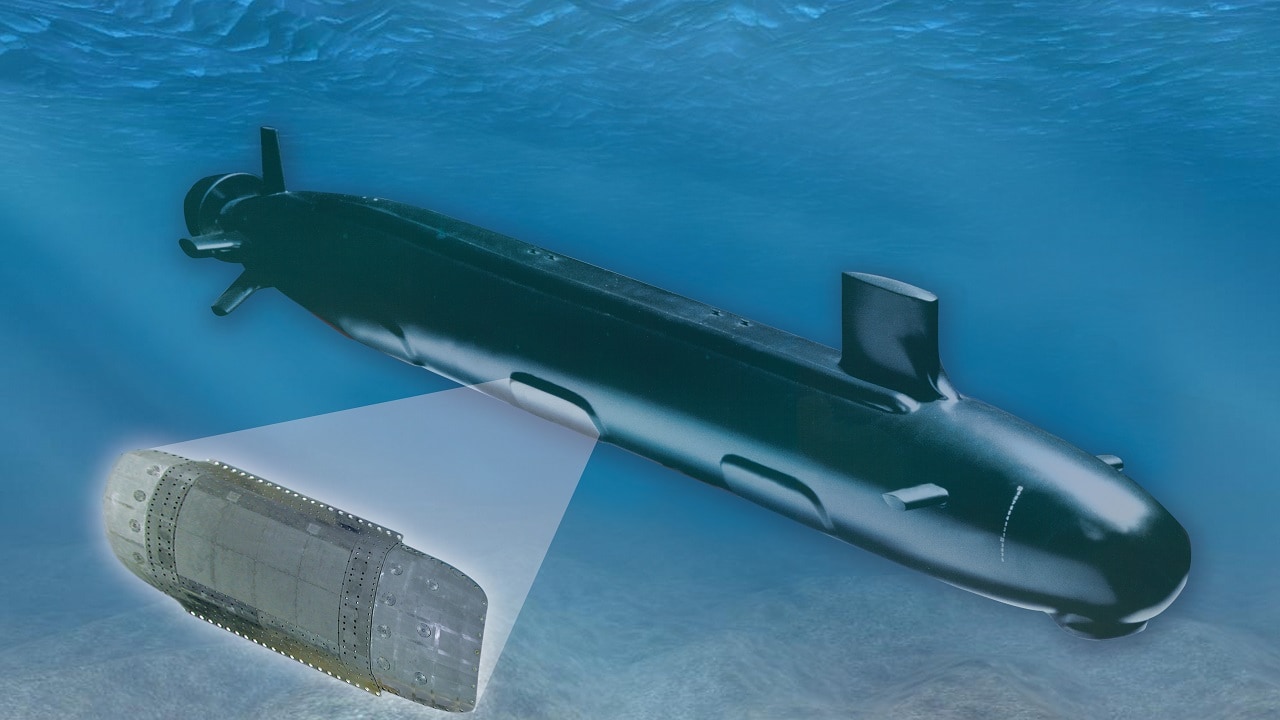
USS Minnesota (SSN-783), a 7,800-ton nuclear-powered attack submarine, is not a new boat. She was commissioned in 2013 and belongs to the Block II Virginia-class line, with a nuclear S9G reactor, roughly 25-plus knot submerged speed, four 533 mm torpedo tubes, Mk 48 heavyweight torpedoes, Tomahawk land-attack missiles, and the acoustic suite expected from the most important undersea platform in the U.S. inventory. The news is not the hardware. The news is the geography.
According to USNI News Western Pacific Pulse on July 31, Minnesota returned to Naval Base Guam after completing its inaugural deployment as the first forward-deployed Virginia-class submarine. During that patrol she took part in Valiant Shield 2026, visited Okinawa and Sasebo, and had previously operated from HMAS Stirling in Western Australia and Darwin in support of U.S.-Australian submarine training. In the same weekly picture, USS George Washington was in Da Nang, Vietnam, while Chinese cruiser CNS Nanchang and frigate CNS Yancheng moved around the Miyako approaches under Japanese surveillance.
Put those three facts on one chart and the lesson is plain. Carriers signal. Submarines compress time.
Guam Changes The Patrol Math
Guam is about 1,500 to 1,700 nautical miles from the Luzon Strait and Taiwan operating areas, depending on the route and patrol box. San Diego is more than 6,000 nautical miles away. Pearl Harbor is roughly 4,500 nautical miles away. Yokosuka is closer to Taiwan than Guam, but it is a surface-fleet hub inside a missile envelope that China watches every day.
A nuclear attack submarine does not need to steam at flank speed across the Pacific to be useful. It needs to arrive quietly, with crew endurance, weapons, maintenance margin, and enough unpredictability that the other side has to spend aircraft, ships, seabed sensors, and command attention hunting it. Forward basing at Guam buys the Navy the one thing shipbuilding cannot deliver quickly: extra patrol days in the contested western Pacific.
That matters because the U.S. submarine force is already stretched. The Navy wants 66 attack submarines; it has fewer than that and many are tied up in maintenance. Virginia-class production still struggles to reach the long-promised two boats per year while AUKUS asks Washington to sell submarines to Australia in the 2030s. Anyone who has served on a destroyer knows the fleet talks about presence as if a calendar can be bent by desire. It cannot. Transit days are gone forever.
A Guam-based Virginia changes that equation at the margin. The boat still needs maintenance. The crew still needs rest. The tender, pier, weapons handling, drydock access, and supply chain still have to work. But if a submarine can start and end its patrol from Apra Harbor rather than the U.S. West Coast, the Navy gets more usable time in the Philippine Sea, South China Sea approaches, and Philippine archipelago without commissioning a new hull.
Minnesota Is Not A Substitute For Capacity
The hard part is not proving Guam is useful. The hard part is scaling it.
A single forward-deployed Virginia-class submarine gives U.S. Indo-Pacific Command another undersea option. It does not solve the force-structure gap. China can put multiple surface action groups through the first island chain, as the Nanchang and Yancheng movement around Miyako showed again this week. Beijing does not need to know exactly where a U.S. submarine is to impose a search burden, but Washington needs enough submarines to make that uncertainty persistent rather than occasional.
The Virginia-class is built for exactly this kind of work. Against a surface group, it can threaten ships with Mk 48 torpedoes. Against shore-based command nodes, air-defense sites, or missile batteries, it can carry Tomahawks. Against a Chinese attempt to isolate Taiwan, it can sit where surface ships would be too visible and too vulnerable. Against PLAN submarines leaving the East China Sea or South China Sea, it can do what the U.S. Navy still does better than any other navy: undersea tracking and ambush.
But a submarine is not a magic token. Guam itself is within range of Chinese ballistic and cruise missiles. Apra Harbor, fuel farms, munitions storage, submarine tenders, repair capacity, and air defense are now part of the submarine fight. If the base cannot reload, repair, hide, and recover fast after strikes, forward deployment becomes a peacetime efficiency rather than a wartime advantage.
The Carrier Visit Is The Visible Half
George Washington arriving in Da Nang is politically useful. Vietnam notices. China notices. The region sees a U.S. carrier strike group still moving through the South China Sea and Western Pacific. The carrier brings airpower, logistics heft, and diplomatic theater that a submarine cannot provide.
But a carrier visit is visible by design. A submarine deployment is valuable because it is not. In a Taiwan crisis, Beijing can build plans around a carrier position once it is found. It has to build far more conservative plans around a Virginia-class submarine that might be west of Luzon, east of Taiwan, or trailing a PLAN group near the Miyako Strait.
That is why Minnesota matters more than the press release language suggests. The first forward-deployed Virginia-class patrol from Guam is a proof of routine. Routine is underrated. A single port visit can be photographed. A repeated undersea deployment pattern changes the daily assumptions of Chinese planners.
What Washington Should Take From This
The right conclusion is not that Guam solves the Indo-Pacific balance. It is that every serious U.S. plan for the first island chain depends on a forward submarine posture that is larger, better protected, and less episodic than it is today.
That means hardened infrastructure at Guam, more repair capacity west of Hawaii, faster munitions handling, integrated air and missile defense, and a production base that can actually deliver Virginia-class boats at the rate politicians promise. It also means being honest with Australia. AUKUS depends on the same submarine pool that INDOPACOM needs tonight, not in a PowerPoint decade.
Minnesota did not change the balance by herself. She showed the balance Washington is trying to build.
The math is still ugly. The U.S. Navy does not have enough attack submarines, does not build them fast enough, and cannot assume Guam will be a sanctuary. But the direction is right. If the United States is serious about denying China sea control inside the first island chain, the most important ships may be the ones nobody gets to photograph.
USS Minnesota completed its inaugural deployment as the first forward-deployed Virginia-class submarine, returning to Naval Base Guam on July 29, 2026. During its patrol, it participated in Valiant Shield 2026 and visited Okinawa and Sasebo. This deployment underscores the strategic importance of submarine presence in the Indo-Pacific region, enhancing U.S. operational capabilities against potential threats.
- USS Minnesota returned to Naval Base Guam after its first forward-deployed patrol on July 29, 2026.
- The submarine participated in Valiant Shield 2026 and visited Okinawa and Sasebo.
- Guam is strategically located for operations in the contested Western Pacific.
- The U.S. Navy aims to increase its submarine presence in the region to counter Chinese naval capabilities.
- The deployment of USS Minnesota highlights the importance of forward-basing submarines for operational flexibility.