
Video: Deciding the Success or Failure of Landing Operations! Direct Coverage of Core Training in Joint Land-Sea Operations
Landing ship loading and unloading training is one of the important subjects for amphibious armored forces in coastal training, focusing on testing the capabilities of frontline combat troops in long-range delivery, three-dimensional assaults, and beach landings. In recent days, a certain amphibious combined brigade of the 73rd Group Army, in coordination with naval vessel units, has conducted joint training in a certain sea area of southern Fujian, focusing on practical training in long-distance water crossing formations and full floating loading and unloading.
With the command given, a convoy consisting of several amphibious armored assault vehicles, infantry fighting vehicles, and other types of vehicles successively crossed the water, forming a line formation, and maneuvered towards the naval landing ship several kilometers away. While driving at sea, the drivers could only observe the sea conditions through periscopes, with limited visibility. At the same time, affected by the waves and currents at sea, the amphibious vehicles and landing ships floated unpredictably in the water, making it easy for the vehicles to slide or scrape when boarding the ship, requiring drivers to precisely control the throttle and direction of the vehicles.
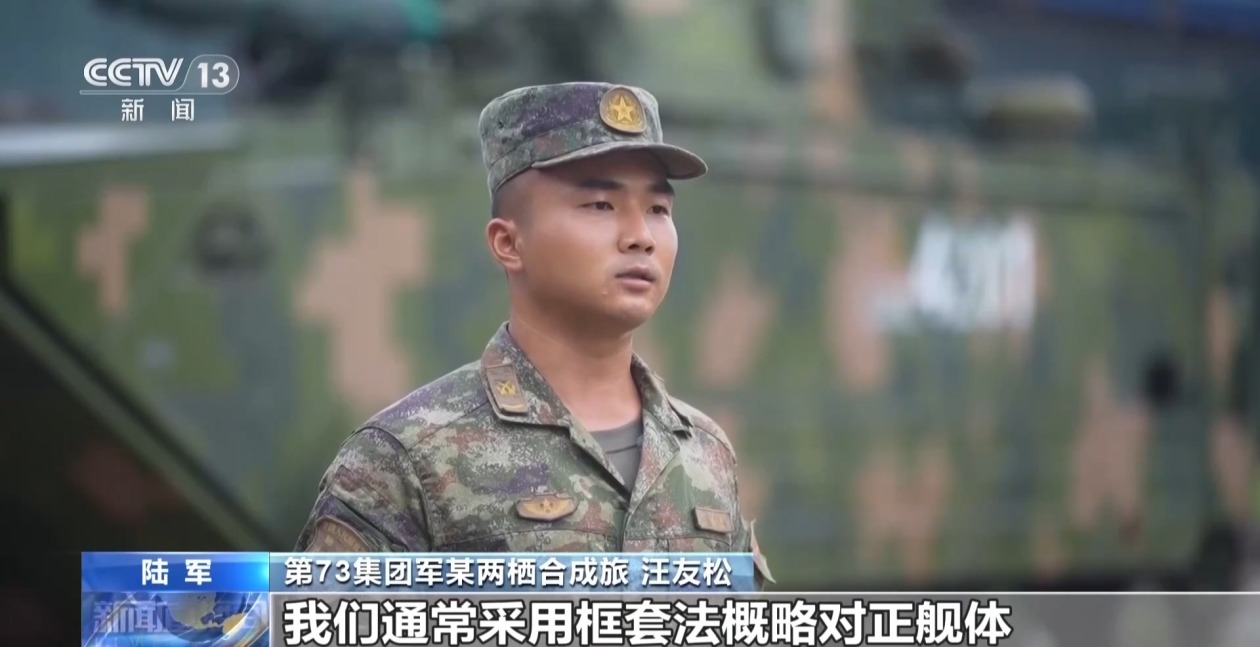
Wang Yousong, a member of the 73rd Group Army's amphibious combined brigade: During the boarding process, we usually use the frame method to roughly align with the ship's body, and when approaching the ship, we use the three-point alignment method to accurately align with the hatch, seizing the best opportunity to complete rapid boarding.
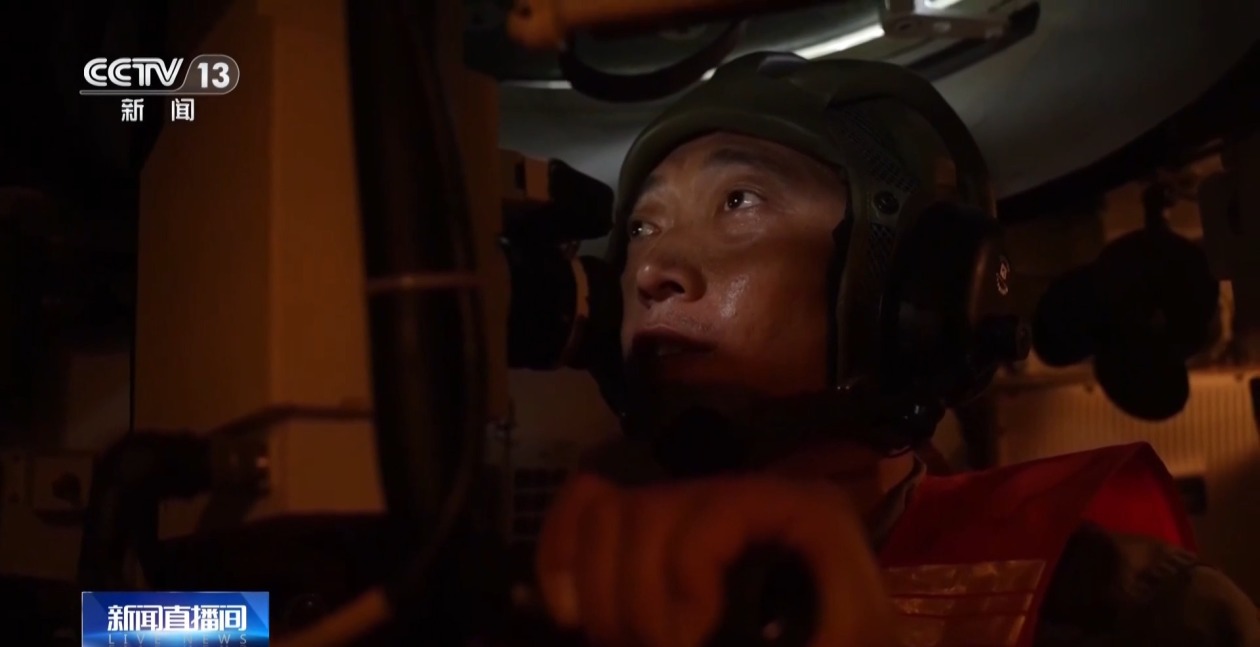
As the lead vehicle commander for this training, Li Xiaodong serves as the "second pair of eyes" for the drivers. He needs to accurately control the vehicle's heading and grasp the timing for boarding based on the commands from the ship's stern commander, guiding the drivers to successfully complete the boarding and disembarking. Upon reaching the target sea area, the vehicles must quickly leave the ship and launch an assault on the beach.
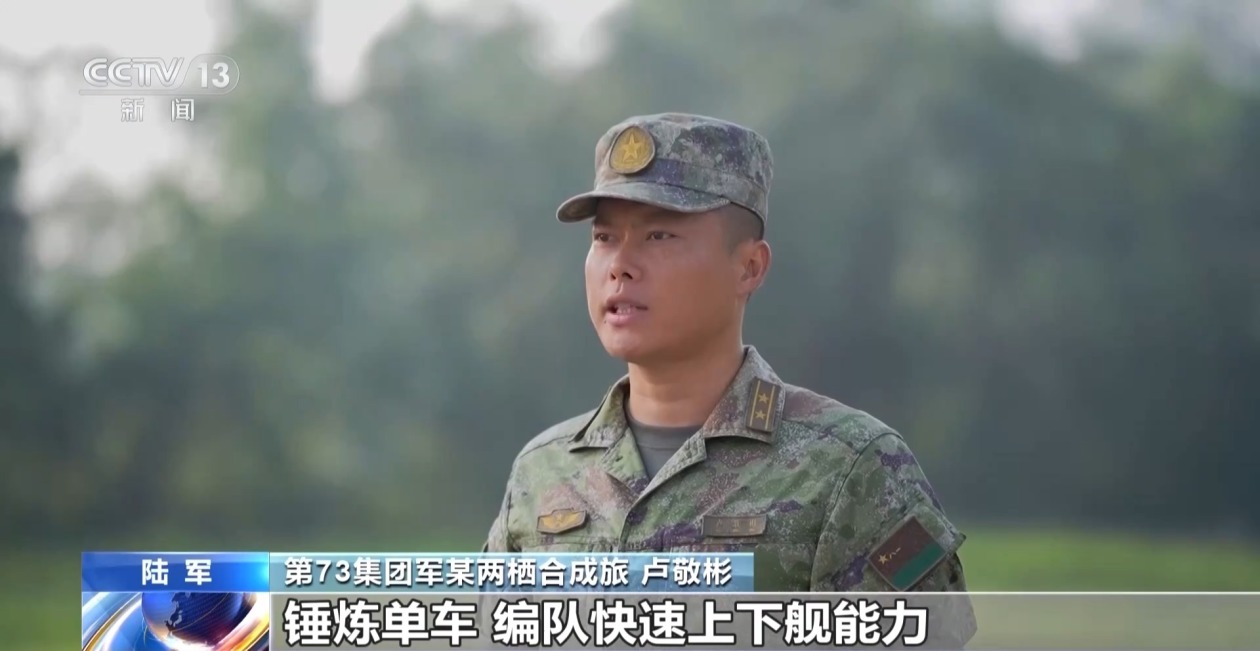
Lu Jingbin, a member of the 73rd Group Army's amphibious combined brigade: We utilize complex sea conditions to hone the rapid boarding and disembarking capabilities of individual vehicles and formations, minimizing loading and unloading time to enhance combat effectiveness. In the next step, we will also increase the difficulty and intensity of realistic training, continuously sharpening the troops' ability to win in both land and sea operations.
Simulating complex sea conditions
Advanced equipment assists in improving training quality and effectiveness
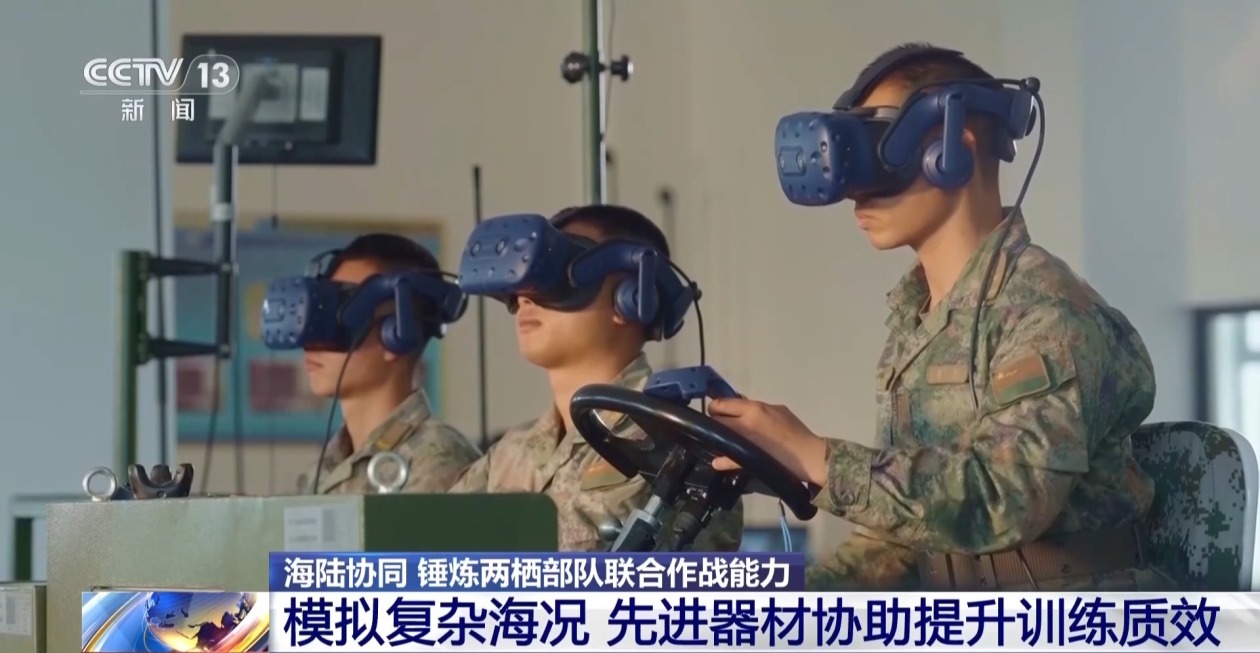
Mastering the skill of precise boarding in one go is not achieved overnight. To enhance the maritime combat capabilities of armored personnel and quickly generate combat effectiveness, this brigade has relied on training equipment such as VR and simulation operation chairs in the early stages, breaking down the barriers of time and space limitations, and allowing for the simulation of various complex and hazardous sea conditions. This enables special situation handling training, helping officers and soldiers solidify their professional foundation and smoothly transition from simulated training to practical training. Through this "first simulate, then implement" training approach, officers and soldiers repeatedly refine their operational skills, improve team coordination levels, and effectively enhance their proficiency in vehicle control, thereby significantly improving training quality and effectiveness.
Expert Interpretation
What is "water crossing formation"?
Core technical tactical training subjects such as water crossing formation and full floating loading and unloading are key links in the joint operations of land and sea during amphibious landing operations, directly determining the delivery efficiency, battlefield survivability, and success or failure of amphibious assault forces. So, what is "water crossing formation"? What are the practical challenges that this tactical core needs to overcome? What decisive impacts does it have on the overall success or failure of landing operations?
Water crossing formation is a core tactical maneuver for amphibious armored forces during maritime assaults, consisting of two closely linked tactical units: "water crossing" and "formation," both of which are indispensable.
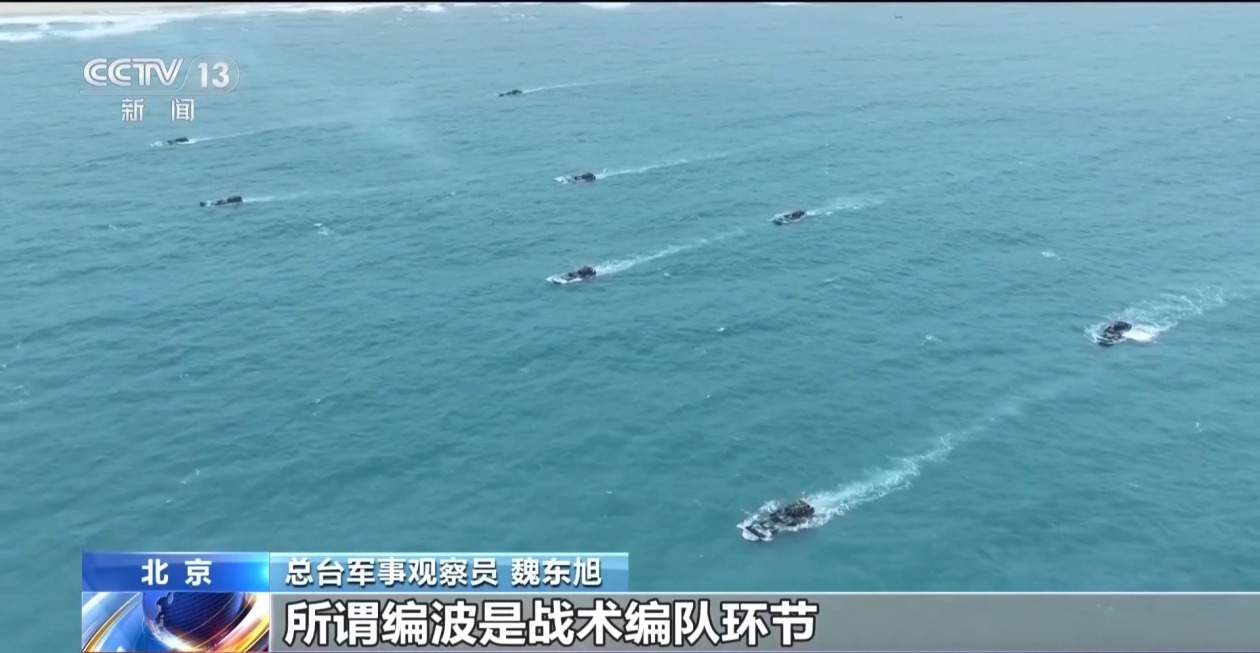
Military Observer Wei Dongxu: The so-called water crossing, in simple terms, refers to the "launching action" of amphibious combat equipment, indicating the entire process of amphibious assault vehicles, infantry fighting vehicles, and other equipment relying on their own buoyancy and water propulsion to enter the water from land or smoothly exit from the landing ship's dock and into the sea. It is the physical transition of equipment from "land combat state" to "maritime maneuvering state," focusing on testing the stability of the equipment and the precision of the driver's control. The so-called formation refers to the tactical formation phase, where each combat vehicle, after water crossing, quickly completes formation grouping, wave division, and task assignment on the sea surface according to the operational plan, forming multi-echelon, modular assault combat groups.
Water crossing formation may seem like a basic maneuver subject, but it is actually the most dangerous and critical window period in landing operations.
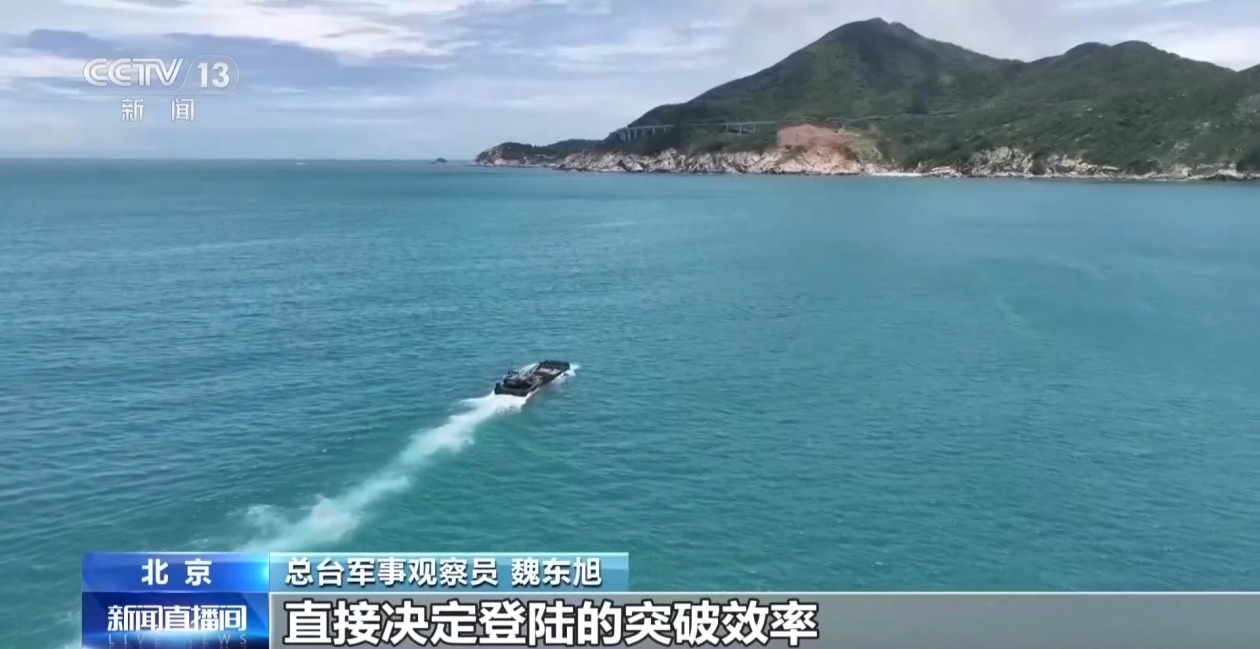
Military Observer Wei Dongxu: During the water crossing phase of amphibious equipment, there is no terrain cover, slow maneuvering speed, and weak resistance to attacks. Standardized, rapid, and precise formation can minimize the time exposed at sea, reducing the probability of being detected and locked by enemy reconnaissance and fire interception. The harsh environments of modern amphibious landing operations present both risks and opportunities; being able to complete rapid formation and timely assaults under complex conditions can achieve tactical surprise, catching the enemy's defenses off guard, and directly determining the efficiency of the landing breakthrough.
Expert Interpretation
High-risk subject — full floating loading and unloading
This training also focused on a key assessment subject, which is full floating loading and unloading. What are the training difficulties and risks associated with this subject?
Military Observer Wei Dongxu: The core of full floating loading and unloading is "full floating crossing and autonomous operation," indicating that amphibious combat equipment, in an unfamiliar sea area without a reliable beachhead, relies entirely on its own floating capabilities to autonomously complete the entire process of water crossing from the landing ship's dock, maritime maneuvering, returning to the ship, troop rotation, and material transfer without any shore-based facilities for assistance. This is a delivery support model fully adaptable to unfamiliar battlefields in real combat.
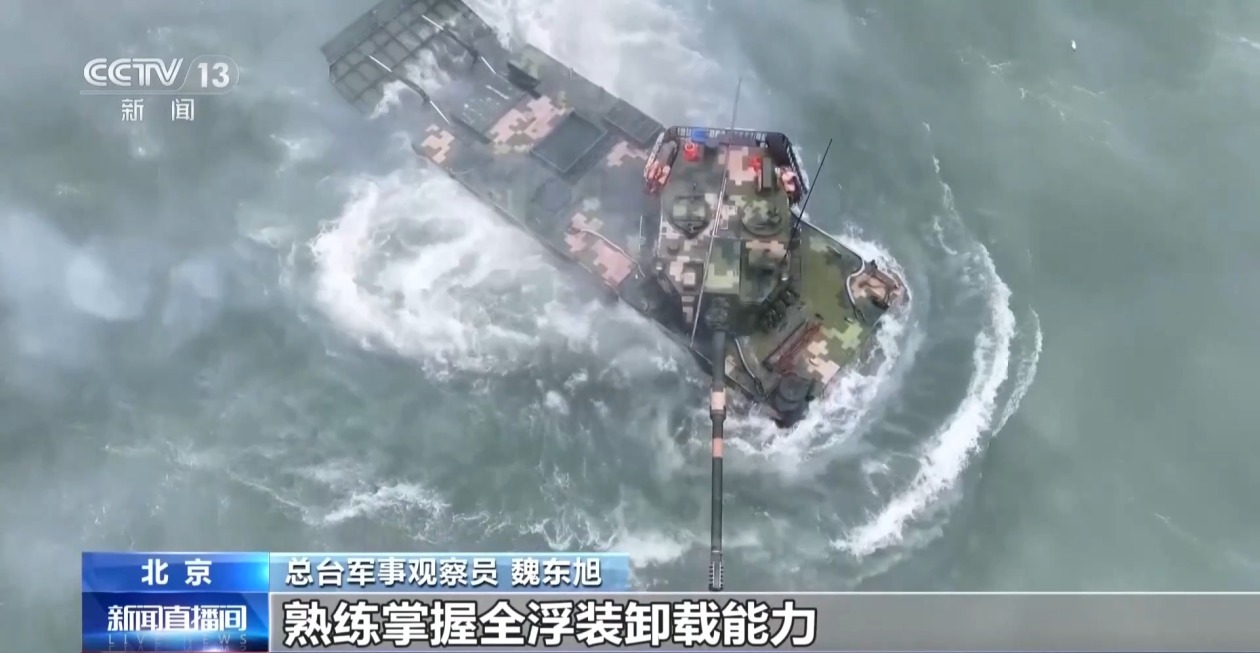
Full floating loading and unloading enables the cyclical delivery and dynamic rotation of troops and equipment, upgrading amphibious assaults from "one-time charges" to "sustained offensives," significantly increasing the margin for error and success rate in landing operations. Mastering the full floating loading and unloading capability means that amphibious forces can operate independently of fixed support systems, conducting combat delivery in any sea area and at any time, possessing real combat capabilities for all-domain maneuvering, long-range assaults, and sustained operations.
The 73rd Group Army Amphibious Combined Brigade conducted joint training exercises with naval forces in the Minan Sea, focusing on amphibious landing operations. The exercises involved multiple amphibious armored vehicles and landing craft, emphasizing unloading and loading capabilities under complex sea conditions. Advanced training equipment was utilized to enhance the troops' operational skills and readiness for real combat scenarios.
- The 73rd Group Army conducted joint training with naval forces in the Minan Sea.
- The training focused on unloading and loading operations of amphibious vehicles.
- Advanced training equipment like VR was used to enhance operational skills.
- The exercises aimed to improve the efficiency and effectiveness of amphibious assaults.
- The training included complex sea conditions to test the troops' capabilities.