
Why the ATACMS Factory in Unterlüß Will Fill America's Arsenal from 2028 — Not Europe's Autonomy
 Dr. Klaus Weber
Why the ATACMS Factory in Unterlüß Will Fill America's Arsenal Starting in 2028 — Not Europe's Autonomy
The US Army has practically exhausted its entire global stock of long-range precision missiles in five months of war against Iran. ATACMS and its successor PrSM are nearly depleted, three sources familiar with the data reported to Reuters on August 4. At this very moment, the German-American defense industry is celebrating its prestige project: the first ATACMS production line outside the USA, located on the 125-year-old Rheinmetall site in Unterlüß in the Lüneburg Heath.
A Contract with a Double Message
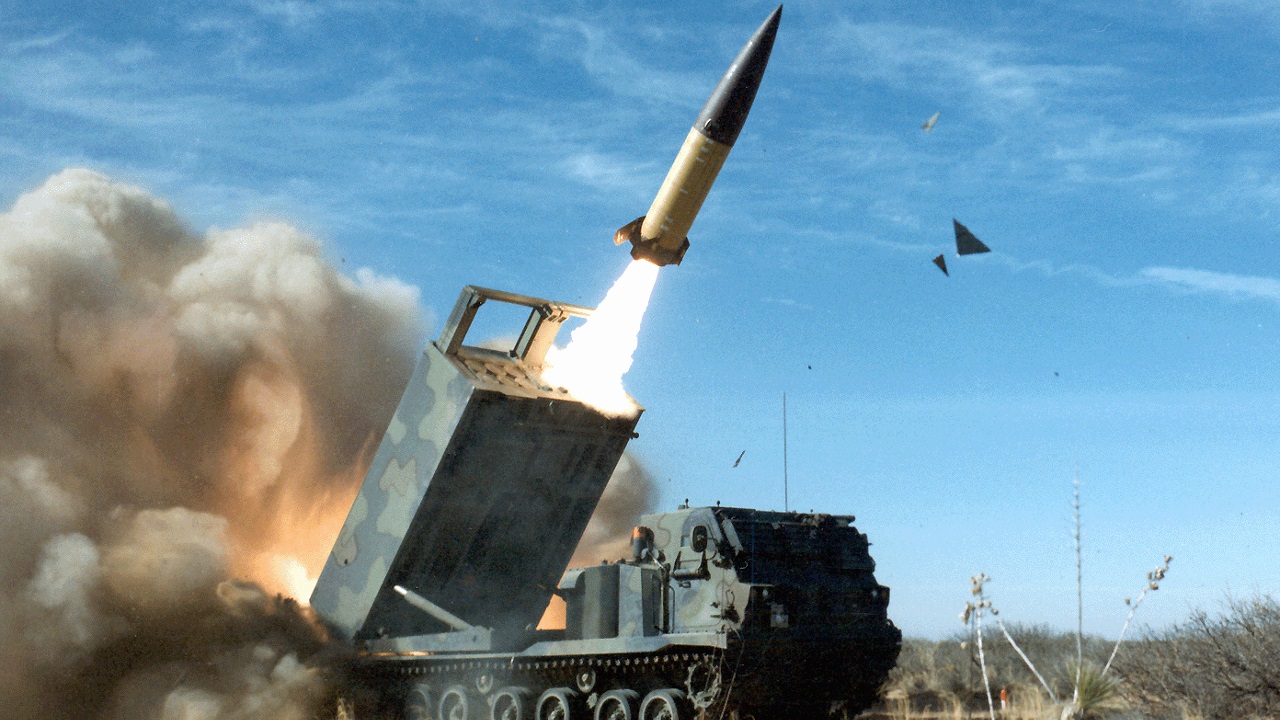
On July 7, Lockheed Martin and Rheinmetall signed a Memorandum of Understanding for the joint manufacturing of the Army Tactical Missile System at the NATO summit's industry forum in Ankara. The German government and the US government publicly supported the move. Rheinmetall CEO Armin Papperger spoke of strengthening the industrial base in Germany for modern defense systems, while Lockheed's Europe chief Dennis Goege referred to the pairing of proven US technology with European manufacturing strength.
The message to Europe is: You will finally have your own production. The message to Washington is: We will finally have suppliers. Both messages are correct — and both conceal what the project structurally means.
The Key Facts of the Deal
- Location: Rheinmetall-Unterlüß, Lower Saxony — first ATACMS manufacturing plant outside the USA
- Planned capacity: 600 to 800 ATACMS per year for European and Ukrainian demand (Papperger, May 2026)
- Timeline: Manufacturing setup in 2027, first revenues in 2028, ramp-up beyond 2029
- Approval: Joint venture is subject to US government approval — technology transfer requires Washington's consent
- Context: Lockheed is scaling back the ATACMS line in Camden, Arkansas, in favor of the PrSM
The Real Problem is American
The Iran war has pushed American missile logistics to their limits. CNN reported on August 4 that nearly 80 percent of the interceptors of a central US missile defense system have been used up. President Trump downplayed the concerns on August 6 — the US has nearly unlimited stocks of some types of ammunition, but admitted that other stocks are tighter. The reality reads differently: Unterlüß is not meant to complement the Arkansas line, but to replace it.
Papperger told Reuters on August 7 what no one in Berlin wants to say out loud: the new manufacturing will also have sufficient capacity to replenish the arsenals of the US armed forces that have been depleted by the conflict with Iran. “This will not happen in two years. It will take much longer."
This sequence is fatal for European security policy. Not only Ukraine, but also NATO's eastern flank depends on American precision weapons. If the strategic reserve of the alliance leader is consumed in a conflict in the Gulf, the question arises of who will still have ammunition against the Russian threat in a serious situation. Washington has given an honest answer to this: the European industry. However, the industry tasked with this is not European-owned, but American-licensed.
Licensed Production is Not Autonomy

Here lies the core of the misunderstanding. The announcement is celebrated in Germany as proof of European sovereignty. In fact, it is the opposite: a licensed production under American design authority. Whoever owns the software, the target parameters, and the export control has sovereignty; whoever provides the assembly hall has a job. The pattern repeats everywhere: Germany and the Netherlands are buying Stinger under the condition of European production — under Raytheon's direction, with the goal of doubling the production volume by 2030.
This is reminiscent of the Patriot experience from February: Europe is allowed to buy, but not to build — production rights and export control remain in the USA. Unterlüß only seemingly shifts this boundary. The line may be in Germany, but the approval for every single export and every change in use remains in Washington. Autonomy that must be approved is not autonomy.
Additionally, there is a temporal paradox. The bottleneck is a problem of 2026: Ukraine expects a Russian winter offensive, European stocks are thin, and US arsenals are empty. The response will come in 2028, in full breadth in 2029. This is not a strategy; it is order book logic. Papperger openly states: “There will be a market for missiles in the next 15 years." From a corporate perspective, this is correct — from a security policy perspective, it is the admission that Europe is addressing today's gap with the factory of tomorrow.
The Price of Convenience
The most significant weight lies in the strategic direction. The USA is replacing the ATACMS with the PrSM; the production line in Unterlüß secures the supply of a system that Washington is phasing out itself. Europe takes on the role of the last manufacturer of a generation of technology that America is already leaving behind. Those who sell this as a gain in autonomy confuse the workbench with the toolmaker. Licensed production solves the logistics question, but it does not solve the sovereignty question — it merely shifts it.
Moreover, there is the economic binding: those who invest billions in the licensed production of an American system have little incentive to finance a parallel European counterpart. The chance that one day an independent European long-range program will grow from Unterlüß decreases with every ATACMS built. Cooperation is not the path to autonomy here, but its replacement.
“The ATACMS production in Unterlüß is the most honest expression of the transatlantic relationship: America designs, Europe assembles, both pay."
One could argue that any cooperation is better than none, that jobs and know-how are created, that the production of American systems could be the first step towards independent development. Exactly this was said after the F-35 purchase, after the Patriot purchase, and after every licensing agreement since the Starfighter. The German defense history of the last sixty years is the story of this hope — and it has not materialized.
The Balance
The agreement from Ankara is a reasonable industrial response to an acute American problem. It is not a European response to the European problem. Those who want true autonomy must unite production rights, design control, and export freedom in one hand — or seriously invest in joint European systems instead of serving the US industry in the German plant. As long as Europe provides the assembly halls and America makes the decisions, the turning point remains a budgetary shift. And the question of who ultimately controls the missiles answers itself in Unterlüß: those who own the design.
Lockheed Martin and Rheinmetall signed a memorandum to produce ATACMS missiles in Unterlüß, Germany, with an expected output of 600 to 800 units annually starting in 2028. This production aims to meet European and Ukrainian demand as the US faces depleted missile stocks due to the ongoing conflict with Iran. The agreement underscores the strategic implications for European military autonomy, as production remains under US oversight and licensing.
- The US Army has nearly exhausted its stock of long-range precision missiles due to the Iran conflict.
- A memorandum of understanding was signed between Lockheed Martin and Rheinmetall for ATACMS production in Germany.
- The production facility in Unterlüß is set to produce 600 to 800 ATACMS annually starting in 2028.
- The production is under US government approval, indicating a dependency on American technology and oversight.
- The report highlights concerns about European military autonomy and reliance on US defense systems.