

Summary and Key Points: “If you don’t like problems, stay out of leadership.” Jim Mattis wrote the eight words in Call Sign Chaos, his 2019 memoir with Bing West, and Steve Balestrieri argues they explain why Marines still revere him: the call sign CHAOS his staff coined for “Colonel Has Another Outstanding Solution”; the reading habit that packed Field Marshal Slim’s book into Afghanistan in 2001; the Christmas morning in 1998 when Commandant Charles Krulak found a brigadier general standing the Quantico duty so a young officer could be home; the 2003 order to 1st Marine Division to use brains before weapons; and the December 20, 2018, resignation letter that cost him his job.
“If You Don’t Like Problems, Stay Out of Leadership”: Why Jim Mattis Still Commands Respect
Leadership is a problem-solving business. Jim Mattis just said it better than anyone.
“If you don’t like problems, stay out of leadership.” The retired Marine general and former Secretary of Defense put that line in Call Sign Chaos: Learning to Lead, the 2019 memoir he wrote with Bing West, and repeated it on the road while promoting the book, including at Dallas Baptist University. Eight words. No wiggle room.
Those eight words also explain why Mattis remains one of the most respected military leaders of his generation, among Marines, soldiers, and plenty of people who never wore the uniform.
Solving Problems Are The Job For Leaders
Most people who chase rank or a corner office want the authority. Far fewer want what comes attached to it. The bad news lands on your desk. So do the decisions nobody else wants to make. Mattis’s point is that this is the core of the job, the part you signed up for whether you realized it or not.
A compilation of his guidance that circulated as Secretary Mattis’ Leadership Philosophy and Guidance hits the same note from a different angle, telling leaders not to resent the problems that come to them.
Anyone who has been in charge of anything at 0300 when a plan has gone to sh… er, sideways knows exactly what he means.
Colin Powell also believed in solving problems. He said, “The day soldiers stop bringing you their problems is the day you have stopped leading them.”
Mattis’ Call Sign Says It All
The press loved calling him “Mad Dog.” However, his actual call sign was CHAOS, a backhanded compliment from his staff, short for “Colonel Has Another Outstanding Solution.” The joke only worked because it was true. He kept showing up with answers.
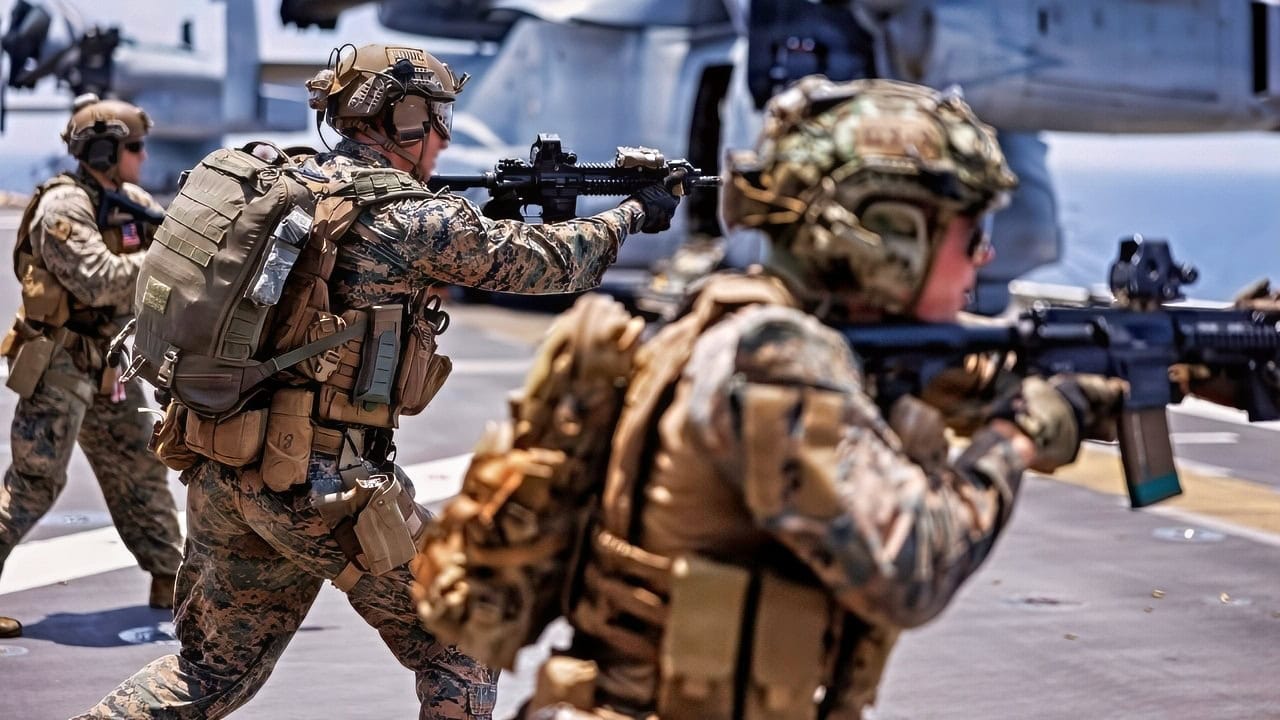
The Marines could land in Iran tomorrow. Navy SEALs would prepare the beach. The 82nd Airborne could infiltrate. The invasion would succeed initially. Then Iran would launch drones and missiles at every U.S. base, satellite terminal, and air defense radar in the Middle East. Getting in is easy. Surviving is the problem.
Those answers came from somewhere. Mattis is famous for his habit of reading. In a 2003 email to a fellow officer that later went viral, he wrote that being too busy to read means learning by experience, “the hard way.”
He added that reading never gave him all the answers, but it lit the path ahead, which was often dark. In Call Sign Chaos, he went further, writing that a leader who hasn’t read hundreds of books is functionally illiterate.
Strong words. However, look at what he packed when he took Task Force 58 into southern Afghanistan in 2001: Field Marshal William Slim’s book, along with histories of the Russian and British experiences in that country.
Mattis reminded readers that humans have fought on this planet for 5,000 years. To him, that was a 5,000-year after-action report sitting on the shelf, free for the taking.
Officers Eat Last
Brains alone don’t earn loyalty. The story that best explains why Marines revere Mattis took place on Christmas Day, 1998. Gen. Charles Krulak, then Commandant of the Marine Corps, made his annual 4 a.m. run, delivering homemade cookies to Marines on guard duty around Washington, Annapolis, and Baltimore. At Quantico, he asked the lance corporal on duty who the officer of the day was.
The answer was Brigadier General Mattis.
Krulak assumed the young Marine had misunderstood the question. He hadn’t. Mattis walked in wearing a duty uniform and a sword. The officer originally scheduled for Christmas duty had a family, and Mattis decided that young officer belonged at home with them. So the one-star took the duty himself.
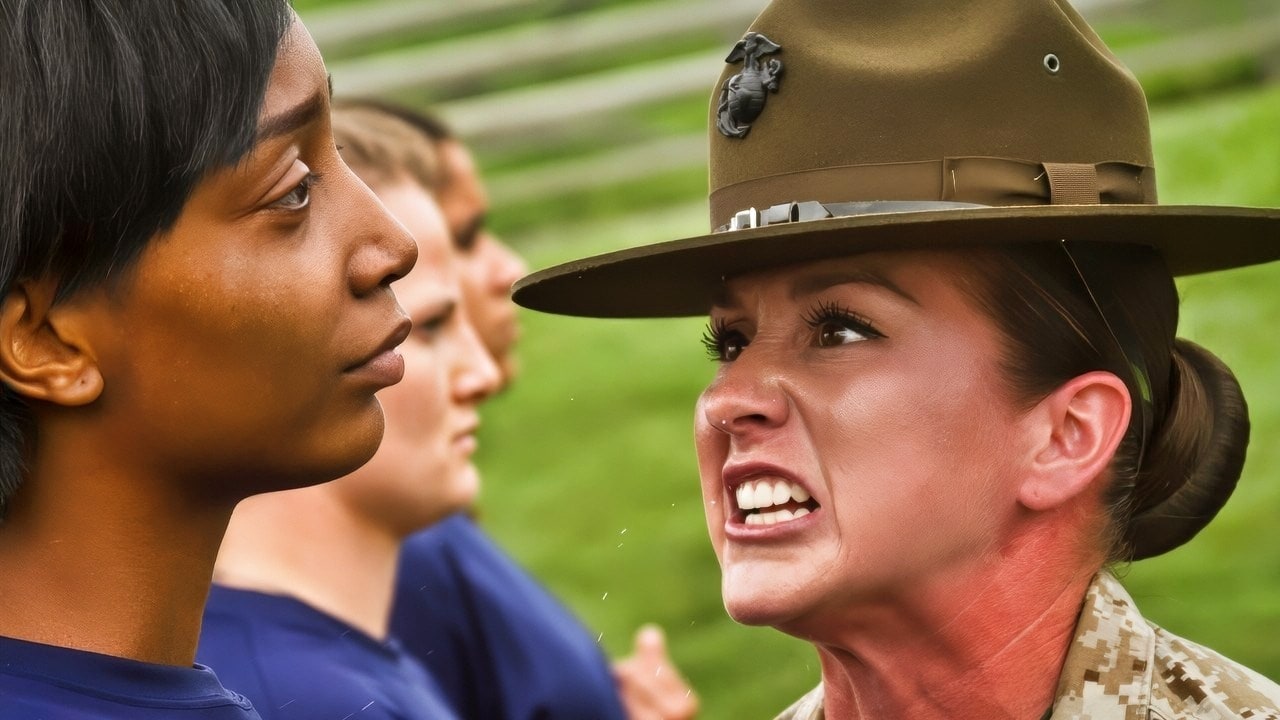
U.S. Marine Corps Sgt. Julie Martinez, a drill instructor with 4th Recruit Training Battalion, Marine Corps Recruit Depot Parris Island, South Carolina and a native of St. George, Utah, encourages a member of the Marine Corps’ Delayed Entry Program to sound off during Recruiting Station Baltimore’s annual Female Pool Function at Fort George G. Meade, Maryland, June 20, 2015. The purpose of the annual Female Pool Function is to build mental and physical toughness among members of the Delayed Entry Program and to maintain their commitment to complete recruit training in order to become United States Marines. (U.S. Marine Corps photo by Sgt. Bryan Nygaard/Released)
No press release. No photo op. We only know because Krulak told the story, and it was later recounted at a 2003 ethics lecture. But rest assured, the Marines on the base surely found out, and things like that go a long way in building loyalty, which flows down the chain as surely as it must up.
That’s the other half of the quote. If you own the problems, you also own the people. All of them, including the ones stuck on a quiet guard post on Christmas morning.
No Better Friend, No Worse Enemy
Before the 1st Marine Division crossed into Iraq in March 2003, Mattis issued a one-page Commanding General’s Message to All Hands. It was blunt about the enemy and just as blunt about how his Marines would conduct themselves.
They were to move swiftly against anyone who resisted and treat everyone else with decency. He told them to use their brains before using their weapons. Then he closed by borrowing from the Roman general Sulla: there is “No Better Friend, No Worse Enemy” than a U.S. Marine.
That line has since become an unofficial Marine Corps motto. However, people tend to skip over the balance. On a single page, a division commander about to launch an invasion told 20-year-old riflemen that restraint and judgment were weapons too.
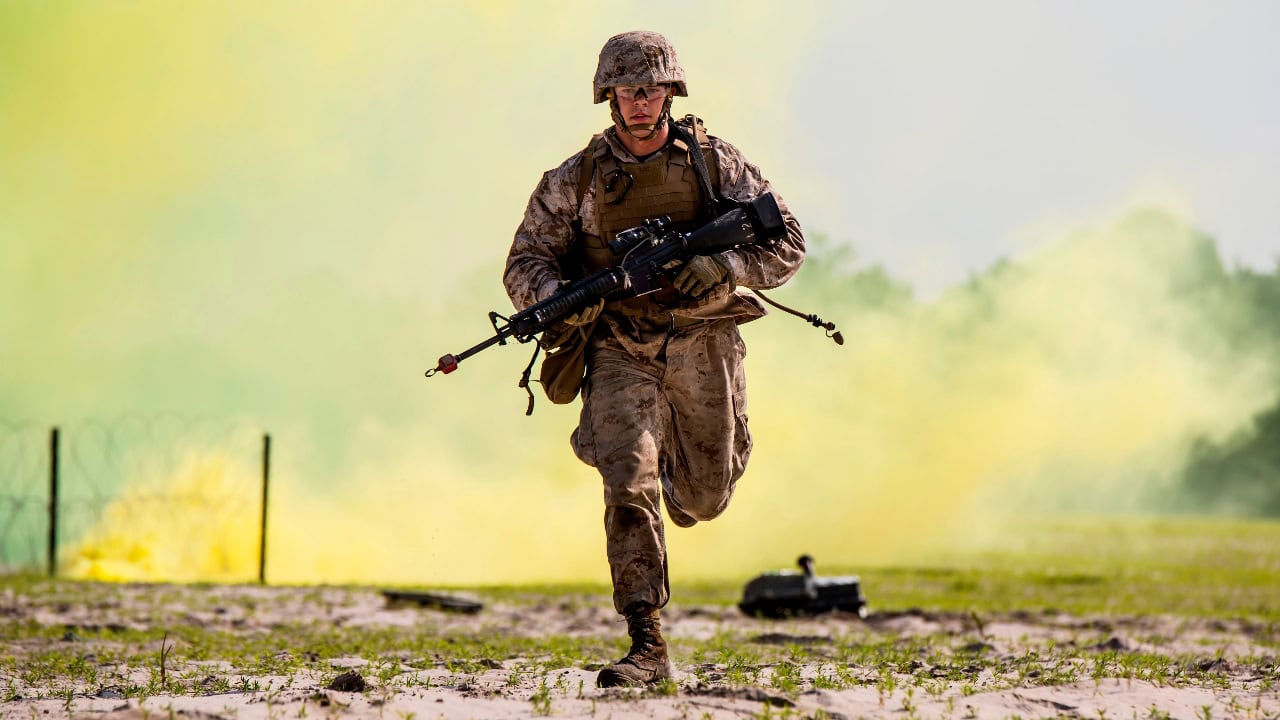
Lance Cpl. Alex Rowan, a combat engineer with 4th Combat Engineer Battalion, 4th Marine Division, stationed out of Bessemer, Ala., runs to take cover before the Anti-Personnel Obstacle Breaching System detonates during the SAPPER Leaders Course aboard Camp Lejeune, N.C., June 26, 2015. During the course, the Marines used assault and breaching techniques to clear a wire obstacle using line charges that utilized C4 explosives and their APOBS. (U.S. Marine Corps photo by Cpl. Krista James/Released)
That is a difficult issue to hand to young men going into combat, and he handed it to them anyway, because he trusted them to solve it.
Walking Away On Principle
Mattis’s final problem as a public servant was the hardest one. On December 20, 2018, a day after the White House announced it was pulling U.S. troops out of Syria, he hand-delivered his resignation letter.
In it, he wrote that American strength is “inextricably linked” to its alliances and told the president he deserved a defense secretary whose views were better aligned with his own.
Say what you will about the politics. What matters here is how he conducted himself. A respectful letter focused on policy. A planned transition. No tell-all. When Call Sign Chaos hit shelves the following year, he largely avoided taking direct shots at the sitting president, describing himself as old-fashioned. That restraint frustrated plenty of reviewers. However, it was entirely in character.
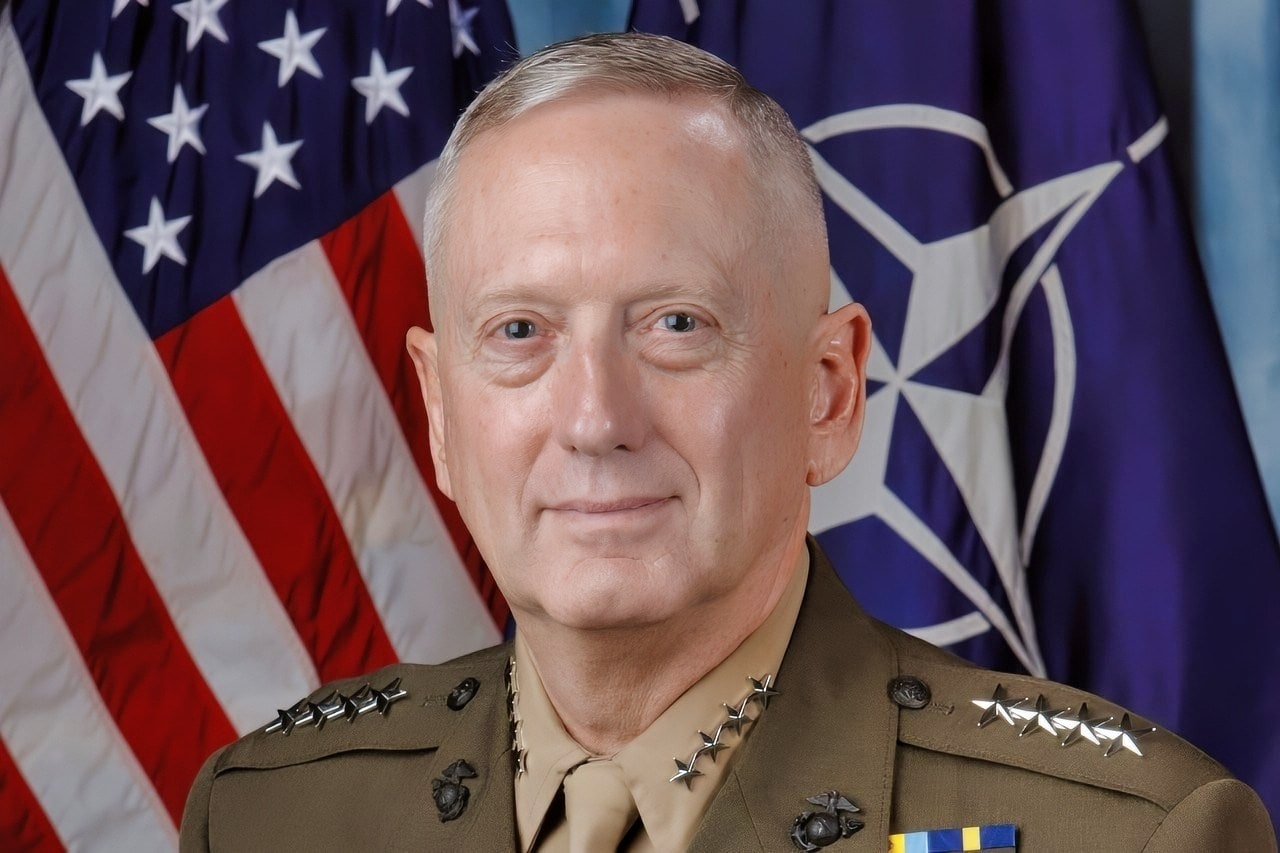
Jim Mattis. Image Credit: Creative Commons.
Why The Respect Endures
Many generals have been smart, and many others have been brave. Mattis combined a scholar’s intellectual preparation, genuine care for the troops at the bottom of the chain, moral seriousness in combat, and a willingness to absorb the consequences of his own convictions.
He led at every level, from rifle platoon to U.S. Central Command, and the Small Wars Journal review argued that his book belongs at every level of professional military education, from ROTC to the senior service colleges.
That’s why the quote still resonates. Mattis prepared for problems before they arrived. He took them off his subordinates’ shoulders when he could. When the biggest one showed up, he met it head-on, even though it cost him his job.
If you don’t like problems, stay out of leadership. Mattis never stayed out… which is why he rose as far as he did.
About the Author: Steve Balestrieri
Steve Balestrieri is a National Security Columnist. He served as a US Army Special Forces NCO and Warrant Officer. In addition to writing on defense, he covers the NFL for PatsFans.com and is a member of the Pro Football Writers of America (PFWA). His work was regularly featured in many military publications.