
Zaluzhnyi Says 12 Years of NATO Promises Are Empty
 Alexandra Reeves
Zaluzhnyi Says 12 Years of NATO Promises Are Empty
Valerii Zaluzhnyi did not say the polite version of the thing everyone in Brussels already knows. He said the blunt version.
Ukraine, he argued at a meeting of Ukrainian ambassadors in Kyiv, will not join NATO. Not soon. Not after one more communique. Not after another round of standards paperwork. According to European Pravda, the former commander-in-chief and current Ukrainian ambassador to the United Kingdom said he had spent about 12 years working on NATO standards and hearing, year after year, what he called fairy tales about imminent membership. His conclusion was brutal: Ukraine will never join.
That is not Kyiv abandoning the West. It is a combat commander saying the institutional language of Euro-Atlantic integration no longer matches the war Ukraine is actually fighting.
The Quote NATO Cannot Easily Ignore
Zaluzhnyi has credibility that most European officials do not. He commanded Ukrainian forces through the most important phase of the full-scale war before being dismissed in 2024 after differences with President Volodymyr Zelenskyy. He now sits in London as ambassador, but he is still heard as a soldier first.
His line about NATO being guided by World War II doctrines was aimed at the alliance as much as at Ukraine. European Pravda quoted him saying it was impossible, given the current level of development of Ukraine's armed forces, to join an organisation still operating with outdated military assumptions. The Kyiv Independent reported the same argument on August 4, adding that he believes Ukraine should look toward emerging European security blocs instead of waiting for NATO accession.
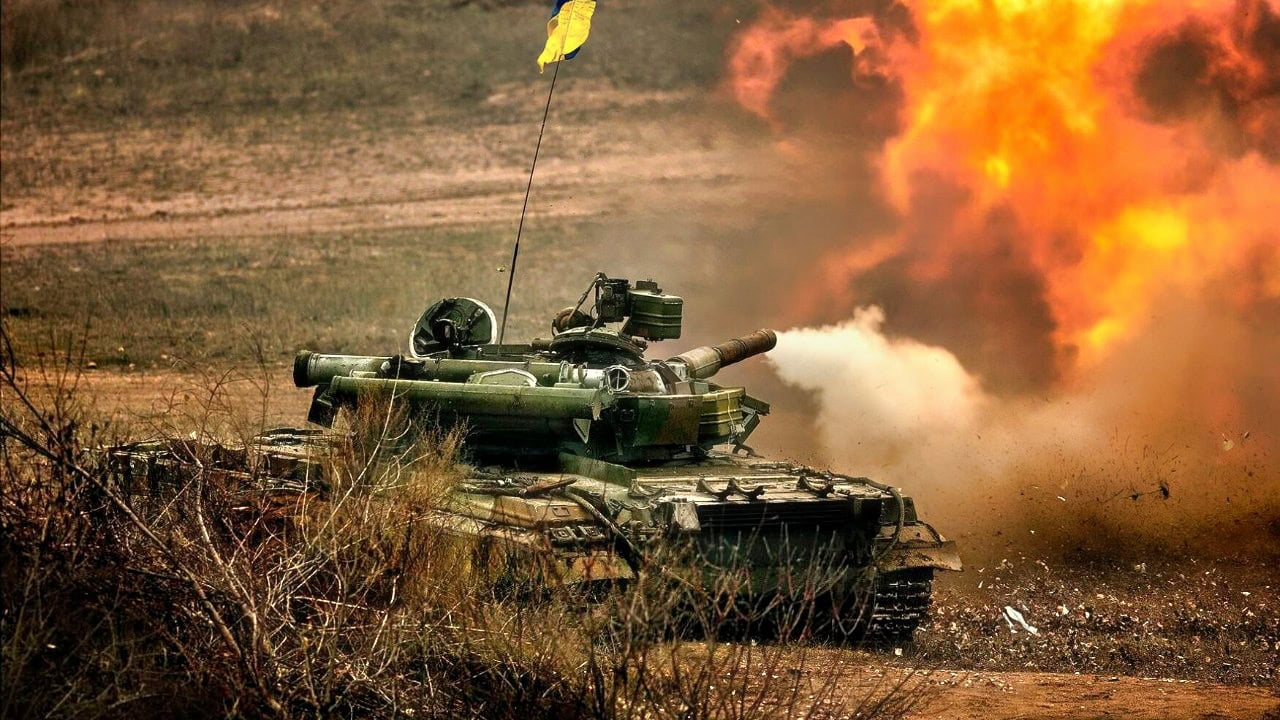
That is an awkward charge because Ukraine is not the side that has looked slow to learn. Ukrainian forces have normalised mass drone reconnaissance, cheap precision strike, distributed command, electronic warfare adaptation and deep attacks on Russian logistics. NATO has money, exquisite systems and thick doctrine. Ukraine has the scar tissue.
So when Zaluzhnyi says NATO may need another 12 years to reach even half of Russia's level in certain standards of readiness, it is not a throwaway insult. It is a warning from someone who watched a supposedly weaker military survive by moving faster than the manuals.
The Ankara Promise Meets the Kyiv Reality
The timing matters. NATO leaders left the July Ankara Summit with a large package of commitments. The alliance said European members and Canada had increased core defence investment by more than USD 139 billion since the 2025 Hague pledge to reach 5 percent of GDP by 2035. NATO also announced more than EUR 50 billion in procurement deals for deep precision strike, integrated air and missile defence, uncrewed systems and intelligence capabilities.
Most important for Kyiv, NATO pledged EUR 70 billion in military equipment, assistance and training for Ukraine in 2026, with a commitment to sustain at least an equivalent level in 2027.
That is real money. It buys air defence interceptors, artillery ammunition, training pipelines, repair capacity and political time. But money is not membership. And the gap between those two things is where the whole Ukraine policy now lives.
NATO wants Ukraine armed, trained and tied closely to the West. NATO does not want a direct Article 5 war with Russia. Ukraine wants enough guarantee that Moscow cannot simply pause, rearm and come back. Those positions can be managed for a while, but they cannot be solved by pretending membership is just a technical process waiting for the right summit language.
Patriot Missiles Show the Limits of Reassurance
The hard military example is air defence. Kyiv has spent months lobbying Washington for more Patriot missiles to blunt Russian strikes on cities, energy infrastructure and military nodes. The Kyiv Independent reported on August 4 that U.S. Ambassador to NATO Matthew Whitaker said Washington was unlikely to reach an agreement with Ukraine on joint Patriot interceptor production before winter.
That matters because Patriot is not a symbolic system. PAC-2 and PAC-3 interceptors are among the few Western weapons proven against advanced ballistic missile threats. A Patriot battery is not just a launcher; it is a radar, command post, launch stations, interceptors, trained crews and a sustainment chain. Ukraine needs the whole ecosystem, not a press release.
This is where Zaluzhnyi's critique bites. NATO countries possess technologies Ukraine needs: anti-ballistic defence, space-enabled targeting, secure communications, advanced sensors. But the alliance cannot move those capabilities into Ukraine at the speed the war demands, and it cannot offer the legal shield of membership. The result is a half-open door with expensive equipment stacked in the hallway.
Europe May Build the Alternative Anyway
Zaluzhnyi pointed toward a possible European military security bloc and mentioned the Joint Expeditionary Force as one mechanism worth taking seriously. The JEF, led by the United Kingdom and including northern European states, does not provide NATO-style collective defence obligations. That limitation is real. Still, it has something NATO often lacks: a smaller group of states that can move with less ceremony.
For Ukraine, that may be more useful than another declaration saying the country belongs in the Euro-Atlantic family. A European-led security arrangement could focus on concrete outputs: air defence production, maritime security in the Black Sea, drone and counter-drone integration, intelligence sharing, training rotations, and pre-negotiated weapons surge mechanisms.
The problem is political. Europeans like the idea of strategic responsibility until it comes with invoices, casualties and hard choices about escalation. A Ukraine security bloc outside NATO would force them to decide whether they are building a real deterrent or just a consolation prize for a country they are not ready to admit.
The Uncomfortable Bottom Line
Zaluzhnyi may be wrong in the absolute sense. History has a way of humiliating confident predictions about alliances. But he is probably right about the present strategic bargain: Ukraine is being armed as if it is central to European security, while being treated institutionally as if it remains too dangerous to defend directly.
That contradiction is becoming harder to hide. The Ankara Summit showed NATO can mobilise money and industrial policy. The latest Ukrainian debate shows money alone will not settle the question of deterrence after this war.
The next thing to watch is not another sentence about NATO's open door. It is whether Europe builds a security mechanism for Ukraine that Russia would actually have to fear. If it does not, Zaluzhnyi's angry phrase about 12 years of fairy tales may age less like frustration and more like a diagnosis.
Valerii Zaluzhnyi criticized NATO's empty promises regarding Ukraine's membership during a meeting in Kyiv, asserting that Ukraine will not join NATO soon. He emphasized the need for Ukraine to explore alternative European security arrangements, as NATO's current military support does not equate to membership. The report also noted NATO's significant financial commitments to Ukraine, but highlighted the limitations of these assurances in the context of ongoing military needs.
- Zaluzhnyi stated that Ukraine will not join NATO soon, if ever.
- He criticized NATO for operating under outdated military assumptions.
- NATO pledged EUR 70 billion in military assistance to Ukraine for 2026.
- Zaluzhnyi suggested Ukraine should consider alternative European security blocs.
- The report highlights the gap between NATO's military aid and actual membership.