
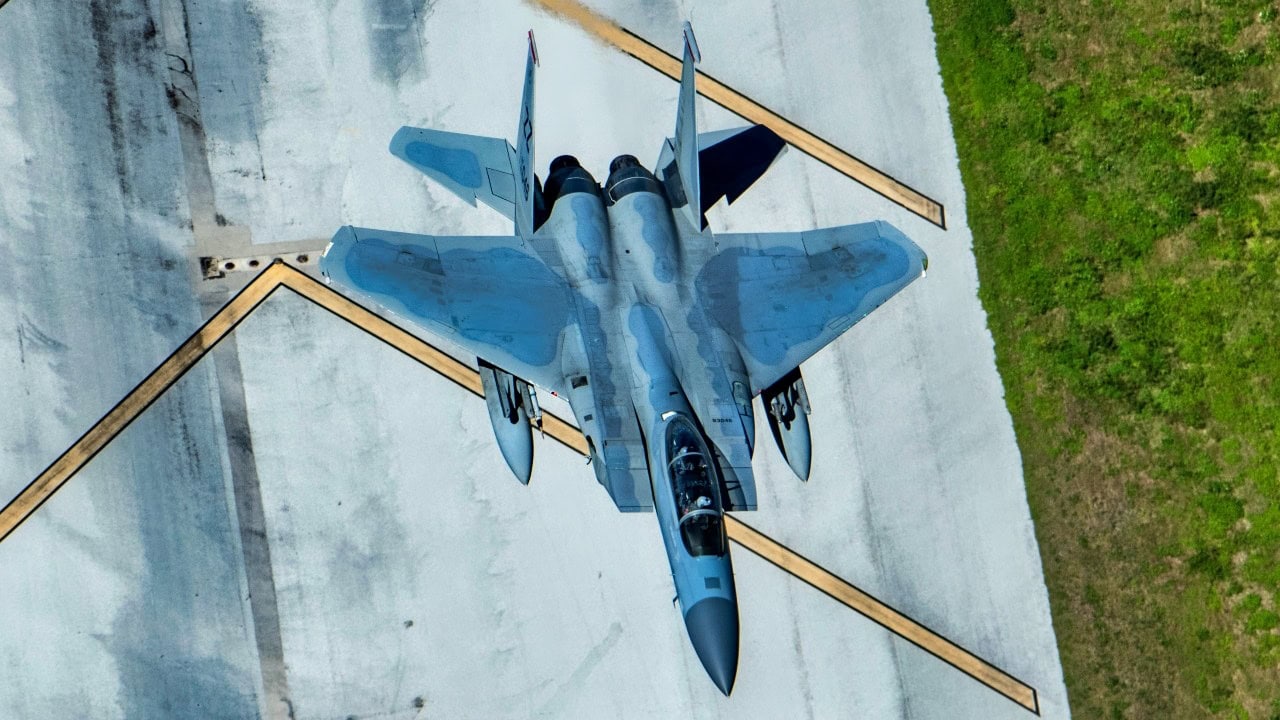
F-35A

🇺🇸United States
Lockheed Martin
2016 – Present
Spotlight

The USAF's 9g conventional-takeoff F-35 — backbone of Western fifth-gen airpower

F-35 Aerial Demonstration Debut at 2017 Paris Air Show (Lockheed Martin)

Watch on YouTube
Overview
F-35A - Image 1
F-35A - Image 2
The F-35A is a single-engine, single-seat multirole fighter aircraft developed by Lockheed Martin. It is part of the F-35 Lightning II family, designed to replace aging fighter inventories including the U.S. Air Force's A-10s and F-16s. The F-35A is known for its advanced stealth capabilities, sensor fusion, and multirole mission capabilities, making it one of the most advanced and connected fighter jets in the world. It is a fifth-generation fighter jet that enhances situational awareness, survivability, and mission success in contested environments.
Specifications

General

Crew1
Engines1
StealthYes
Thrust Kn191 kN
Internal GunGAU-22/A
Ferry Range Km2,220 km
Max Speed Mach1.6 Mach
Service Ceiling M15,240 m

Other

Length15.7 m (51.4 ft)
G Limit9 g
Wingspan10.7 m (35 ft)
Powerplant1x Pratt & Whitney F135-PW-100 afterburning turbofan
Empty Weight Kg13,290 (29,300 lb)
Internal Fuel Kg8,278 (18,250 lb)
Max Takeoff Weight31,750 kg class (70,000 lb)
Weapons Payload Kg8,160 (18,000 lb)
Latest Developments
Oct 24, 2026strong signal
Second batch of Finnish F-35s arrives in Rovaniemi

Two more F-35A Lightning II stealth fighters arrived in Finland on Oct. 23, 2026.

Oct 24, 2026strong signal
Canada gets its first two CF-35A stealth fighters

Canada plans to base its first eight F-35s there during 2026 and 2027 to train Canadian pilots.

Oct 23, 2026strong signal
Denmark to buy cheap U.S. cruise missile built in Germany

Entity 'F-35' mentioned in report

Oct 22, 2026strong signal
‘Ability to strike back’: Denmark commits to long-range missile orders

The purchases of F-35 Joint Strike Missiles, produced by Norway’s Kongsberg, and ground-launched Anthem cruise missiles, manufactured by US firm Covenant, are a significant step towards making Denmark better able to defend itself.

Oct 22, 2026strong signal
Pentagon, Lockheed agree to 10-year deal for 850 F-35 jets

the framework averages 85 U.S. aircraft per year

Oct 22, 2026strong signal
Pentagon, Lockheed agree to decade-long F-35 framework deal for hundreds of jets

The framework covers at least 850 US aircraft over 10 production lots with initial spares and includes 10 years of sustainment and modification kits.

Oct 21, 2026strong signal
Air Force needs 1,509 combat-ready jets by 2035, service tells Congress

The Air Force included funds for an identical number of F-35s in its base budget.

Oct 21, 2026strong signal
Australia marks missile, cyber ‘firsts’ in exercise with Indonesia

A detachment of its Lockheed Martin F-35 Lighting II fifth-generation fighters are currently deployed to Singapore as part of a contingent taking part in the Five Power Defence Arrangements exercise called Bersama Lima.

Featured Coverage
Research Notes

Conventional runway variant and the main F-35 fleet standard

high

The F-35A is the conventional takeoff and landing variant and forms the largest part of the F-35 family for the U.S. Air Force and many international operators.

The F-35A is the conventional takeoff and landing member of the F-35 family. Unlike the F-35B, it does not include short takeoff and vertical landing hardware; unlike the F-35C, it is not optimized for catapult launch and arrested recovery from aircraft carriers.

That makes the F-35A the baseline air force variant for runway operations. The U.S. Air Force describes it as intended to replace aging F-16 and A-10 aircraft for multirole missions, while Lockheed Martin presents it as the lightest and smallest F-35 variant.

For HiWars, this page should explain the A variant as the land-based fleet standard. The parent F-35 page explains the program; the F-35A page should focus on runway basing, operators, mission roles, and what is different from B and C models.

Multirole strike fighter optimized for air force operations

high

F-35A capability centers on stealth, sensor fusion, electronic systems, internal weapons carriage, and integration with wider air-force networks.

The F-35A is designed to conduct air-to-air, air-to-surface, suppression of enemy air defenses, intelligence-support, and electronic functions from conventional air bases. Its value comes from the same F-35 mission-system family as the other variants: low observability, fused sensors, data links, and software-defined capabilities.

Compared with F-35B and F-35C, the A variant avoids the weight and complexity of vertical-lift or carrier structures. That supports a different balance of cost, range, payload, and maintenance for land-based users.

This does not make the aircraft simple. F-35A effectiveness depends on software block, weapons certification, sustainment system, engine and thermal margins, mission data files, and operator training.

Block upgrades and readiness matter more than variant label

high

A country operating F-35A aircraft still needs software, mission data, weapons integration, maintenance capacity, and trained crews to realize the advertised capability.

The F-35A is widely operated, but the label alone does not define capability. Aircraft delivered at different times may differ in software, hardware refresh status, weapons integration, national modifications, and access to updates.

CRS and other oversight sources make clear that sustainment, modernization, and cost remain central F-35 program issues. For the F-35A page, that means readiness and modernization should be part of the content, not an afterthought.

HiWars should connect F-35A inventory records to operator, block status, weapons clearance, basing, and upgrade pathway. This turns a model page into a useful operational reference rather than a repeated specification sheet.

Key parameters at a glance

high

Figures are from official U.S. Air Force and Lockheed Martin fact sheets unless marked otherwise.

Role
Conventional takeoff/landing (CTOL) multirole stealth fighter — the U.S. Air Force variant
Length
15.7m
Wingspan
10.7m
Maximum speed
Mach 1.6
Powerplant
1x Pratt & Whitney F135-PW-100, ~191 kN with afterburner
Internal fuel
8,278kg
Weapons payload
8,160kg
G-limit
9 g — the highest of the three F-35 variants
Combat radius
~1,240km (interdiction profile, internal fuel, reported)
Nuclear role
Dual-capable; certified for the B61-12 bomb — the only nuclear-certified F-35 variant

Program milestones

high

Key publicly documented milestones for the F-35A variant.

2001-10JSF contract award

Lockheed Martin's X-35 wins the Joint Strike Fighter competition; the System Development and Demonstration contract covers the CTOL variant that becomes the F-35A.

2006-12First flight

F-35A prototype AA-1 makes the type's maiden flight from Fort Worth, Texas, on 15 December 2006.

2011-07First operational-base delivery

The first production F-35A arrives at Eglin AFB, Florida, beginning USAF training operations.

2016-08USAF initial operational capability

The 34th Fighter Squadron at Hill AFB declares IOC with Block 3i aircraft on 2 August 2016.

2019-04First USAF combat employment

USAF F-35As conduct their first combat strike, hitting an ISIS target in Iraq on 30 April 2019.

2024-03Nuclear certification disclosed

The F-35 Joint Program Office confirms the F-35A was certified to carry the B61-12 nuclear bomb (achieved October 2023), making it the first fifth-generation dual-capable aircraft; the certification does not extend to the F-35B/C.

2024-07TR-3 deliveries resume

Deliveries restart with truncated Technology Refresh 3 software after a roughly year-long acceptance pause, clearing the path toward Block 4 upgrades.

Strategic significance

medium

The F-35A is the numerical backbone of the F-35 enterprise and of Western fifth-generation airpower more broadly. As the conventional takeoff and landing variant, it is the cheapest and most numerous of the three models, recapitalizing the U.S. Air Force's F-16 and A-10 fleets and equipping the air forces of most program partners and foreign customers — from NATO members to Japan, South Korea, Israel and Australia. Its value lies less in any single flight-performance figure than in the combination of low observability, fused sensors and networked data-sharing that lets it act as a forward sensor and battle-management node for older aircraft.

The variant carries two roles its siblings do not. It is the only F-35 rated to 9g and fitted with an internal gun, reflecting its air force multirole mandate, and since its B61-12 certification it is the only fifth-generation dual-capable aircraft, positioning it to take over NATO's nuclear-sharing mission from aging F-16 and Tornado fleets. That certification extends the aircraft's strategic weight well beyond conventional strike, though the operational details of which squadrons hold the mission remain closely held.

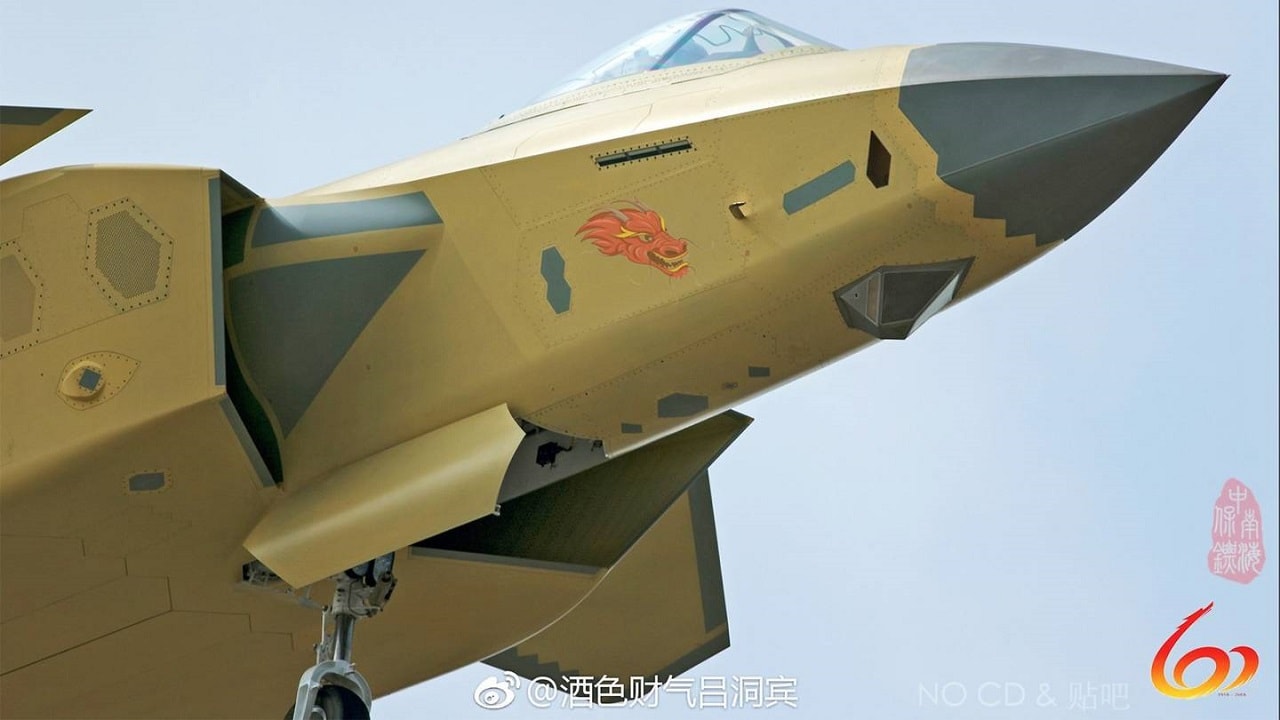
Set against peer designs such as China's J-20 or Russia's Su-57, the F-35A's advantages are generally assessed to lie in sensor fusion, software maturity at scale and a very large allied user base, while its persistent weaknesses are programmatic: sustainment costs, mission-capable rates below service targets, and repeated delays to the TR-3/Block 4 modernization path. Its long-term effectiveness will depend as much on resolving those sustainment and upgrade issues as on the airframe's inherent capabilities.

Videos

USAF F-35A Lightning II Flying Display at Farnborough Airshow 2026 (Aviation International News)

Watch on YouTube

First Look: New USAF F-35A Full Aerobatic Demonstration (AirshowStuff)

Watch on YouTube

U.S. deploys F-35A fighters to the Philippines for the first time (Bilibili)

Watch on Bilibili
Sources & References
Related Discussions

No discussions about F-35A yet

Start the first discussion