
2026 P-1 and P-8A Conduct Anti-Submarine Training South of Okinawa: Maritime Defense Demonstrated by Three Aircraft Types from Japan and the U.S.
 Tanaka Takashi
2026 P-1 and P-8A Conduct Anti-Submarine Training South of Okinawa: Three Aircraft Types Demonstrate Maritime Defense
On June 9, the Japan Maritime Self-Defense Force's P-1 and P-3C, along with the U.S. Navy's P-8A, conducted anti-submarine training in the airspace and waters south of Okinawa. According to a June 10 announcement from the Maritime Staff Office, the training items included LINKEX and anti-submarine warfare. Although brief, this announcement seems somewhat significant to the author. The simultaneous deployment of the three aircraft types—P-1, P-3C, and P-8A—is not merely a goodwill flight; it is practical training aimed at searching for submarines at the southern end of the First Island Chain, connecting information, and accelerating decision-making.
Significance of the Location South of Okinawa
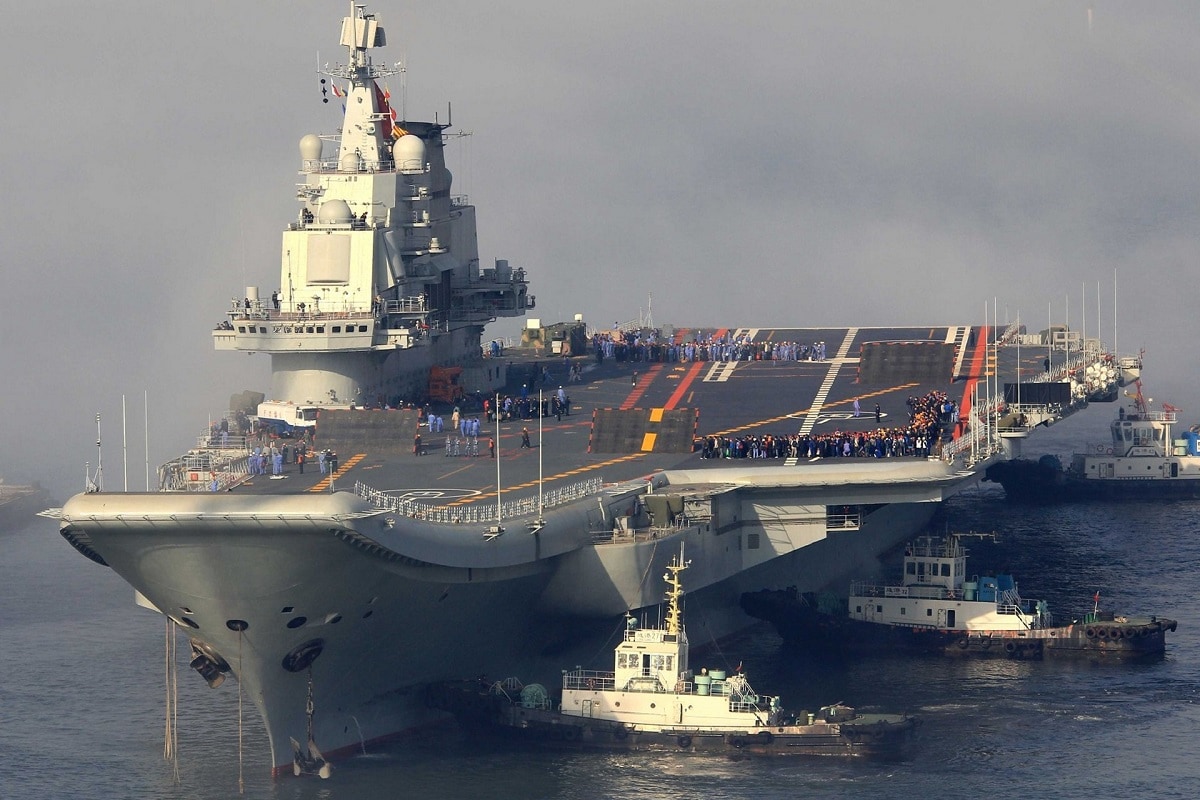
The fact that the training area was south of Okinawa cannot be overlooked. This location is a junction of maritime traffic routes extending east of Taiwan, through the Miyako Strait and the Bashi Channel, and is a place where peacetime monitoring and wartime blockade avoidance overlap. The Joint Staff Office announced on June 2 that a fleet including the Chinese Navy's aircraft carrier Liaoning had moved from the southwest of Okinotori Island to south of Miyako Island and further east of the Philippines since May 26. According to the same report, approximately 170 takeoffs and landings of carrier-based aircraft and helicopters were confirmed between May 26 and 28.
It is dangerous to definitively conclude China's intentions based solely on this number. However, it is clear that the aircraft carrier strike group is repeatedly operating from east of Taiwan into the Philippine Sea. The fact that anti-submarine patrol aircraft training was conducted in this maritime area indicates that the JMSDF views not only surface vessels but also underwater movements as part of a single operational picture.
Roles of the Three Aircraft Types
The P-1 is a patrol aircraft independently developed by Japan, equipped with four turbofan engines and designed for low-speed patrols and the operation of numerous sensors. Although the P-3C is becoming outdated, it has supported anti-submarine warfare around Japan since the late Cold War, and the experience of its crew remains significant. The U.S. Navy's P-8A is a high-speed patrol aircraft based on the 737 airframe, with strengths in wide-area deployment, sonobuoy operations, and data link capabilities.
This LINKEX likely involved training on how to share detection information from these different aircraft and at what point to treat targets. In anti-submarine warfare, the challenge is not just the moment of detecting a submarine. It also involves determining who will draw the next search line after losing contact and who will update the overall picture of the maritime area. This is where the disparity in capabilities between the Japan-U.S. alliance becomes apparent.
Pressure Demonstrated by the Fleet East of Taiwan
USNI News reported on June 8 that China deployed a fleet of six vessels related to maritime law enforcement and rescue east of Taiwan and in the Luzon Strait. According to the report, the Taiwanese side confirmed this fleet approximately 140 nautical miles east of Taiwan, and the Chinese side explained it as a response to Japan and the Philippines' maritime boundary negotiations. ABS-CBN also reported on June 7 that this movement was a special action following the maritime boundary negotiations between Japan and the Philippines.
What is noteworthy here is that China has sent not only military vessels but also ships claiming to be for law enforcement and maritime safety east of Taiwan. The tactics familiar in the East China Sea and South China Sea are gradually shifting to the Pacific side of the First Island Chain. This means that Japan has even less room to consider the defense of the Nansei Islands and responses to a Taiwan contingency separately.
Maintenance Needed Before Deterrence
In Japan, there is a growing interest in long-range missiles and unmanned aerial vehicles. This is understandable. However, based on my experience in the JMSDF, the foundation for protecting SLOCs (Sea Lines of Communication) lies more in daily patrols, maintenance, communication, and managing crew fatigue than in conspicuous strike capabilities. The joint training of the P-1 and P-8A may not be flashy, but it supports the underlying aspects of the operational theater.
The anti-submarine warfare capabilities of the Japan-U.S. alliance depend not only on the superiority of equipment but also on whether they can read the same maritime chart at the same speed.
The concern is that as the frequency of training increases, the wear and tear on aircraft and personnel will also increase. If the process of retiring the P-3C, the operational rate of the P-1, and the division of duties with the U.S. military's P-8A are not transparently organized, the anti-submarine network south of Okinawa may appear dense on paper but will actually have thin periods. Before addressing movements from the Chinese side, the sustainability of the Japanese side is being called into question.
Key References
- Maritime Staff Office June 10, 2026 announcement Japan-U.S. Bilateral Exercise
- Joint Staff Office June 2, 2026 announcement Activities of Chinese Navy Aircraft Carrier
- USNI News June 8, 2026 Chinese Flotilla Surges East of Taiwan Amid Spat with the Philippines, Japan
- ABS-CBN News June 7, 2026 China holds special operation near Taiwan after Japan-Philippines sea border talks
On June 9, 2026, the Japan Maritime Self-Defense Force and U.S. Navy conducted anti-submarine training south of Okinawa using P-1, P-3C, and P-8A aircraft. The exercise focused on LINKEX and anti-submarine warfare, emphasizing the strategic importance of the region amid recent Chinese naval activities. This joint operation reflects the ongoing collaboration between Japan and the U.S. in maritime defense.
- Japan and U.S. conducted anti-submarine training with P-1, P-3C, and P-8A aircraft.
- Training took place south of Okinawa on June 9, 2026.
- The exercise focused on LINKEX and anti-submarine warfare.
- Chinese naval movements were reported in the region prior to the exercise.
- The training highlights the importance of maritime surveillance in the area.