
American Events for Seven Years to Boost Patriot and THAAD Production Reveal the Depth of Gulf Dependence in 2026
 Ahmed Al-Rashid
American Agreements for Seven Years to Increase Patriot and THAAD Production Reveal the Depth of Gulf Dependence in 2026
On August 31, the U.S. Department of Defense announced new framework agreements with Lockheed Martin and General Dynamics Ordnance and Tactical Systems to increase the production of Patriot PAC-3 MSE and THAAD interceptors over seven years. The news appears to be an American industrial story, but in reality, it is a distinctly Gulf story. Any military personnel who have served in the region know that the value of air defense batteries is not measured by the number of launchers on display at a military parade, but by the number of missiles available in the third week of war, the speed of replenishment, and who has the authority to set priorities when fronts are crowded.
The American decision came after months in which the Iran war and the Ukrainian war depleted Washington's stocks of expensive interceptors. Reports from Defense News and Anadolu indicated that the goal is to quadruple THAAD production capacity and triple Patriot production, while accelerating the delivery of critical components. This is not a technical detail. This is an official acknowledgment that the previous stockpile is no longer sufficient for a long war, nor is it enough to reassure allies in the Gulf, Europe, and Asia simultaneously.
What Washington Has Actually Decided
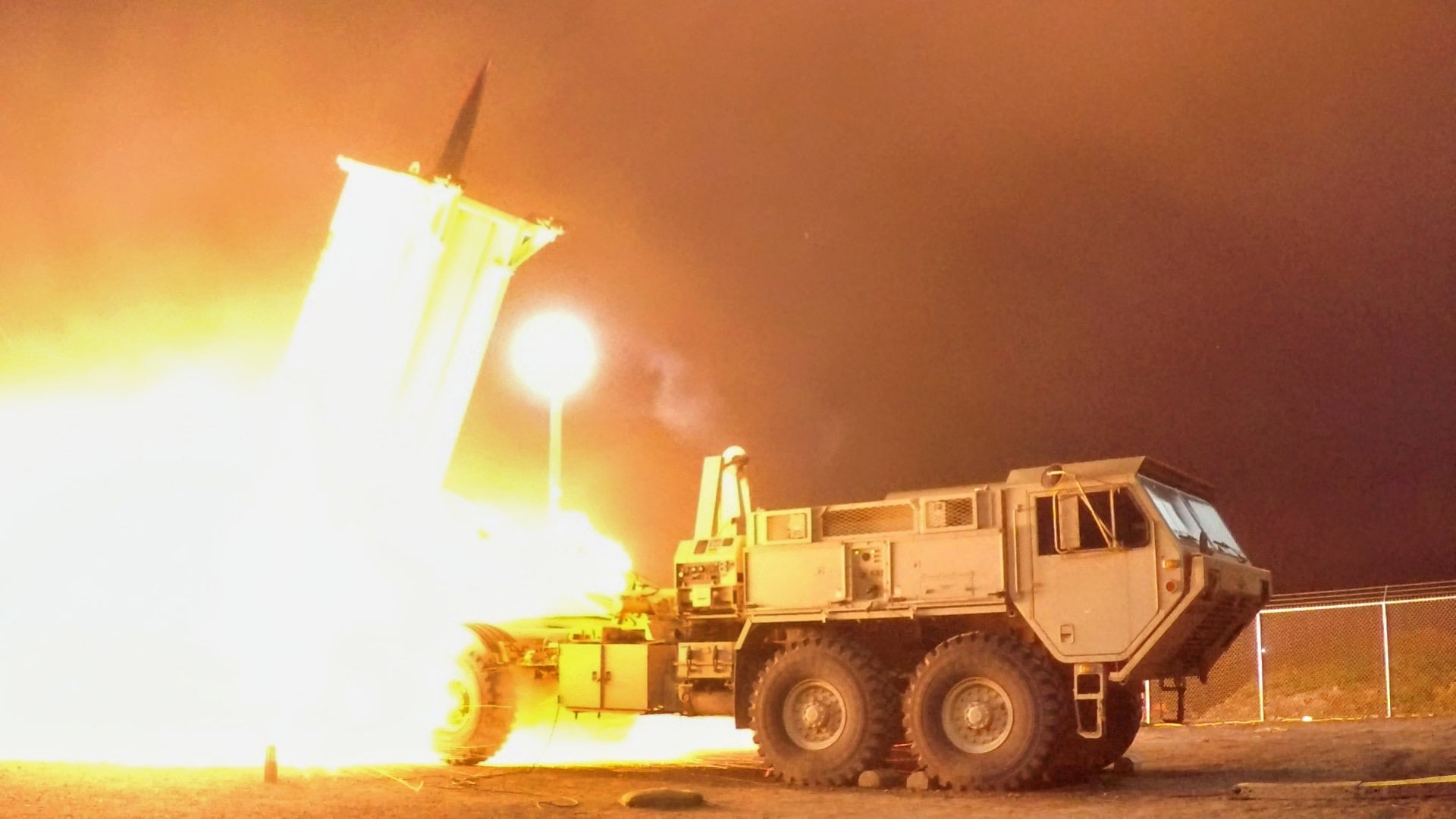
According to the published data, the new agreements will open seven-year purchase contracts to increase quantities and accelerate delivery schedules, but they will remain tied to annual congressional appropriations. In other words, the Pentagon wants to send a long-term signal to suppliers to invest in production lines, supply chains, and specialized labor, because producing this type of interceptors is not like producing conventional munitions. Here, there are seekers, radars, electronic components, rocket motors, and acceptance tests that cannot be compressed overnight.
- Duration of agreements: 7 years.
- Industrial goal: Increase Patriot PAC-3 MSE production to 3 times.
- Second industrial goal: Increase THAAD production capacity to 4 times.
- Political condition: Final funding remains contingent on congressional appropriations.
Most importantly, this step does not come from a vacuum. A previous report referenced by CSIS estimated that the United States consumed about 65% of its pre-war Patriot stockpile, and about 38% of THAAD interceptors, while other reports indicated that a significant part of the depletion is also related to support requirements for Ukraine. Practically, when the world's foremost military power announces that it needs seven years and framework contracts to regain a margin of safety in this sector, it means that the entire market will enter a phase of organized scarcity rather than abundance.
Why This Matters More to Saudi Arabia, the UAE, and Qatar than Others
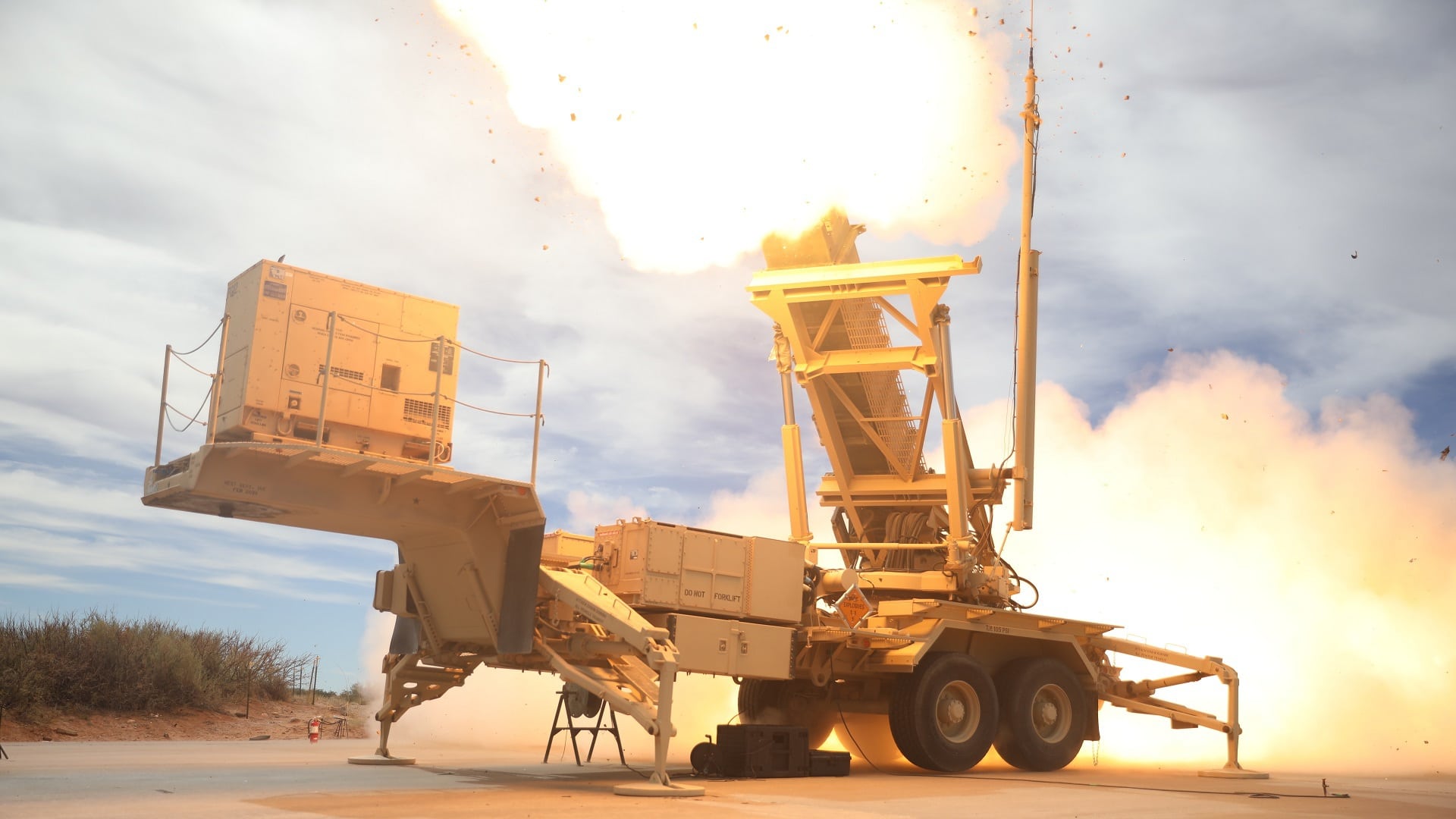
The Gulf states have purchased a complete air defense philosophy over the past two decades based on layers: Patriot for medium and high altitude, and THAAD for higher ballistic threats, along with radars, early warning systems, and American political and operational linkage. However, possessing these systems does not mean having the freedom to use them temporally or logistically. Here lies the knot that many in the region do not like to acknowledge: a battery that does not have a sufficient stockpile or a guaranteed replenishment chain quickly turns from a symbol of sovereignty to a symbol of dependence.
Saudi Arabia, in particular, has known this truth well since the years of Houthi attacks, and then since the subsequent Iranian escalation. Successful interception is costly, and failure is even more costly, but the most dangerous cost is the depletion of stockpiles in a long battle against an adversary willing to launch cheaper missiles or larger quantities of suicide drones. The UAE, Qatar, and Jordan face the same equation to varying degrees: air defense is not just a question of system quality, but of the ability to sustain combat when sporadic strikes turn into a prolonged campaign.
For this reason, the American decision should not be read as merely an internal industrial news story, but as a signal of prioritization. Washington is implicitly telling its allies that global demand for interceptors has become higher than the comfortable supply capacity, and that rebuilding the American stockpile has become part of American national security itself. When the United States becomes an urgent customer in a market dominated by its own companies, Gulf customers will discover once again that money buys a place in line, but does not guarantee that you will be first in the next delivery window.
The Capability Triangle That Buyers in the Gulf Overlook
In my view, the Gulf discussion about Patriot and THAAD is still trapped in the easier part of the equation, namely purchasing the platform. However, any effective air defense system is based on a clear triangle:
- Equipment, which is what governments like to announce.
- Training, which determines decision speed, engagement accuracy, and ammunition management.
- Institution, meaning maintenance, storage, integration between branches, and the ability to fight for weeks, not just hours.
The problem is that the Gulf has generously invested in the first leg, improved partially in the second, but still relies on the American umbrella for the third leg more than it publicly acknowledges. Therefore, the news of expanding production in America does not only mean that Washington is addressing a temporary shortage; it also means that allies who built their deterrence on American supply will remain temporally and politically tied to the rhythm of American industry.
Owning THAAD does not mean having decision independence if the next interceptor missile comes from an American production line congested with the wars of others.
What Could Change Regionally After These Agreements
First, the value of ready stockpiles will increase more than the value of the announced contract. Second, the gap will widen between countries that possess air defense systems and those that also have reserves, logistical flexibility, and a cohesive warning network. Third, we may witness a speeding up of the Gulf's search for less costly partial alternatives to intercept drones and cheaper missiles, as using Patriot against every low-cost threat is a recipe for depletion, not a recipe for victory.
But the deeper change will remain political. By 2026, it became clear that air defense in the Middle East is no longer just a weapons trade, but has become a tool of influence and distribution of reassurance. Who gets the interceptors first in a moment of crisis, who is asked to wait, and whose requests are tied to the rhythm of the U.S. Congress, all these questions touch on sovereignty itself. Here lies the paradox that has haunted the Gulf for years: it wants strategic independence, but it builds the most expensive part of its defense on an external supply chain that it does not control in terms of speed or final priorities.
This is the true meaning of the new American agreements. They are not just about increasing production, but an acknowledgment that the era of cheap or unrestricted air defense is over. From a military perspective, those who do not read this shift now will discover it later under the pressure of the first long attack, not the first press conference.
Sources
On August 31, 2026, the U.S. Department of Defense announced new agreements with Lockheed Martin and General Dynamics to increase production of Patriot PAC-3 MSE and THAAD systems over the next seven years. This decision comes in response to depleted stockpiles due to ongoing conflicts, indicating a shift in defense priorities and logistics for Gulf allies. The agreements aim to enhance air defense capabilities amid rising global demand.
- The U.S. plans to increase THAAD production by four times and Patriot production by three times over seven years.
- The agreements are tied to annual congressional appropriations.
- The U.S. has consumed a significant portion of its previous Patriot and THAAD stockpiles due to ongoing conflicts.
- The agreements signal a shift in defense procurement priorities for Gulf allies.
- The U.S. aims to reassure allies in the Gulf, Europe, and Asia regarding air defense capabilities.