
China's Liaoning Carrier Tests Western Pacific Reach in 2026
 Marcus Chen
China's Liaoning Carrier Tests Western Pacific Reach in 2026
China has sent the aircraft carrier Liaoning and a carrier strike group into the western Pacific while U.S. and Japanese forces prepare for their own regional drills. The movement is not a rehearsal for an invasion of Taiwan. It is a test of whether the People's Liberation Army Navy can make a carrier group operate beyond the first island chain while forcing Japan and the United States to spend attention, aircraft, and fuel tracking it.
The deployment is a distance problem before it is a combat problem
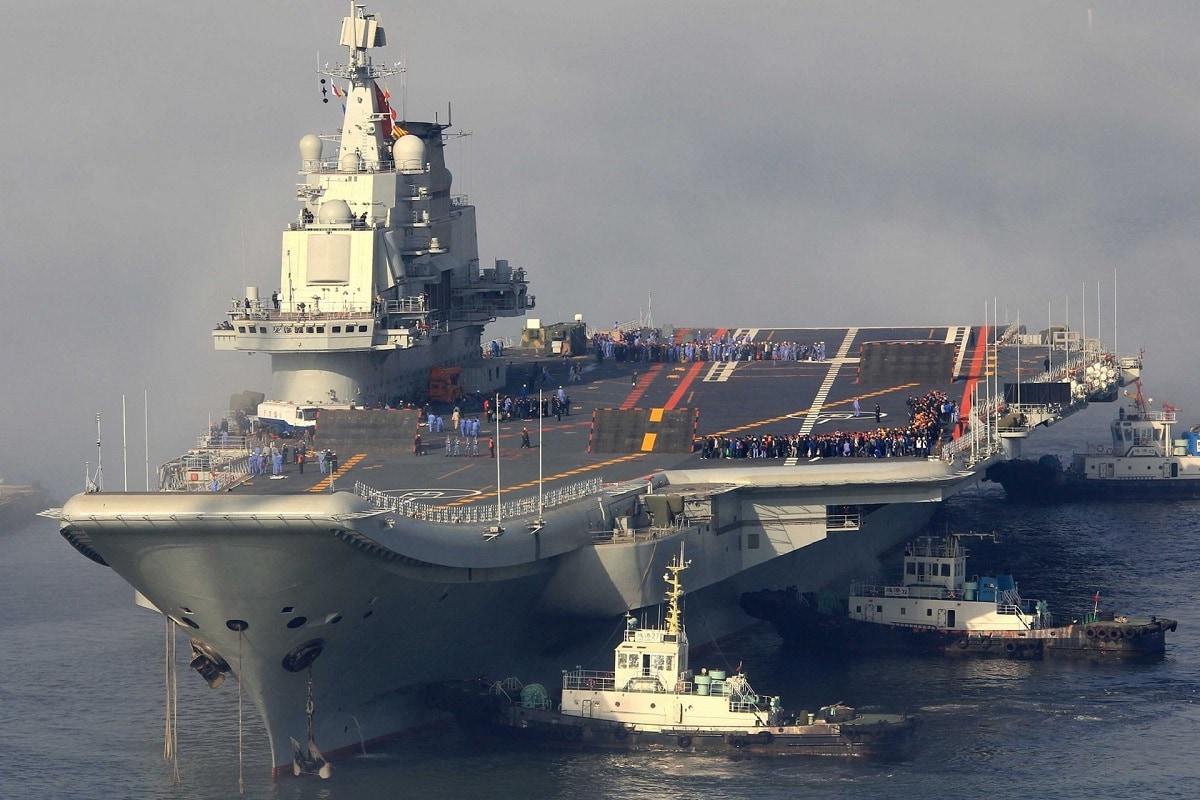
Japanese and regional reporting placed the Liaoning group in the western Pacific after it passed through waters near Okinawa. USNI News separately reported that the group later headed toward the South China Sea after Philippine Sea drills. Those reports describe a carrier, escorts, and embarked aircraft, but they do not establish the group’s exact order of battle or its operational objectives. That distinction matters. Open-source headlines often turn a transit into a major exercise before the ships have demonstrated sustained flight operations.
Liaoning is China’s first operational carrier, a roughly 60,000-ton ski-jump ship based on the Soviet Kuznetsov design. Its STOBAR launch system limits aircraft bring-back weight and sortie generation compared with a U.S. CATOBAR carrier. The ship can still deploy J-15 fighters, helicopters, and newer unmanned or electronic-support systems, but its value is not measured by the number of aircraft painted on deck. It is measured by how many sorties it can generate, recover, refuel, and repeat after a week at sea.
What Beijing is actually testing
- Navigation and sustainment: A carrier group operating farther from mainland air cover has to manage fuel, maintenance, weather, communications, and replenishment without assuming immediate shore support.
- Air-defense integration: The carrier must coordinate escorts, airborne early warning, fighters, and submarines against surveillance from Japan, the United States, and other regional forces.
- Command pressure: A visible group creates a tracking problem for opponents. Every Japanese patrol aircraft and U.S. intelligence asset assigned to Liaoning is an asset not assigned elsewhere.
- Political signaling: Beijing can present the deployment as normal training while demonstrating that the western Pacific is no longer a sanctuary for allied naval exercises.
The timing sharpens the message. Japanese reporting linked the carrier movement to a period of heightened U.S.-Japan activity. Stars and Stripes reported Japanese fighter responses to Chinese carrier operations near Okinawa. Neither reaction proves that a crisis is underway. It does show that the operating environment is becoming more crowded, and that the PLA Navy can create friction without firing a shot.
Liaoning is a useful instrument but a poor substitute for sea control
One carrier cannot dominate the western Pacific. Liaoning’s ski-jump launch system, limited fixed-wing early-warning capacity, and dependence on escorts impose hard ceilings on what the group can do. A U.S. carrier strike group brings catapult-launched aircraft, organic airborne early warning, mature replenishment routines, and decades of experience sustaining high-tempo operations. The comparison is not a simple scoreboard, however. China does not need Liaoning to defeat a U.S. carrier in a standalone duel.
Beijing can use the carrier as one layer in a larger sea-denial system built around shore-based missiles, submarines, long-range aircraft, satellites, and land-based fighters. In that architecture, the carrier’s job may be to extend reconnaissance, complicate the geometry of allied operations, and threaten targets that move outside the densest coverage around China. It is a mobile complication, not an independent war-winning machine.
The important question is not whether Liaoning can replace a U.S. carrier. It is whether the United States and Japan can keep operating at their preferred tempo while China repeatedly puts a carrier group in the same ocean.
The Taiwan implication is indirect but real
A western Pacific carrier deployment does not by itself create a blockade of Taiwan. The Taiwan Strait is closer to Chinese land-based airpower than to Liaoning’s likely operating area, and a wartime blockade would depend more heavily on missile forces, coast guard and maritime militia activity, submarines, mines, and logistics. Liaoning’s contribution would be to stretch the defensive problem: threaten the eastern approaches, complicate reinforcement routes, and force allied planners to divide air and submarine coverage.
That matters because geography gives China a shorter line to the Taiwan Strait, while the United States must assemble combat power across the Pacific. A carrier group that can sortie through the island chains, even for training, helps Beijing practice the habits needed for a wider fight: dispersed movement, coordinated air operations, replenishment, and information management. The operational payoff is cumulative, not theatrical.
The next measurement is endurance
The first reports establish movement, not capability. The meaningful indicators over the next several days are the number and tempo of J-15 sorties, the identity and behavior of the escorts, replenishment activity, submarine cooperation, and whether the group remains operationally coherent after moving between the Philippine Sea and the South China Sea. Satellite imagery and Japanese tracking reports will tell us more than official slogans.
Marcus Chen’s judgment is straightforward: Liaoning is not proof that China has achieved U.S.-style carrier aviation. It is proof that Beijing is building a navy willing to learn in contested waters. The strategic effect comes from repetition. If China can send carrier groups into the western Pacific every year, sustain them longer, and combine them with shore-based strike systems, the burden on U.S. and Japanese forces rises even when no exercise becomes a confrontation. The ship itself is not the headline. The expanding operating pattern is.
Sources
- USNI News, “UPDATED: Chinese Carrier Strike Group Heads to South China Sea After Philippine Sea Drills,” October 14, 2026.
- South China Morning Post, “China’s Liaoning carrier heads to Pacific as US, Japan prepare for drills,” October 14, 2026.
- The Japan Times and Kyodo News, “China sends aircraft carrier group into western Pacific,” October 14, 2026.
- Stars and Stripes, “Chinese carrier operations near Okinawa draw Japanese fighter response,” October 15, 2026.
China's Liaoning Carrier and its strike group operated in the western Pacific in 2026, testing capabilities beyond the first island chain. This deployment is not a rehearsal for an invasion of Taiwan but aims to challenge U.S. and Japanese forces, which are preparing for their own drills. The carrier group was reported near Okinawa and later moved towards the South China Sea after Philippine Sea drills, indicating a strategic operational test.
- China's Liaoning Carrier is operating in the western Pacific.
- The carrier group is not rehearsing for an invasion of Taiwan.
- The deployment tests the PLA Navy's operational capabilities beyond the first island chain.
- The Liaoning carrier is equipped with J-15 fighters and other support systems.
- The operational environment is becoming more crowded with U.S. and Japanese responses.