
International Observation: UK's Military Aid Commitment Fails to Alleviate Ukraine's "Urgent Needs"
Xinhua News Agency, London, October 16 (Reporter Zhang Feng) - Ukrainian President Zelensky visited the UK on the 14th, meeting with British Prime Minister Burnham and King Charles III. The British side reiterated its support for Ukraine and promised to increase military aid.
Analysts believe that as US-Ukrainian relations come under renewed pressure and the US considers limiting intelligence sharing with Ukraine, Zelensky's visit aims to consolidate support from the UK, a key European ally, and alleviate the increasing pressure on Ukraine regarding air defense and sustained combat. However, due to their own capabilities, neither the UK nor other European countries can fully compensate for the gap left by the US reduction in military aid to Ukraine, and the actual effectiveness of their assistance is limited.
Ukraine: Responding to US Pressure
During the meeting, Burnham and Zelensky focused on how to continue increasing military aid to Ukraine and ensure the advancement of related work. Burnham stated that the UK remains a "steadfast ally" of Ukraine. According to a message released by the UK government on the same day, the UK promised to provide Ukraine with a batch of lightweight multi-purpose missiles to help Ukraine respond to current aerial security threats and enhance its defensive capabilities.
Prior to this visit, Zelensky had repeatedly criticized the US-Russia diesel supply agreement reached on the 9th, which triggered strong dissatisfaction from the US side. On the 10th, US President Trump stated that "Ukraine should change its president," implying that Zelensky has not done enough to end the Russia-Ukraine conflict, while also blaming him for rising diesel prices in the US.

In the early morning of September 17, 2026, multiple missiles struck the Dnipro district of Kyiv, the capital of Ukraine, causing thick smoke to rise. The Ukrainian Air Force stated that the Russian military launched multiple missiles at Kyiv that day. Photo by Xinhua reporter Li Dongxu
On the 13th, Ukraine stated that it had not received early warnings from Western partners during two consecutive days of Russian ballistic missile attacks on the capital Kyiv, implying a "supply cutoff" from the US. On the same day, Trump stated that the US is still sharing intelligence with Ukraine, but Zelensky claimed he had received warnings that related cooperation might be suspended. On the 14th, Ukraine further stated that SpaceX's Starlink satellite internet system terminals used by the Ukrainian military began to experience speed restrictions on the evening of the 13th, leading to interruptions in multiple military tasks.
Analysts believe that under the pressure of US-Ukrainian relations and tightening US military aid to Ukraine, Zelensky's visit to the UK aims to secure more military assistance from the British side. Ukraine also values the UK's important position in European security affairs and hopes that the UK will use its influence to play a greater role in securing aid for Ukraine from European countries and coordinating sanctions against Russia.
UK: Multiple Interests Considered
In the face of Ukraine's predicament, the UK expressed support even before Zelensky's visit. UK Defense Secretary Stritting stated on the 11th that he does not support the US-Russia diesel supply agreement.
The UK government issued a statement on the 13th saying that it is increasing its support for Ukraine, including delivering surface-to-air missiles worth £45 million (approximately 8.9 yuan per pound) to Ukraine, with £10 million worth of missiles being expedited for Ukraine's urgent winter defense needs. The UK also promised to provide over 5,000 lightweight multi-purpose missiles worth £1.6 billion to Ukraine over the next four years. Additionally, the UK plans to completely ban its companies from providing shipping and insurance services for Russian liquefied natural gas exports.
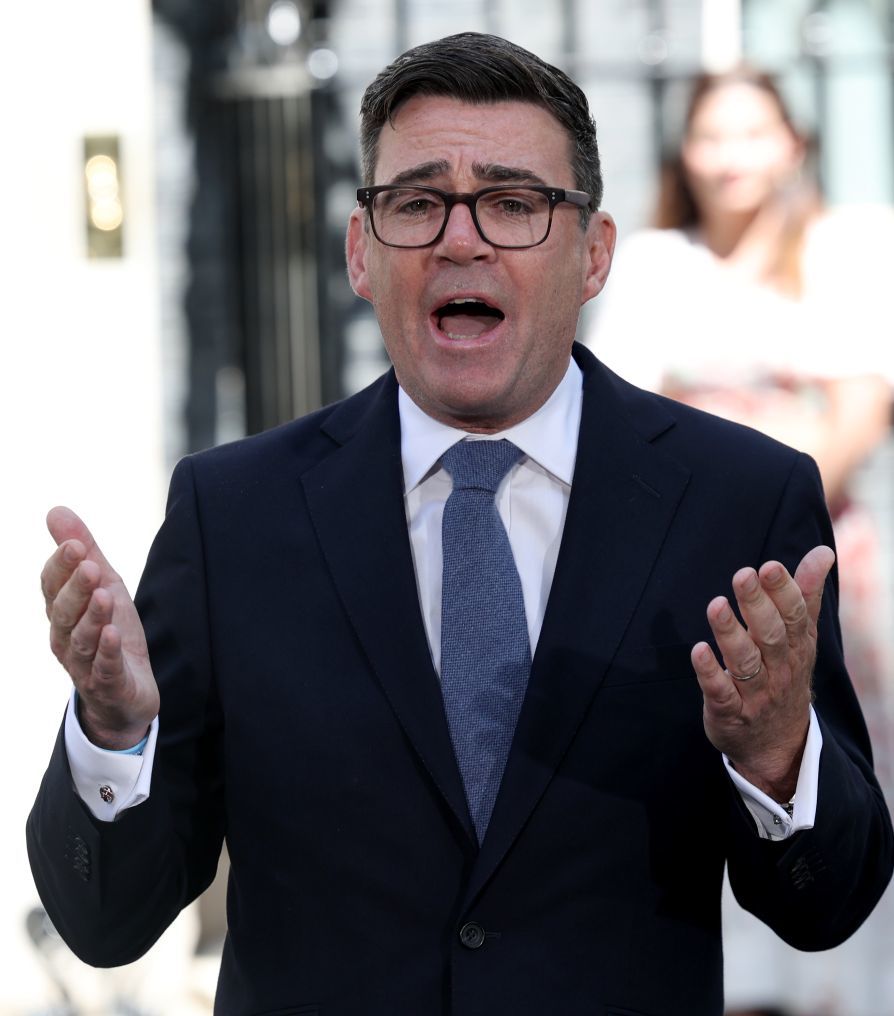
This is a file photo of Burnham speaking in front of 10 Downing Street in London, taken on July 20, 2026. Photo by Xinhua reporter Li Ying
In fact, since the escalation of the Ukraine crisis in 2022, the UK has been one of the most proactive European countries in aiding Ukraine, being the first to provide advanced weaponry such as main battle tanks and stealth missiles, and has actively coordinated European countries to jointly counter Russia.
Analysts believe that the UK's active support for Ukraine against Russia has multiple reasons. On one hand, the UK has long adopted an "offshore balancing" policy in Europe, has historical grievances with Russia, and does not want to see Ukraine fall under Russian control, while also needing to prevent European countries from getting closer to Russia through ongoing conflict. On the other hand, after Brexit, the UK's influence in Europe has declined, and it is attempting to enhance its voice in European security affairs by leading aid to Ukraine, maintaining its status as a major power. Additionally, the UK can provide orders for its domestic military industry through aid to Ukraine and collect real combat data for its weaponry on the Russia-Ukraine battlefield. Furthermore, the UK has a low dependency on Russian energy, which reduces concerns about adopting a hardline policy against Russia.
From the recent situation, the "special relationship" between the UK and the US has shown signs of cracks, with significant differences between the two sides on various issues such as the status of Northern Ireland, the sovereignty of the Falkland Islands (Malvinas), the situation in Palestine and Israel, and immigration policies. The UK's increase in military aid to Ukraine also seems to be a way to constrain the US, sending a signal that the UK and Europe hope to achieve strategic autonomy and do not wish to be constrained by the US.
Hard to Fill the Gap
Public opinion generally believes that the missile aid promised by the UK this time may partially alleviate the air defense pressure on the Ukrainian military, but neither the UK nor other European countries can fully replace the military assistance provided by the US.
Media outlets such as the Wall Street Journal believe that although European countries are increasing military support for Ukraine and Ukraine is working to reduce its dependence on the US, there is still a significant gap between Europe and the US in terms of capabilities in weapons and intelligence, making it difficult to replace the US's role in aiding Ukraine in the short term.
Reuters reported that Ukraine relies not only on the low-orbit satellite communication services provided by the US through Starlink but also on missile launch warning information provided by the US space-based infrared system. Even if the EU's independent satellite network project progresses as planned, it will still take several years to become operational.
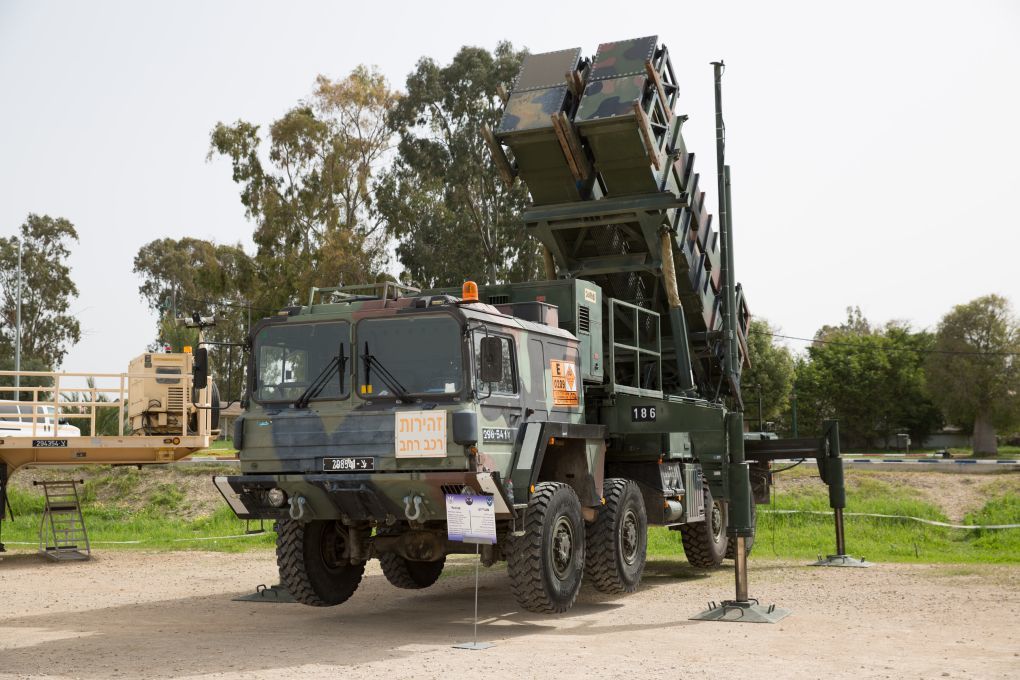
This is a file photo of the "Patriot" missile defense system taken at the Hatzor Air Force Base in Israel on March 8, 2018. Photo by Xinhua reporter Guo Yu
According to CNN, currently, the only equipment Ukraine has to intercept high-speed ballistic missiles from Russia is the US-made "Patriot" air defense system, and the interceptors used by this system have already been exhausted. The Kiel Institute for the World Economy in Germany stated that Europe still needs to rely on US supplies to obtain advanced equipment such as the "Patriot," and whether it can develop and produce reliable alternatives in the long run remains uncertain.
Moreover, from the UK's perspective, when its aid will be in place is a question. The arrangements announced by the UK show that some aspects of the new round of military aid to Ukraine are still in the planning stage, and whether the aid can be timely effective will depend on the subsequent funding implementation and equipment production and delivery situation, with the expectation that it will still take some time before the missiles provided by the UK are actually used on the battlefield by Ukraine.
Ukrainian President Zelensky visited the UK on October 14, 2023, to secure increased military aid amid pressures from the US. The UK pledged to provide 4,500 light multi-purpose missiles and accelerate the delivery of surface-to-air missiles valued at £10 million to bolster Ukraine's air defense capabilities. This commitment comes as Ukraine faces intensified military threats and seeks to strengthen its support from European allies.
- Ukrainian President Zelensky visited the UK on October 14, 2023.
- The UK pledged to provide 4,500 missiles to Ukraine over the next four years.
- The UK government is accelerating the delivery of surface-to-air missiles worth £10 million for Ukraine's winter defense needs.
- Zelensky's visit aimed to secure more military support amid strained US-Ukraine relations.