
CSIS Report Identifies China's Aircraft Carrier Anti-Submarine Shortcomings, U.S. Nuclear Submarines Become the Primary Threat in the First Island Chain
 Li Minghui
CSIS Report Names China's Aircraft Carrier Anti-Submarine Shortcomings, U.S. Nuclear Submarine Ambush Becomes the Primary Threat in the First Island Chain
On August 16, the Center for Strategic and International Studies (CSIS) released the report "Flipping the Script," proposing a "five pillars" cost-imposing strategy to counter China's aircraft carrier groups: underwater ambush, distributed land-based strikes, long-range firepower, cyber and electromagnetic attacks, and unmanned swarms. Interestingly, the report suggests that the most effective threat to the PLA is not anti-ship missiles, but submarines.
Why Submarine Ambushes Are Most Lethal
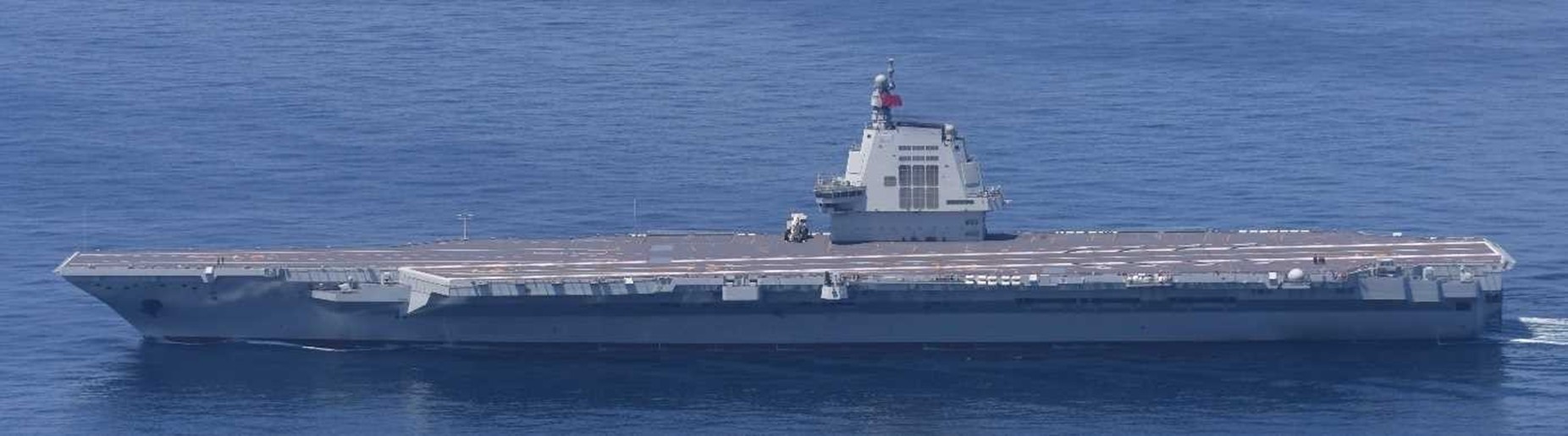
The report argues that the activities of U.S. attack submarines in the Western Pacific represent one of the strongest threats to Chinese aircraft carrier groups. The reasoning is straightforward: the PLA's underwater detection and tracking capabilities still have significant gaps, making high-value vessels vulnerable to ambush. The narrow waterways of the First Island Chain amplify this vulnerability—when the fleet traverses critical chokepoints like the Miyako Strait and the Bashi Channel, it is precisely the best time for submarines to set ambushes.
Christopher Sharman, director of the China Maritime Studies Institute at the U.S. Naval War College, puts it more bluntly: the PLA has invested heavily in underwater perception in recent years, but "PLA-affiliated authors themselves admit that China's meteorological and oceanographic observation capabilities still lag behind the U.S. Navy"; "insufficient understanding of the underwater operational space remains an obstacle for the PLA's submarine and anti-submarine operations, especially beyond the First Island Chain."
What the PLA Is Trying to Improve
The report identifies shortcomings mainly in "data" rather than "platforms":
- Marine environmental perception: The "Transparent Ocean" program has deployed hundreds of deep-sea observation systems extending from the South China Sea to the Pacific, including satellites, buoys, underwater gliders, and seabed sensors.
- Anti-submarine platforms: The KQ-200 fixed-wing anti-submarine patrol aircraft and the 927-type ocean surveillance ship equipped with towed array sonar are gradually being developed.
- Sensor upgrades: The sonar systems of anti-submarine helicopters and patrol aircraft are continuously being improved.
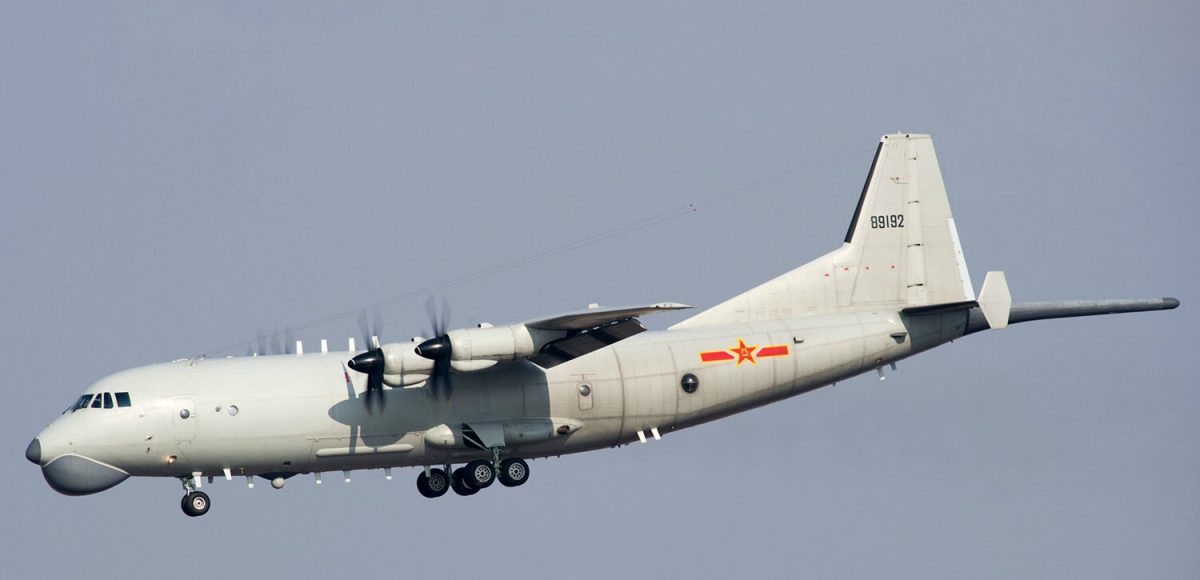
In simple terms, anti-submarine warfare is not about one or two pieces of equipment, but rather about the long-term accumulation of data on the marine noise environment. The U.S. military has decades of experience in this area, and while China aims to quickly catch up through the "Transparent Ocean" initiative, the timeline is a significant hurdle.
The Other Half of the Report Is About Production Capacity
This report is not just a military analysis; it is also a production capacity proposal. It calls for the U.S., Japan, and Australia to jointly produce missiles, expand torpedo and underwater unmanned vehicle production capacity, and proposes a fleet structure of "300 manned ships plus 300 unmanned ships," directly linking to the debates surrounding the FY 2027 National Defense Authorization Act. This logic is familiar to those acquainted with the defense industry—the biggest enemy of the U.S. Navy right now is not Chinese warships, but its own shipbuilding capacity and ammunition stockpiles.
The report's authors believe that rather than continuing to spend money to protect U.S. aircraft carriers from Chinese anti-ship missile threats, it would be better to turn the tables and make Chinese aircraft carriers "an expensive burden."
I have reservations about this judgment. The current operational radius of Chinese aircraft carriers is still within the protective range of land-based ballistic missiles. Timothy Heath, head of the defense research firm Perceptum, puts it bluntly: "It is foolish for China to deploy aircraft carriers so far away; land-based medium-range ballistic missiles remain the best option for threatening U.S. Navy vessels in the Second Island Chain." In other words, the submarine ambush scenarios envisioned in the report assume that Chinese aircraft carriers will indeed venture deep into the Western Pacific—and this assumption may not be one that the PLA intends to fulfill.
The Real Question Mark
With the Fujian ship about to enter service, China's aircraft carriers are moving from "existence" to "effectiveness." However, an old question remains unanswered: anti-submarine warfare requires a time accumulation of marine environmental data, which cannot be bought with money. When the CSIS report lists submarine ambushes as the greatest threat in the First Island Chain, the real question worth pursuing is not how many more aircraft carriers China can build, but whether the PLA's underwater battlefield construction can keep pace with the launch of new aircraft carriers.
The CSIS report highlights the vulnerabilities of the Chinese Navy's anti-submarine capabilities, identifying U.S. nuclear submarines as a major threat in the Western Pacific. It emphasizes that the narrow waterways of the first island chain increase the risks for Chinese naval operations. The report suggests that the U.S. should focus on making Chinese aircraft carriers a costly burden rather than just defending against missile threats. It also notes that China's underwater warfare capabilities are still developing and require time to improve.
- CSIS report identifies U.S. nuclear submarines as a significant threat to Chinese aircraft carriers.
- China's anti-submarine capabilities are lacking, particularly in underwater detection and tracking.
- The report suggests that the narrow waterways of the first island chain amplify vulnerabilities for Chinese naval operations.
- The U.S. Navy is encouraged to focus on making Chinese carriers a costly burden rather than solely defending against anti-ship missiles.
- China's underwater warfare capabilities are still developing, and time is needed to catch up with U.S. capabilities.