
DARPA's 2026 Hypersonic Cruise Missile Bet Targets China's Pacific Advantage
 Marcus Chen
DARPA's 2026 Hypersonic Cruise Missile Bet Targets China's Pacific Advantage
DARPA has not announced a new missile. It has done something more revealing: on September 30, the agency asked industry how to build an air-breathing hypersonic cruise missile that can fly farther, faster, or higher than current designs and be manufactured in large numbers. The request for information is not a contract, a program of record, or a promise of a first flight. But it is a clear admission that the United States still has a production problem in the weapons category most often discussed as a race with China.
The requirement is broad because the mission is still unsettled
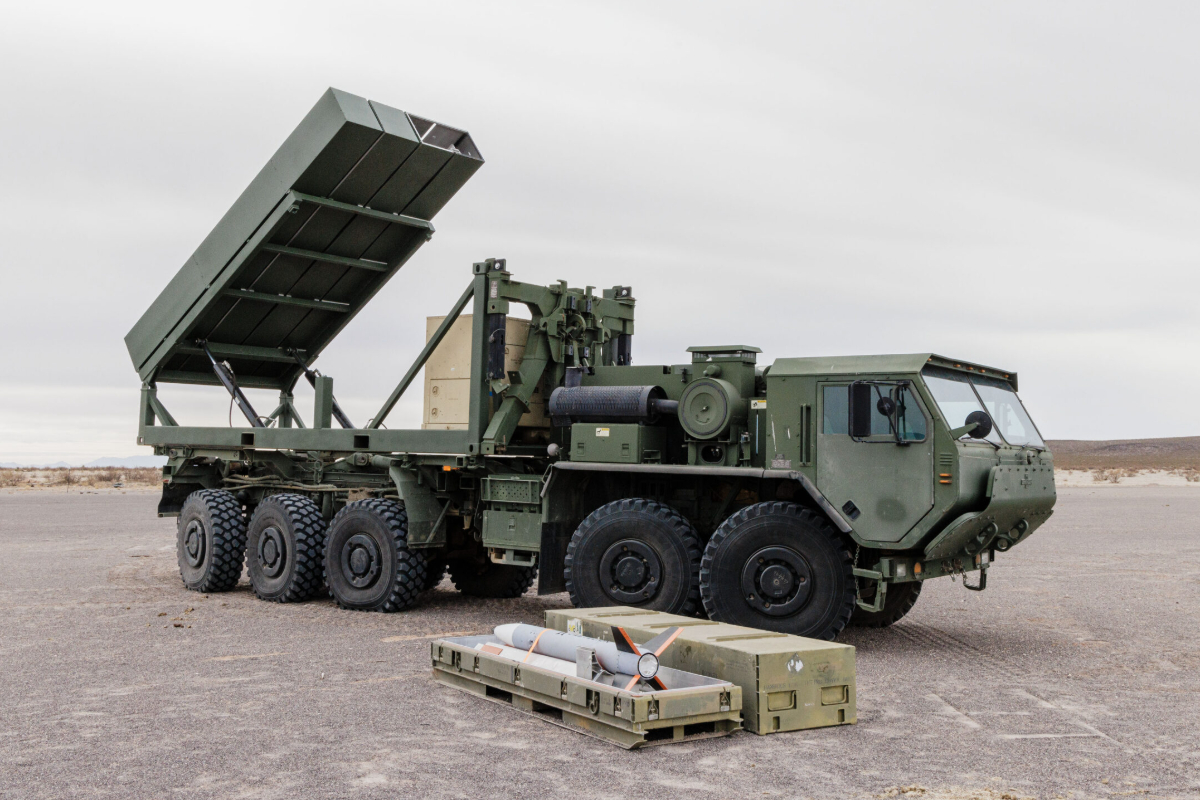
As Defence Blog reported, DARPA's Next Generation Hypersonic Cruise Missile notice covers several size classes. One could fit inside or under a fighter. Another could fit a bomber bay, a cargo-aircraft pallet, or a ship's vertical launch system. Larger variants could be carried by a heavy bomber or launched from the ground.
That list is not bureaucratic decoration. It reflects the geography of a Pacific war. A fighter-carried weapon offers rapid response but limited range and payload. A ship-launched weapon can add mass to a distributed surface force, but consumes valuable launch cells. A bomber weapon can reach deeper targets, yet depends on tanker support, airfield access, and survivable command networks. DARPA is asking for a family of options because no single platform solves the Indo-Pacific basing problem.
The notice defines hypersonic flight as above Mach 5 and focuses on air-breathing propulsion, normally a scramjet that draws oxygen from the atmosphere. DARPA wants a major step in at least one of three dimensions: range, cruise speed, or altitude. It also wants manufacturing and assembly designed for high-rate production from the beginning, rather than bolting affordability onto an exquisite prototype after the fact.
The Pacific value is measured in defended distance
The most concrete number in the request is the proposed test envelope: 250 to 2,000 nautical miles, or roughly 460 to 3,700 kilometers. That range is not an advertised operational range, but it shows the agency is thinking about weapons that can cross the large defended spaces separating Japanese, Philippine, Guamanian, and carrier operating areas from potential targets.
For a Taiwan contingency, the attraction is straightforward. A survivable hypersonic cruise missile could allow aircraft and ships to threaten command nodes, air defenses, and maritime formations without approaching the densest part of the People's Liberation Army's sensor and missile network. It would not make U.S. forces invulnerable. It would complicate China's targeting cycle by forcing the PLA to search across more launch points and defend against a faster, lower-signature weapon.
But speed is not the same as usable combat power. The missile still needs a target-quality track, a communications architecture that can survive jamming, and an authorization process that moves faster than the target. A 2,000-nautical-mile test range is irrelevant if the launch platform cannot receive updated aim points after leaving port or base. The weapon's real value will come from the kill chain, not the brochure.
China is the pacing problem, not the only target
The Pentagon's concern is not simply that China possesses advanced missiles. Beijing has spent years building a layered anti-access system around the first island chain, combining land-based missiles, aircraft, maritime sensors, and a growing fleet. The U.S. response has often produced capable but expensive systems in small numbers. DARPA's language about affordable, high-rate production is therefore the most important part of the announcement.
That emphasis also fits the recent U.S. effort to expand autonomous and distributed warfare. The Pentagon's proposed Autonomous Warfare Command, reported by Defense One, is intended to push unmanned capabilities toward combatant commands and frontline units. A mass-producible hypersonic weapon would fit the same logic: more launchers, more complicating dilemmas, and fewer irreplaceable platforms carrying the entire burden.
There is a danger in treating every new request as evidence of an imminent capability. DARPA's notice is explicitly an information-gathering step. The agency has not provided a budget, acquisition date, or first-flight schedule. Scramjet propulsion, thermal protection, guidance, testing, and range access remain expensive engineering problems. DARPA also wants test methods that reduce dependence on traditional ranges and limit the signatures that reveal when a flight is about to occur. That requirement alone signals how difficult the existing test pipeline remains.
The industrial math will decide the outcome
The United States already has hypersonic projects, including air-launched and boost-glide weapons. The new question is whether the country can turn demonstrations into a replenishable inventory. A missile that costs several million dollars and takes months to assemble may be impressive, but it cannot support a prolonged Pacific campaign. A cheaper round built in volume may be less glamorous and more useful.
That requires common components, modular electronics, multiple suppliers, and realistic training stocks. It also requires the Navy, Air Force, Army, and Marine Corps to agree on interfaces before each service creates its own incompatible missile family. Anyone who has served on a destroyer knows that a weapon is only as available as its reload chain, maintenance crews, targeting data, and fuel.
DARPA's September 30 request is best read as a warning: the United States has not yet solved the distance-and-volume problem of Pacific strike.
China's advantage is not guaranteed, and this RFI is not a defeat. It is an attempt to reset the design question around production before another boutique weapon enters the inventory. But the Pentagon should judge the program by rounds delivered, launchers dispersed, and targets held at risk—not by a successful demonstration flight. Until the math works at scale, the hypersonics race remains a technology story pretending to be a military strategy.
Sources
DARPA requested information on developing a hypersonic cruise missile capable of flying 250 to 2,000 nautical miles. This initiative aims to address production challenges and enhance U.S. military capabilities in the Pacific, particularly in response to China's advanced missile systems. The focus is on creating a family of missiles that can be deployed from various platforms, including fighters and ships, to complicate China's targeting cycle.
- DARPA is seeking to develop a hypersonic cruise missile with air-breathing propulsion.
- The proposed missile could have a range of 250 to 2,000 nautical miles.
- The focus is on high-rate production and affordability of the missile.
- The request reflects concerns about China's military capabilities in the Pacific.
- The development is still in the information-gathering phase without a confirmed budget or timeline.