

In September 2006, the U.S. retired the F-14 Tomcat. The decision was made not only because of the aircraft’s perceived age, but possibly to prevent any aircraft or spare parts from falling into the Islamic Republic of Iran’s hands.
Retiring the F-14 has always been controversial.
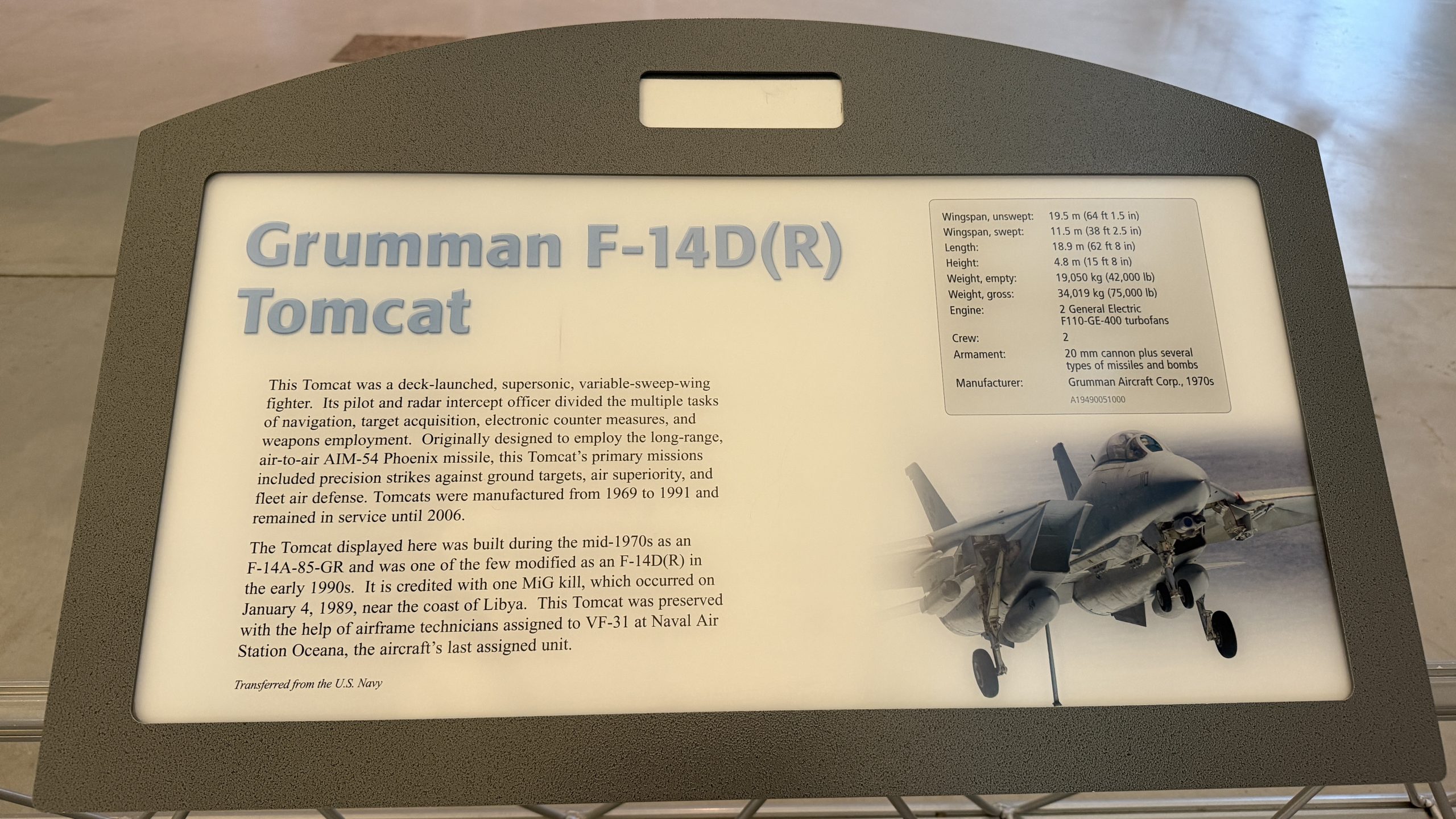
F-14 Tomcat from Steven F. Udvar-Hazy Center. Image taken by 19FortyFive staff on 9/30/2026.
Although the Department of Defense had its reasons, the Tomcat’s reputation made retiring such a beloved aircraft a tough pill to swallow.
However, recent developments suggest the Cold War legend may once again take to the skies, just like the SR-71 Blackbird comeback, in some respects.
The U.S. Congress is currently considering Senate Bill S. 4161, or the “Maverick Act.” The bill would restore three F-14D fighter jets and may allow the Tomcat to fly in airshows again.
The Maverick Act: What Is It and Where Is It Now?
The Maverick Act was introduced in the U.S. Senate earlier this year by Sen. Tim Sheehy, a Republican from Montana, and Rep. Abraham Hamadeh, a Republican from Illinois and a current Army Reserve officer.
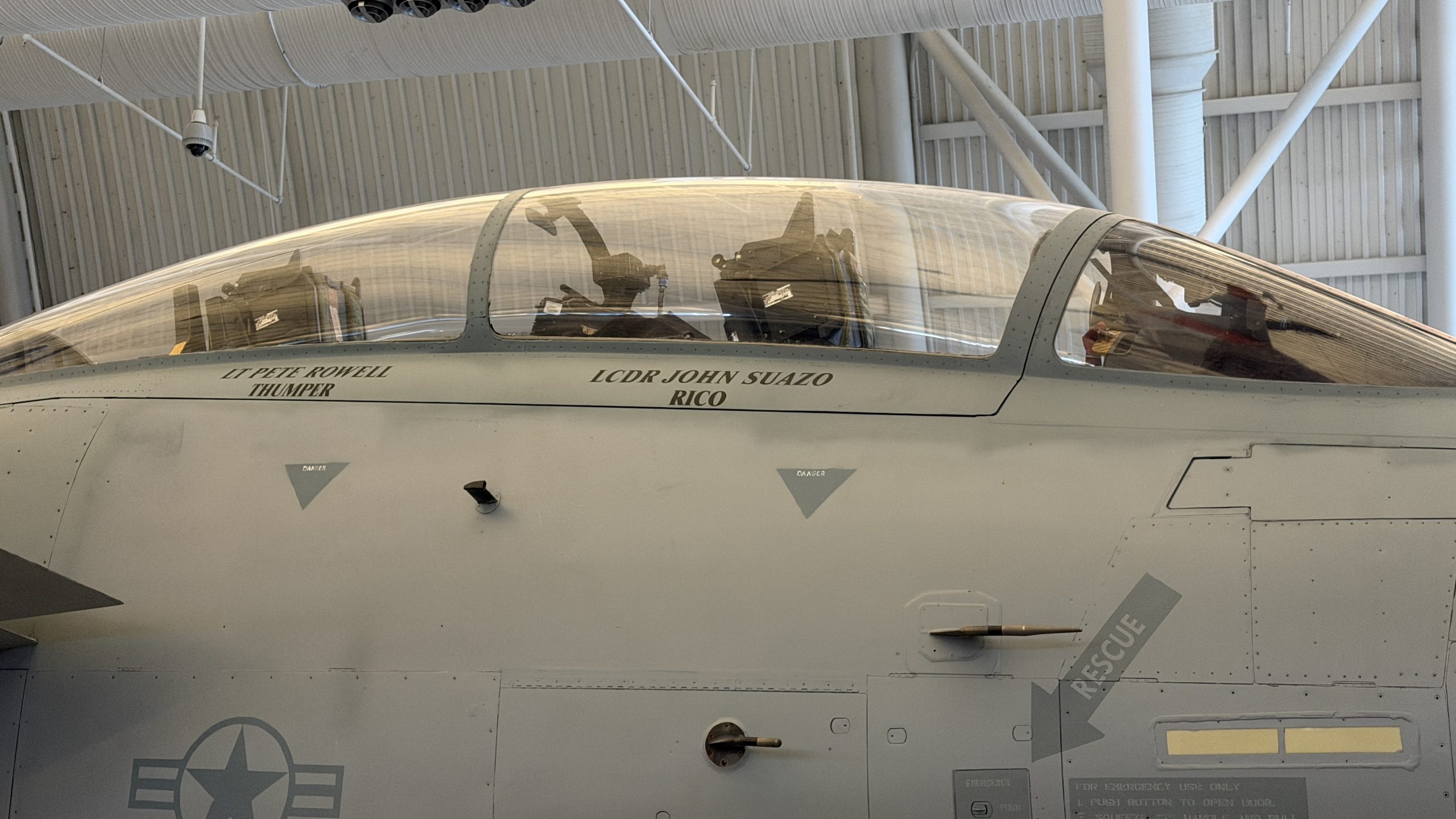
F-14 Tomcat from Steven F. Udvar-Hazy Center. Image taken by 19FortyFive staff on 9/30/2026.
The bill authorizes the Navy to hand over three of the last remaining F-14Ds to the U.S. Space and Rocket Center Commission in Huntsville, Alabama.
The legislation also clarifies that the aircraft shall be restored only for airshows and exhibitions, not for combat use.
Additionally, the Commission, not the Department of War, will pay to refurbish and restore the F-14s.
The U.S. Senate unanimously passed the bill in April, and it is currently in the House of Representatives, where it will be reviewed again and, if passed, sent to the President’s desk.
For the past two decades, the Navy’s retired F-14Ds have sat in the Boneyard at Davis-Monthan Air Force Base in Arizona.
Under the Maverick Act, the aircraft must be completely demilitarized, meaning they will have no combat systems and cannot carry munitions.
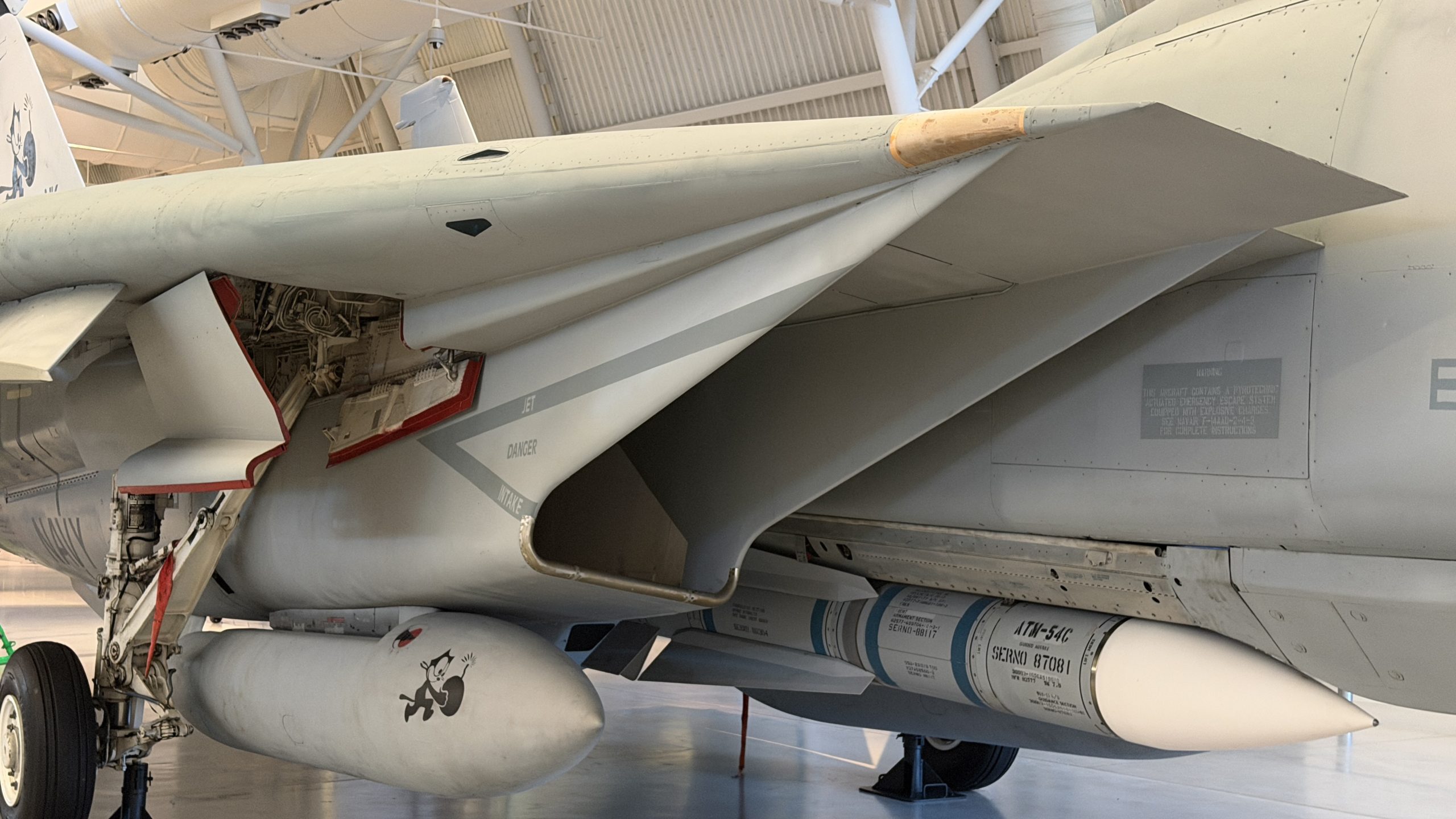
F-14 Tomcat from Steven F. Udvar-Hazy Center. Image taken by 19FortyFive staff on 9/30/2026.
According to the legislation, the Secretary of the Navy “shall provide excess spare parts to make one of the F-14D aircraft flyable or able to complete a static display.” The bill further clarifies that any spare parts must come from the Navy’s existing stocks.
No new spare parts shall be procured for the bill.
The legislation also allows for the Space and Rocket Center Commission to contract with qualified non-profit organizations to assist with the restoration work.
The Collings Foundation took a similar approach when it restored an F-4D Phantom to flying condition.
Returning the Tomcat to the Skies
The Maverick Act has sparked hope across the aviation community and for good reason.
Before this, the prospects of returning an F-14 Tomcat to flying condition were essentially nil.
Now, however, although the bill has not yet passed the House of Representatives, the venerable Tomcat has a solid chance of taking to the skies in the U.S. once again.
Thanks to the Top Gun films, the F-14 has held a special place in the American public’s hearts and minds.
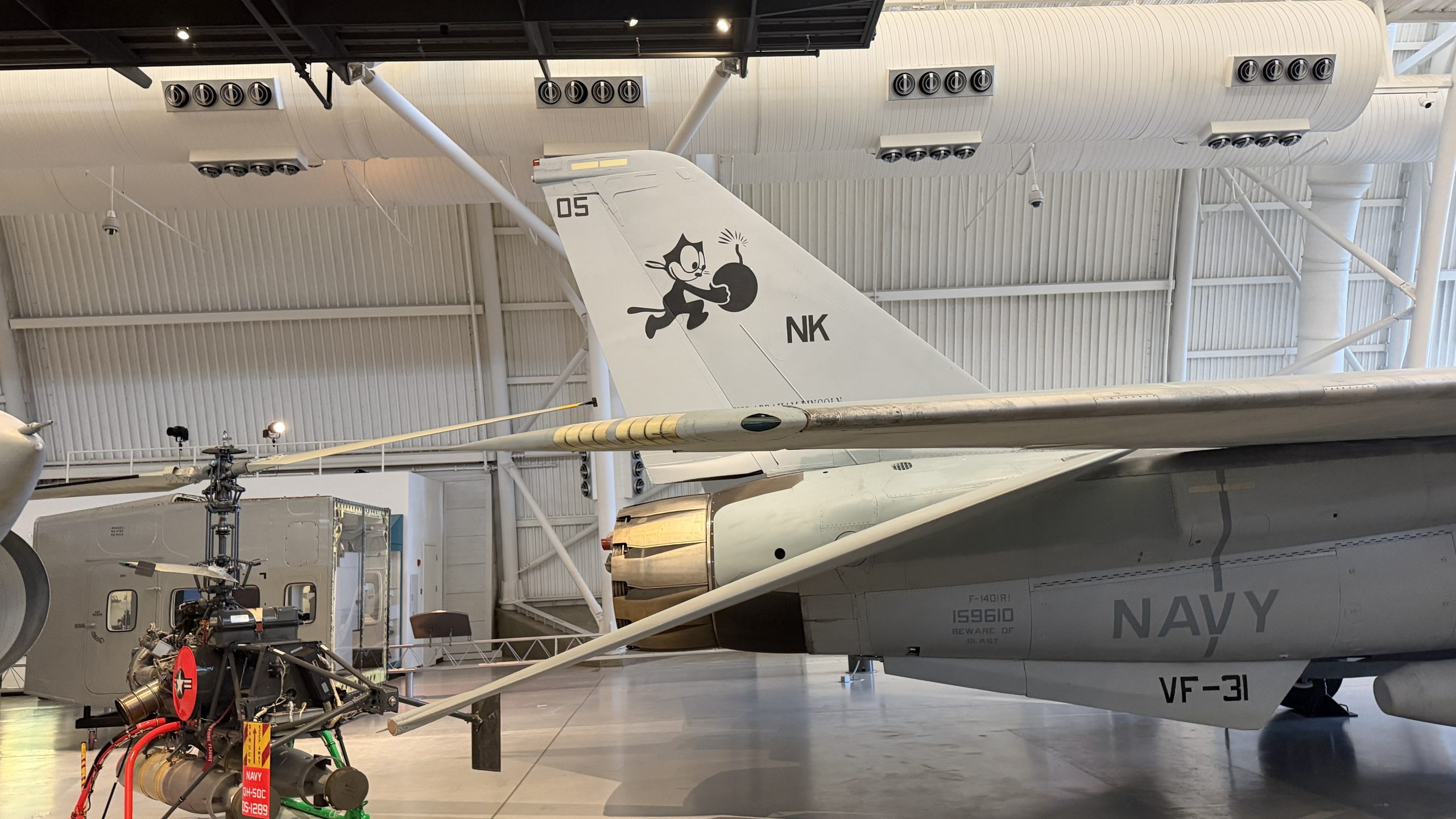
F-14 Tomcat from Steven F. Udvar-Hazy Center. Image taken by 19FortyFive staff on 9/30/2026.
Congressman Hamadeh, the bill’s author, is himself an aviation enthusiast.
In a prior bill, he moved to restore five Cessna T-37 “Tweet” trainer aircraft from the Boneyard.
F-14 Not Going to Fly?
That being said, restoring even one F-14D into flying condition will be an uphill battle.
First, there are the engines. The F-14D uses two General Electric F110 engines.
Restoring the engines is fairly easy, since the F110 engines were and still are used on some F-16 and F-15 models.
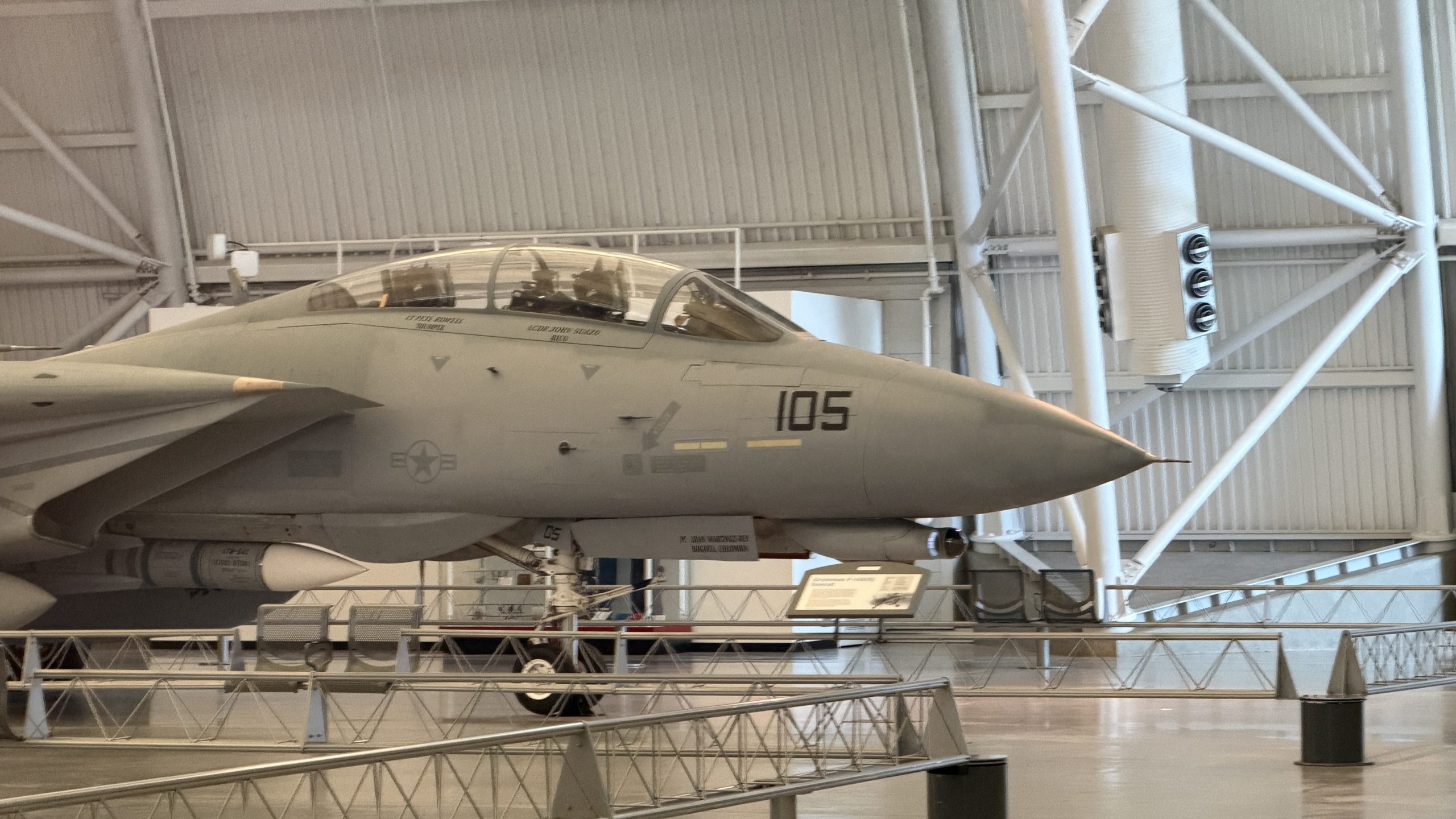
F-14 Tomcat from Steven F. Udvar-Hazy Center. Image taken by 19FortyFive staff on 9/30/2026.
The bigger problem is the Central Air Data Computer (CADC). The CADC is a complex computing system that controls the Tomcat’s variable-sweep wing system.
The computer measures the aircraft’s speed and other flight conditions and automatically adjusts the aircraft’s wings.
This system used one of the first microprocessors, and restoring it to working condition would be difficult, but not necessarily impossible.
It would require working with Northrop to obtain a copy of the software and doing a good deal of reverse engineering, which may not be easy if the Maverick Act expressly prohibits producing new parts.
Easier Said Than Done
The biggest roadblock to restoring the F-14 would be the titanium wing box.
The Tomcat’s wing box connected the swept wings to the fuselage.
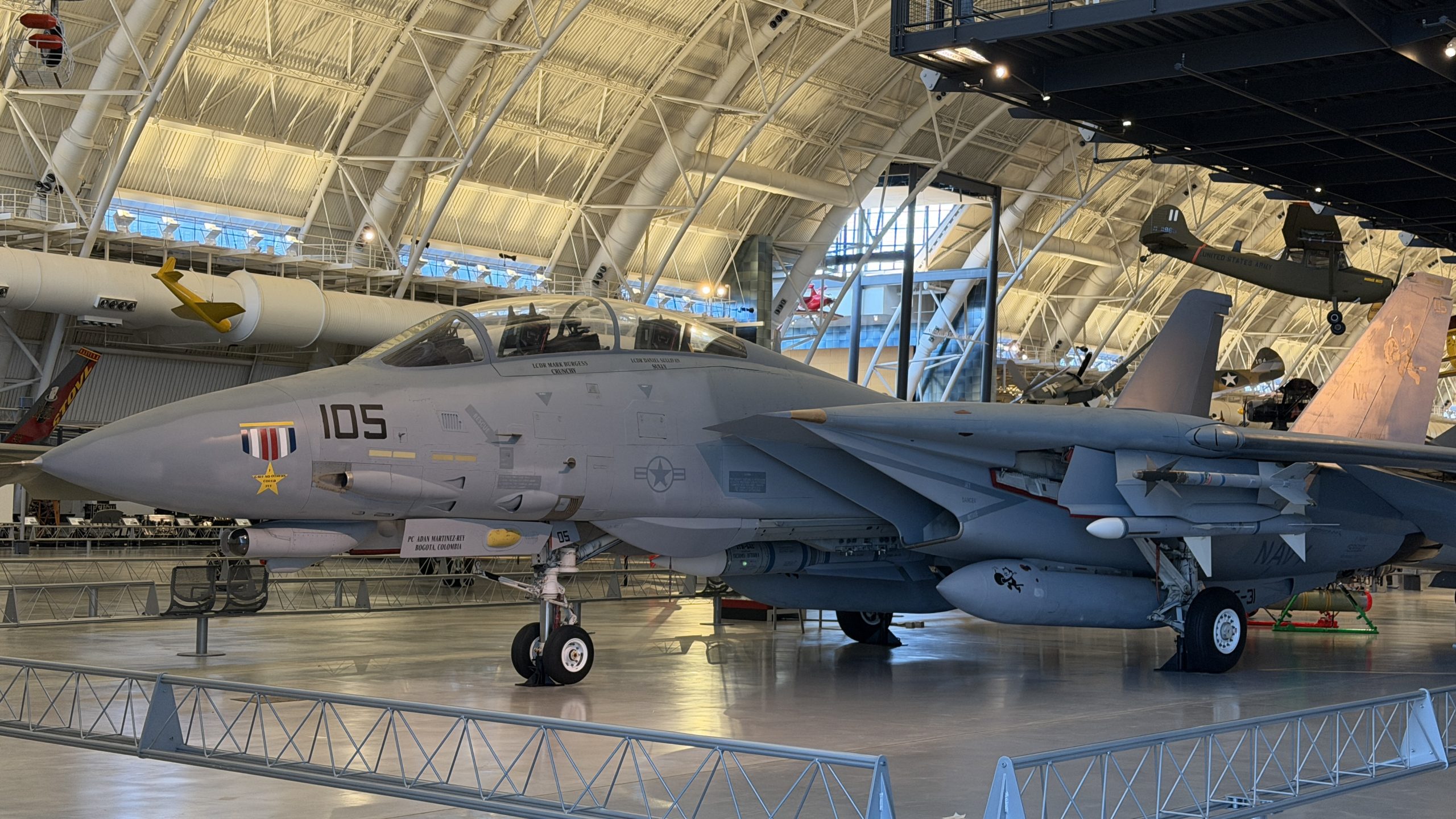
F-14 Tomcat from Steven F. Udvar-Hazy Center. Image taken by 19FortyFive staff on 9/30/2026.
This structure used strong materials and manufacturing techniques that are no longer in use.
The problem is that when the Navy retired the Tomcat to the boneyard, it deliberately cut the wing box to ensure the aircraft could never fly again.
To repair the wing box, one would have to replace it with an intact model, which is probably impossible, or find a modern titanium welding solution to fix the damage, which would be much harder and more expensive.
Again, restoration is not impossible; however, the wing box poses an immense challenge.
What Happens Next?
Not to sound pessimistic, but even if the Maverick Act passes, the chances of an F-14 actually returning to flying condition are slim.
Beyond the technical hurdles of restoring the aircraft, funding is also a factor.
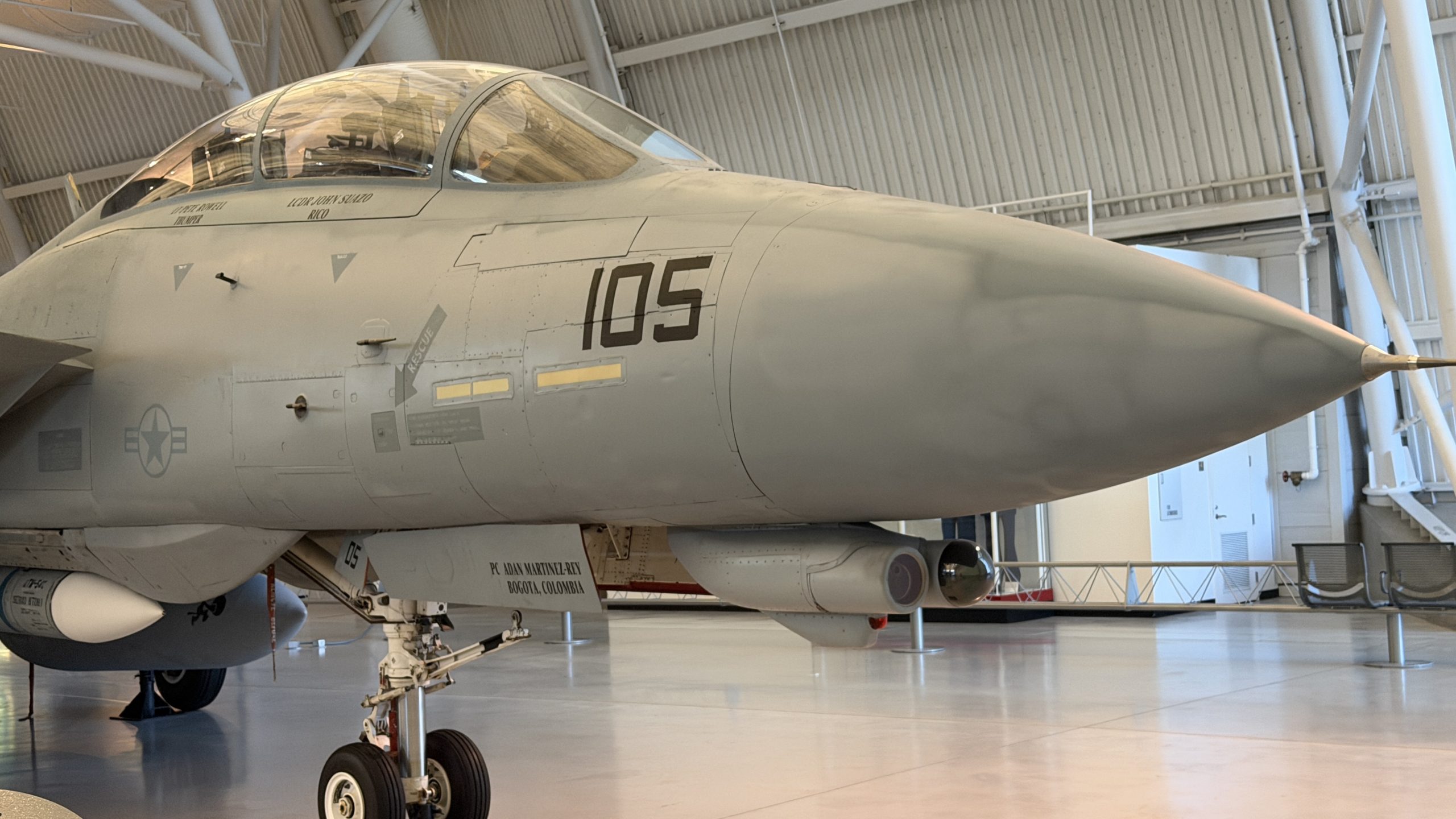
F-14 Tomcat from Steven F. Udvar-Hazy Center. Image taken by 19FortyFive staff on 9/30/2026.
Flying and maintaining the Tomcat is expensive, and that was one reason the aircraft was withdrawn from service.
The chances are slim, but not impossible. One should never underestimate what modern technology can do. With enough funding and the right technical expertise, the Tomcat could return to American skies.
About the Author: Isaac Seitz
Isaac Seitz, a Defense Columnist, graduated from Patrick Henry College’s Strategic Intelligence and National Security program. He has also studied Russian at Middlebury Language Schools and has worked as an intelligence Analyst in the private sector.