
General Anton Grunis was killed in Donbas — seven Russian commanders became drone targets in 2026
 S.W
S.WGeneral Anton Grunis killed in Donbas — seven Russian commanders became drone targets in 2026
Strike on the command vertical
The death of Major General Anton Grunis was confirmed not by a Ukrainian press release, but by the Russian military leadership. On September 16, the Deputy Chief of the Main Military-Political Directorate of the Armed Forces of Russia, Lieutenant General Apti Alaudinov, reported that the commander of the 4th Separate Guards Motor Rifle Brigade of the Southern Group of Forces "died a hero." This concise acknowledgment is significant in itself: Moscow usually does not rush to confirm the deaths of officers of such rank, especially if the circumstances of the strike allow the enemy to claim a successful hunt for the command staff.
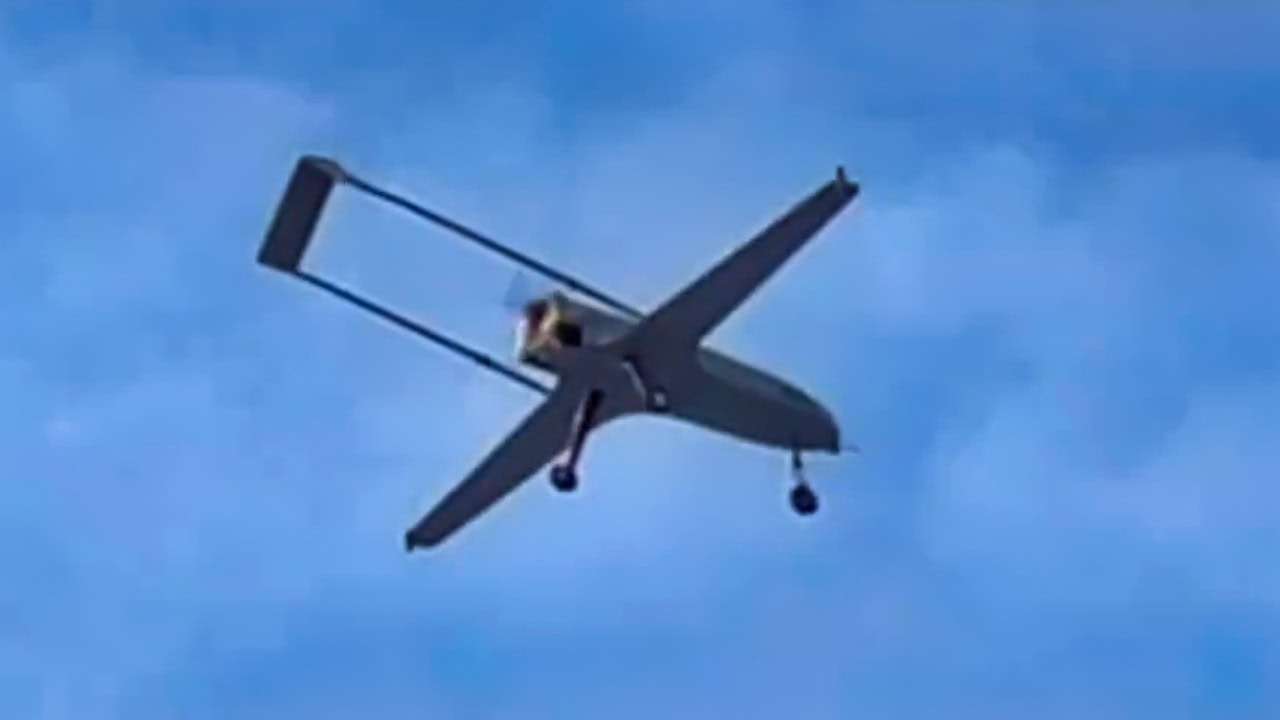
According to the commander of Ukraine's Drone Forces, Robert Brovdi, known by the call sign "Madyar," Grunis was destroyed on September 12 in the Donetsk region by a strike from Ukrainian drones. The operation, according to the Ukrainian side, was carried out by the 427th Separate Brigade of Drone Systems "Rarog." The independent publication Meduza reports the same sequence of events and notes that the Russian confirmation followed reports from Ukrainian and Russian sources. The details of the defeat do not yet allow for an independent determination of the type of device used, so claims about specific strike tactics should be considered preliminary.
The general who reported the capture of the city
Grunis became a particularly notable target due to his role in the information chain of the Russian army. In July, he personally reported to Vladimir Putin about the alleged capture of Kostiantynivka — one of the key fortified points in the Donbas. Ukraine then rejected this claim, stating that Russian troops had not established full control over the city. Putin publicly called Grunis an officer who "fights brilliantly," and at the end of August, Defense Minister Andrei Belousov awarded him the Star of Hero of Russia.
This creates an uncomfortable connection for the Russian command. An officer whose career was publicly tied to a victorious report was killed in an area where the boundary between declared control and actual presence remains disputed. This does not prove that the report itself was a conscious lie: in frontline conditions, a commander may receive an incomplete picture, and the political leadership may prefer the most convenient interpretation. However, a system in which advancement depends on demonstrating success inevitably encourages reports to be made before results are secured.
Why seven commanders are more important than one name
Brovdi stated that Grunis became the seventh Russian commander at the brigade, division, or army level whose death was confirmed after strikes by Ukrainian Drone Forces. Even if this figure reflects the Ukrainian method of counting and does not include all losses, it indicates a change in the nature of the hunt for command. Drones are no longer just a cheap means of defeating equipment and infantry. With the presence of reconnaissance networks, operators, and stable communication, they become a tool for systematic pressure on the command infrastructure.
For the Russian army, this is particularly sensitive for three reasons. First, large formations maintain a noticeable dependence on the personal decisions of commanders at the front. Second, the attempt to maintain an offensive pace forces officers to appear closer to the line of combat contact more frequently and to use predictable routes for communication and movement. Third, awards and public reports increase the value of the figure in the eyes of the enemy: a person whom the Kremlin presents as the face of success becomes not just a military target but also an informational one.
The old Soviet principle "the commander must be at the front" made sense in an era of limited intelligence. In the Donbas of 2026, it turns into a dangerous habit. A commander who physically checks positions and personally confirms task completion can make decisions more quickly, but at the same time leaves a digital and visual trace. The Russian army is trying to compensate for this by dispersing headquarters, using camouflage, and engaging in electronic warfare; however, these measures do not negate the main point: the denser the enemy's reconnaissance network, the more expensive a centralized command system becomes.
Tactical success does not equal a strategic turning point
The death of Grunis does not automatically mean the disintegration of the 4th Brigade or the cessation of Russian operations. The Russian system is capable of quickly appointing replacements, and combat tasks continue regardless of the fate of one officer. Moreover, an excessive focus on generals may obscure less spectacular work — the destruction of communication nodes, operators, transport, and reconnaissance means upon which the command vertical depends.
But the political effect will be significant. Moscow must simultaneously explain the loss of an awarded commander, maintain the narrative of control over Kostiantynivka, and convince its own audience that Ukrainian drone forces have not gained a systemic advantage. These tasks do not align well. In the Soviet tradition, a defeat on the map could be concealed with the formula of "reorganization." The death of an officer recently presented as a hero of victory is much harder to hide.
My conclusion is cautious. Ukraine has not yet proven that it can paralyze Russian command with a single campaign of strikes against commanders. Russia has also not shown that it can replace the old vertical with a flexible network system without compromising the quality of command. If the confirmed figure of seven commanders continues to grow, Moscow will face not just one painful loss but an institutional problem — the necessity to choose between the visible presence of generals at the front and their physical safety. War rarely forgives such contradictions.
Sources
General Anton Grunis was killed by Ukrainian drones in Donetsk Oblast on September 12, 2026, marking the seventh confirmed death of a Russian commander due to drone strikes. The operation was carried out by the 427th Separate Brigade of UAVs 'Rarog'. This incident underscores a significant shift in drone warfare, now targeting military leadership rather than just equipment.
- General Anton Grunis was confirmed killed on September 12, 2026, by Ukrainian drones.
- He was the seventh Russian commander confirmed killed by Ukrainian drone strikes.
- The operation was conducted by the 427th Separate Brigade of UAVs 'Rarog'.
- Grunis was previously recognized for his role in the Russian military and had reported to President Putin.
- The report highlights a shift in the effectiveness of drone warfare targeting military leadership.