
Iran Raises Missile Range Ceiling in 2026 and Puts Gulf Defenses to the Test of True Capability
 Ahmed Al-Rashid
Iran Raises Missile Range Ceiling in 2026 and Puts Gulf Defenses to the Test of True Capability
On November 13, 2026, Ali Balali, advisor to the commander of the Aerospace Force of the Iranian Revolutionary Guard, stated that Tehran has the capability to increase the range of its missiles and that it no longer sets a publicly declared limit on flight distance. This was not an announcement of a new missile as much as it was a declaration of a political and military transition in Iran's definition of deterrence boundaries. The exhibition held by the Aerospace Force in Tehran showcased missiles with ranges between 2000 and 3500 kilometers, drones with endurance of up to 30 hours, air defense systems, as well as launch vehicles capable of delivering satellites to an altitude of 500 kilometers.
The Declared Range is Not the Operational Capability
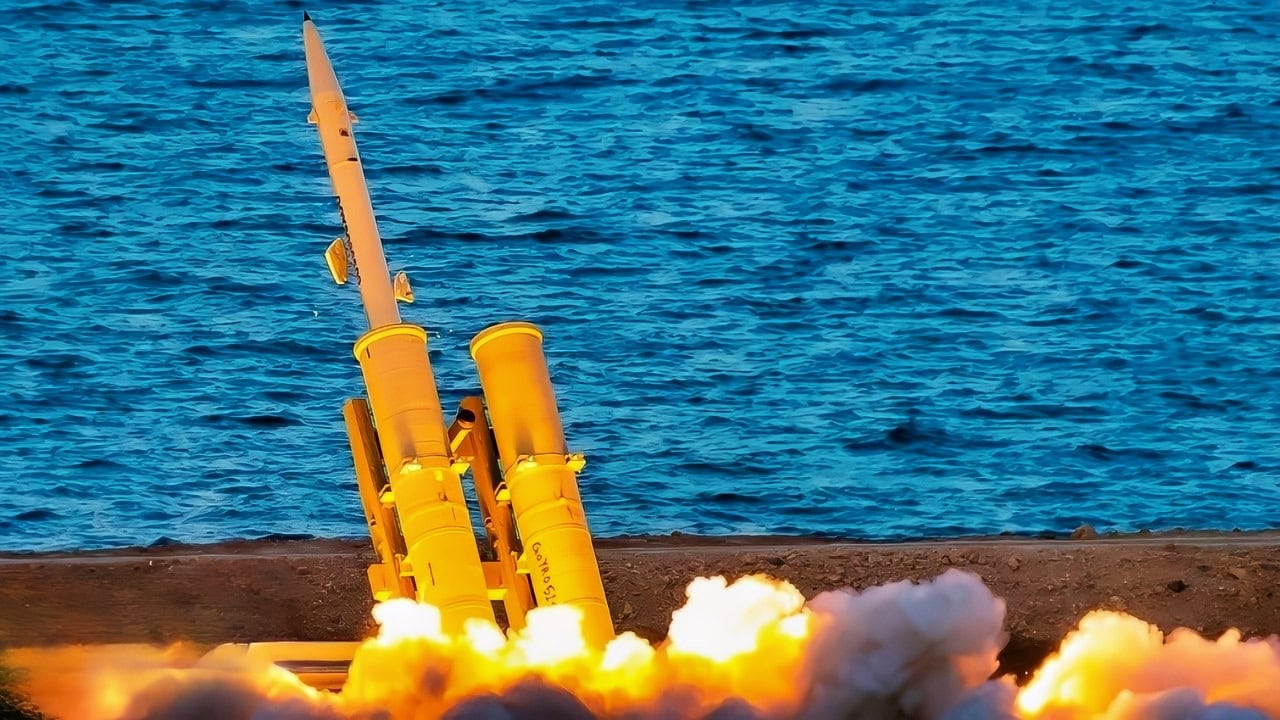
The primary source of these statements was the RIA Novosti agency, which was reported by other news sources including NEWS.am and The Times of Israel. However, from a military perspective, it is essential to distinguish between three aspects that are often conflated in political discourse: maximum range, usable range in combat conditions, and target accuracy after penetrating defenses. Possessing an engine capable of propelling a warhead over a longer distance does not automatically mean having a reconnaissance, guidance, and communication system that can produce reliable hits at that range.
Nevertheless, it would be a mistake to treat the statement as mere empty propaganda. Iran has accumulated practical experience in launching missiles and drones during its confrontation with the United States and Israel, testing command networks, concealing launch platforms, and compensating for the loss of some fixed facilities. This experience may not grant it air superiority, but it raises the cost of protecting bases, ports, and oil facilities, which is precisely the point that hurts Gulf countries.
Why This Announcement Matters to Saudi Arabia and the UAE
Even before exceeding the 2000-kilometer threshold, Iranian missiles can threaten almost all vital bases and facilities within the Gulf. Therefore, increasing the range is not the only factor that changes the equation. The more important factor is expanding the list of potential targets and forcing the adversary to distribute radars, interception systems, and fighter jets over a larger area. The wider the circle, the higher the consumption of interception missiles, and it becomes more challenging to determine which attack is the main strike and which is a diversion.
Saudi Arabia possesses Patriot and THAAD systems and invests in a multi-layered early warning network, while the UAE has significant operational experience in air defense. However, recent years have proven that purchasing the system does not equate to having a complete capability. True capability is the product of equipment, training, and the institution that manages it. If any of these factors approaches zero, large numbers in sales brochures will not save the oil facility when it is hit by a wave of ballistic missiles and low-altitude drones.
The Gulf Response is Moving Towards Command Before Weapons
The Iranian statement coincides with the Gulf Cooperation Council's decision to establish a forward military command in Kuwait and allocate appropriate forces for it. This decision, announced on November 10, aims to improve coordination in the northern Gulf, where threats from Iran and Iraq intersect with energy lines and ports. Its significance lies not in the number of soldiers, which has not yet been announced, but in the attempt to reduce the time between threat detection, decision-making, and task distribution.
However, the forward command will not solve the interception problem alone. If each country retains its radars, data, and rules of engagement, the new command will become an additional communication room rather than a real air defense center. If sensors are linked and situational awareness is unified, along with training on interception stocks, it could be a practical step towards a more cohesive Gulf force. The difference between the two models is not only technical; it is a sovereign decision about the willingness of countries to share information at a moment when mistakes are costly.
Israel and the United States in Tehran's Calculations
Tehran claims that the 2000-kilometer limit was a defensive choice and that changing circumstances made raising it necessary. This should not be interpreted as an immediate announcement of targeting Europe, but it expands the margin of pressure on U.S. bases in the region and on Israel. For Washington, the threat is not measured by range alone, but by the number of mobile launch platforms and Iran's ability to launch salvos simultaneously with cyberattacks and cheap drones.
As for Israel, it will read the announcement from a different perspective. Systems like Arrow, David’s Sling, and Iron Dome can intercept various types of threats, but missile defense is not an impenetrable wall. It is a calculated attrition process that requires early warning, ammunition, quick decision-making, and knowledge of which target is worth intercepting. Therefore, the Iranian message will push Israel to enhance preventive strikes and intelligence, but it may also lead it to be cautious about expanding a war whose end cannot be defined.
Conclusion
In my opinion, the political value of Iran's announcement is greater than the direct technical value. Tehran is telling its neighbors that the phase of being satisfied with narrow geographical boundaries has ended, while Gulf states, by establishing a forward command, are indicating that they want to build self-reliance within the American umbrella. However, the dilemma remains the same: the Gulf is rapidly purchasing advanced equipment, but it is not building a unified institution that can operate it under the pressure of a heavy attack at the same speed. As any military personnel who has served in the region knows, it is not just the party with the longest missile that wins, but the party that sees first, decides first, and continues after the first shot is fired.
Sources
- RIA Novosti via 参考消息, November 14, 2026, https://china.cankaoxiaoxi.com/#/detailsPage/junshi/657037839d7a491e95776c0c1753de4c/1/2026-11-14
- The Times of Israel, IRGC Statements on Missile Range, https://www.timesofisrael.com/
- The Jerusalem Post, Iran's Missile Production Capability, https://www.jpost.com/
- NEWS.am, Statements from the Iranian Aerospace Force Advisor, November 13, 2026, https://news.am/
- Al Jazeera, GCC Decision to Establish a Forward Military Command in Kuwait, https://www.aljazeera.com/news/2026/11/10/gcc-agrees-to-set-up-advanced-military-command-headquarters-in-kuwait
Iran announced its ability to extend missile ranges beyond 2000 kilometers during a military exhibition in Tehran on November 13, 2026. This development raises concerns for Gulf states, as Iranian missiles could threaten vital installations. Concurrently, the Gulf Cooperation Council established a forward military command in Kuwait to enhance regional defense coordination against Iranian threats.
- Iran can increase missile range beyond 2000 kilometers.
- Iran showcased missiles and drones in a military exhibition.
- The Gulf states are concerned about the implications of Iran's missile capabilities.
- The GCC announced the establishment of a forward military command in Kuwait.
- Iran's missile capabilities could threaten U.S. bases and Israeli positions.