
Iran's Strike on the Muwaffaq Salti Base in Jordan Kills Two American Soldiers and Reveals the Gulf Patriot Gap 2026
 Ahmed Al-Rashid
Iran's Strike on Muwaffaq Salti Base in Jordan Kills Two American Soldiers and Reveals the Gulf Patriot Gap 2026
On the dawn of July 19, 2026, the American-Iranian war was no longer just about the Strait of Hormuz or oil tankers. The missile that struck the Muwaffaq Salti airbase in Jordan, killing two American soldiers and injuring four others according to U.S. Central Command, as reported by Al Jazeera and Times of Israel, shifted the focus to a more embarrassing question for Arab capitals: Can the bases hosting American forces protect themselves when they become the direct target?
This is not a symbolic incident. The Jordanian base is located at a distance that makes it part of the American deployment network in the Levant and the Gulf, not just a local facility. If it is true that the strike was with a ballistic missile accompanied by a wave of drones or other aerial threats, we are facing a practical test of the capabilities for warning, interception, asset distribution, and not just another political statement from Tehran or Washington.
From a Jordanian Base to an Exposed Gulf Network
According to Al Jazeera, the United States responded with strikes for the eighth consecutive night targeting sites near Sirik, Qeshm Island, and Shadigan. CENTCOM stated that the strikes targeted coastal surveillance facilities, air defense, naval capabilities, missile and drone storage. Times of Israel added that Iran expanded its response to include Kuwait, where Tehran spoke of targeting an ammunition depot at Camp Adairi and a Patriot radar and aerial surveillance radar at Ali Al-Salem base.
Militarily, the latter statement is more important than the number of missiles. When the radar itself becomes a target, air defense is no longer just a battery firing a missile at another missile. It becomes a sensitive network with eyes, nerves, and decision-making centers. Hitting the radar, or forcing it to go silent, may be enough to open a small window for a cheap drone or a low-flying cruise missile to pass through. Here, the old Gulf problem emerges: purchasing systems as luxury items, only to discover that war strikes the links between them.
Patriot is Not a Magic Shield
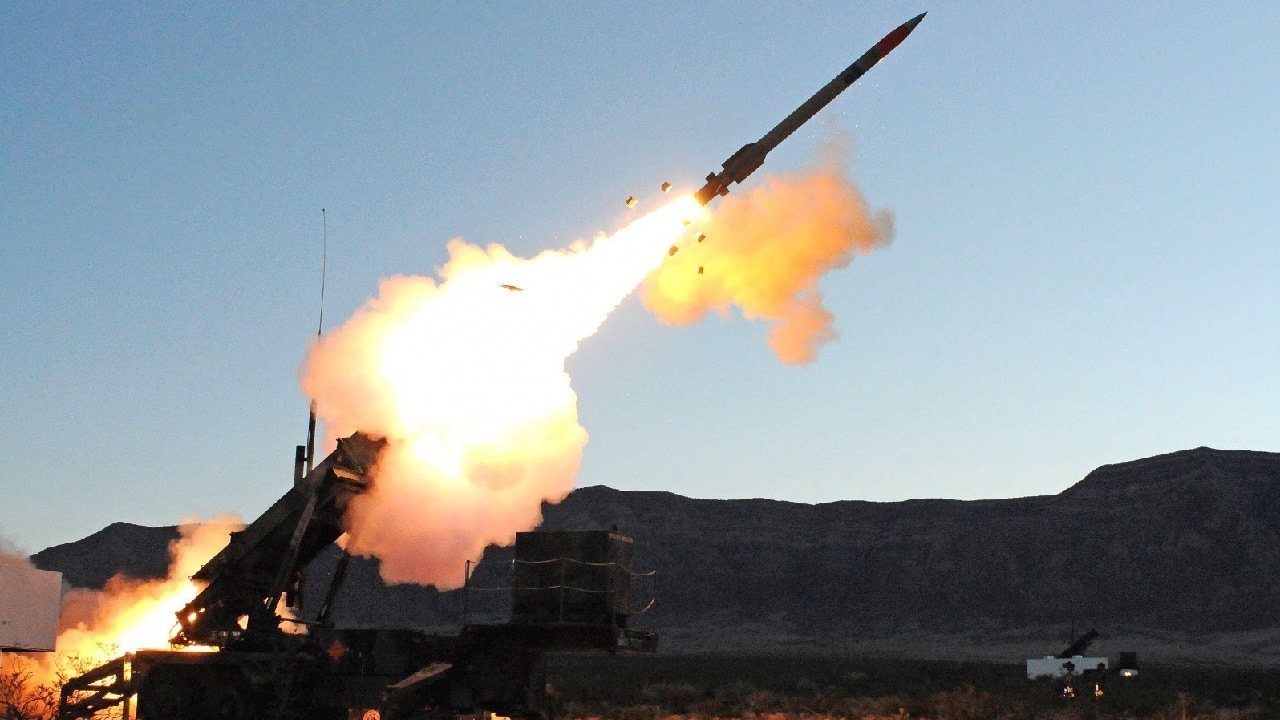
Those familiar with the air defense structure in the region know that the Patriot was primarily designed to intercept aircraft and tactical ballistic missiles, and then evolved to face more complex threats. However, it remains part of layers, not a single layer. The battery requires early warning, a functioning radar, command and control, clear rules of engagement, a stockpile of intercept missiles, and coordination with allied aviation. If one link fails, the high price of the system becomes less important than the small discipline in its operation.
Iran understands this. Therefore, it does not always need to completely destroy the base. It is enough to send a message that American bases in Jordan, Kuwait, Bahrain, and possibly Saudi Arabia are not off the target bank. The missile that kills two soldiers in Jordan pressures Washington, but it also pressures Amman, Riyadh, Kuwait, and Manama, as they find themselves in an uncomfortable equation: hosting American deterrence while inheriting part of the cost of using it.
The Jordanian and Gulf Dilemma
Jordan is a special case. It is a close security ally of Washington, but it is a country with limited geographical depth and resources, and it does not want to become an open front in an American-Iranian war. The Muwaffaq Salti base is important because it gives the United States a working point close to Iraq, Syria, the Gulf, and Israel, but this operational value itself makes it a magnet for Iranian retaliation. In my estimation, every forward base in the region today lives this contradiction between its military utility and its political danger.
The Gulf faces a larger version of the problem. Kuwait announced intercepting threats, and Iran claimed it struck radars and facilities linked to American forces. As for the warnings mentioned by Times of Israel in Al Khobar and Yanbu, they remained within the realm of what Riyadh has not publicly confirmed, but they reveal the sensitivity of the Saudi oil and military structure to rumors of an attack before the attack itself. In modern warfare, a false alarm sometimes succeeds in disrupting the economy as effectively as a missile.
The Triad Capability is Still Absent
I reiterate here what I always say about the armies in the region: capability is not a mineral on a display platform. Capability is a triangle of equipment, training, and institution. Air defense equipment is abundant in the Gulf, from Patriot to THAAD to short-range drone defense systems. Training exists but is not homogeneous from one country to another. As for the joint institution, that is, the ability to link radars, rules of engagement, and political decision-making in a short time, it is the weakest link.
Therefore, the Iranian strike on Jordan does not only reveal the courage or recklessness of Tehran. It also reveals that Iran reads the map at the level of bases, not at the level of states. It strikes where Americans are present, where there is radar, and where there is ammunition, then leaves the Arab governments with the task of explaining why their territories have become part of the response arena. This is a relatively cheap way to force allies to recalculate the cost of hosting.
After the Strike
Washington will respond forcefully because it cannot leave the killing of its soldiers without a price. It has already begun this by striking coastal surveillance facilities, air defense, and missile and drone storage inside Iran. But the Arab question is not whether the United States can strike Iran. The question is whether the United States can protect its bases every night, in every country, against a mix of ballistic missiles, drones, cruise missiles, and political pressure on the host governments.
An old saying in armies states that a trench does not protect a soldier if the road to it is exposed. In the Middle East today, the American base is the trench, and the exposed road is the network of Arab alliances that want the American umbrella while simultaneously fearing becoming part of the target. Here lies the paradox that cannot be resolved by purchasing an additional Patriot battery or a condemnation statement from the Gulf Cooperation Council.
The practical conclusion is that the strike on Muwaffaq Salti is not a new number in the war record, but a clear test of the idea of relying on American bases as a substitute for building a real regional air defense.
Iran launched a missile strike on Al-Mawafaq Air Base in Jordan on July 19, 2026, killing two U.S. soldiers and injuring four others. This attack highlights vulnerabilities in U.S. air defense systems in the region. In retaliation, the U.S. conducted airstrikes against Iranian military sites, while Iran threatened additional targets in Kuwait.
- Iran launched a missile strike on Al-Mawafaq Air Base in Jordan.
- Two U.S. soldiers were killed and four injured in the attack.
- The strike raises questions about the effectiveness of U.S. air defense systems in the region.
- The U.S. responded with airstrikes targeting Iranian military facilities.
- Iran expanded its military response to include targets in Kuwait.