
Japan's Three F-2s in India Push the Indo-Pacific Air Fight West in 2026
 Marcus Chen
Japan's Three F-2s in India Push the Indo-Pacific Air Fight West in 2026
Three Mitsubishi F-2A fighters and about 110 Japanese personnel are heading to Jodhpur for Veer Guardian 26. On paper, that is a small detachment. In operational terms, it is the first time Japan Air Self-Defense Force fighters will work from an Indian air base, more than 5,500 kilometers from Tsuiki in Fukuoka Prefecture. That does not give Tokyo a new front against China overnight. It does something more practical. It tests whether Japan can move combat aircraft, maintainers, fuel planning, and command relationships deep into the Indian Ocean side of the Indo-Pacific without U.S. bases doing the heavy lifting.
That is why this deployment matters. Marcus Chen's rule of thumb is simple: count the platforms, then count the distance, then ask what the sortie generation actually buys you. Three fighters are not a strike package that changes the military balance by themselves. But three fighters operating from Rajasthan tell you Japan and India are no longer treating air cooperation as a staff-college exercise. They are rehearsing access.
What Japan Is Actually Sending
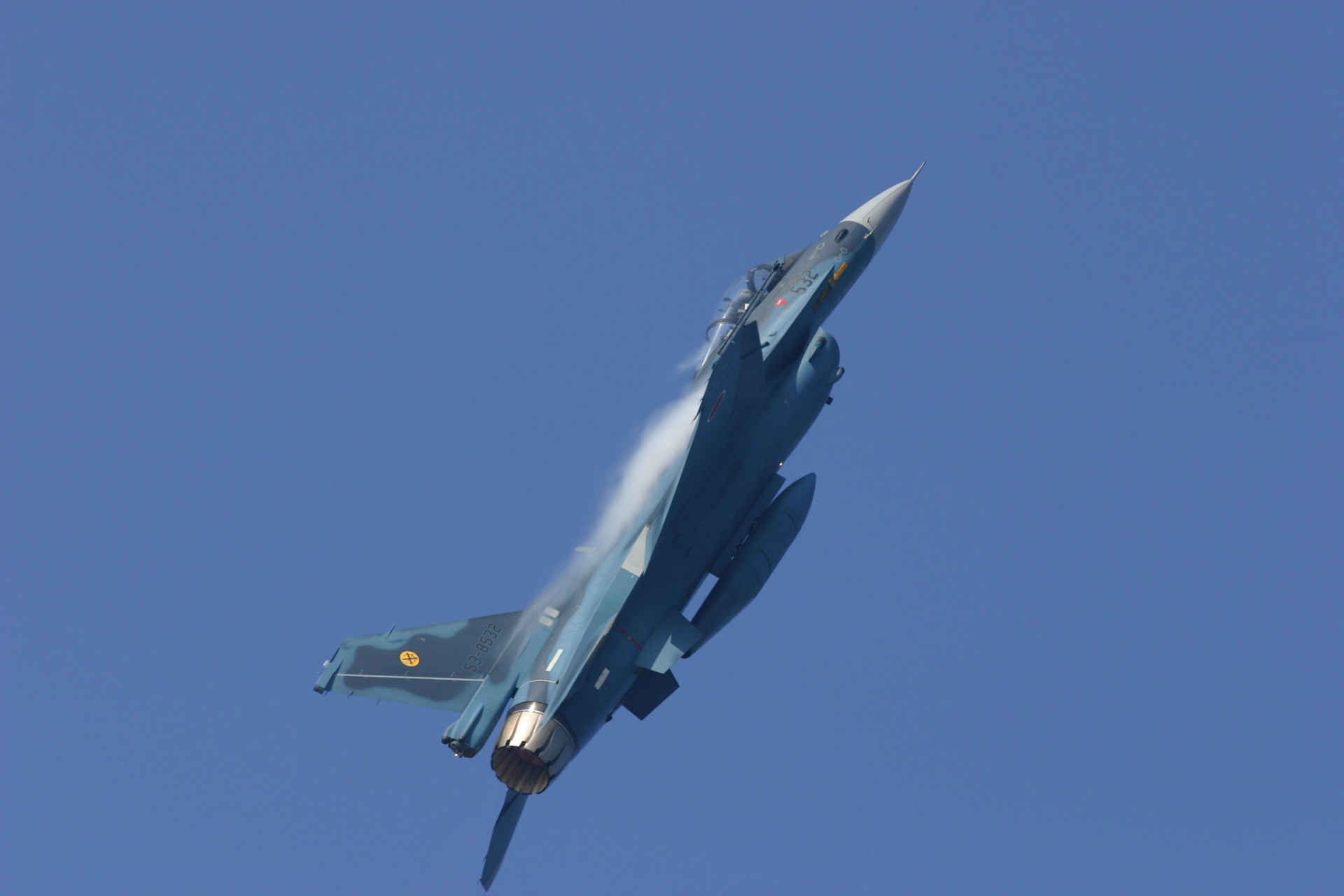
Kyodo, via Mainichi, reports that the ASDF will send three F-2As from the 8th Air Wing and roughly 110 personnel to the exercise area around Jodhpur. News18 reports that India will field Su-30MKI, Rafale, and Tejas fighters, which means the Japanese crews will train against three very different operating profiles in one event: heavy twin-engine air dominance, Western multirole precision strike, and a lighter indigenous fighter force. Even the reporting on the exercise window is a little revealing. Mainichi cites Sept. 9 to 21, while News18 gives Sept. 13 to 20. That discrepancy suggests the politically important announcement came before every operational detail had fully settled, which is common when a deployment matters diplomatically as much as tactically.
- Japanese detachment: 3 F-2A fighters and about 110 personnel.
- Location: Jodhpur, Rajasthan, the first Veer Guardian hosted in India.
- Indian aircraft named in local reporting: Su-30MKI, Rafale, and Tejas.
- Distance from Tsuiki to Jodhpur: roughly 5,576 kilometers.
Those numbers are modest, but they are not trivial. Moving three fighters is easy. Moving the maintenance team, spare parts logic, weapons handling procedures, flight safety standards, and secure communications framework is the real exercise. Anyone who has served around flight operations knows that the airplane is the easy part. The support package is the capability.
Why India Matters More Than the Exercise Name
The India piece is the strategic signal. Japan has spent the last several years tightening operational links with U.S. forces, Australia, and the Philippines because those are the places most directly tied to a Taiwan or East China Sea contingency. India sits farther west, outside that immediate first-island-chain geometry. That is exactly why this deployment is useful. It shows Tokyo wants air relationships that are not confined to Northeast Asia and not entirely dependent on the U.S. hub-and-spokes architecture.
The August 20 defense ministers' meeting made that point more clearly than the fighter announcement alone. India and Japan signed a Memorandum of Arrangement on Maritime Security Cooperation, expanded technology and industrial talks, and specifically highlighted Veer Guardian 26 as the first visit of JASDF fighter aircraft to India. Read together, that is not just an exercise notice. It is a wider attempt to connect maritime domain awareness, industrial cooperation, and tactical air training into one Indo-Pacific partnership.
For India, this is also useful in very concrete ways. The Indian Air Force gets exposure to a Japanese platform optimized around maritime approaches and anti-ship strike logic rather than just continental air defense. For Japan, operating from western India forces planners to think beyond the narrow home-island defense problem and into coalition reach, long logistics tails, and dispersed basing under political constraints. That is a useful habit for any military that expects fixed bases to be targeted early in a war.
What the F-2 Adds and What It Does Not
The F-2 is not Japan's largest fleet and it is not a stealth aircraft, but it is a serious maritime strike platform. Its combat radius is roughly 833 kilometers, it can reach about Mach 2, and its larger wing and radar fit were designed for Japan's sea-lane defense problem. In other words, this is not an arbitrary trainer deployment. Tokyo is sending a fighter associated with anti-ship strike and tactical support over maritime approaches. That matters because India's western and peninsular geography naturally pushes air planning toward sea control, sea denial, and long-distance logistics protection across the Indian Ocean.
Still, the limits matter. Three F-2s do not create a new coalition strike wing. They do not solve tanker availability. They do not prove Japan and India could sustain combined air operations in combat. And they certainly do not mean New Delhi is signing up for somebody else's Taiwan war. The temptation in Washington is always to see every new exercise as a proto-alliance. The math is usually less dramatic. A three-aircraft deployment is best understood as a rehearsal for access and interoperability, not a forward combat posture.
The Real Shift Is Geographic
The biggest takeaway is geographic, not numerical. Japan is pushing tactical air cooperation westward. India is letting a Northeast Asian partner operate fighters from its soil for the first time. That broadens both countries' mental map of the theater. In a real crisis, geography becomes logistics, and logistics become strategy. If Tokyo can normalize operating fighter detachments from unfamiliar bases across the wider Indo-Pacific, it gains options. Options are what deterrence looks like before the shooting starts.
That is the real value of Veer Guardian 26. Not because three F-2s will frighten Beijing on their own. They will not. The value is that Japan and India are starting to practice a version of coalition air power that is less scripted, farther from home, and more connected to the maritime contest that now defines the region. In the Indo-Pacific, access is combat power waiting for a mission. This deployment is Japan buying a little more of it.
Japan is deploying three F-2A fighters and approximately 110 personnel to Jodhpur, India, for the Veer Guardian 26 exercise in September 2026. This marks the first operational use of Japanese fighters from an Indian air base, highlighting a significant step in military cooperation between Japan and India. The exercise will involve training alongside Indian aircraft such as the Su-30MKI, Rafale, and Tejas, emphasizing the strategic importance of this deployment in the Indo-Pacific region.
- Japan is deploying three F-2A fighters and about 110 personnel to Jodhpur, India for the Veer Guardian 26 exercise.
- This is the first time JASDF fighters will operate from an Indian air base.
- The distance from Tsuiki, Japan to Jodhpur is approximately 5,576 kilometers.
- The exercise will involve training against Indian aircraft including Su-30MKI, Rafale, and Tejas.
- The deployment signifies a strategic shift in Japan's military cooperation with India.