
NATO's Eurofighters Shot Down a Drone Over Latvia — Russia Won Either Way
 Alexandra Reeves
NATO's Eurofighters Shot Down a Drone Over Latvia — Russia Won Either Way
An Italian Eurofighter operating under NATO's Baltic Air Policing shot down an unidentified drone over eastern Latvia on the morning of August 14, and here's the uncomfortable part: whether that drone was Russian or Ukrainian — and the evidence so far points one way — the encounter was a small victory for Moscow either way.
The Third Shootdown in a Year
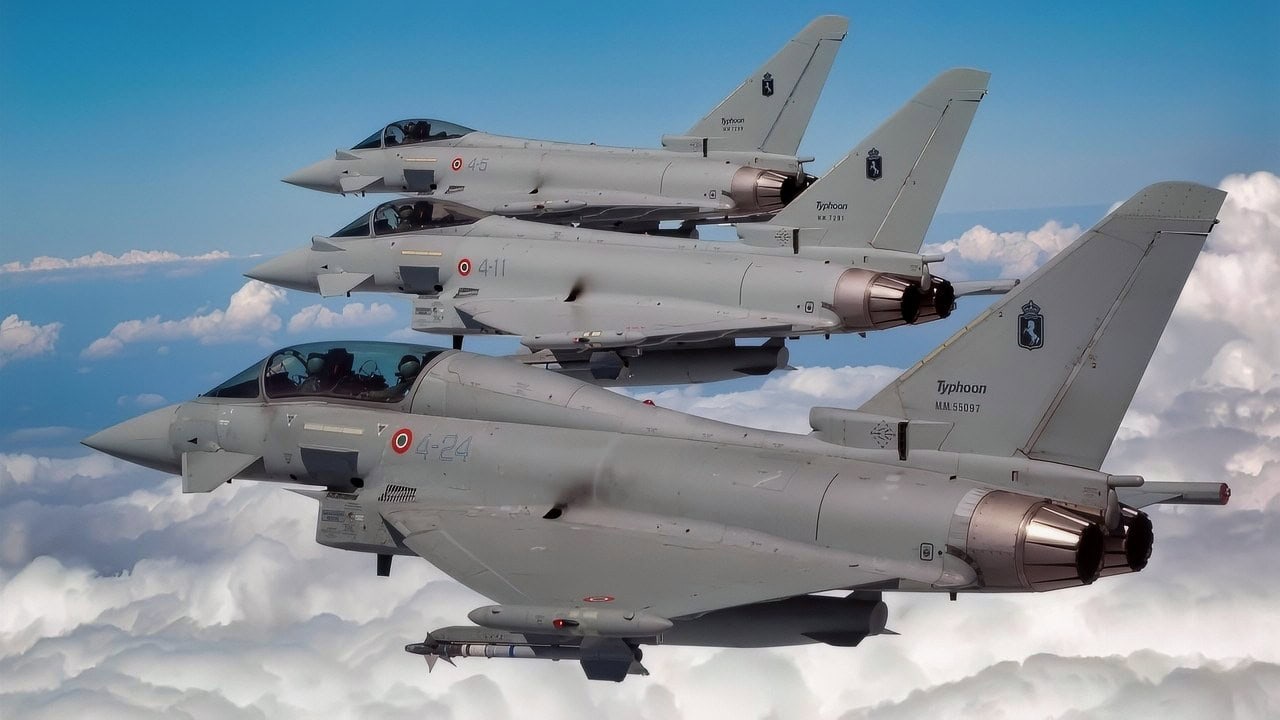
The drone entered Latvian airspace early Friday and was intercepted over the Balvi region in the country's east, according to Latvia's armed forces. Two Italian Eurofighters launched from Lithuania and two Turkish F-16s scrambled from a base in Estonia; one of the Eurofighters identified and destroyed the intruder, NATO spokesperson Allison Hart told Reuters. Latvian soldiers were searching a heavily forested area near the village of Rugaji, roughly 35 kilometres from the Russian border, for debris.
Latvia's Defence Ministry described the aircraft only as a "foreign unmanned aerial vehicle" that entered "as a result of Russian electromagnetic warfare" — the clearest official signal yet that this was a Ukrainian strike drone, deflected off its programmed route by Russian jamming during an overnight Ukrainian attack on Russian ports near St Petersburg. Governor Alexander Drozdenko said Russian forces shot down 15 Ukrainian drones over the Leningrad region; Ukraine also struck the Baltic oil-export hub of Ust-Luga, damaging infrastructure and sparking a fire, according to Ukrainian reports and the regional governor.
Russia's Jammer, Ukraine's Drone, NATO's Problem
This is the third time this year that allied jets have had to destroy a drone over the Baltic states. A Romanian F-16 shot down a Ukrainian drone over Estonia in May; a French Rafale downed another over Latvia in June. Latvian military spokesperson Iveta Berzina was blunt about the pattern: "All these incidents are related to Russian electromagnetic warfare activities, which contributes to these unmanned aerial vehicles entering Latvian airspace."
Kyiv has been saying the same thing for months. In May, Ukrainian Foreign Minister Andrii Sybiha publicly accused Russia of deliberately redirecting Ukrainian drones into neighbouring countries — a charge that put Ukraine's most loyal allies in the awkward position of shooting down weapons that were never aimed at them, fired by an army they are arming.
That is the loop Moscow has built. Russia jams Ukrainian drones, they drift across a NATO border, and NATO spends an expensive Eurofighter sortie — and in some cases an air-to-air missile that costs more than the drone it kills — to clean up the mess. The alliance gets the optics of a violation; Russia gets data on scramble times, intercept procedures and political nerves, all without firing a shot at anyone.
The Alliance's Answer Is a Statement
Two days before the Latvian shootdown, the North Atlantic Council met in extraordinary session over a separate wave of incursions: Russian drones and aircraft violating Polish and Romanian airspace in late July and early August, including a Romanian F-16 shootdown of a suspected Russian-made drone on July 27 and three consecutive days of scrambles before it.
NATO's response was a condemnation. The allies said Russia bears "full responsibility" for violations that are "dangerous and unacceptable" and "demonstrate Russia's increasing tolerance for risk." They promised to keep strengthening integrated air and missile defences from the Baltic to the Black Sea — and then reaffirmed, in the same statement, their "enduring commitment" to Ukraine, whose drones are the ones winding up over Riga's borders.
"Russia bears full responsibility for the airspace violations, which are dangerous and unacceptable, and demonstrate Russia's increasing tolerance for risk." — NATO North Atlantic Council, August 12
There is a logic gap the statement does not address. If Russian jamming is pushing Ukrainian drones across NATO borders, then holding Moscow "fully responsible" is accurate in a causal sense — but it also means the alliance's escalation pressure points at a practice, not an attack. Nobody in Brussels is going to invoke Article 5 over a jammed drone. Which is exactly why Moscow keeps doing it.
The False-Flag Fears Are Already Here
The Baltic states are not waiting for NATO to sort out the semantics. According to Reuters, Russia's NATO neighbours are tightening security around dams, power plants and gas infrastructure over mounting concern that Moscow will stage a "false flag" incident using Ukrainian drones — letting a deflected UAV crash into a civilian installation and blaming Kyiv for an attack on allied soil.
Finland, which shares a longer border with Russia than any other NATO member, temporarily restricted aviation and maritime traffic in the eastern Gulf of Finland on Friday morning as a precaution. In July it closed airspace outright over drone risk. The pattern is no longer an anomaly; it is a standing feature of the eastern flank.
The Real Test Isn't the Drone
Here is what keeps me up at night about this incident, and it is not the wreckage in the Latvian woods. Every shootdown is a live-fire rehearsal for a decision NATO has never had to make: whether a contact approaching allied territory is an accident, a provocation or an attack — and how fast the alliance can tell the difference when the window for that decision is measured in minutes.
Russia is using cheap drones and borrowed jammers to make NATO practice that decision over and over, on its terms, for the cost of a few Shaheds. Each interception is logged, timed and filed. Each one normalises the next. The alliance keeps saying Russia bears full responsibility — and it does — but responsibility is not the same as cost, and right now Moscow is the one collecting both.
Watch three things in the coming weeks: what the debris search near Rugaji actually turns up, whether NATO quietly changes its rules of engagement for drones below a certain size, and whether any Baltic government starts asking publicly why the alliance is still playing this game one scramble at a time. Because the drone that got shot down over Latvia was the cheap part. The expensive part is the habit of treating each incident as a surprise.
An Italian Eurofighter shot down an unidentified drone over Rugaji, Latvia, on August 14. The drone is believed to have been redirected into Latvian airspace by Russian electromagnetic warfare. This incident is the third drone shootdown by NATO in the Baltic region this year, highlighting ongoing tensions and military operations in the area.
- An Italian Eurofighter shot down a drone over Latvia on August 14.
- The drone was likely redirected into Latvian airspace due to Russian jamming.
- This incident marks the third drone shootdown by NATO in the Baltic region this year.
- Latvia's Defence Ministry indicated the drone was a foreign unmanned aerial vehicle.
- NATO condemned Russia for its role in the airspace violations.