
Patriot and APKWS Deals Worth $41 Billion Rearm the Gulf in 2026
 Ahmed Al-Rashid
Patriot and APKWS Deals Worth $41 Billion Rearm the Gulf in 2026
In the first half of 2026 alone, Washington approved arms deals for Gulf Cooperation Council countries worth $41 billion, according to an AGBI analysis of U.S. State Department data. This figure is not a financial detail in a procurement ledger, but a condensed picture of what happened after the Iran War: the Gulf is not buying military luxury, but is trying to buy time between waves of missiles and drones.
The Numbers That Don’t Lie Much
The comparison is stark: $41 billion in six months versus $9 billion for the entire year of 2025. If expansions of previously announced deals are added, estimates suggest another $17 billion that have not all appeared in public announcements. Of the 15 deals announced this year, 12 are related to air and missile defense or aviation. This means that the priority is no longer tanks or large ships, but interceptors, radar, and command systems that decide within seconds whether the target is a cheap drone or a ballistic missile coming from a distance.
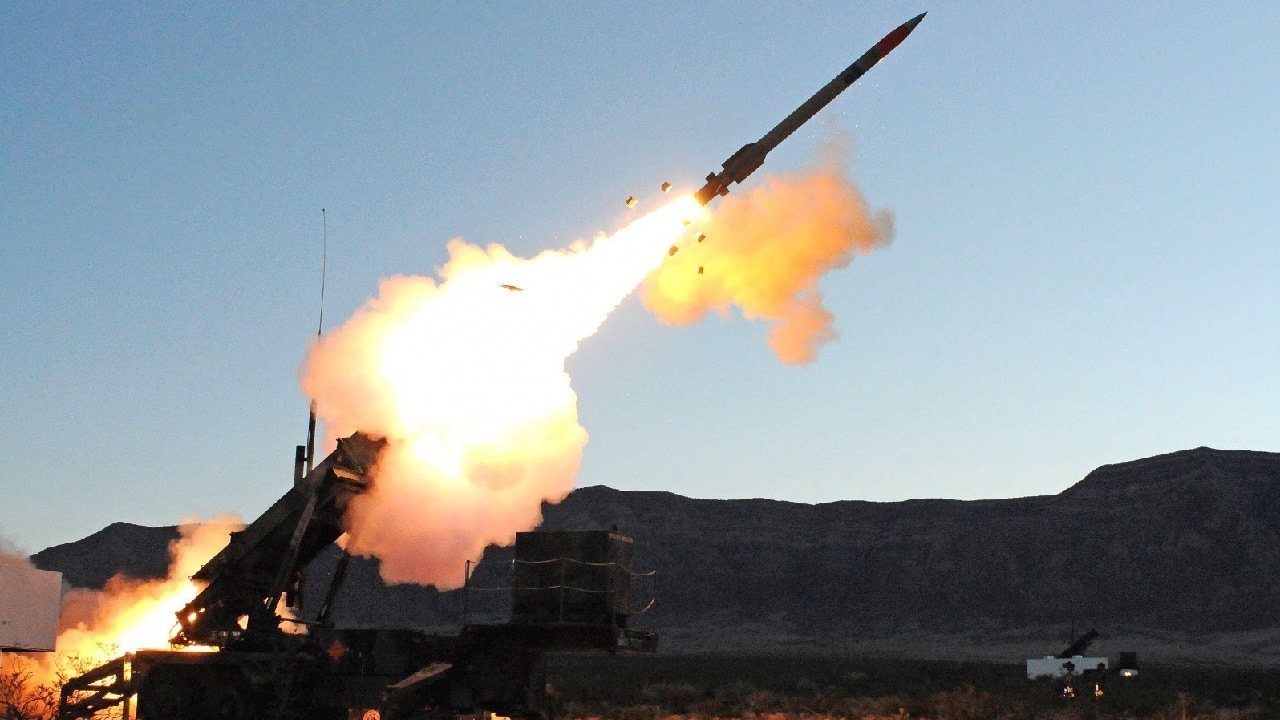
The largest deal in this package was Saudi Arabia's request for 730 Patriot interceptors worth $9 billion. This quantity alone exceeds the number that Lockheed Martin had allocated for producing Patriot missiles in 2025, which is about 650 missiles. Here begins the practical problem: signing the contract does not mean that the battery in the field is now full. In the military, paper does not intercept missiles.
July Deal Reveals Riyadh's Direction
On July 15, the U.S. State Department announced new approvals for Saudi Arabia and Kuwait. Riyadh requested up to 10,000 APKWS-II air-to-air guidance kits and up to 10,000 air-to-ground guidance kits, as part of a package worth $1.96 billion. Kuwait requested support for its C-17 fleet worth $484 million, which includes spare parts and equipment to ensure operational readiness for strategic airlift.
These details are important because they show that the Gulf is not buying a single layer of defense. Patriot and THAAD face the highest threat missiles, while APKWS converts unguided rockets into precision munitions that can be used against lower-cost targets such as drones, fast boats, or light launch platforms. Practically, this is an attempt to reduce the cost of engagement. No country can launch a million-dollar missile at every drone that costs tens of thousands and then call that sustainability.
The Gulf's Problem Is Not Money
Any military officer who has served in the region knows that Gulf countries often do not suffer from a lack of funding. The problem lies in the triangle of capability: equipment, training, and institution. Equipment is purchased relatively quickly. Training takes years. The institution that links early warning, rules of engagement, maintenance, ammunition stockpiles, and chains of command takes longer than a political cycle or a defense exhibition.
After the Iranian strikes and the accompanying depletion of U.S. stockpiles, the question has become more troubling: if Washington itself needs three years or more to rebuild stockpiles of some key munitions, when will the missiles requested by the Gulf arrive? And what happens if a second crisis arises before they arrive? Therefore, the deal for 730 Patriot missiles for Saudi Arabia should not be read as an immediate capability, but as a reservation in a crowded global production queue that includes Ukraine, Israel, and U.S. leadership itself.
The Political Dimension in Contracts
Washington and Gulf governments are trying to finalize as many deals as possible before the U.S. midterm elections, as a shift in the balance of Congress could make approvals more difficult. Some deals from May, including packages for Israel, Qatar, Kuwait, and the UAE worth $8.6 billion, passed through emergency justifications that shortened the parliamentary review period. This is not just an administrative mechanism. It is an acknowledgment that the war with Iran has turned air defense into an internal political issue in Washington as much as it is a matter of survival in Doha, Riyadh, and Kuwait.
But politics comes at a price. The more the Gulf relies on U.S. exceptions, the more it undermines its claim to be building complete defensive independence. Yes, Saudi Arabia wants to localize 50 percent of defense spending under Vision 2030. Yes, American and European companies see the Kingdom as a potential place to alleviate production bottlenecks. But assembling part of the supply chain is one thing, and owning the design, software, modification rights, engine stock, and seeker heads is another.
What This Changes in the Regional Balance
Iran must read these deals cautiously. Increased interceptions will reduce the effectiveness of traditional missile strikes, but will not eliminate the logic of saturation. Tehran knows that Gulf air defense improves when waves are limited, and becomes tense when ballistic missiles mix with drones, cruise missiles, and radar deception. Therefore, Iran will continue to seek the cheapest way to force its adversaries to expend their most expensive munitions.
As for Israel, it benefits from the expansion of the American defense network in the region, but it also sees that Gulf countries now have a stronger justification for acquiring technology that Washington has been hesitant to transfer. If command and control packages, radars, and precision munitions reach a higher level, then the unannounced defense cooperation between Israel and some Gulf capitals may become less sensitive militarily, but it will remain politically costly in the eyes of Arab public opinion.
Conclusion
The 2026 deals do not say that the Gulf has become safe. They only indicate that Gulf capitals have understood that the time for buying shiny platforms alone has ended, and that munitions, maintenance, and networking have become the heart of power. Yet the paradox remains: the Gulf is buying independence through channels of reliance on the United States. And as the old military saying goes, the weapon whose arrival you do not know does not count in the first plan, but in the last hope.
The U.S. approved $41 billion in arms sales to Gulf Cooperation Council countries in the first half of 2026, emphasizing air defense capabilities. Saudi Arabia ordered 730 Patriot missiles, while Kuwait sought support for its C-17 fleet. This shift in procurement reflects a strategic focus on missile defense systems amid regional threats, with political implications tied to upcoming U.S. elections.
- The U.S. approved $41 billion in arms sales to Gulf countries in the first half of 2026.
- Saudi Arabia requested 730 Patriot missiles worth $9 billion.
- Kuwait requested $484 million in support for its C-17 fleet.
- The focus is on air defense and missile systems rather than traditional ground forces.
- The arms sales are politically motivated ahead of U.S. midterm elections.