
Pentagon's 6-Month Review Forces NATO-Europe 2026 to Conventional Accounting
 Dr. Klaus Weber
Pentagon's 6-Month Review Forces NATO-Europe 2026 to Conventional Accounting
Six months is usually a short administrative span in European defense policy. In this case, it is a strategic deadline. On July 29, the Pentagon confirmed that the review of American troop presence, basing, and force disposition in Europe announced by Defense Secretary Pete Hegseth on June 18 in Brussels has formally begun. No withdrawals have been announced. This is precisely where the temptation for self-soothing lies. A review that is explicitly meant to examine how Europe takes primary responsibility for its conventional defense alters the planning basis even before a single American soldier is reassigned.
No Withdrawal Announcement, but a New Benchmark
Hegseth referred to the review in June as a real review that could take up to six months. Elbridge Colby, the Under Secretary of Defense for Policy, has now articulated the purpose even more sharply: NATO should move quickly and irreversibly towards European primary responsibility for conventional defense. This is not a technical audit of barracks occupancy. It is a political test of which European commitments are backed militarily.
The difference is important. Since 2022, European capitals have been discussing higher quotas, special funds, and new procurement programs. Washington is no longer just asking whether Europe is spending more, but whether these expenditures can replace American functions. This concerns intelligence, air defense, heavy land forces, munitions, strategic transport, command capability, and the political commitment to reliably provide bases, overflight rights, and access in times of crisis.
The 5 Percent Target Does Not Automatically Resolve the Capability Question
At the Hague NATO Summit in 2025, allies committed to a 5 percent framework, with 3.5 percent for core defense and 1.5 percent for resilience and related security expenditures. This figure is politically impressive. Institutionally, it is inadequate. Those announcing 3.5 percent today will not have deployable brigades, integrated air defense, or munitions stocks for a prolonged war by 2026.
Germany illustrates the problem particularly clearly. The special fund has closed contractual gaps, initiated F-35s, radios, munitions, and air defense. However, it has not created a robust European replacement structure for American capability cores. Poland is buying quickly, but heavily American and South Korean. The Baltic states spend a lot relative to their GDP but have little absolute depth. France possesses nuclear and expeditionary capabilities but remains limited in conventional mass and budget clarity. The UK speaks strategically faster than its defense budget closes the gaps.
Ukraine's Air Defense Shows the Real Bottleneck
In parallel to the Pentagon review, Ukraine provides the operational evidence. According to a recent analysis by Justin Bronk for RUSI, picked up by Defense News, Ukrainian F-16s have shot down more than 2,500 Russian Geran and Gerbera attack drones. This sounds like success. However, it is also a warning signal: a small fleet of an estimated 39 available F-16s is so heavily burdened by drone hunting, missile consumption, and flight hours that maintenance cycles and operational availability become a strategic factor.
Russia is producing more than 6,000 one-way attack drones per month, according to Bronk. Against such quantities, highly qualified pilots, F-16 flight hours, and air-to-air missiles are an expensive resource. Therefore, Ukraine is trying to combine inexpensive short-range air defense, mobile machine gun teams, anti-aircraft guns, and intercept drones in dense zones. NATO-Europe currently cannot simply replicate this density because personnel, sensors, munitions, and local protection concepts are lacking.
This is where the Ukraine war and the American Europe review intersect. If Washington wants to weight its European forces differently globally, Europe must not only buy more tanks. It must be able to perform the everyday defense tasks that have often remained invisibly American: protecting airfields, defending headquarters, securing logistics nodes against drones, intercepting ballistic missiles, and simultaneously providing enough conventional land forces for deterrence on the eastern flank.
The Review Also Hits Europe's Political Reliability
Hegseth's speech in Brussels contained a second point that is underestimated in Europe. He criticized allies who have denied or shifted access, basing, or overflight rights in the context of Iran to legal debates. For Washington, this is not a trivial matter. An alliance that demands American presence but selectively politicizes American operational freedom invites exactly the kind of scrutiny that has now begun.
This is uncomfortable for Berlin but not surprising. German security policy likes to separate between defending Europe and global American power projection. Institutionally, this separation is cleaner than strategically. The American bases, command structures, and air transport chains that Europe relies on in an Article 5 scenario are the same structures that Washington needs for other crises. Those who only want the insurance policy but wish to avoid infrastructure policy should not be surprised if the insurer recalculates the premium.
What Europe Must Demonstrate in Six Months
The right European response would not be outrage over American pressure. It would be a sober capability assessment. First, NATO-Europe needs a robust list of American functions that cannot be replaced in the short term: ISR, air refueling, strategic transport, integrated air and missile defense, munitions depth, and operational command. Second, European states would need to specify which of these functions will be realistically, not rhetorically, enhanced in Europe by 2028. Third, the EU would need to link its industrial instruments like SAFE and EDIP to NATO capability gaps, rather than treating them primarily as industrial policy programs.
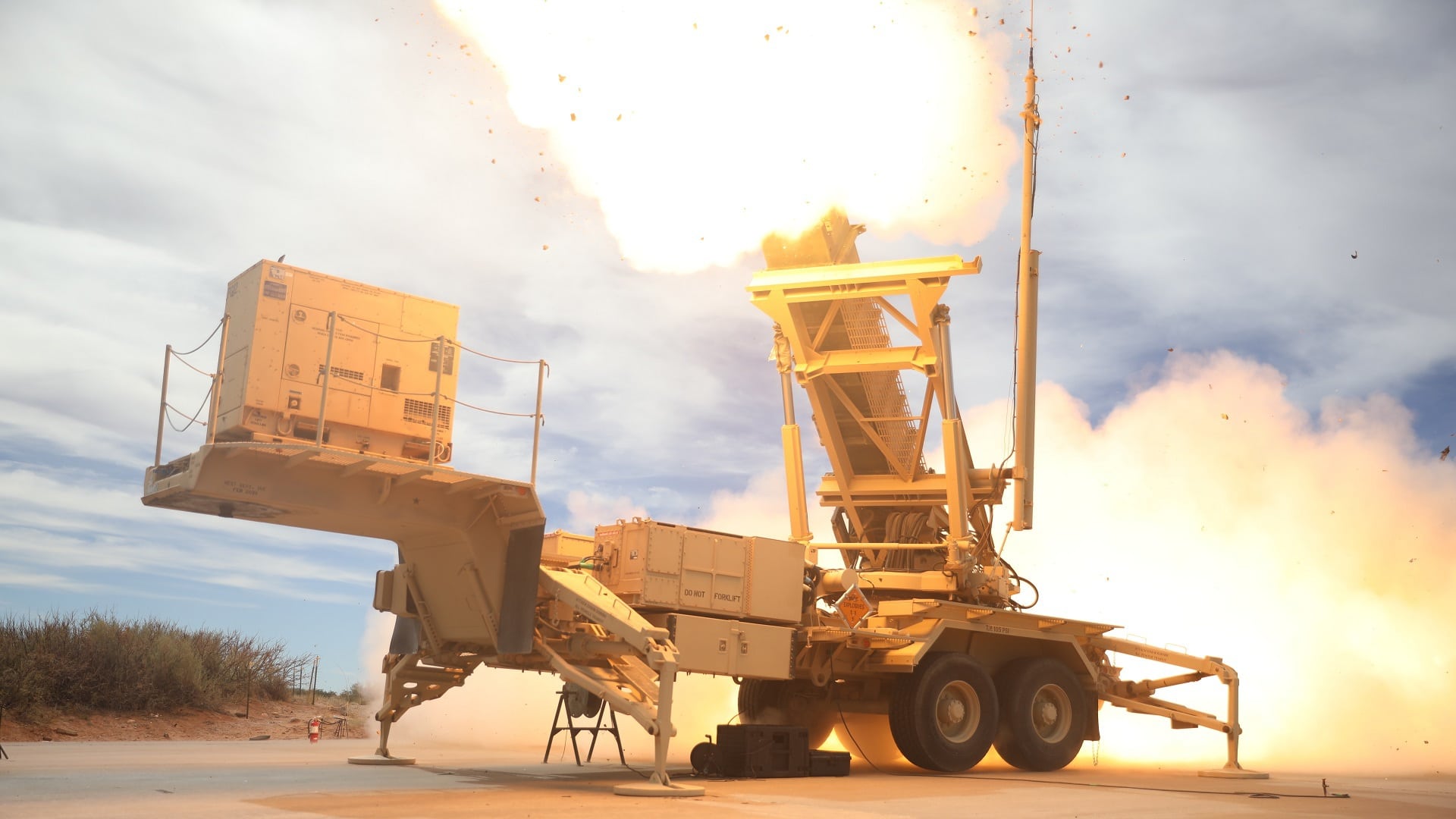
But is that enough? Only if procurement and operational planning are brought together. Europe often orders systems nationally, plans them multilaterally, and expects American integration in times of crisis. This three-part division is convenient but not war-proof. A Patriot launcher in Germany, a SAMP/T system in Italy, and an F-35 squadron in the Netherlands do not yet constitute a European air defense architecture as long as sensors, munitions stocks, rules, command networks, and political approvals do not align.
The Uncomfortable Point
The Pentagon review is not a guarantee of an American withdrawal. It is something more effective: a mechanism that holds European promises against American planning options. If Europe presents only higher budget lines after six months but no demonstrable capability to take on conventional defense tasks, Washington will draw its own conclusions from that.
The European reflex will be to describe this development as Trumpism or American unreliability. That is too simple. The deeper truth is: Europe's strategic dependence did not arise because America has demanded too much. It arose because Europe has been institutionally organized too little for decades. More money is now necessary. But without capability discipline, it remains just the expensive form of the same dependence.
The Pentagon initiated a review of U.S. troop presence in Europe on July 29, 2023, emphasizing the need for NATO to assume greater responsibility for its conventional defense. This review aims to assess European military capabilities and commitments, with no troop withdrawals announced. The situation highlights the strain on Ukraine's air defense and the necessity for European nations to enhance their military readiness by 2028.
- Pentagon confirmed the start of a review of U.S. troop presence in Europe on July 29, 2023.
- The review aims to assess Europe's responsibility for its conventional defense.
- No troop withdrawals were announced, indicating a shift in strategic planning.
- European nations are urged to enhance their military capabilities by 2028.
- Ukraine's air defense capabilities are under strain due to high demand and limited resources.