
Recap: Autonomy dominates the US Army’s 2026 conference in Washington

WASHINGTON — The Association of the United States Army showcased its annual conference from Oct. 12-14 in Washington, assembling defense industry officials, lawmakers and military personnel from around the globe to assess the future force and evolving threats.
Dominating displays at this year’s show was an unmistakable surge in automation and unmanned systems, as well as weaponry and vehicle capabilities that continue to adapt to a frenzied pace of innovation at the heart of today’s conflicts.
Army officials attending the conference emphasized the service’s need for rapid transformation as the technologies at the core of these conflicts seemingly evolve by the day.
Defense News and Army Times covered these discussions — and more — from this year’s show.
Catch up on all of our top stories from this year’s AUSA conference and be sure to read our latest coverage at defensenews.com/digital-show-dailies/ausa.
Jump to a section:
Drone Dominance
A forward-looking philosophy
Weapons and equipment
Getting defensive
Personnel
Sponsored By: American Rheinmetall
Back to Top
Drone dominance
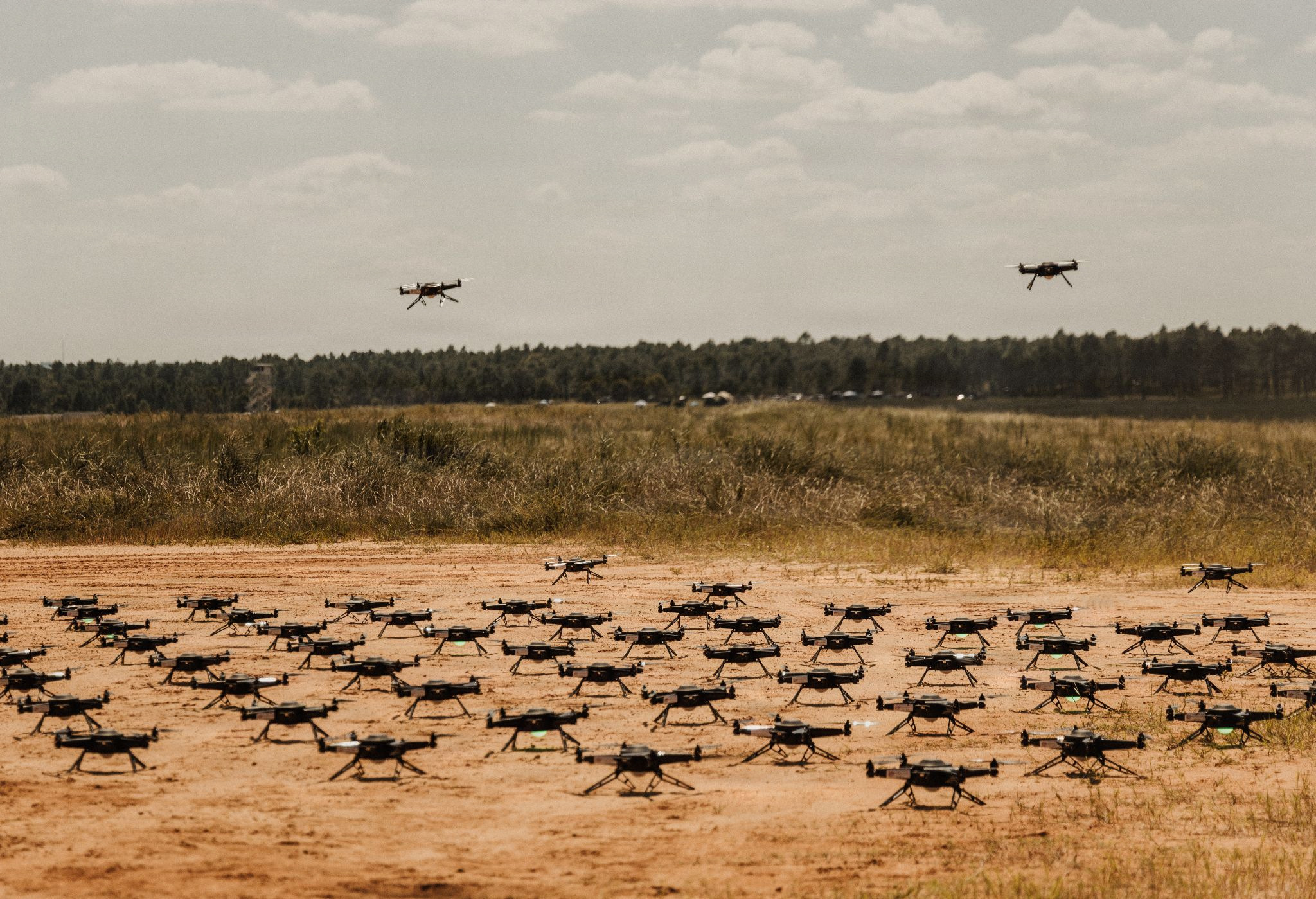
Pentagon, Army go all in on autonomy
The Pentagon wants to take its stockpile of autonomous weapons from thousands of units into the millions.
Defense Secretary Pete Hegseth addressed AUSA attendees at the Project Agincourt panel on Wednesday, sharing that the Pentagon is requesting roughly $50 billion in reconciliation funding to support the push to scale autonomous and robotic systems. Read more here.
Autonomous weapons are changing the way brigades fight
At Fort Bragg, soldiers recently tested how unmanned systems could help troops breach obstacles while reducing exposure to battlefield hazards.
During Project Sandhills 2.0, soldiers planned flight routes and operated Bumblebee V2 small unmanned aircraft systems at Range 63.
The project tested how unmanned systems could support contested obstacle breaching, while soldiers and industry partners collected feedback to inform future Army capabilities. Read more here.
US Army to stand up command for unmanned and autonomous warfare
The U.S. Army ordered the creation of its own command for autonomous systems a day after Hegseth announced a new four-star military command for unmanned and autonomous warfare.
An Oct. 1 memo signed by Acting Army Secretary Adam Telle directs the Army vice chief of staff to establish the U.S. Army Futures and Autonomous Systems Command, or FASCOM. It also tells the assistant secretary of the Army for acquisition, logistics and technology, who oversees how the Army buys weapons, to put one office in charge of purchasing its priority autonomous systems. Read more here.
US Army expands drone marketplace to 33 nations
The U.S. Army’s online marketplace for rapid drone acquisition is expanding internationally.
Representatives of Canada, Croatia, Egypt, Japan, Kuwait, Morocco, Albania and Panama signed a statement of intent to join the Unmanned Aircraft Systems (UAS) Marketplace during a ceremony Tuesday.
Since the marketplace was stood up, it has processed $800 million in transactions. Read more here.
Drone carrying M250 machine gun completes firing test
A heavy-duty quadcopter carrying Sig Sauer’s new M250 light machine gun has completed a test requiring it to identify and engage targets from the air, the company announced Tuesday.
Sig Sauer completed the test in concert with Israel Aerospace Industries, maker of the Fire Storm 250, a reusable drone that can stay airborne for two hours and is designed with a stabilized machine-gun mount. Read more here.
US Army targets 2028 for first high-energy laser counter-drone weapons
The first directed energy weapon selected by the U.S. Army for the Enduring-High Energy Laser (E-HEL) program could be out of testing and ready for counter-drone operations by early 2028, Army officials told Military Times.
In September, the Army awarded AeroVironment a $464.8 million contract for LOCUST X3, its modular, palletized high-energy laser system. Earlier generations of the LOCUST system are actively fielded in operational environments, including at the U.S. southern border, according to AeroVironment. The first LOCUST X3 is slated for delivery by Q4 of FY 2027 and will be mounted on the Joint Light Tactical Vehicle. Read more here.
Jump to a section:
Drone Dominance
A forward-looking philosophy
Weapons and equipment
Getting defensive
Personnel
Sponsored By: American Rheinmetall
Back to Top
A forward-looking philosophy

‘Noticeable shift in warfare’: Army under secretary on the lessons of modern combat
The Army’s evolving priorities were reflected all over the AUSA show floor, according to Army Under Secretary Mike Obadal. In a sit-down with Military Times, Obadal highlighted areas that look nothing like the armor-heavy shows of years past.
Obadal also discussed the high-low mix of exquisite and affordable munitions, faster acquisition cycles and why keeping a human in the loop remains the default for AI on the battlefield. Read more here.
‘We’ve drowned ourselves in buzzwords’: Acting secretary gives sermon-like first speech
Acting Army Secretary Adam Telle’s AUSA speech differed significantly from his predecessor’s in 2025, but he quickly made it clear that the Army was holding the course set by former Army Secretary Dan Driscoll, who resigned Aug. 31 over growing disagreements and friction with Defense Secretary Pete Hegseth.
Telle hailed the Army’s work to streamline acquisition and reduce roadblocks to getting soldiers the gear they need, citing the Army’s work to reduce service “fiefdoms” from thousands to a few newly named portfolio acquisition executives. Read more here.
The Army’s new warfare guidance
Disrupt enemy command and control. Hit enemy forces with firepower, then assault with ground troops to finish the job. And be resilient enough to function despite what the enemy dishes out in return.
That’s the essence of “How The Army Fights,” a new 46-page guide on how the U.S. Army can leverage the tactical to improve the operational. Read more here.
9 companies selected to build next-gen command and control software
The U.S. Army announced that it is awarding initial contracts to several defense technology companies to build applications for its new battlefield software.
The service will pay a one-year total of $93.6 million, spread out across nine companies, to create applications for its Next Generation Command and Control, or NGC2, software.
The NGC2 will provide a shared network for technologies, weapons, sensors, devices and applications to operate within that will increase decision-making speed on the battlefield. Read more here.
A second expeditionary cyber battalion on the horizon
The Army will soon double the number of battalions it uses to train and deploy expeditionary cyberspace and electromagnetic warfare teams, according to the Army.
At AUSA on Monday, head of Army Cyber Command Lt. Gen. Christopher Eubank gave an approximate timeline for when the service would be delivering the new unit devoted to the exact same mission as the 11th Cyber Battalion, dubbed the Leviathans. Read more here.
An Indo-Pacific manufacturing hub in Korea?
As the Eighth Army in Korea builds out its logistics capability, it’s investing in advanced manufacturing with an eye to supplying spares, not only to local Army forces, but also to troops across the Pacific region.
Eighth Army officials spoke earlier this year about how establishing a Korea-based regional sustainment hub, or center for logistics, maintenance and supply, could cut down the burden and cost of long-distance sustainment. At a roundtable event Monday, Eighth Army Commander Lt. Gen. Joseph Hilber indicated the force was moving out to build that sustainment hub. Read more here.
Jump to a section:
Drone Dominance
A forward-looking philosophy
Weapons and equipment
Getting defensive
Personnel
Sponsored By: American Rheinmetall
Back to Top
Weapons and equipment
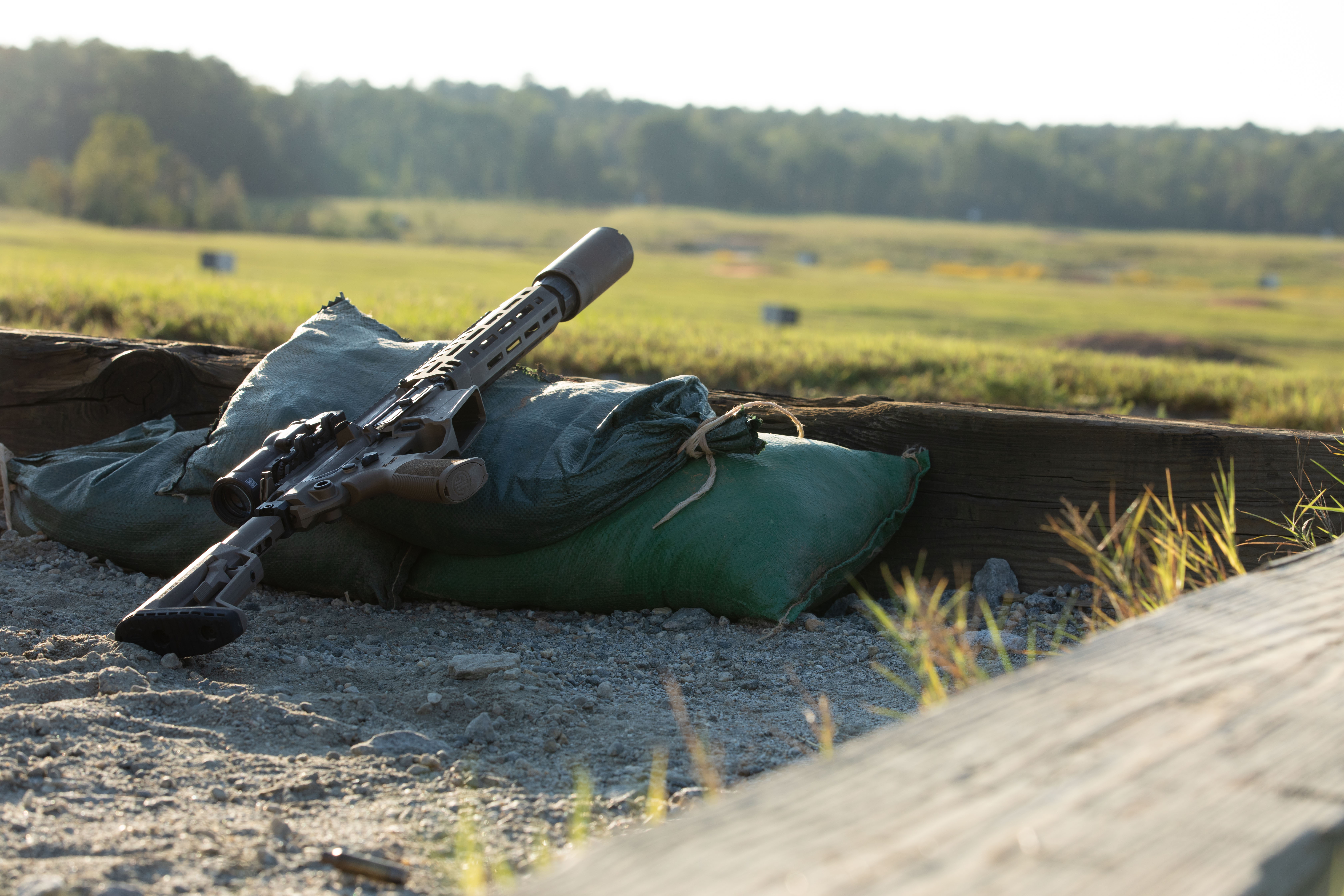
M8 rifle to begin fielding in December
Fielding of the M8 carbine, which appears set to replace Sig Sauer’s M7 as the Army’s standard rifle less than three years after the M7’s initial fielding began, will begin in December with some units at Fort Bragg, North Carolina, company executives confirmed to Military Times.
The NGSW new weapons rollout also includes Sig’s M250 machine gun, which will replace the aging M249 Squad Automatic Weapon and is expected to reach troops in the first half of next year, said Dave Buehler, the company’s vice president of manufacturing. Read more here.
A 25-round mag for Army’s next-gen rifle
Soldier feedback, from the constructive to the blistering, has been instrumental in guiding weapons manufacturer Sig Sauer in its development of the M8 carbine.
Among those changes is a 25-round magazine to replace the 20-round mag that shipped with the M7, said Josh Shoemaker, Sig’s product manager for defense. Read more here.
US Army gets first mobile cannon to replace M777 howitzer
The U.S. Army has taken delivery of its first Korean-made mobile tactical cannon less than a year after first issuing a solicitation, service officials said.
Speaking to reporters, the Army’s leader for offensive fires said that the mobile tactical cannon, made by Hanwha Defense USA, was on display at a first-of-its-kind “Army Modernization Day” held on Capitol Hill earlier this month. Read more here.
The race to replace the Bradley heats up
Both XM30 contenders made their case at AUSA. General Dynamics Land Systems brought a one-eighth-scale model of the XM30 Wolf after delivering its first full-size prototype to the Army in August. Read more here.
American Rheinmetall delivered its first Lynx prototype in September, with seven more due by year’s end. Some troops have been able to see the vehicle and were able to hop inside and turn it on, a company official said, beginning a new era for Army combat vehicles. Read more here.
Infantry Squad Vehicle surge
GM Defense announced on Monday that the Army has expanded orders for the Infantry Squad Vehicle, or ISV, from the initial 649 to nearly 12,000.
The announcement means the service will be increasing its fleet of ISVs by roughly 1,750%.
The ISV and ISV-Heavy, which are modeled after GM’s Chevrolet Colorado ZR2 and Chevrolet Silverado HD 3500 ZR2, respectively, are designed to be adapted to changes on the battlefield rather than specific mission sets. Read more here.
Bell touts MV-75 Cheyenne II as combat game changer
The U.S. Army’s MV-75 Cheyenne II is expected to bring increased capability to the service, not just through its boosted speed and range but also with its “digital backbone.”
Although the Cheyenne’s speed and weapons systems capabilities are expected to increase substantially, Bell, the defense manufacturer for the aircraft, anticipates the real “revolutionary” part to be its software. Read more here.
Jump to a section:
Drone Dominance
A forward-looking philosophy
Weapons and equipment
Getting defensive
Personnel
Sponsored By: American Rheinmetall
Back to Top
Getting defensive
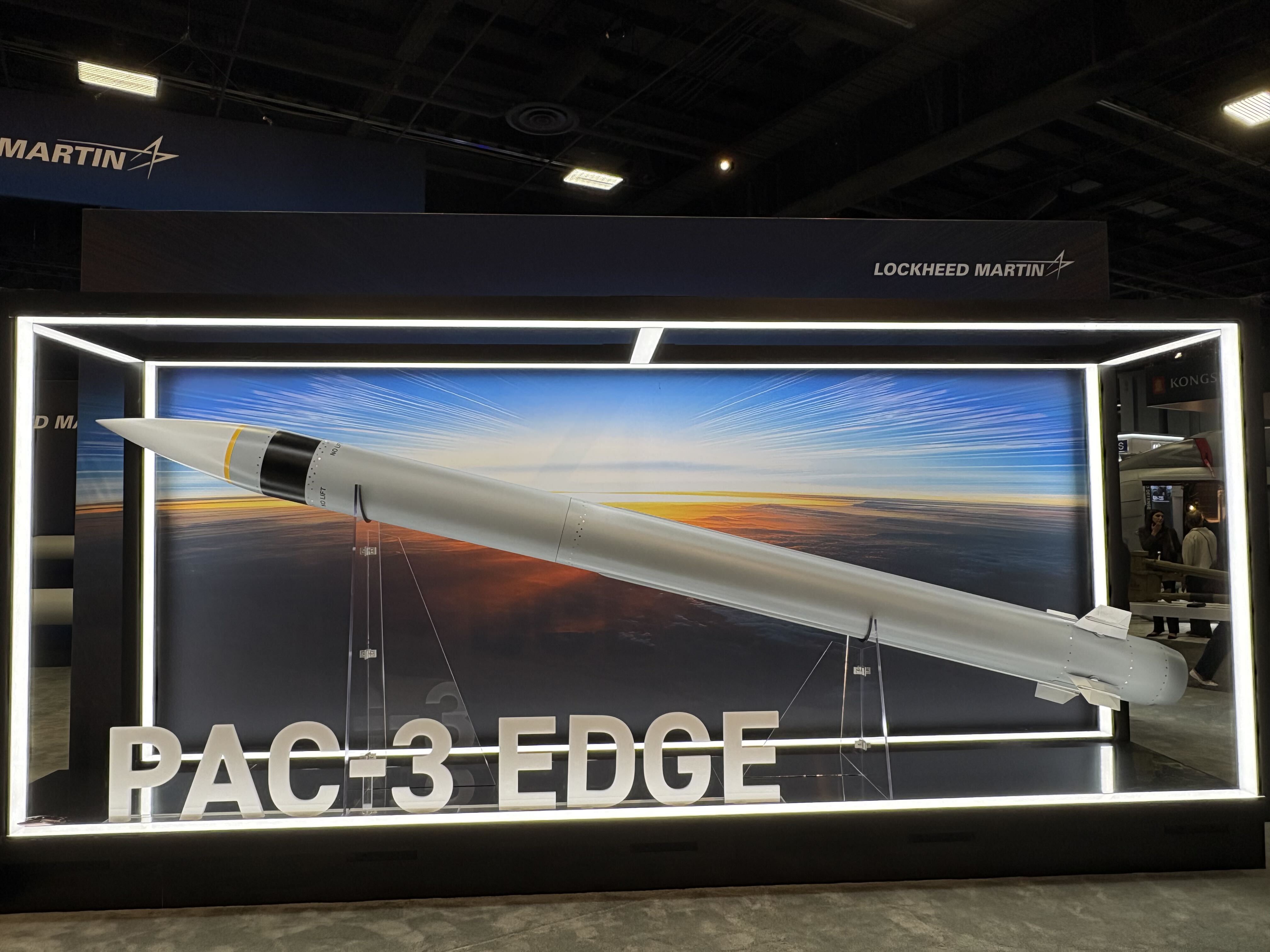
New PAC-3 Edge interceptor aims for agility
The latest iteration of Lockheed Martin’s PAC-3 family of missile interceptors is designed to bring extreme agility to bear against a diverse array of missile threats, Defense News learned.
Designed to defend against hypersonic and advanced missile threats, the unveiling of the PAC-3 Edge at AUSA comes as the U.S. military’s reliance on costly interceptors against cheap munitions. Read more here.
Anduril reveals family of surface-to-air interceptor missiles
Anduril announced a new family of surface-to-air interceptor missiles in an effort to create a more diverse range of defensive measures while building at scale.
Steelfin, a family of highly configurable, mass-producible, surface-to-air interceptor missiles, has been developed to deliver cost, volume and capability across a variety of threats, the company announced. Read more here.
BAE Systems unveils new layered air-defense system
BAE Systems on Monday unveiled new layered air-defense systems designed to counter missiles and drones.
The international defense company introduced the Multi-Domain Artillery Cannon System, or MDACS, and the High-Power Microwave, or HPM, as complementary systems for protecting critical installations and field units. Read more here.
Powerus unveils fully autonomous drone interceptors
The South Carolina-based startup Powerus unveiled a fully autonomous version of its Guardian interceptor on Monday at AUSA.
Brett Velicovich, the company’s president and co-founder, said in an interview with Military Times that logical product upgrades have been key to the company’s success. He explained how the company’s growth, the evolution of its interceptors and rising U.S. military demand for drone-defense systems amid the war in Iran have converged. Read more here.
Northrop Grumman breaks out the big guns at AUSA
Amid the missiles and microelectronics, Northrop Grumman brought something more familiar to the floor: really big guns.
The company showed off Raid Hunter, a 50mm gun-based air defense system with AI targeting and proximity-fuzed rounds built for drone swarms and cruise missiles, and debuted a dual-feed M230 chain gun that lets crews switch between counter-drone and anti-armor ammo on the fly. Read more here.
Forterra partners with Hypercraft on autonomous vehicle for high-risk missions
Defense companies Forterra and Hypercraft have collaborated to produce a contested-environment-ready autonomous vehicle, which they showed off for the first time at AUSA.
Forterra installed its AutoDrive autonomy software platform that powers unmanned maneuverability onto Hypercraft’s Razorback ground vehicle, yielding a product that can withstand the punishing logistics of combat without putting soldiers at risk. Read more here.
Jump to a section:
Drone Dominance
A forward-looking philosophy
Weapons and equipment
Getting defensive
Personnel
Sponsored By: American Rheinmetall
Back to Top
Personnel
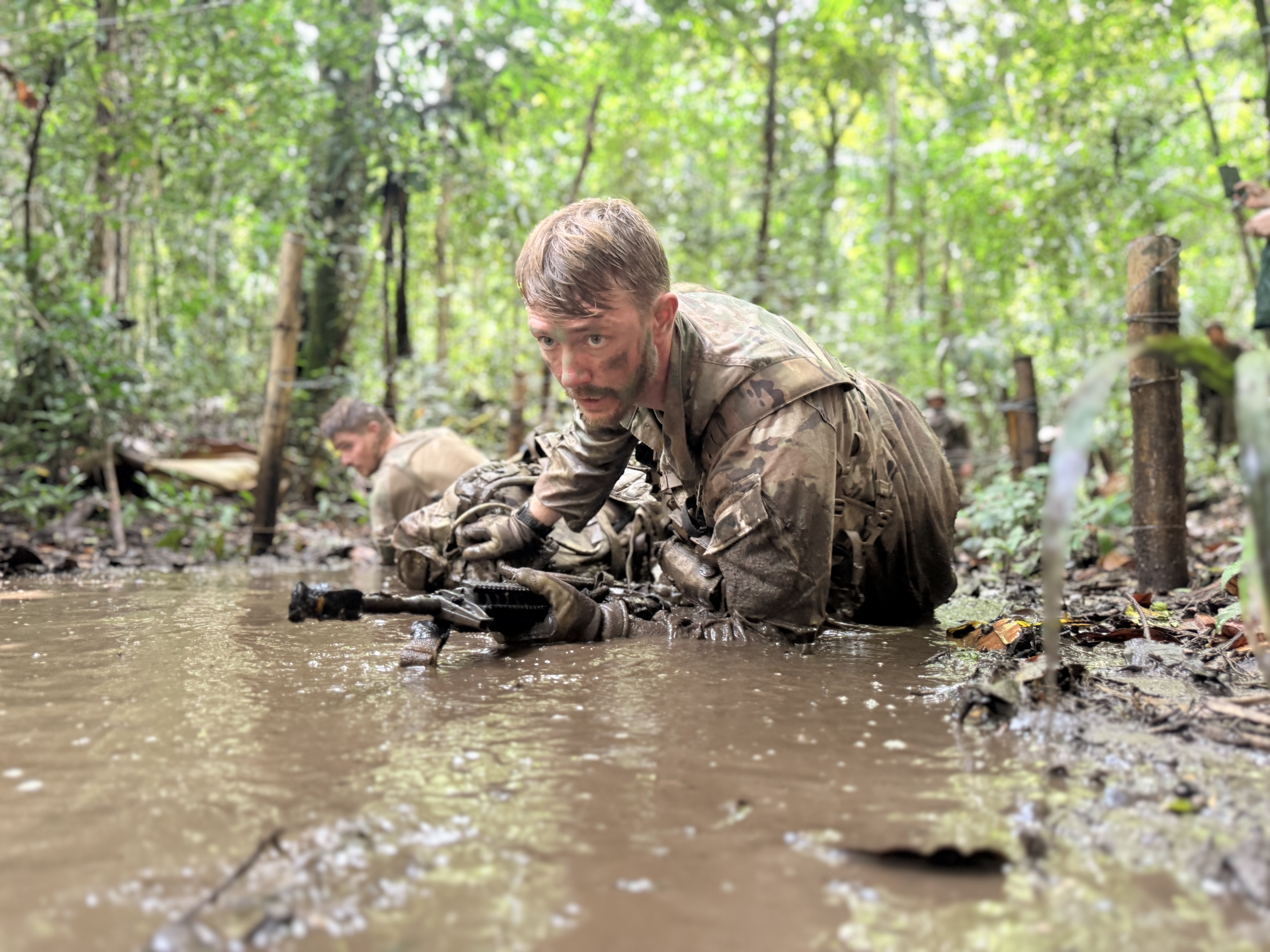
Back in the jungles of Panama
The U.S. Army has resumed a partnership with Panamanian forces, in which the country’s troops teach and attend the 18-day Jungle School.
As Panama’s troops have trained, lived — and in some cases, fought — in such environments, they are largely seen by U.S. personnel as the ultimate masters of the terrain. Read more here.
For soldiers of the 11th Airborne, ‘winter is always coming’
Survival in Alaska’s vast wilderness, where any hint of complacency can indeed kill, presents a colossal difficulty. Training service members to fight in these environs is an undertaking even more daunting.
For the soldiers of the U.S. Army’s 11th Airborne Division, this task rests, ultimately, on the shoulders of Maj. Gen. John Cogbill and the capable leaders he advises. Cogbill spoke to Military Times about what goes into warfighting in the far North. Read more here.
Generals propose larger-footprint, more frequent exercises in Korea
A month after President Donald Trump intervened to scale back joint military exercises with South Korea, citing a desire not to upset his “very good relationship” with North Korean dictator Kim Jong Un, the commander of Army forces on the peninsula said he’d like to go bigger — both in exercise frequency and geographic scope.
Speaking at AUSA, Gen. Xavier Brunson, commander of United Nations Command, Combined Forces Command, and United States Forces Korea, said lessons from Ukraine prompted interest in changing the shape and structure of exercises there. Read more here.
‘Addicted to the Guard’: Generals call for a ‘traffic cop’ on governors’ demands
During a panel at AUSA, the message of National Guard leaders was clear: State demands of Guard troops are unsustainable — and they need to stop.
The effects are felt in equipment readiness and training, particularly as funding has not followed the deployment of units and their gear. Read more here.
Updates to testosterone screening
A quarter of troops measured below testosterone thresholds, a new study of Army personnel found, with similar results compared to the general U.S. population.
According to the research, 20% of male soldiers younger than 30 years had testosterone levels less than the threshold established by the American Urological Association of 300 nanograms per deciliter, or ng/dL. Roughly a third of service members — 32.8% — aged 30 and older fell below the threshold. Read more here.
‘Nobody’s losing pay’: Army Cyber Command head on new tech mastery program
The head of the U.S. Army’s digital defense wing on Monday reassured soldiers in the field that a new initiative aimed at enhancing cyberspace proficiency wouldn’t affect their pay.
The Cyber Mastery Incentive program debuted on Oct. 1, promising a new way of paying service members that rewards technology mastery and performance of demanding tasks. But reports emerged that the program wasn’t as financially enticing as advertised, with reductions in certain soldiers’ pay by up to $1,000 per month. Read more here.
Jump to a section:
Drone Dominance
A forward-looking philosophy
Weapons and equipment
Getting defensive
Personnel
Sponsored By: American Rheinmetall
Back to Top
The U.S. Army showcased advancements in automation and unmanned systems at the AUSA conference in Washington from October 12-14, 2026. The Pentagon announced a request for $50 billion to scale autonomous weapons, while the Army established a command for unmanned warfare. The Army's drone marketplace expanded to 33 nations, and the M8 carbine is set for fielding in December 2026.
- The Pentagon is requesting $50 billion for autonomous systems funding.
- The U.S. Army is establishing a command for unmanned and autonomous warfare.
- The Army's drone marketplace is expanding to 33 nations.
- The M8 carbine will begin fielding in December 2026.
- The first high-energy laser counter-drone weapon is expected by 2028.