

Summary and Key Points: Expert Dr. Brent M. Eastwood builds on the line attributed to George S. Patton, “War is just like boxing. When you get an opponent on the ropes, you must keep punching the hell out of him and not let them recover,” tracing his doctrine of relentless pressure, fear as a weapon and Rommel-inspired breakthroughs to three victories: El Guettar in 1943 after Kasserine Pass, the Third Army’s dash across France after Normandy, and the relief of Bastogne.
Patton’s “Boxing” Rule for War: Keep Hitting Until the Enemy Breaks
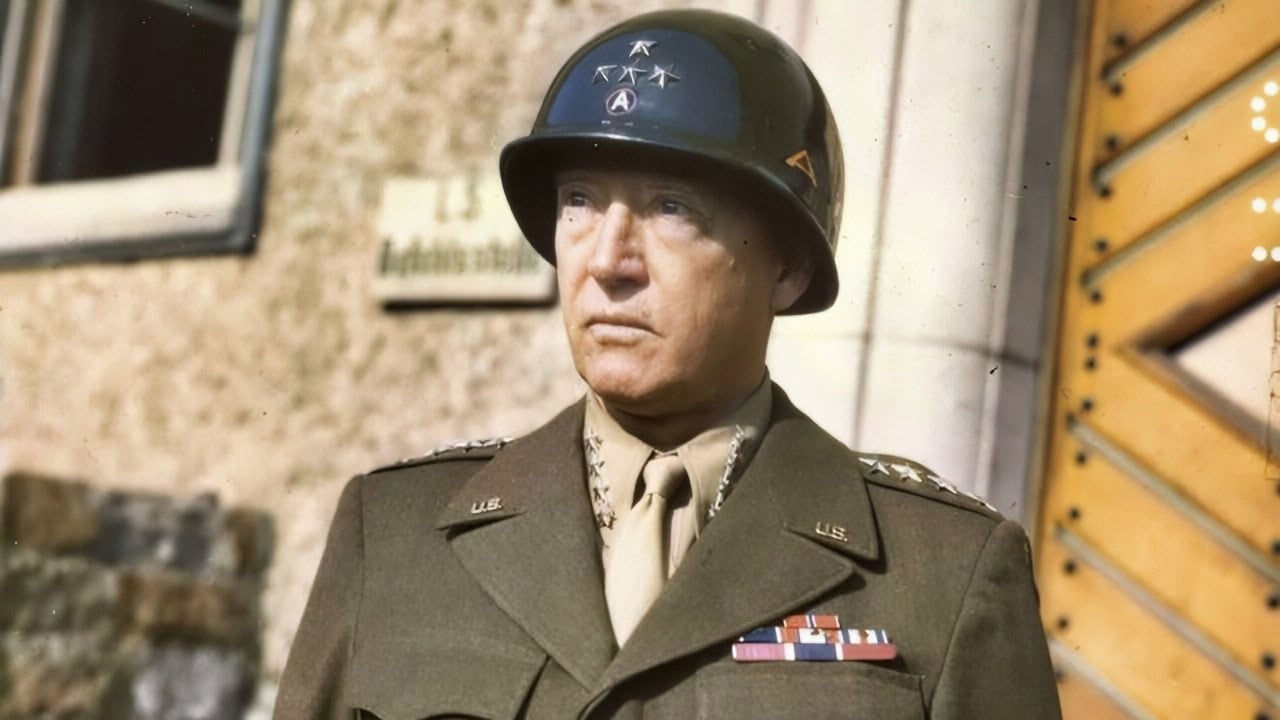
General George Patton U.S. Army Photo
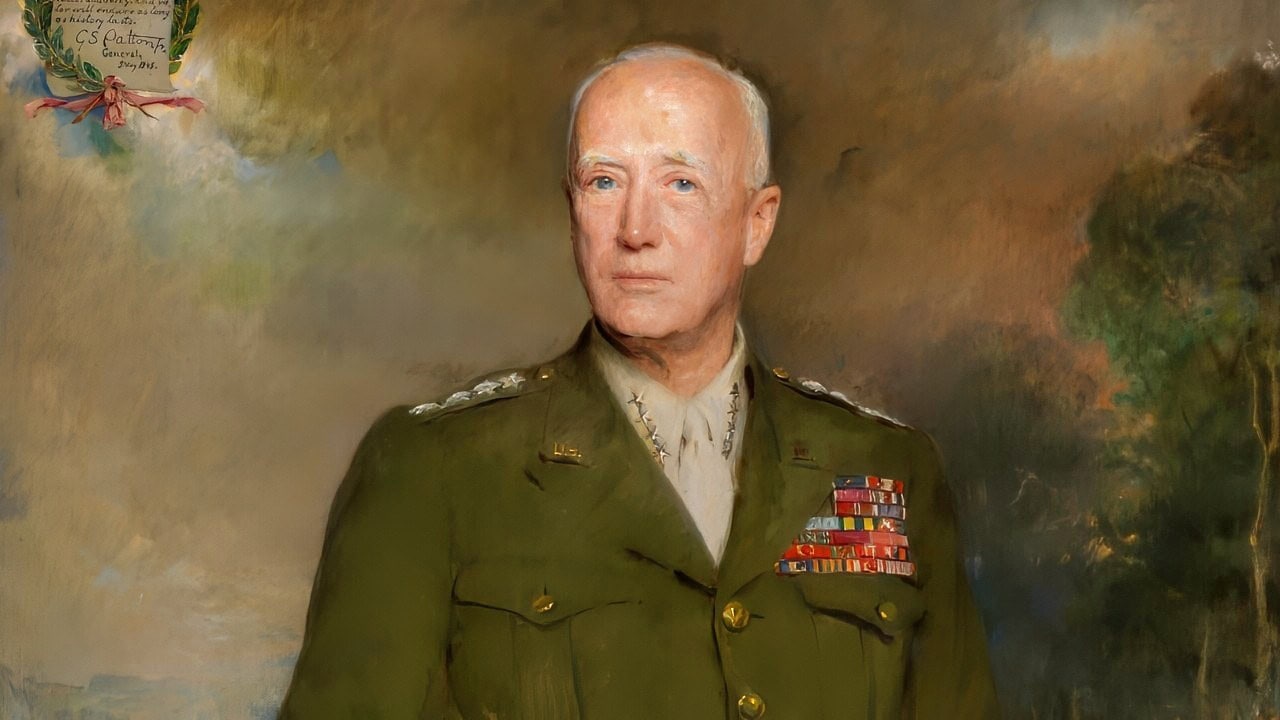
U.S. Army General George Patton. Image Credit: Creative Commons.
“War is just like boxing. When you get an opponent on the ropes, you must keep punching the hell out of him and not let them recover.” -General George S. Patton
This quote is attributed to Patton during World War Two.
He believed in the value of attacking an enemy repeatedly and then delivering a decisive blow with surprise and speed.
The point of any war, Patton thought, was to place constant pressure on an adversary. Hit him hard and often, and do not allow him to recover.
Can A Soldier Fight Like a Boxer?
Patton believed soldiers should be pugilists who can fight hand-to-hand if needed. His men would endure casualties, just as a boxer sometimes has to take a hit from his opponent.
But a fighter could evade punches and counterattack at the right moment to win.
Always Keep the Pressure on Your Opponent
Patton had a philosophy of relentless attack. He spent little time thinking about logistics or support beyond fuel for his tanks and more ammunition to dominate.
Patton let his subordinates plan resupply operations.
His strategy for victory was to keep the enemy moving and prevent them from pausing to regroup for a counterattack.
Make Fear Into a Friend
Patton believed in a doctrine of constant turmoil that would place fear in the enemy like a dominant boxer.
The non-stop terror of an attack mindset also instills confidence in the men he commanded. They knew Patton was a god-like warrior, and they had no problem fulfilling his orders.
His Aggressiveness Sometimes Led to Mistakes
The feisty general let other leaders worry about caution and carefulness. He was more aggressive than his bosses and often made mistakes, such as striking soldiers or getting into trouble with the media.
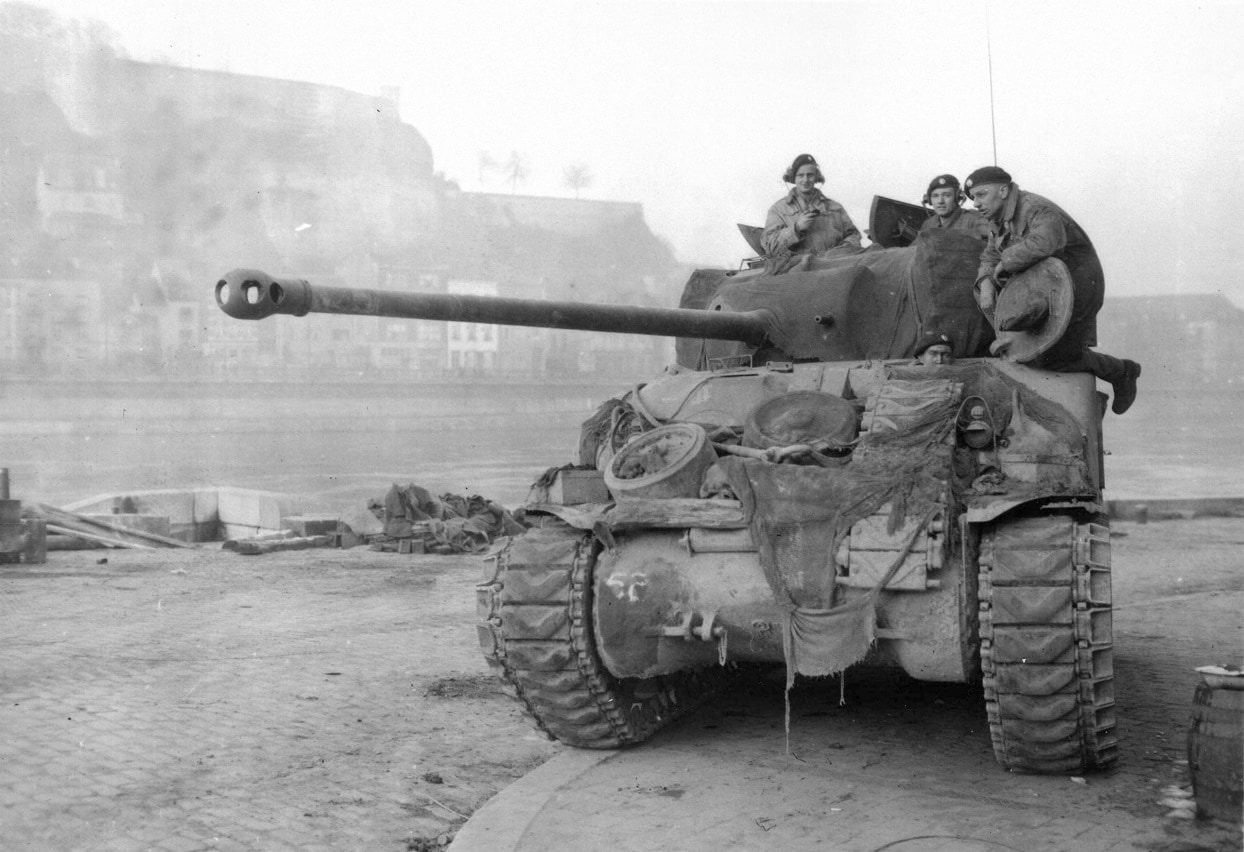
M4 Sherman Tank from WWII Image: Creative Commons.
Despite the negative publicity from those incidents, Patton still loved the adulation of the crowds and wanted non-stop glory.
Teach Rommel a Lesson
He was a student of military history and was enthusiastic about Erwin Rommel’s famous book, Infantry Attacks.
This work showed Patton that an aggressive commander can poke holes in the lines of the enemy and burst through with a violent spearhead to run amok behind the opponent’s core strength at the front.
These tactics gave more meat to the bones of Patton’s analogy to boxing.
The general was a famous Olympic pentathlete.
He could ride, shoot, and fence with the best in the world.
Patton knew that famous athletes trained hard like boxers and prepared for a violent melee in the ring. Patton could sense an opponent’s fear and get inside his head.
This led to the use of overwhelming force on the attack and instilled in him a practice of never letting his foot off the gas.
Three Great World War Two Victories
The best example of Patton’s military prowess came after the D-Day invasion of Normandy. It didn’t look good for the Allies at first. A successful beachhead was created, but the friendly forces could not pierce the Germans’ defenses. Patton’s belief in successful boxing took over.
Patton instigated Operation Cobra that created a hole in the Nazi lines.
Then Patton raced through the breach and dove right into France, scattering enemy forces while his tanks pounced. His forces were the tip of the spear and sped through the country unabated. Like a boxer, Patton never let up and made his opponent pay the price with more audacity and boldness than they were used to.
Battle of the Bulge and George S. Patton were Military History for the Ages
The Germans weren’t finished, though. They made a surprise attack in what would become the Battle of the Bulge and the Relief of Bastogne. Patton showed that he was a tactical wizard. He told Eisenhower that he could change the direction of the Third Army completely to come to the aid of trapped Americans.
This was a huge feat of flexibility, quickness, and agility. Patton was confident in his men, and that confidence let them mount such a huge counterattack and build newfound momentum.
There was an enormous force that also needed beans and bullets. This time, Patton was aware of the logistical hurdles. The 101st Airborne was surrounded at Bastogne. The Third Army showed its mettle by attacking the southern bulge of the German lines. The Nazis were surprised at how ferocious Patton’s troops were fighting in the cold weather. This averted the allies from having to retreat further and gave American fighters a comeback victory.
Badly Needed Win in North Africa
In North Africa, Patton was also splendid. In 1943, the Americans needed some type of morale boost after being defeated at Kasserine Pass. Patton breathed new life into his II Corps and instilled newfound discipline and confidence.
He focused on the strength of the 1st Infantry Division and 601st Tank Destroyer Battalion and whipped them into even better shape. This force would be instrumental in seizing the initiative.
The German 10th Panzer Division had mounted a counter-attack at El Guettar in central Tunisia. U.S. infantry and a Ranger unit had taken the town, and the Germans struck back with a lightning operation involving tanks and dismounted fighters.
The Nazis thought they could run their tanks out in the open. That’s when Patton’s artillery and tank destroyers struck paydirt and punished the Germans extensively.
This was the first major U.S. victory in the war and showed the American public that Patton was the right commander for the job. It turned the tide in North Africa and gave U.S. troops confidence that they could easily rout a German tank corps.
Patton could fight hard when the chips were down. The boxing analogy was spot on. He never let up on his tactical genius of unrelenting attack. Punch, punch, and punch some more. If you get countered, lick your wounds, and never quit. This was Patton’s mantra and it placed him in the pantheon of one of America’s greatest generals.
About the Author: Dr. Brent M. Eastwood
Author of now over 3,000 articles on defense issues, Brent M. Eastwood, PhD is the author of Don’t Turn Your Back On the World: a Conservative Foreign Policy and Humans, Machines, and Data: Future Trends in Warfare plus two other books. Brent was the founder and CEO of a tech firm that predicted world events using artificial intelligence. He served as a legislative fellow for US Senator Tim Scott and advised the senator on defense and foreign policy issues. He has taught at American University, George Washington University, and George Mason University. Brent is a former US Army Infantry officer. He can be followed on X @BMEastwood.