
Rubio's Statement on Iran and 25 Dead Sailors Reveal the Actual Closure of Hormuz in 2026
 Ahmed Al-Rashid
Rubio's Statement on Iran and 25 Dead Sailors Reveal the Actual Closure of Hormuz in 2026
On November 14, Marco Rubio stated that economically weakened Iran does not require additional military action against it. On the same day, the United Nations reported that the death toll in Hormuz and its surroundings had reached 25 sailors since the onset of the U.S.-Israeli war on Iran. These two figures do not describe separate scenes. The first announces that economic pressure has become the preferred tool of war, while the second confirms that the sea is where the civilian workforce pays the price for that pressure.
This is not an announcement of the end of operations, nor should it be read as such. It is closer to an American characterization that a significant part of the military objective has already been achieved by reducing Iran's economic capacity and raising the cost of trade with it. ABC News reported that one of the motivations for the strikes was concern over an Iranian response to the Israeli attack. Tehran's characterization that Washington is threatening Iranians with starvation has echoed in supportive sources like Palestine Chronicle, and thus should be treated as an Iranian narrative rather than an independent fact. However, the material impact of both narratives is evident at the docks and aboard the ships.
The Maritime Danger Has Become a Humanitarian Crisis
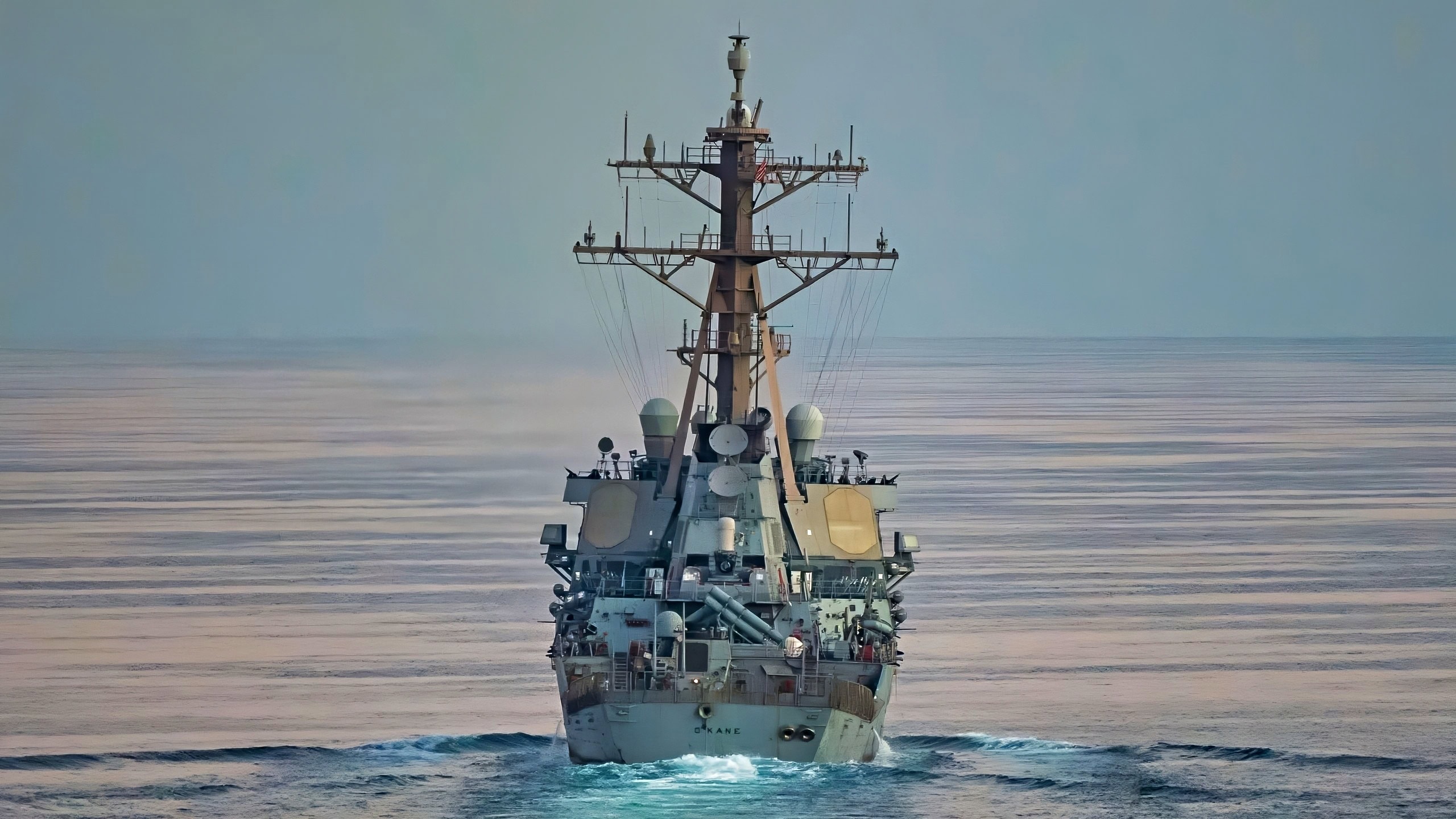
The United Nations figure of 25 dead is the most solid reference in this round. UN reports also indicate an evacuation of nearly 2,500 sailors, with 44 sailors remaining detained. These data should not be reduced to a war risk item added by the insurer to the bill. A sailor who is killed or pulled from a ship cannot be replaced at the push of a button, nor can the shipowner assume that a new crew will accept the same route after days of fires and mines.
In practical terms, the actual closure is formed from three interrelated loops. First, the pool of available crews shrinks when management companies or unions refuse to rotate sailors in the danger zone. Second, insurance companies tighten war clauses, raising exclusions and required guarantees, making the journey legally and financially difficult even if the passages are open on paper. Third, the owner opts for delays, detours, or remaining at anchor. At that point, no party needs to officially close the sea, as an independent decision from each owner accumulates the same result.
The evacuation numbers indicate that this mechanism has begun to operate. An Al-Monitor report warned of disruptions in fertilizer movement; this is not a marginal commodity for Gulf countries or for Asian and African food markets. FAO estimates regarding the transmission of input shocks to food over six to twelve months make this trajectory serious, not just daily speculative material about insurance prices.
Two Narratives of the Siege and Two Overlapping Passage Rules
Washington and its allies use the phrase "Iran's closure of Hormuz" to describe the danger to international navigation. In contrast, Tehran and its allies present what they call an American siege of Iranian ports. The two phrases should not be merged. The first relates to the Revolutionary Guard's ability to impose permission or threats within the strait and its surroundings, while the second pertains to the American ability to intercept shipments or target networks serving Iranian ports.
However, the analytical separation does not negate the practical overlap. The emerging passage rule is that a ship must actually avoid a route that provokes the Revolutionary Guard or deviates from the channels it claims to be authorized, while simultaneously avoiding a cargo or destination or communication that might place it within the scope of American interception. This is not freedom of navigation; it is navigation under two conflicting mandates, with the civilian captain having no reliable means to know their limits before it is too late.
On November 14, the Revolutionary Guard stated that another tanker had struck a mine and caught fire, marking the fifth incident within 24 hours. This is an unverified unilateral claim, and attributing each incident to a specific party is not settled. The Saudi-led coalition also announced the downing of a Houthi drone. The value of these incidents is not in immediately turning them into a decisive outcome, but in raising the risk assessment among crews and insurers before investigations are completed.
Has U.S. Policy Really Changed?
The test is not in Rubio's statement but in the subsequent orders. There are three verifiable indicators in the coming days. First, will CENTCOM continue strikes against targets like Qeshm or Sirik, or will it shift to long-range protection only? Second, what is the frequency of interceptions by Task Force Iron Gate and the scale of assets allocated to it? An increase in interceptions means that a reduction in ground strikes does not equal a reduction in military action. Third, will a specific negotiating path emerge with a mediator and agenda, rather than general signals about sanctions and deterrence?
The continuation of site strikes, an increase in interception frequency, and the absence of a negotiation channel will mean that the phrase "no need for further military action" describes a transition in the distribution of tools rather than a retreat from war. Conversely, freezing strikes with a documented communication channel and easing passage restrictions would be the first evidence of an actual shift.
The Security Council and the Gulf Push for Stability They Cannot Enforce
The Security Council session on the Gulf described a fragile calm under test. China and Russia tend to link the danger to U.S.-Israeli strikes and sanctions and push for their cessation, while the Western stance focuses on the safety of navigation and the right of passage. The Gulf states have more direct demands: protecting tankers and facilities, preventing the spread of fire to their territories, and keeping energy and fertilizer exports predictable. They do not need a lecture on geography; any military officer who has served in the region knows that a disabled port exhausts the state even if air defense batteries remain intact.
Here lies the paradox. Major powers can declare deterrence, and Iran can declare control, but no one can force a civilian sailor to accept a voyage they see as non-survivable. Therefore, the death of 25 sailors is not a humanitarian margin of the crisis, but an operational indicator that Hormuz may actually close before any party officially declares it closed.
What Needs to Be Verified Within 72 Hours
- Any updated UN statement on the dead, injured, evacuees, and detainees, separating confirmed facts from preliminary reports.
- CENTCOM data regarding strikes on Qeshm or Sirik targets, not just air and maritime interception data.
- The number of interceptions by Task Force Iron Gate, their locations, and the types of threats announced by the command.
- Notifications from protection and compensation clubs and insurance companies regarding new war conditions or suspension of coverage in Hormuz.
- Any announced negotiation channel with a mediator, participants, and agenda, and any documented amendment to the rules of ship passage.
Sources
- UN News for reports on sailors and the situation in the Gulf
- United Nations Security Council for Gulf sessions
- ABC News for background on the U.S. statement
- Al-Monitor for implications on fertilizers
- FAO for food and agriculture supply chains
On November 14, 2023, 25 sailors were reported killed in the Strait of Hormuz amid ongoing tensions related to Iran's economic pressures. The Iranian Revolutionary Guard Corps noted multiple maritime incidents, including a ship striking a mine. UN reports indicated that approximately 2500 sailors were evacuated, with 44 remaining detained, highlighting significant operational challenges and human costs in the region.
- Marco Rubio stated that Iran does not require additional military action due to economic pressure.
- UN reports indicate 25 sailors killed and 2500 evacuated from the Strait of Hormuz.
- Iranian Revolutionary Guard Corps reported multiple maritime incidents, including a ship hitting a mine.
- Concerns raised about the impact on fertilizer shipments due to maritime risks.
- The situation reflects a complex interplay of military and economic pressures in the region.