
Russia Reasserts Demand to Push Back NATO and Changes Calculation on Ukraine in 2026
 Dmitri Volkov
Russia Revives Demand to Push Back NATO and Changes Calculation on Ukraine in 2026
Old Demand in a New Negotiation Cycle
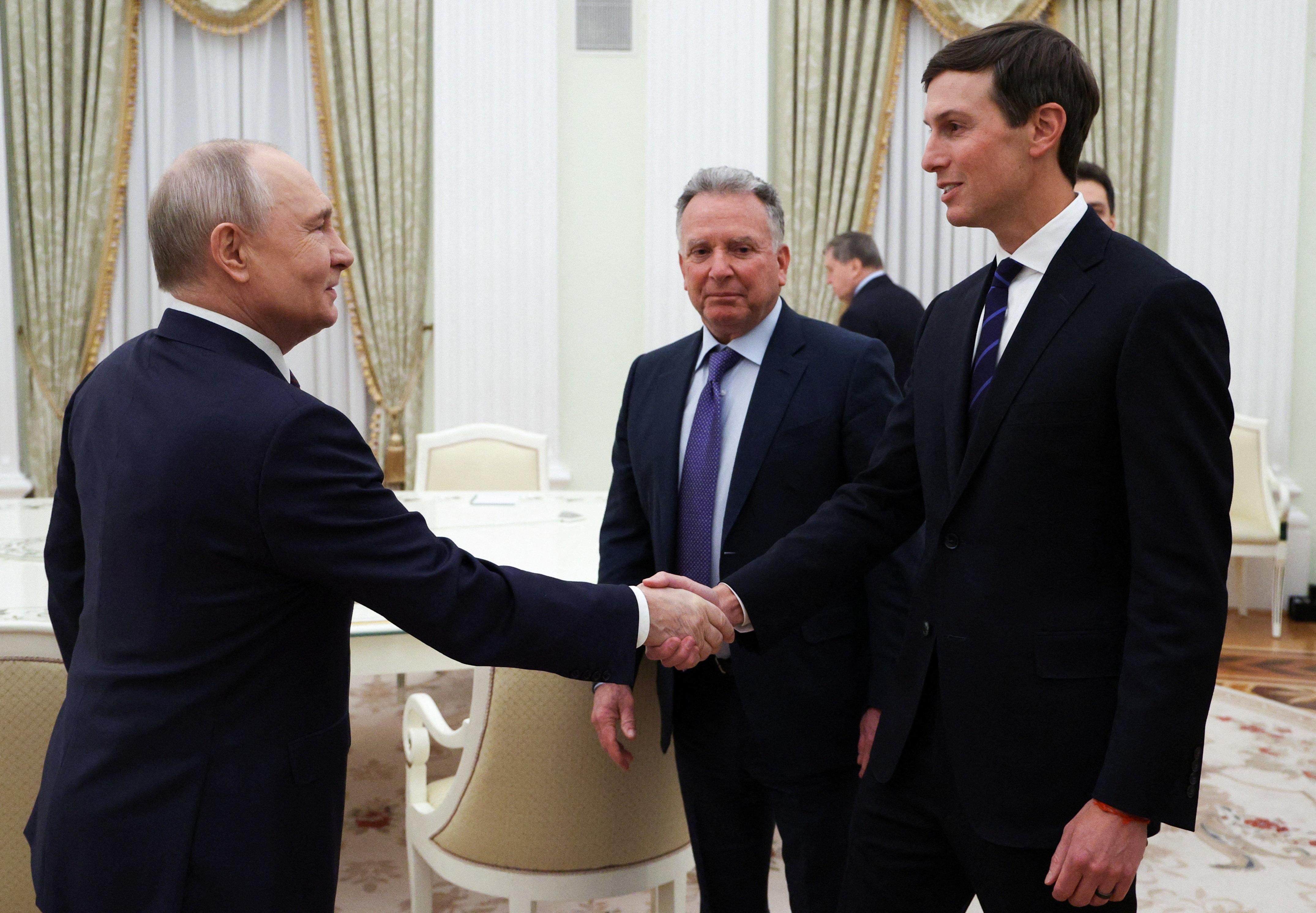
The most telling detail of the latest reports on negotiations regarding Ukraine is not the promises of a swift agreement, but the revival of a demand that Moscow had already made in 2021. Russia is once again linking a possible deal to limiting NATO's military presence and changing the security architecture in Europe (according to The New York Times, November 13, 2026). This is not a random formulation or a diplomatic improvisation. The Kremlin is bringing back to the table precisely the set of conditions that should transform the war against Ukraine from a bilateral conflict into negotiations about the status of the entire European system.
In 2021, such logic ended in failure: Moscow demanded legal guarantees against NATO expansion and a de facto rollback of the alliance to its configuration before 1997. After the onset of full-scale war, this demand temporarily became politically toxic. Now it is becoming a working tool again because the negotiation process has shifted from the question of a ceasefire to the question of who will determine Ukraine's post-war security.
Why Moscow is Raising the Bar Now
The reason is not necessarily Russia's confidence in a swift military victory. Rather, the Russian leadership views time as a resource. The Institute for the Study of War in its assessment from November 13 continues to record the activity of Russian forces on the front, while Western reports simultaneously describe the negotiations as a process in which Vladimir Putin is trying to buy time. In this combination, military pressure and diplomatic pause complement each other: the front is needed to raise the cost of refusal, while negotiations are necessary to maintain the possibility of presenting maximalist demands as "minimum security."
This is where the current cycle differs from the negotiations in Geneva that I wrote about earlier. Back then, the main question was whether a short-format meeting could create at least a technical channel for a ceasefire. Now Moscow is trying to define the framework in which the discussion itself will be considered legitimate. If only the Russian-Ukrainian border is discussed, the Kremlin is under pressure. If NATO's presence, guarantees, the placement of weapons, and the role of European states are discussed, Russia gains much more room for negotiation.
The Reuters report about the formation of a five-nation European group to participate in the negotiations shows why this issue is important. Europe seeks to speak with one voice, but the very structure of such representation creates complexity: states directly responsible for assisting Ukraine must simultaneously act as its defenders and as potential participants in future security guarantees. For Moscow, this is a convenient target. The more intermediaries and guarantees there are, the easier it is to assert that the conflict concerns not only Ukraine.
Military Logic of the Diplomatic Demand
From a military perspective, the demand to push back NATO has three levels. The first is operational. Russia wants to limit supplies, training, intelligence support, and the deployment of Western systems near the front. The second is strategic. Moscow seeks to maintain a zone of political uncertainty between Russian territory and the alliance's military infrastructure. The third is institutional. The Russian leadership is trying to regain the veto power over the foreign policy choices of neighboring states, although in public formulation this will be called "indivisible security."
However, there is a contradiction between these levels. Even if European countries agree to limitations on troop deployments, this will not eliminate the Ukrainian army, the Ukrainian intelligence network, and the experience of four years of war. Moreover, the attempt to impose a neutral status on Ukraine without effective guarantees will only push Kyiv to maintain a maximally autonomous defense model. Military neutrality without trust turns not into demilitarization, but into constant mobilization.
This is why Russian rhetoric about NATO sounds more convincing to the domestic audience than for practical diplomacy. It explains the war through an external conspiracy while simultaneously concealing the unpleasant fact: the main problem of Russian security lies not in the distance to Brussels, but in the state's ability to conduct a long war, replenish losses, support industry, and retain allies.
European Response and Limits of Negotiation
The analysis by the Council on Foreign Relations from November 13 calls for Europe to engage more actively in the settlement. There is strategic sense in this, but activity does not equal concession. Europe can offer a mechanism for monitoring a ceasefire, long-term funding for Ukrainian defense, and guarantees for recovery. It cannot reliably guarantee Russia that Ukraine will never cooperate with NATO if Ukraine itself does not make such a commitment, and previous security agreements did not ensure its protection.
Moscow's demands also face a geographical fact. After 2022, NATO's northern flank has expanded, and military planning among Eastern European countries has become tighter. Russia's attempt to achieve a rollback of the alliance has not diminished the perception of threat in Poland, the Baltic states, and Finland—it has intensified it. In this sense, the Kremlin's diplomatic goal produces the opposite effect: each ultimatum about "non-expansion" increases the demand for American presence and European defense budgets.
Forecast
In the coming weeks, Moscow is likely to combine limited signals of readiness for negotiations with an expansion of the list of preliminary conditions. This allows for claims of peaceful intentions without making decisions that would actually stop the war. The Western side, on the contrary, will try to separate the issues of a ceasefire and the final security architecture. This is the correct sequence, but it will only work if there is military pressure making the prolongation of negotiations more costly.
Russia revives the demand to push back NATO not because it has become more realistic, but because it is useful again as a mechanism to raise the price of any agreement.
The cold conclusion is simple: the negotiations of 2026 will be a dispute not only about territories but also about Russia's right to determine the limits of another's sovereignty. If Europe agrees to discuss security without Ukraine's participation, Moscow will obtain the framework it needs. If Kyiv retains a central place, and European guarantees are backed by resources, the Russian demand will remain a tool of pressure but not the basis for peace.
Sources
- The New York Times, November 13, 2026 — on the revival of Russian demands to limit NATO.
- Reuters, November 13, 2026 — on the European group for participation in negotiations regarding Ukraine.
- Institute for the Study of War, Russian Offensive Campaign Assessment, November 13, 2026.
- Council on Foreign Relations, November 13, 2026 — on the role of Europe in the settlement.
- Radio Free Europe/Radio Liberty, November 13, 2026 — on Russian demands as an obstacle to a peace agreement.
Russia is reintroducing demands to limit NATO's military presence and is recalibrating its approach to Ukraine for 2026. This shift links potential agreements to NATO's military presence and the broader European security framework. The Kremlin's strategy reflects a desire to redefine the legitimacy of discussions surrounding NATO and Ukraine, as European nations form a group to engage in negotiations. This development indicates a complex diplomatic landscape ahead.
- Russia is reintroducing demands to limit NATO's military presence in negotiations regarding Ukraine.
- The Kremlin is linking potential agreements to NATO's military presence and European security architecture.
- Russia's demands reflect a shift in the negotiation process from ceasefire to post-war security discussions.
- European nations are forming a group to participate in negotiations, complicating the diplomatic landscape.
- Russia's rhetoric aims to redefine the legitimacy of discussions around NATO and Ukraine.