
Southern Theater Command's South China Sea Patrol on June 29 Triggers PLA 054A Deployment During 5th Maritime Activity of US-Philippines
 Li Minghui
Southern Theater Command Announces South China Sea Patrol on June 29, Triggering PLA 054A Deployment Following US-Philippines 5th Maritime Activity
On the morning of June 29, the Southern Theater Command announced the organization of routine air and naval patrols in the South China Sea. The news itself is brief, but the timing is quite interesting: on the same day, the US and the Philippines had just completed their fifth bilateral maritime cooperation activity of the year, with the location still pointing to the waters near the West Philippine Sea and Scarborough Shoal. Both the Global Times and China Daily linked this patrol to the joint patrols of the Philippines with external forces, while the US Seventh Fleet and Philippine media confirmed that US-Philippines naval and air forces conducted operations from June 27 to 28.
The Force Composition Behind a 054A
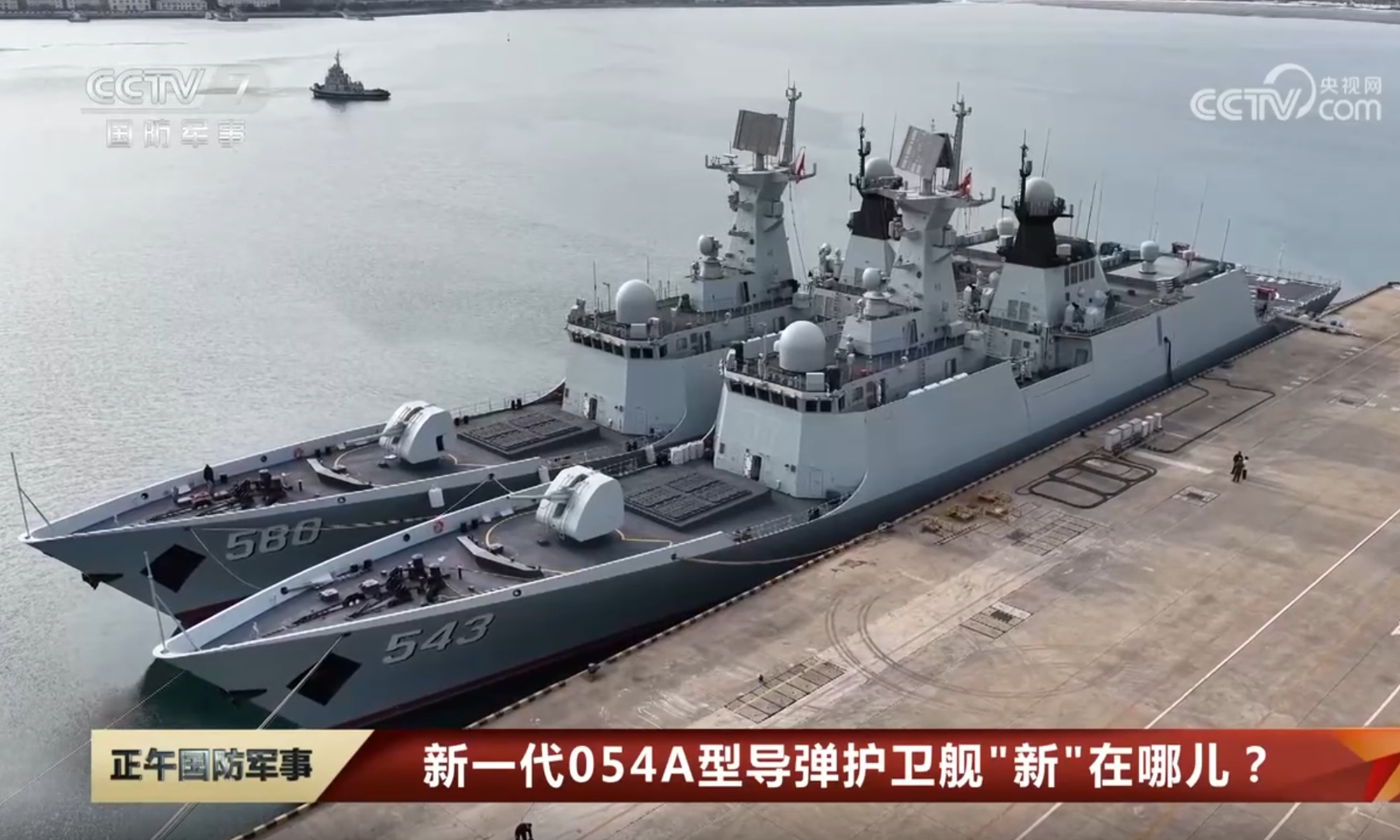
A detail disclosed by the Philippines is worth highlighting: during the exercise, a Chinese Navy Jiangkai-class frigate with hull number 555 was observed from a distance, accompanied by three Chinese Coast Guard vessels. Hull number 555 is generally classified by external observers as part of the 054A missile frigate series. The 054A has a full-load displacement of about 4,000 tons and is equipped with a 32-cell vertical launch system, HQ-16 medium-range air defense missiles, anti-ship missiles, and towed array sonar, making it one of the most stable offshore escort platforms for the PLA Navy in the past decade.
In simple terms, this is not about deploying a main destroyer to assert dominance, but rather about using a mature frigate along with coast guard vessels to create a configuration that is "visible, manageable, and not overly escalated." The value of the 054A lies not in its individual firepower, but in its sufficient numbers, controllable operational costs, and extensive service experience. For a high-frequency, low-intensity friction area like the South China Sea, such vessels are actually more suitable for routine presence than the 055-class destroyers.
The Focus of US-Philippines Operations is Frequency, Not Scale
The US Seventh Fleet publicly stated that the US-Philippines maritime cooperation activities aim to enhance interoperability and joint capabilities. The Philippine News Agency noted that this is the fifth such joint maritime exercise this year, involving the Philippine Navy, Coast Guard, and US naval and air units. While this number may not seem large, if we look at the timeline, the rhythm has shifted from "annual exercises" to "monthly or even event-triggered" maritime operations.
I believe that what Beijing is truly focused on is not how many ships are involved in this exercise, but rather how the US and the Philippines are gradually stringing together a routine training area encompassing Scarborough Shoal, the Bashi Channel, and the waters west of Luzon. For the PLA, the challenge of responding to this rhythm is not about deploying a ship once, but about maintaining low-cost rotations among the Southern Theater Command, Navy, Coast Guard, and aerial reconnaissance forces. Once maritime presence becomes routine, the real test will be logistics, ports, maintenance, and command chains, rather than the performance parameters of one or two star vessels.
The Southern Theater Command's Response is More Like Pressure Calibration
This time, the Southern Theater Command still used the term "routine patrol" while emphasizing that the situation in the relevant waters is under control. This wording carries more information than a fierce warning. It indicates that the PLA hopes to incorporate countermeasures into a repeatable process: when the US and the Philippines conduct an operation, China will respond with air and naval forces and Coast Guard presence; if the other side maintains low intensity, China will not rush to escalate the situation.
From an equipment perspective, the 054A, large Coast Guard patrol vessels, land-based air forces, and possible unmanned reconnaissance platforms constitute the most common "gray zone surveillance chain" in the South China Sea. The issue is that the more frequently this chain is used, the more it requires stable support from rear ports and data links. A shortcoming that is easily overlooked is that while the South China Sea islands and coastal bases are becoming increasingly sophisticated, the high humidity and salinity environment is not friendly to the maintenance of onboard electronic equipment and rotorcraft, and long-term high-intensity duty will quickly reflect in failure rates.
The Real Signal Lies Around Scarborough Shoal
The US and the Philippines' choice to continue advancing maritime cooperation activities at the end of June indicates that Manila has not reduced visibility due to Chinese patrols. China has also chosen not to remain silent, instead publicizing its military presence through announcements from the Southern Theater Command. Both sides are demonstrating to their domestic audiences and allies that "there is no retreat." The most dangerous aspect of this type of interaction is not whether a collision occurs on that day, but rather that the distances between ships and aircraft, radio communications, and Coast Guard interception actions will be continuously compressed into smaller spaces.
My judgment is that the Scarborough Shoal area will not suddenly quiet down in the coming months. What is truly worth watching is whether the PLA will turn the deployment of frigates like the 054A into a fixed template, or continue to maintain a blurred division of labor between the Coast Guard in the foreground and the Navy in the background? This answer will provide more insight into the next phase of pressure in the South China Sea than the patrol itself on June 29.
The People's Liberation Army Navy conducted a routine patrol in the South China Sea on June 29, 2023, involving one 054A frigate and three coast guard ships. This action coincided with the U.S. and Philippines completing their fifth joint maritime activity, indicating a strategic response to increased naval cooperation between the two nations. The patrol reflects China's ongoing military presence in the region amid rising tensions.
- The Southern Theater Command announced routine patrols in the South China Sea on June 29.
- A 054A frigate and three coast guard ships were involved in the patrol.
- The U.S. and Philippines conducted their fifth joint maritime activity on the same day.
- The patrol is seen as a response to increasing U.S.-Philippine naval cooperation.
- The presence of the 054A frigate indicates a strategic posture in the region.