
The Russian Army is Building a "Security Zone" — The New Border of War in Ukraine in 2026
 Dmitri Volkov
The Russian Army is Building a "Security Zone" — The New Border of War in Ukraine in 2026
The most important part of Vladimir Putin's statement about the "security zone" lies not in the word "zone," but in the word "non-negotiable." Moscow proposes to consider the future strip of territory within Ukraine as not subject to negotiations, but as a predetermined outcome of military operations. This is not a description of a temporary defensive measure, but an attempt to turn the ongoing offensive into a permanent element of political geography.
From Buffer to Unilateral Border
According to Reuters on October 16, Putin stated that Russia is forming a "security zone" along the border with Ukraine, and that its parameters are not open for discussion. The military logic here is clear: to push Ukrainian firepower away, complicate strikes on Belgorod, Kursk, and other border regions, and create space for the deployment of artillery, reconnaissance units, and drones. But terminology is just as important as tactics.
In Soviet military theory, a buffer zone was seen as a tool of operational time — it was supposed to slow down the enemy and allow for the deployment of main forces. In the current Russian rhetoric, a temporary tool is being transformed into a territorial demand. This is why Moscow avoids specifying the exact width of the zone: uncertainty preserves the freedom to expand it as the front line changes. A "zone" in this understanding is not a line of defense, but a mechanism for presenting new demands.
Why the Statement Came Now
On the eve and during the last day, Russian strikes on Ukraine have reportedly resulted in the deaths of at least eight people and power outages affecting about a million residents, according to Al Jazeera. Independent details of each episode still require verification, but the sequence of events is quite clear: Moscow simultaneously demonstrates its ability to inflict damage deep within Ukraine and formulates a political explanation for further pressure.
This is a classic linkage of Russian military diplomacy. First, a new factual situation is created, then it is declared a response to a threat, after which any demand to stop is interpreted as a refusal to acknowledge the "reality on the ground." From 2022 to 2025, a similar scheme was applied to the annexation of occupied territories. In 2026, it takes on a narrower but potentially more fluid form — Russia may not declare immediate annexation but demand control over territory that will formally remain Ukrainian.
What the Zone Means for the Russian Army
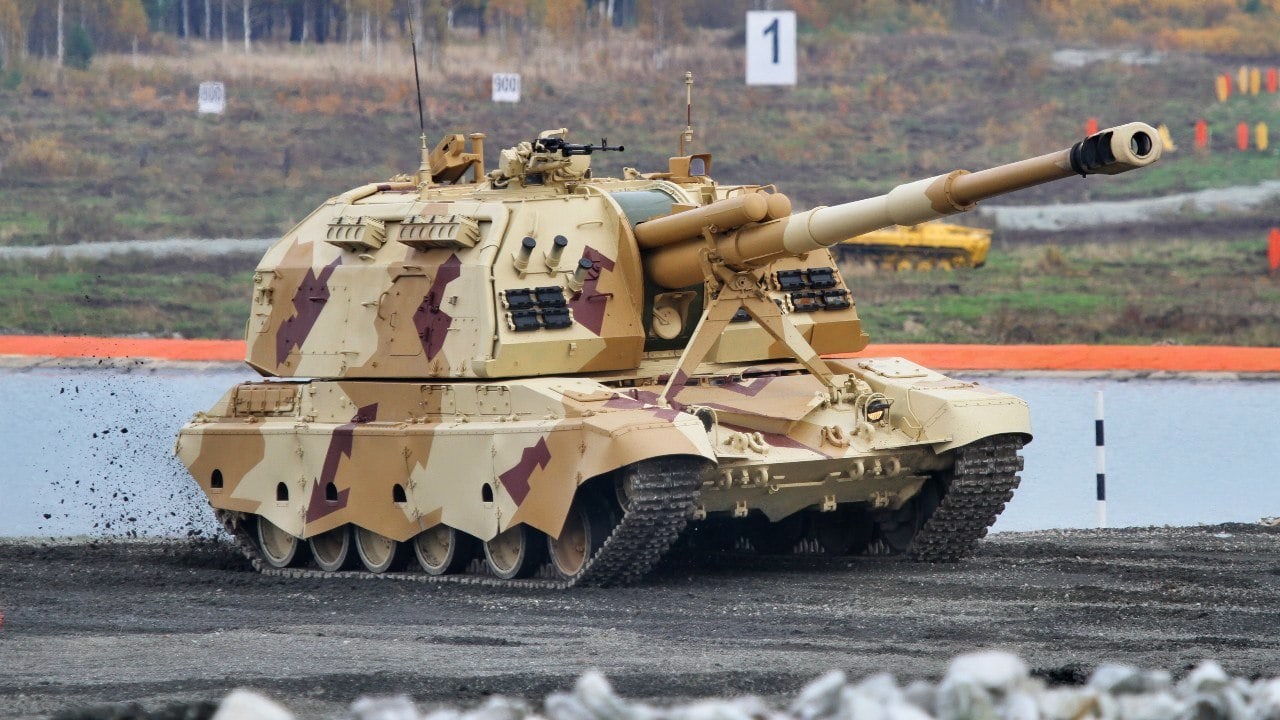
At the operational level, there are three tasks. The first is to push Ukrainian artillery units away from Russian populated areas. The second is to reduce the range at which Ukrainian reconnaissance drones can observe concentration areas and logistics. The third is to create a secure corridor for the continuous use of Russian strike drones and aviation. However, an artillery system like the 2S19 "Msta-S" provides not a "security zone," but merely a fire tool for its expansion; without infantry, engineering units, electronic warfare assets, and sustainable logistics, it does not turn temporary occupation into stable control.
Here lies the main gap between the political statement and military reality. To maintain a strip even 20–30 kilometers deep, not only will the advance of frontline units be required, but also an echeloned defense, mine protection, short-range air defense, and constant replenishment of personnel. The Russian army has already learned to compensate for the lack of maneuverability with a mass of drones and firepower. But every new section of the front increases the burden on transport, communication, and command. The official word "zone" conceals the cost of this infrastructure.
The Ukrainian Response and the Limits of the Russian Plan
Ukraine, according to reports from Western media, is accelerating the creation of means to counter Russian strike drones and continues to strike at military and informational infrastructure in the Russian rear. This is important: even if Russia pushes Ukrainian ground strike capabilities away from the border, it will not be able to automatically close off the entire air and cyber perimeter. Modern warfare no longer allows for the simple formula "captured a strip — achieved security."
Moreover, an indefinite zone creates a legitimacy problem for the Kremlin. If its width is small, it will not eliminate the threat to border areas. If Moscow tries to expand it, it will appear as a new offensive rather than a defensive measure. For external mediators, the difference is crucial: ceasefire negotiations imply fixed lines and verifiable commitments, while a "non-negotiable zone" leaves Russia the right to define both the line and exceptions.
Forecast
The Russian army is likely to use the term "security zone" as a political framework for local offensive operations in border directions. This does not mean the immediate creation of a single deep strip: Russian resources, Ukrainian defense, and the saturation of the battlefield with drones make such a project extremely costly. But the formula is already useful for Moscow. It turns every new tactical success into an argument for further advancement.
In the short term, expect a combination of strikes on energy, pressure on border areas, and demands to recognize new limitations on Ukrainian military activity. In the long term, everything will depend on Russia's ability to sustain the expansion of the front with personnel and equipment. The "security zone" can become a stable military frontier only with a sustainable war economy. Otherwise, it will remain what Russian doctrinal formulas often become — a loud name for a space that the army still has to conquer.
Sources
- Reuters, October 16, 2026 — Vladimir Putin's statement on the "non-negotiable security zone" along the Ukrainian border.
- Al Jazeera, October 17, 2026 — reports on Russian strikes, casualties, and power outages in Ukraine.
- Wall Street Journal, October 17, 2026 — on Ukraine's urgent creation of defenses against Russian strike drones.
Russia is establishing a 'security zone' along the Ukrainian border, which is intended to be a permanent feature of the region's political geography. This move aims to push Ukrainian artillery away from Russian territories and create operational space for military assets. Recent Russian strikes have resulted in casualties and power outages in Ukraine, while Ukraine is enhancing its defenses against Russian drone attacks. The situation reflects a blend of military operations and political strategy.
- Russia is creating a 'security zone' along the Ukrainian border that is not subject to negotiation.
- The zone aims to push Ukrainian artillery away from Russian territories and create space for military operations.
- Recent Russian strikes in Ukraine resulted in casualties and power outages for approximately one million residents.
- Ukraine is accelerating its defense capabilities against Russian drones and continues to target Russian military infrastructure.
- The establishment of this zone is seen as a political maneuver to assert territorial claims without formal annexation.