
The UAE tests the EDGE 155mm shell in 2026 and transforms ammunition into a test for defensive independence.
 Ahmed Al-Rashid
The UAE Tests the EDGE 155mm Shell in 2026 and Transforms Ammunition into a Test for Defense Independence
On November 3, 2026, the EDGE Group announced the completion of the first dynamic test of firing an Emirati 155mm artillery shell of the Extended Range Full Bore type, designed and manufactured by LAHAB within the UAE. The news may seem less glamorous than a fighter jet deal or an air defense battery, but in military terms, it is more significant; a country that cannot produce the ammunition consumed by its systems remains dependent on external supply chains, no matter how many modern platforms it has.
What EDGE Actually Tested
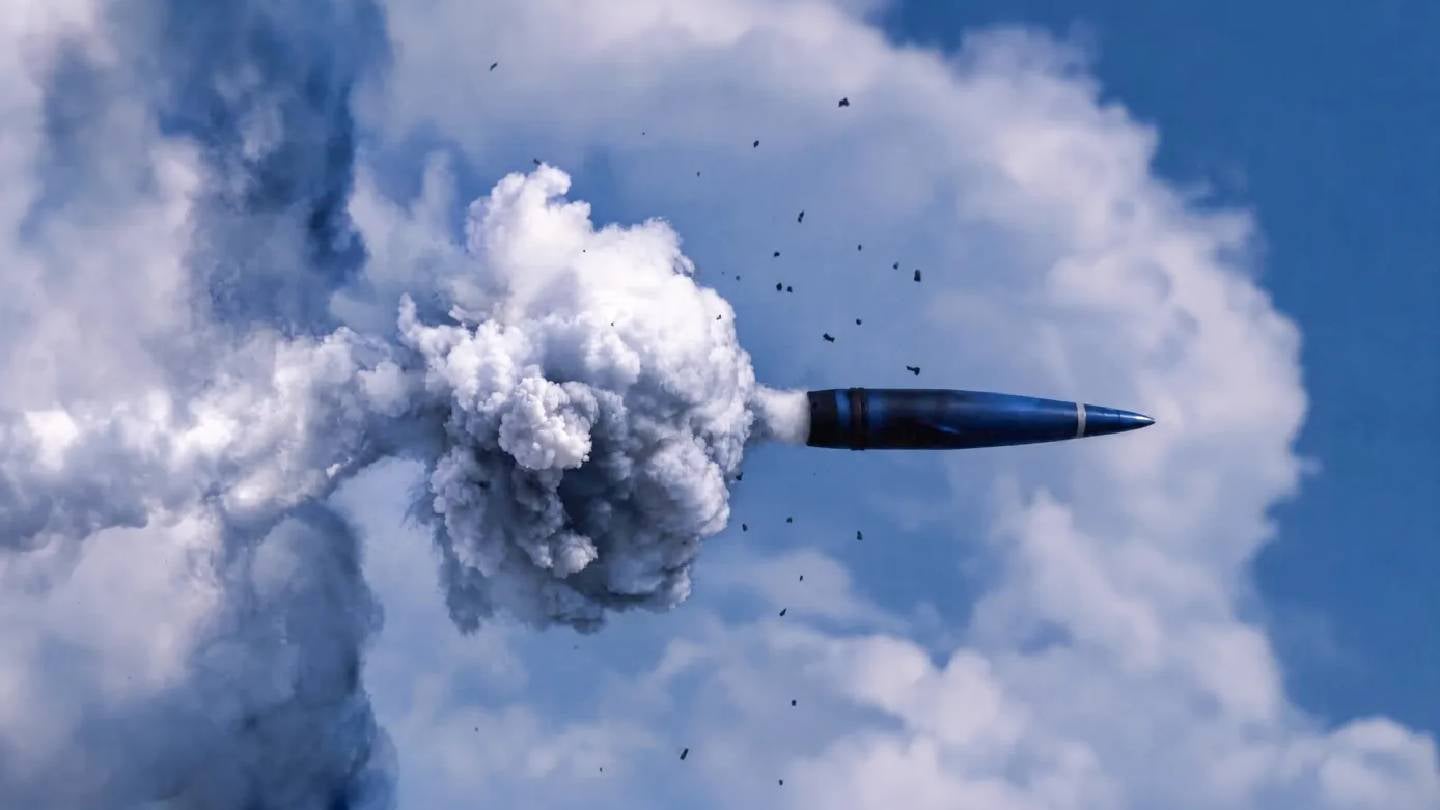
The shells were fired from a 52-caliber barrel, which is the type used in modern long-range howitzers. According to information conveyed by The Defense Post from EDGE, the shots hit the target area within the expected trajectories, with a consistent grouping and limited dispersion. The test was not merely a trial launch; it measured the shell's compatibility with weapons built according to the Joint Ballistics Memorandum of Understanding standard, the actual chamber pressure, the match of the impact point with theoretical calculations, and the integrity of the shell components.
However, a successful test should not be turned into an announcement of ammunition ready for service. The next phase includes field tests to measure effectiveness, followed by qualification according to Military Standard requirements and NATO Standardization Agreement 4224. This means that the shell has proven so far that it flies as designed, but it has not yet demonstrated its full operational performance or its ability to be produced repeatedly with consistent quality under packing, storage, and transport conditions.
Why Abu Dhabi Focuses on Shells, Not Just Platforms
The war in Ukraine has brought artillery ammunition back to the forefront of defense thinking. Meanwhile, the Iran-U.S.-Israel conflict in 2026 showed the Gulf that stockpiles can deplete quickly when the region turns into a theater of reciprocal strikes. In this environment, it is not enough for the UAE to have modern artillery or precision drones; what is required is the ability to replenish stocks without waiting for a European factory or political approval from a supplying country.
The 155mm shell is part of the HAZEEM program, which aims to manufacture a family of munitions within the UAE. EDGE also announced on October 27 that the LAHAB automated line for 40mm shells has reached full production capacity of up to 1.5 million rounds annually, reducing reliance on manual labor by about 60 percent. The link between the two programs is clear: Abu Dhabi is not only looking for a local product but also for an expandable industrial base that can record production data and detect defects during operation.
The Real Gain Lies in the Aspect of Sustainability
In evaluating armies, a triangle of capability is used, consisting of equipment, training, and institutions. The UAE has made significant progress in equipment and can purchase advanced platforms from the United States, Europe, and Israel. However, the most challenging aspect is the institution that maintains readiness during a prolonged crisis. Manufacturing the shell locally enhances sustainability, but it does not solve the entire problem. Propellant materials, explosives, packaging materials, measurement laboratories, secure supply chains, artillery crews trained on the new ammunition, and a logistics system that ensures what comes out of the factory reaches the unit with the same specifications must all be available.
Practically, the test also opens a commercial door. If the HAZEEM shell later obtains the required qualification, EDGE will attempt to offer it to armies using 155mm artillery according to Western standards. However, the ammunition market does not reward Emirati science alone; the buyer wants a documented track record, compatibility with multiple barrels, a stable price, and the ability to deliver during wartime. Therefore, the qualification phase and recurring contracts will be more important than the image of the shell coming out of the barrel.
Independence Does Not Mean Separation from the Outside
The Emirati discourse on localization gains greater credibility when it shifts from assembling vehicles to manufacturing ammunition with ballistic requirements. However, complete defense independence is unrealistic. Even the most manufacturing-intensive countries rely on imported raw materials, technologies, and testing devices. The reasonable goal is to reduce choke points, not to eliminate external dependence.
Here lies the Gulf paradox. The UAE spends to build a defense industry that can reduce reliance on suppliers, but at the same time, it needs Western standards and international certifications to sell its products and integrate them into allied systems. This is not a technical problem but a long-term political decision; localization that is limited to quantity production does not create strength, while localization that builds knowledge in testing, maintenance, and development can change the country's position in the arms market.
Conclusion
The test of the EDGE 155mm shell is an important step, but its value will be measured by the number of rounds that can be produced with matching quality, the speed of replenishing units, and its ability to operate in a disrupted supply chain. Abu Dhabi has begun to understand the lesson that many countries in the region have ignored: buying weapons is easier than ensuring they remain in the fight. Nevertheless, the contradiction remains between the desire for defense independence and the need for recognition, standards, and external technologies; this time, it will not be resolved by press releases, but by the long test of the factory, the warehouse, and the gun simultaneously.
Sources
The EDGE Group successfully tested a 155mm artillery shell in the United Arab Emirates on November 3, 2026. This test, part of the HAZEEM program, aimed to enhance the UAE's defense independence by developing local ammunition production capabilities. The shell demonstrated accurate targeting and is intended to reduce reliance on foreign suppliers for military ammunition.
- The UAE tested a 155mm artillery shell on November 3, 2026.
- The shell was designed and manufactured by LAHAB in the UAE.
- The test demonstrated accurate targeting and limited dispersion of the shells.
- The UAE aims to reduce reliance on foreign ammunition supplies.
- The 155mm shell is part of the HAZEEM program for local ammunition production.