
Tobolsk, Ukhta, and Valdai — Ukraine Moves the War to the Russian Rear 2000 Kilometers Away
 Dmitri Volkov
Tobolsk, Ukhta, and Valdai — Ukraine Moves the War into the Russian Rear at 2000 Kilometers
On the night of August 10, Ukrainian drones set fire to ZapSibNeftekhim in Tobolsk — the largest petrochemical complex in Russia and one of the largest in Europe. The distance from the front line is over two thousand kilometers, beyond the Ural Mountains. On the same day, the LUKOIL-Ukhta oil refinery in the Republic of Komi was also struck, and according to The Telegraph, the S-400 "Triumph" launch system, which was protecting Vladimir Putin's Valdai residence, was hit. In twenty-four hours, Ukraine's long-range campaign has overturned what has always been considered an axiom in Russian military theory: the category of strategic rear, protected by distance itself.
What Exactly Was Hit
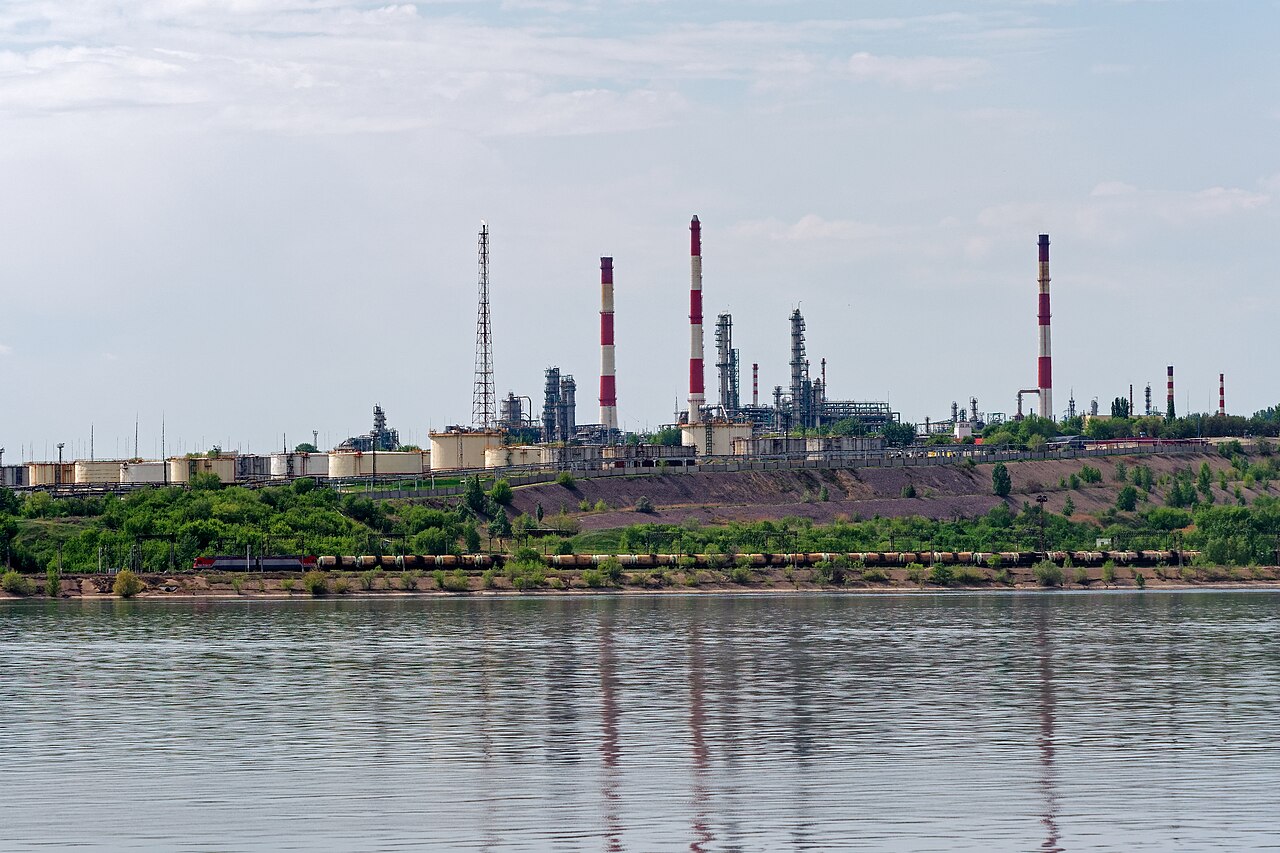
The General Staff of the Armed Forces of Ukraine confirmed the hit on the central gas fractionation unit of ZapSibNeftekhim — a facility that processes about 6.6 million tons of raw materials per year. Formally, this is "petrochemistry," but the list of products speaks for itself: butadiene, isobutylene, maleic anhydride, and MTBE — a high-octane additive essential for the production of rocket fuel components, aviation kerosene, and composite materials for drones. In other words, the strike was not against a "civilian plant," but against the upper tier of the military-industrial pyramid — that layer which is not formally included in defense orders.
The Ukhta oil refinery "LUKOIL-Ukhtaneftepererabotka" is the first confirmed hit by Ukrainian drones in the Republic of Komi. According to the Main Intelligence Directorate (HUR), an oil tank with a fuel spill was hit, and a gas condensate complex producing propane-butane and gasoline was damaged. The plant supplies fuel and lubricants to the Russian military — this is confirmed by Ukrainian intelligence, and this is exactly the case where its words align with technological reality: the refinery on the Usa-Ukhta pipeline operates on blends of Komi oil and covers the northwestern supply logistics. On the same day, a refinery in Saratov was on fire, where, according to Russian Telegram channels, one person died.
Valdai — A Strike on the Defensive Ring, Not the Residence
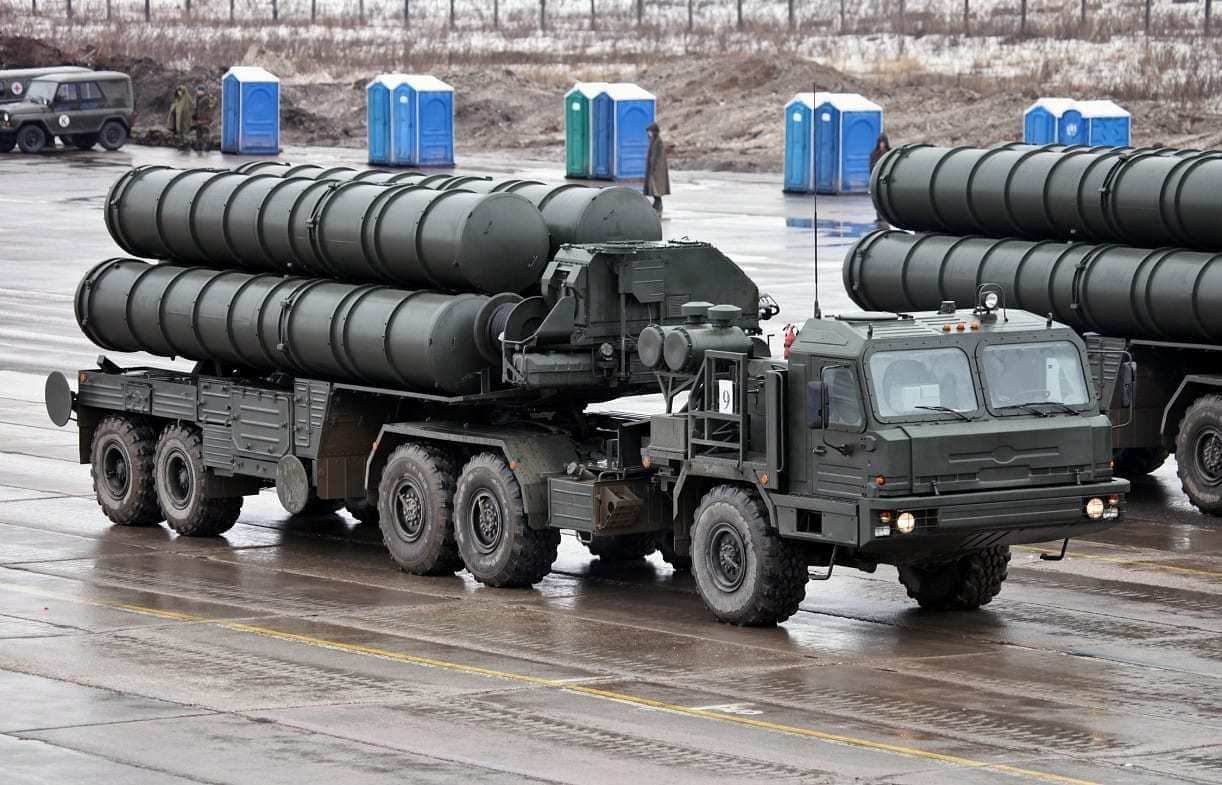
The Telegraph reported that Ukrainian drones struck the S-400 "Triumph" launch system guarding one of Putin's residences in Valdai — the very one around which a "buffer zone" of about 70 square kilometers has grown over the year, equipped with air defense systems, electronic warfare means, and mobile fire groups. It is important to distinguish this episode from the December 2025 incident when Moscow announced "91 drones heading for the residence" — at that time, independent analysts, including ISW, found no traces of an attack, and Kyiv publicly denied it. Now, the situation is different: the target was not a person, but an element of his defensive ring. This is a military operation against infrastructure, not an assassination attempt — and that is why it is difficult to refute.
But the very fact is noteworthy. According to satellite analysts, there are between twelve and twenty-five air defense systems deployed around the Valdai residence — almost as many as around Moscow. Meanwhile, the largest petrochemical complex in the country in Tobolsk and the refinery in Komi appear to be unprotected. The priorities of defense are unmistakable: first the residence, then the Kremlin, and only then — the industry that sustains the war. In this choice lies the entire institutional logic of the system, and it is also its Achilles' heel.
"Black Spark" and the New Mechanics of Long-Range Strikes
Particular attention should be paid to the executor. The Special Operations Forces of the Armed Forces of Ukraine reported that the strike on ZapSibNeftekhim was carried out by Deep Strike units "in cooperation with the resistance movement 'Black Spark'," operating on Russian territory. If confirmed, this indicates not just a long-range drone launched from Ukrainian territory, but a new operational model: coordination of targeting, reconnaissance, and possibly final adjustment with an internal network operating deep in the rear. For Russian intelligence services, this is the worst-case scenario — it means that the fight against Ukrainian drones is no longer limited to destroying launch systems at the border.
The Economics of the Strike
Zelensky called such operations "long-range sanctions" — a precise, albeit cynical, formulation. The West has not lifted the ban on using the long-range weapons provided for strikes deep into Russia, so Kyiv is responding with its own drones of domestic design. The asymmetry is evident: a "homemade" drone with a warhead costs hundreds of times less than the air defense system trying to shoot it down, and thousands of times less than restoring a gas fractionation unit that sits idle for months. A strike on the raw material tier is a pure exhaustion strategy: it is cheaper to burn down factories than to wait for sanctions to reach their products.
"This is the first case in Russian history where it no longer has a safe strategic rear. For the first time, it cannot fight without reinforcements from North Korea," Zelensky stated, commenting on the strikes of August 10.
A harsh statement, but it contains a kernel of common sense. According to HUR estimates, Pyongyang supplies 25 to 40 percent of artillery shells for the Russian army, and Kyiv reports preparations to receive another 30,000 North Korean soldiers. A rear that is no longer protected by distance and depends on external supplies is no longer a rear in the classical sense of the word.
Negotiation Background
All of this is happening against a backdrop that makes the strikes particularly expressive. According to The Wall Street Journal, on August 9, Ukraine and Europe rejected Putin's proposal for a ceasefire in exchange for concessions of eastern territories and presented a counterproposal to the American side on the eve of the meeting between Trump and Putin. Long-range strikes are the military projection of this diplomatic refusal: Kyiv demonstrates that it can raise the cost of war from within, without waiting for permission from the West. This is the classic logic of "negotiations from a position of strength," only now strength is measured not by tanks on the front, but by drones over Tobolsk.
Conclusion
In 1941, Soviet industry evacuated beyond the Urals precisely because no bomb could reach it there. Today, Tobolsk — beyond the Urals — is burning from drones assembled by Ukrainian engineers. For me, having grown up on this history, it is hard to watch this without bitterness: a system that has become accustomed to sacrificing everything for protection is safeguarding the S-400 palaces while leaving the factories that feed the war to their fate. Air defense for all industrial facilities in the country will not be enough — neither in terms of the number of systems, nor in terms of money, nor in terms of personnel. Moscow will have to choose: either to expose the front to cover the rear, or to resign itself to the systematic burning of its industrial base. Neither of these options promises a quick exit from the war — but the first one, perhaps, brings its end closer than the Kremlin would like.
Ukrainian drones attacked the ZapSibNeftekhim complex in Tobolsk and the Lukoil refinery in Uhta on August 10, 2023, marking a significant escalation in the conflict by striking over 2000 kilometers behind Russian lines. The operations targeted critical infrastructure, including military supply chains, and were executed by Ukrainian special operations units in coordination with internal resistance movements. This represents a shift in the operational landscape, challenging traditional notions of Russia's strategic depth.
- Ukrainian drones attacked the ZapSibNeftekhim complex in Tobolsk and the Lukoil refinery in Uhta.
- The strikes occurred over 2000 kilometers from the front lines, targeting strategic military and industrial sites.
- The attacks are part of a broader Ukrainian strategy to disrupt Russian supply lines and military capabilities.