
U.S. Air Force seeks new maker for B-1B bomber control panel
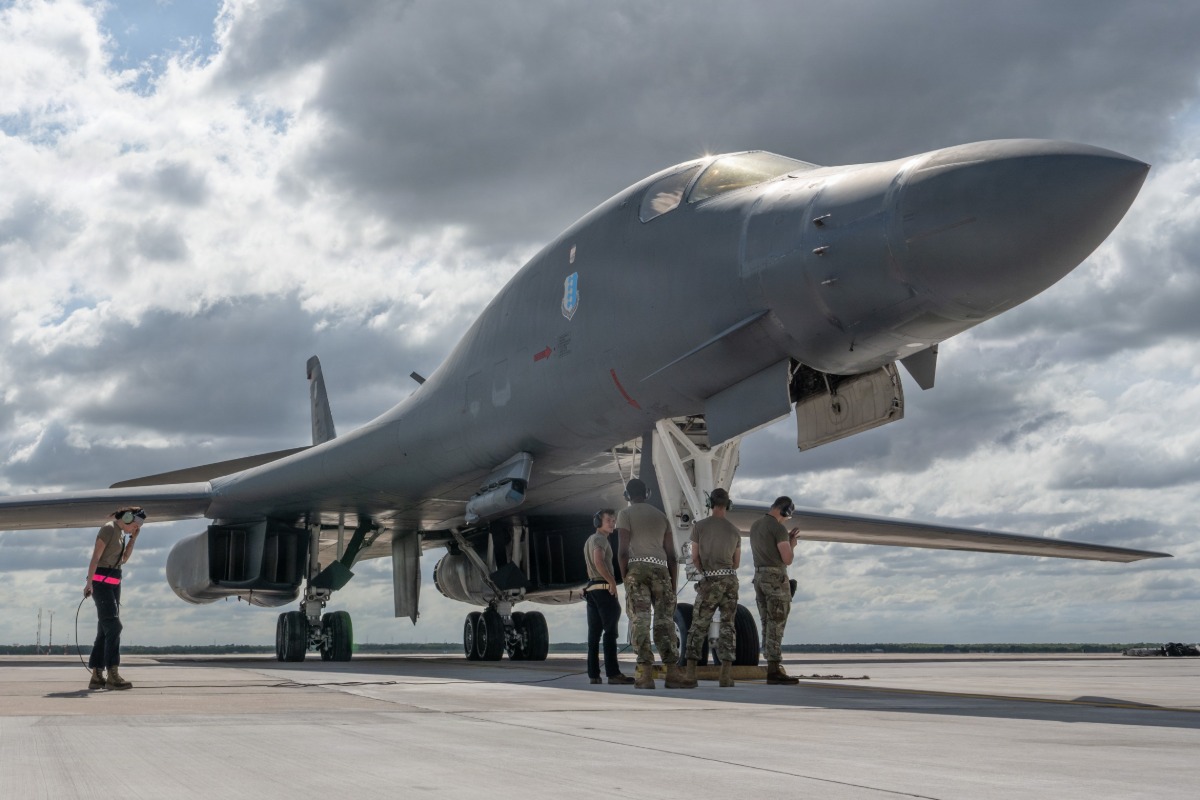
The Defense Logistics Agency, the Pentagon office responsible for keeping military equipment supplied with everything from fuel to spare parts, published a notice on August 11 seeking manufacturers capable of building a replacement electric control panel for the B-1B Lancer, a swing-wing bomber that has served as a backbone of American long-range strike capability since the mid-1980s.
The notice, issued by the 422nd Supply Chain Management Squadron based at Tinker Air Force Base in Oklahoma, is what the Pentagon calls a Sources Sought Synopsis, a formal way of asking industry who out there can actually build a part before the government commits to a real contract. This is not a purchase order and carries no funding attached to it, meaning no company will get paid based on this notice alone. Instead, it functions as market research, a step the Air Force uses to figure out how many qualified manufacturers exist for a given component and whether the eventual contract should be opened to full competition or reserved specifically for small businesses, a decision that shapes which kinds of companies get the chance to bid once real money is on the table.
The part itself carries the designation Panel, Control, Electric, identified by a National Stock Number, the standardized tracking code the Pentagon uses to catalog literally every piece of equipment across the entire U.S. military supply chain, so that a specific bolt, gasket, or circuit panel can be identified and reordered from anywhere in the world without confusion. The Air Force is seeking an estimated 11 units of this particular panel, a modest quantity that reflects the reality of sustaining an aircraft fleet that has been flying for four decades rather than a mass-production run for a brand-new weapon system.
That aircraft, the B-1B Lancer, entered service with the Air Force in 1986 as a supersonic, variable-sweep-wing bomber designed originally during the Cold War to penetrate Soviet air defenses at high speed and low altitude. Built by what was then Rockwell International, later absorbed into Boeing, the B-1B can carry a larger payload of conventional weapons than either of the Air Force’s other two strategic bombers, the B-2 Spirit and the aging B-52 Stratofortress, though the B-1B lost its ability to carry nuclear weapons in 2011 under the terms of the New START arms control treaty with Russia, leaving it as a conventional-only strike aircraft. The fleet has flown extensively in recent decades over Afghanistan, Iraq, and Syria, where its ability to loiter over a battlefield for extended periods and drop large quantities of precision-guided bombs made it a valuable close air support asset for troops on the ground.
Keeping a fleet of aircraft this old flying reliably depends entirely on exactly the kind of unglamorous parts sourcing this notice represents. As the original manufacturers of specific components either stop producing them or exit the defense industry entirely, a problem the Pentagon refers to as diminishing manufacturing sources, the military has to find new companies willing and able to reverse-engineer or rebuild parts that may not have been manufactured in years. The notice specifically flags that potential suppliers may need to handle nonrecurring engineering costs, the expense of essentially relearning how to build a part from scratch when the original technical drawings or production line no longer exist, a routine but often expensive hurdle for legacy aircraft sustainment programs across the military.
Work under any eventual contract would take place at Tinker Air Force Base, which serves as the Air Force’s primary depot for maintaining and overhauling the B-1B fleet alongside several other aircraft types, making the base a central hub for exactly the kind of parts procurement this notice represents. Companies interested in supplying the panel have until 11:59 p.m. Central time on August 18, 2026, to respond, and the Air Force is explicitly seeking interest from businesses of every size and category, including small businesses, service-disabled veteran-owned businesses, and businesses located in historically underutilized zones, a standard part of how the Pentagon tries to broaden its industrial base beyond a handful of major defense contractors.
Content preview only. Full article available at source. View Full Article
The U.S. Air Force is seeking manufacturers for a replacement electric control panel for the B-1B Lancer bomber, as announced by the Defense Logistics Agency on August 11, 2026. The Air Force aims to procure 11 units of this part, which is essential for maintaining the aging fleet. Interested companies have until August 18, 2026, to respond, with work to be conducted at Tinker Air Force Base.
- The Defense Logistics Agency published a notice on August 11, 2026.
- The Air Force is seeking manufacturers for a replacement electric control panel for the B-1B Lancer.
- The notice is a Sources Sought Synopsis for market research.
- The Air Force is looking for 11 units of the control panel.
- Work would take place at Tinker Air Force Base.