
U.S. Army wants a robot truck that fires four different missiles
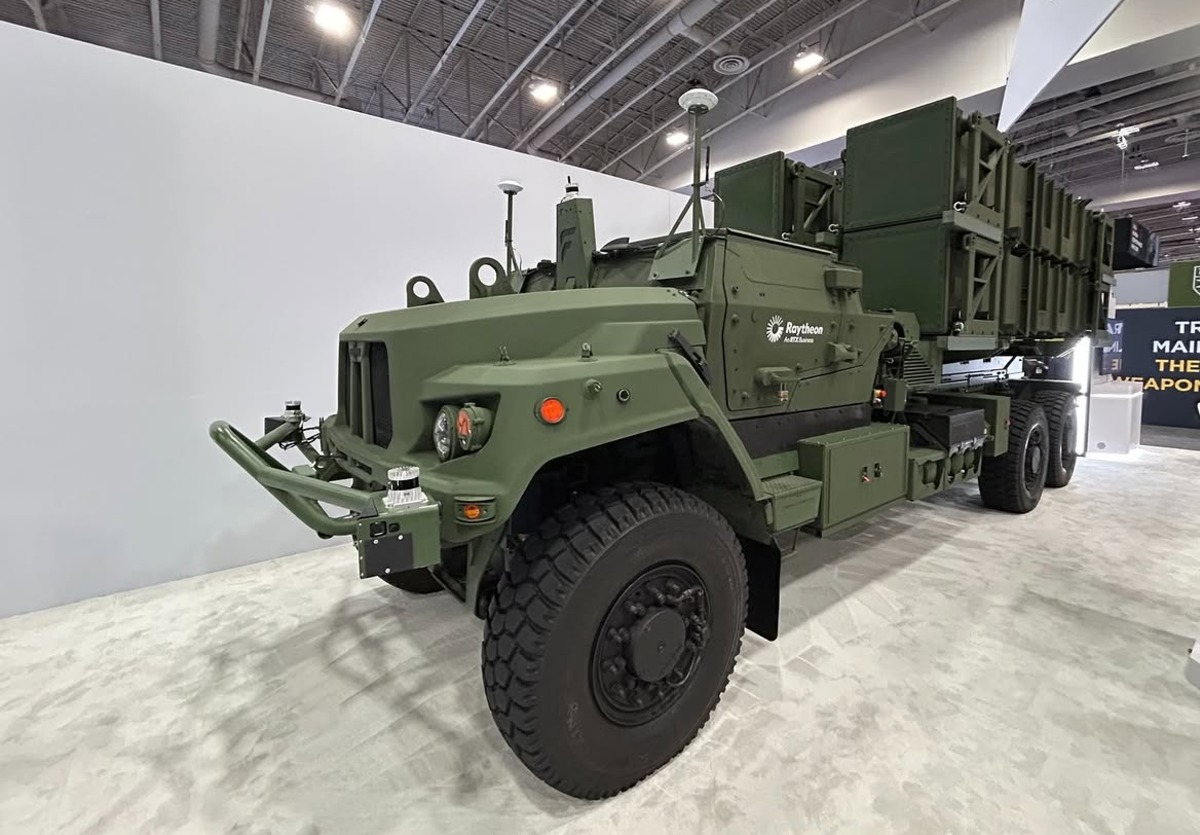
The U.S. Army’s Portfolio Acquisition Executive Fires office, the branch responsible for developing the service’s next generation of missile and rocket systems, published a request on August 11 seeking companies capable of designing an autonomous vehicle that could reshape how American ground forces move and launch weapons on future battlefields.
The program is called the Common Autonomous Multidomain Launcher, or CAML, and its centerpiece is something the Army calls the Autonomous Mobility Platform, or AMP, an optionally crewed vehicle, meaning it can drive itself or carry a human operator, engineered to load, transport, fire, and reload munitions weighing up to 36,000 pounds (16,329 kilograms) without a soldier ever having to physically handle the weapon. That weight limit matters because it determines just how much destructive capability a single vehicle can carry into the field, and 36,000 pounds sits comfortably in the range needed to move some of the Army’s heaviest guided weapons.
What makes the AMP unusual isn’t just that it drives itself. It’s designed to load and unload its own cargo using something called a Load Handling System, essentially a robotic mechanism that lets the vehicle pick up and swap out standardized munition pallets on its own, the same way a forklift moves a shipping container but built directly into a combat vehicle operating in hostile territory. Those pallets, which the Army calls Unique Munition Pallets, come in four distinct configurations, and each one transforms the same base vehicle into a completely different weapon system.
One pallet carries the Tomahawk, the long-range cruise missile the Navy has used for decades to strike targets hundreds of miles away. Another carries PAC-3 Missile Segment Enhancement interceptors, the interceptor missiles used by the Patriot air defense system to shoot down incoming aircraft, drones, and ballistic missiles. A third houses AIM-9X missiles configured for the Indirect Fire Protection Capability system, a short-range air defense weapon built to counter the kind of drone and rocket attacks that have become common on modern battlefields. The fourth carries rocket pods for the Multiple Launch Rocket System family of munitions, the guided and unguided rockets the Army has relied on for decades of long-range ground bombardment.
That kind of flexibility represents a significant departure from how the Army currently fields its missile systems, where each weapon typically rides on its own dedicated vehicle built specifically for that munition. Under the CAML concept, a single AMP could theoretically be loaded with a Tomahawk pallet for a long-range strike mission one day and swapped out for a Patriot interceptor pallet defending against an incoming drone swarm the next, all without soldiers needing an entirely separate fleet of vehicles for each weapon type. The Army’s solicitation also calls for a Leader Vehicle Autonomy Kit, a modular system that can be installed on other vehicles, autonomous or not, to serve as a command node that synchronizes multiple AMP vehicles as they move in convoy, execute fire missions, or rapidly set up and break down firing positions, capabilities that matter enormously on a battlefield where staying in one place too long can mean getting hit by enemy fire.
The Army is pursuing this program under a legal authority known as Other Transaction Agreements, a contracting method that lets the Pentagon move faster than the traditional defense acquisition process by working directly with companies, including ones that have never held a full defense contract before, to build and test prototypes before committing to a full production program. The solicitation specifically invokes 10 U.S. Code Section 4022, the law that governs these prototype agreements, and notes the Army may eventually move to full-rate production without running a separate competition if the prototype phase goes well, a significant incentive for companies competing to land this initial contract.
The Army has also built a specific data ownership requirement into the program that could reshape how it buys weapons going forward. The solicitation requires companies to turn over full technical ownership of the system, including detailed engineering documents and interface specifications, to the government rather than keeping that information proprietary. Army officials describe this approach as eliminating vendor lock, the situation where a military branch becomes dependent on a single company because that company controls the only detailed technical knowledge of how a system works, a problem that has driven up costs and slowed modernization efforts across multiple Pentagon programs over the years. By owning the technical baseline outright, the Army says it will be able to distribute that information to other companies down the line, opening the door to competition on future upgrades or replacement parts rather than being locked into whichever single company builds the first prototype.
Companies interested in competing have a narrow window to respond. The Army is requiring initial submissions, capped at ten pages, by noon Eastern time on September 1, 2026, with only U.S.-based companies cleared to handle secret-level classified information and hardware eligible to participate. Those chosen to advance will move through additional rounds of in-person pitches and potential prototype demonstrations before the Army decides who ultimately builds the system, a process the solicitation indicates could stretch well into 2027 before any contract is finalized.
Content preview only. Full article available at source. View Full Article
The U.S. Army issued a request on August 11, 2023, for companies to develop the Common Autonomous Multidomain Launcher (CAML), an autonomous vehicle designed to transport and launch multiple missile systems. This vehicle, known as the Autonomous Mobility Platform (AMP), can handle munitions weighing up to 36,000 pounds and is intended to enhance operational flexibility on the battlefield. The Army's approach aims to streamline procurement and reduce dependency on single vendors by requiring full technical ownership of the system.
- The U.S. Army published a request for companies to design an autonomous vehicle on August 11, 2023.
- The vehicle, called the Common Autonomous Multidomain Launcher (CAML), is designed to transport and launch various missile systems.
- The Autonomous Mobility Platform (AMP) can load, transport, fire, and reload munitions without soldier intervention.
- The AMP can carry up to 36,000 pounds of munitions, including Tomahawk missiles and PAC-3 interceptors.
- The Army aims to eliminate vendor lock by requiring full technical ownership of the system from contractors.