
U.S. Army and Marines train together on a remote Pacific island
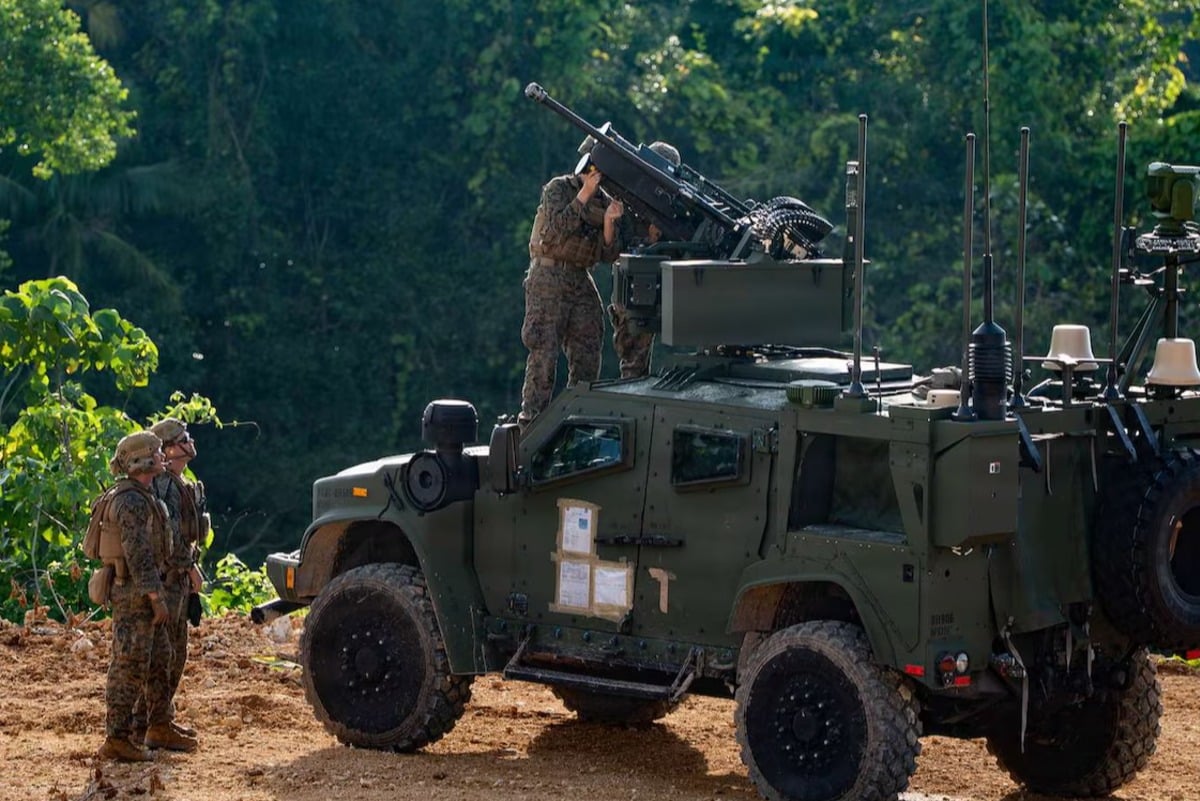
Soldiers from Echo Battery, 5th Battalion, 5th Air Defense Artillery Regiment, wrapped up their final live-fire exercise using the Avenger air defense system last month during Exercise Tenacious Archer 2026, held in Airai, Palau, according to a report by Army Sgt. Martin Nalls of 8th Army. The multiday exercise brought together soldiers and Marines from multiple branches to practice defending against aerial threats across the Pacific, a region where the United States has steadily built up joint training as concerns grow over China’s expanding military reach.
Palau, a small island nation in the western Pacific with deep historical and defense ties to the United States dating back to World War II, sits along strategic sea lanes that connect the Philippines, Guam, and the broader Indo-Pacific theater American planners increasingly view as the most consequential region for future conflict. The exercise drew soldiers from artillery, military police, and sustainment units, working alongside Marines assigned to an aircraft wing, to run live-fire events and rehearse the planning and coordination needed to defend critical assets and friendly forces under conditions meant to mirror actual combat rather than a scripted training scenario.
Tenacious Archer exists specifically to force different branches and specialties that rarely operate together to figure out how to fight as one team, an increasingly urgent skill as the Pentagon leans harder into what it calls joint and combined operations, meaning missions where Army, Marine Corps, Navy, Air Force, and allied units all have to communicate and coordinate in real time rather than fighting in separate lanes. Beyond simply shooting at aerial targets, participants spent the exercise validating planning processes, testing communications networks, and rehearsing the command-and-control procedures, the systems and protocols that let commanders issue orders and receive updates across multiple units, that determine whether a joint force can actually respond fast enough when a real aerial threat appears.
For Echo Battery, the exercise carried extra weight because it marked the end of an era for the unit’s primary weapon system. The Avenger, formally designated the AN/TWQ-1, is a surface-to-air missile system typically mounted on a Humvee that has provided short-range air defense protection against low-flying aircraft, helicopters, cruise missiles, and drones since it entered service in the late 1980s, making it older than most of the soldiers who currently operate it. The system carries Stinger missiles, a shoulder-launched infrared-guided weapon originally designed to shoot down aircraft, and has been repeatedly upgraded over the decades even as the Army has steadily worked to replace it with more modern platforms better suited to the drone-heavy threats that have come to define recent conflicts, including Russia’s ongoing war against Ukraine.
Army Capt. Eric Sandlin, Echo Battery’s commander, framed the exercise as both a farewell to a system that has served the unit well and a step toward whatever comes next.
“Tenacious Archer 2026 will be the final live-fire exercise for Echo Battery using the Avenger weapon system,” said Army Capt. Eric Sandlin, Echo Battery commander. “The Avenger has been a capable platform for our formation, and we’re now transitioning to new equipment that will further modernize our air defense capabilities and prepare us for future operational requirements.”
Sandlin did not specify which system will replace the Avenger in Echo Battery’s arsenal, and the Army’s broader modernization push offers several candidates without confirming which one applies here. The Army has spent the past several years fielding the M-SHORAD system, officially named SGT Stout after a Medal of Honor recipient, a Stryker-mounted platform that combines Stinger missiles, Hellfire missiles, and a 30mm cannon with its own radar to give crews faster response times and better protection than the decades-old Humvee-based Avenger can offer. Whether Echo Battery is transitioning specifically to SGT Stout, a newer variant, or an entirely different system remains unclear from Sandlin’s comments alone, leaving the exact shape of the unit’s future arsenal as an open question the Army has not yet answered publicly.
The exercise also gave Echo Battery something less tangible than new equipment: practice working with people it doesn’t normally train alongside.
“This was a unique experience for my battery,” Sandlin said. “Training with the Marine Corps, soldiers from other Army branches and our partners strengthened our ability to communicate, coordinate and accomplish the mission together.”
That kind of cross-branch familiarity matters more than it might seem from the outside, since real combat rarely respects the tidy organizational lines that separate one branch’s units from another’s, and confusion over communication procedures or command relationships in the middle of an actual attack can cost lives. Army Sgt. 1st Class Joshua Hogan, Echo Battery’s master gunner, the senior enlisted soldier responsible for training crews on weapon systems and ensuring live-fire safety, pointed to the practical, hands-on value of actually firing weapons rather than simulating the process.
“Live-fire exercises like Tenacious Archer give air defenders valuable hands-on experience by allowing soldiers to fire the Stinger missile and observe its performance in flight,” said Army Sgt. 1st Class Joshua Hogan, Echo Battery master gunner. “It’s also an opportunity to train alongside other military branches and partner forces, helping us better understand each other’s capabilities and improve how we operate together.”
Watching a missile actually fly and strike its target, rather than reading about the process in a manual or running through it on a simulator, builds a kind of confidence and muscle memory that no amount of classroom instruction can replicate, particularly for young soldiers who may never have seen the weapon system they train on actually work under field conditions. The integration of Army, Marine Corps, and partner nation forces throughout Tenacious Archer reinforced a lesson the Pentagon has repeated across multiple recent Pacific exercises, that interoperability, the ability of different forces to fight effectively together despite different equipment, procedures, and chains of command, has become as important to regional security as any single weapon system fielded by any single branch.
Content preview only. Full article available at source. View Full Article
Echo Battery of the U.S. Army completed its final live-fire exercise with the Avenger air defense system in Airai, Palau, during Exercise Tenacious Archer 2026. The multiday exercise involved soldiers and Marines from various branches practicing air defense against aerial threats. This exercise emphasized the importance of interoperability and real combat training as the U.S. military transitions to newer air defense systems.
- Echo Battery completed final live-fire exercise with the Avenger air defense system.
- Exercise Tenacious Archer 2026 involved multiple military branches training together.
- The Avenger system is being phased out in favor of newer air defense systems.
- The exercise focused on real combat scenarios and interoperability among forces.
- Participants validated planning processes and command-and-control procedures.