
Han Guang No. 42 Concludes: Hsiung Feng Missile First Forward Deployment to Penghu, Taiwan Military Conducts Unscripted Command Drill to Reshape Taiwan Strait Defense Line
 Li Minghui
Han Kuang 42 Concludes: Hsiung Feng Missiles Advance to Penghu for the First Time, Taiwan Military Conducts Unscripted Command Exercises to Reshape the Taiwan Strait Defense Line
At 11:50 PM on August 11, in the underground tunnel of Fuxing North Road in Taipei, soldiers from the Military Police Reserve Brigade simulated a firefight with "infiltrating PLA special forces." This underground passage leading to the Dazhi Bridge and the Joint Operations Command Center was barricaded with New Jersey barriers, concertina wire, and HESCO barriers stacked six layers high, with anti-tank mines laid in the first five layers. The Han Kuang 42 live-fire exercise entered its final week, with the Taiwan military focusing on the urban area of Taipei—rather than the beachhead.
Anti-Airborne Drill Targets PLA's First Wave Tactics
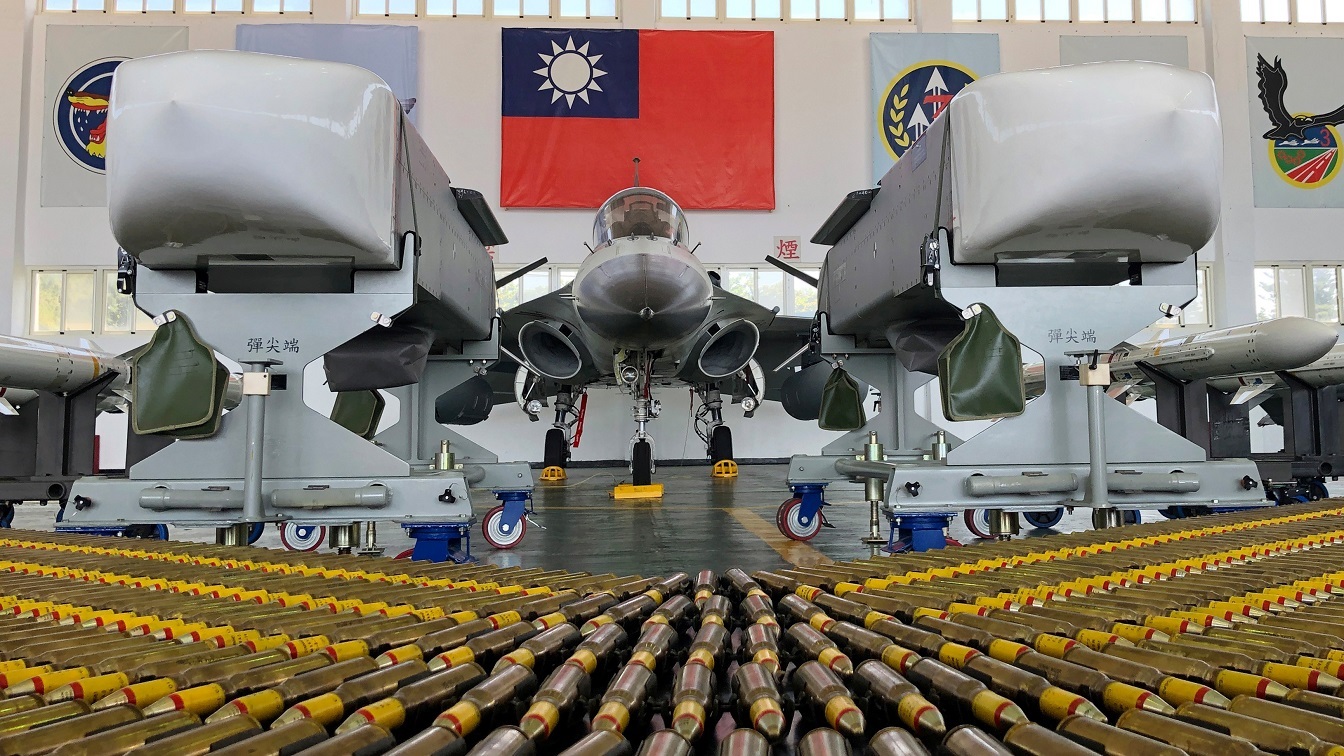
The scenario at Songshan Airport is quite revealing: after the PLA gains air superiority, they use special forces and drones to cover an airborne assault on Songshan Airport, cutting off Taipei's defenses. This is not the Taiwan military scaring itself—on August 4, 17 aircraft, including J-10s, J-16s, and KJ-500s, flew out to sea, with 12 crossing the so-called "median line of the Taiwan Strait." By choosing to conduct anti-airborne drills at Songshan Airport, the Taiwan military openly acknowledges a judgment: the PLA's first wave of attacks may not be an amphibious landing, but rather an airborne seizure of key nodes.
The anti-airborne drill in the Miaoli direction was carried out by the 5th Combat Zone, with CM34 armored vehicles conducting sweeps, psychological warfare loudspeakers in coordination, reconnaissance drones identifying targets, and a fire coordination center directing supporting fire, completing the process.
Command Authority Shifted from Battalion Level to Platoon Level
More important than the exercise itself is the command mechanism. According to a report by Wind Media on August 10, the Taiwan military activated the U.S. Army's RDSP (Rapid Decision and Synchronization Process) during port defense drills—marking the first time U.S. regulations were fully integrated into Taiwan's military exercises. Colonel Lin Yangzhong, the commander of a joint arms battalion, stated plainly: "The enemy will not come from where we expect. When faced with situations we cannot handle, I, as the battalion commander, will immediately activate RDSP, and operational guidance will be issued immediately, allowing the troops to execute actions different from the original plan."
In simple terms, the Taiwan military is practicing "what to do when plans are disrupted," rather than "finishing according to the script." Unscripted, decentralized, and reverse briefing—this approach, which was merely a slogan last year, has now been implemented to the point where platoon-level units can autonomously handle key tasks without battalion-level approval. Notably, on August 9, Hsiung Feng II and Hsiung Feng III anti-ship missile launchers were pushed forward to Penghu, commanded by the Coastal Operations Command established only on July 1—this new command participated in a large-scale exercise for the first time with real combat scenarios.
The Geometric Significance of Penghu
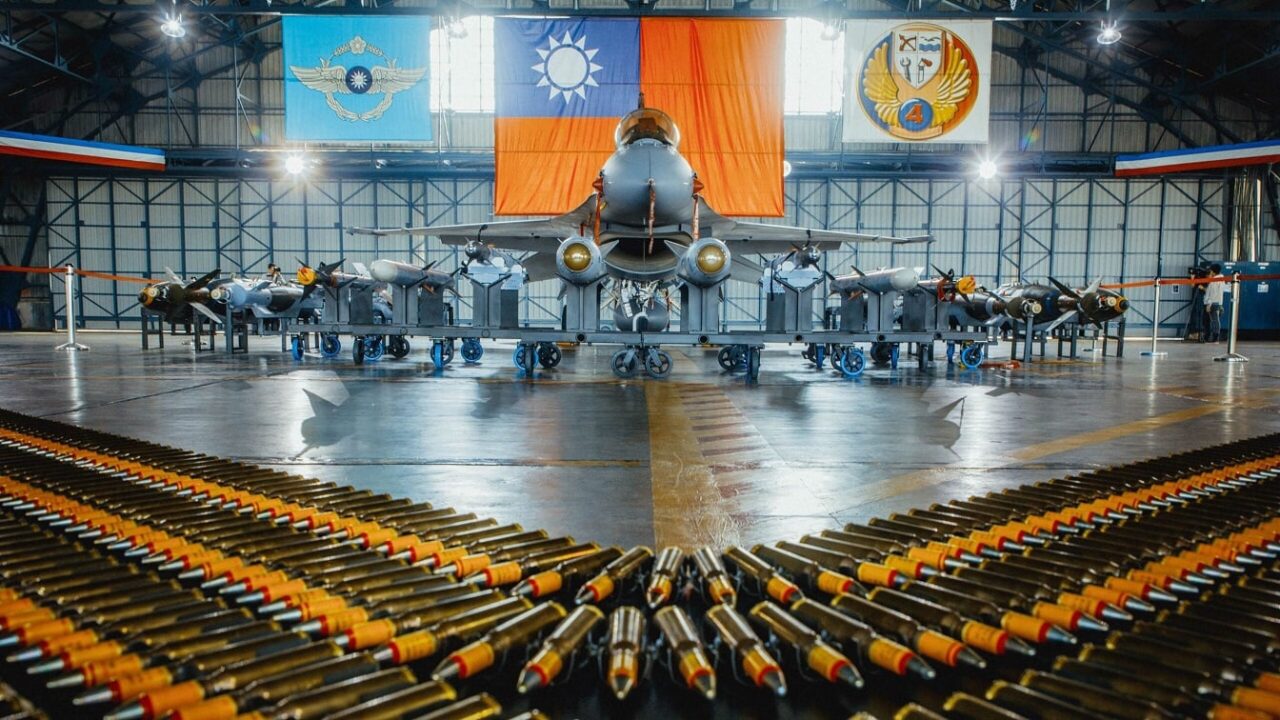
The significance of Hsiung Feng missiles entering Penghu is easily understood by anyone familiar with geometry. Penghu is located right in the middle of the Taiwan Strait; launching from here, both PLA vessels circumventing Taiwan from the east and those still in the near seas of the mainland fall within range. The Taiwan military refers to this as "land-based control of the sea"—using shore-based anti-ship missiles to compensate for the numerical disadvantage of surface vessels. The Hsiung Feng III is a supersonic "aircraft carrier killer," compressing reaction time to mere seconds; the Hsiung Feng II is a high subsonic sea-skimming missile. Both utilize mobile launch vehicles, allowing them to fire and depart, significantly enhancing survivability compared to fixed positions.
PLA Perspective: Official Words vs. Reality
Interestingly, the interpretations of this exercise on both sides of the Taiwan Strait are completely misaligned. The official stance from Ministry of National Defense spokesperson Jiang Bin is that it is a "political show," while netizens on mainland social media mock the Taiwan military over the fallen hatch cover of an M60A3. However, scholars related to the PLA quoted in Wind Media's "Beijing Observations" column privately assess the situation quite differently—they noted that Han Kuang 42 was practicing urban defense, full mobilization of reserve brigades, continuity of command after communication disruptions, and local governments maintaining basic services after central paralysis. One scholar wrote directly: "Taiwan is not simply accumulating equipment; it is learning to extend resistance time and enhance social resilience." This is a direct lesson from the Russo-Ukrainian War.
Three Reservations from the Author
First, the value of unscripted training depends on the intensity of the confrontation—if the hypothetical enemy always plays by the rules, then unscripted is just another type of script. Whether the Taiwan military has a real opponent will be determined by the quality of the confrontation during the northern air defense exercises on August 13-14. Second, the premise of RDSP is smooth communication, while the PLA's first wave of attacks is precisely a paralysis strategy—on August 10 and 13, 30-minute network slowdown drills in central and northern regions were aimed at the public, not the reliability of military command links under real electronic interference. Third, the incident on August 9 involving a truck dropping shells indicates that there are still gaps in the ammunition circulation process of the mobilization system—full brigade mobilization does not simply mean calling the troops.
The exercise concluded on August 14. The real question is not whether the Taiwan military can hold the beachhead—they have already admitted they cannot, having pulled the defense line back to urban areas. The question is: if the Taiwan military decentralizes command to the platoon level, pushes missiles forward to Penghu, and normalizes social mobilization, will the strike list in the PLA's "first wave paralysis" scenario still be sufficient?
The Taiwanese military conducted exercises in Taipei on August 11, 2023, simulating responses to potential airborne assaults by the PLA. The exercises involved 17 aircraft, including Ching-Kuo fighter jets, and featured a decentralized command structure to enhance operational flexibility. Additionally, Yun Feng missiles were deployed to Penghu, emphasizing their strategic importance in the Taiwan Strait.
- Taiwanese military exercises included simulations of PLA airborne assaults.
- Ching-Kuo fighter jets and Yun Feng missiles were deployed during the exercises.
- Command structures were decentralized to allow for rapid decision-making.
- Exercises took place in urban areas of Taipei and included responses to potential PLA strategies.
- The significance of deploying Yun Feng missiles to Penghu was highlighted for its strategic location.