
120 KN-23 missiles and 90 North Korean rocket launchers in Voronezh — a new stage in the military alliance between Moscow and Pyongyang
 Dmitri Volkov
120 KN-23 missiles and 90 North Korean missileers in Voronezh — a new stage in the military alliance between Moscow and Pyongyang
Russia is no longer just buying missiles from North Korea — it is integrating North Korean missileers into its own combat brigade. According to Ukraine's GUR, about 90 North Korean servicemen are arriving in the Voronezh region for integration into the 112th Missile Brigade of the Russian Armed Forces, which will receive six launchers and up to 120 ballistic missiles KN-23 and KN-24 (Reuters, August 5, 2026). The first batch — 40 missiles — has already been delivered. The final configuration of the unit will be agreed upon in negotiations between Moscow and Pyongyang in September.
Deployment near the border
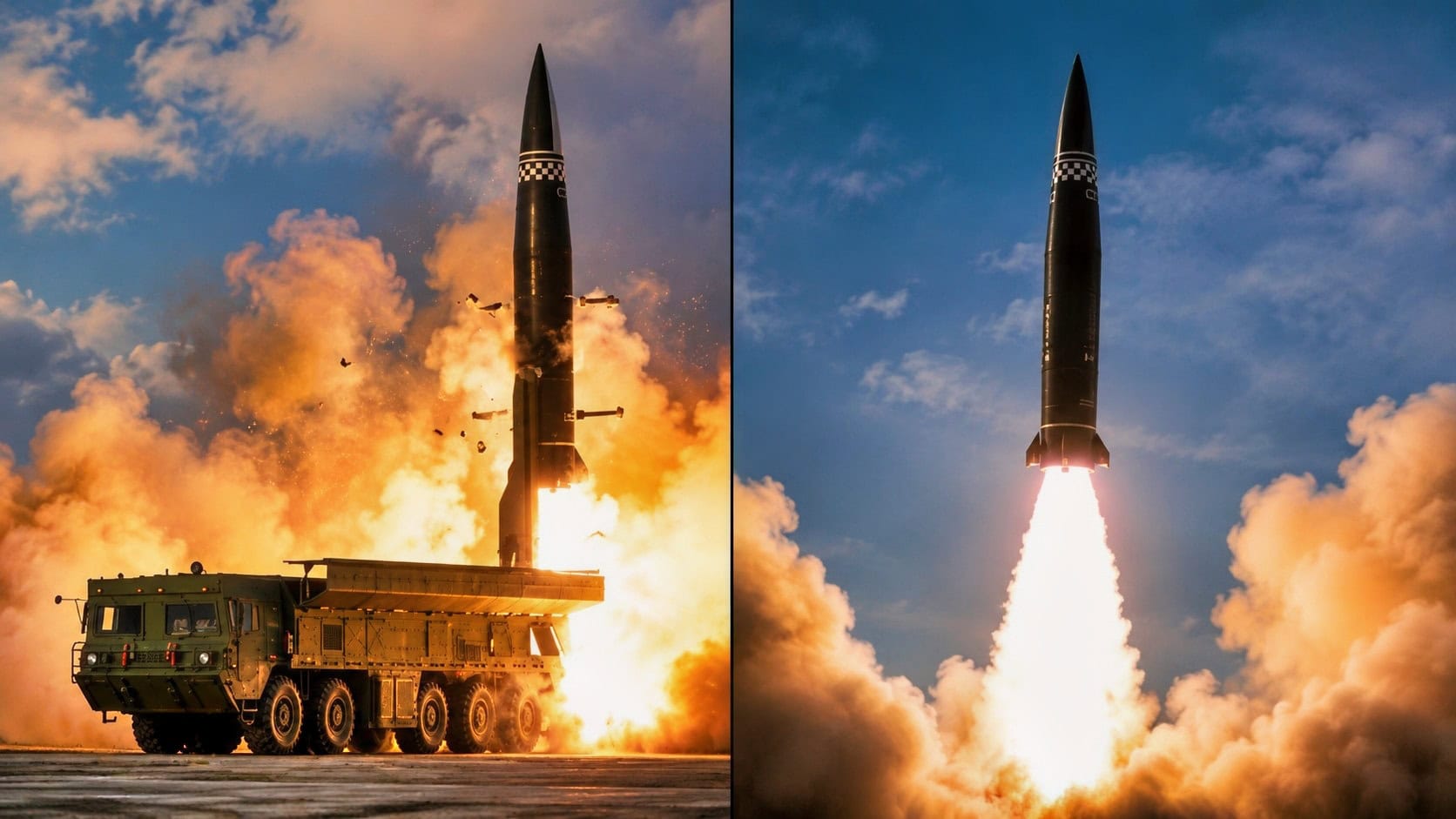
The Voronezh region is located about 150 kilometers from the border with Ukraine. The range of the KN-23 ("Hwasong-11A") reaches 900 kilometers with a warhead of 500–1500 kg — enough to keep all of eastern and central Ukraine under threat without leaving Russian territory. In comparison, the Russian "Iskander" is more accurate at comparable dimensions — but the KN-23 is significantly cheaper and is supplied in volumes that Moscow's own production cannot provide.
This deployment is not the first encounter Ukraine has had with North Korean missiles. Moscow has been using the KN-23 and KN-24 since December 2023; from the end of 2023 to August 2025, Pyongyang supplied about 150 such missiles. After nearly a year-long pause, launches resumed at the end of July 2026. On July 30, a KN-23 destroyed a residential building in the village of Radushnoe in the Dnipropetrovsk region — six people were killed, including three children. A second missile that same night fell in an open field about 3.5 kilometers from its targets — a clear illustration that the accuracy of these missiles remains a lottery.
War as a testing ground
ISW noted in its summary on August 11 that the main point is: Russia is launching small batches of KN-23 in nighttime strike packages not so much to hit targets, but for combat testing and accuracy refinement (ISW, August 11, 2026). At the same time, a training center is being built in the Voronezh region, where North Korean missileers and the missiles themselves will likely be stationed. The Ukrainian front is turning into a testing ground for North Korean missile development — with free telemetry from real combat launches.
The results of this "feedback" are already measurable. The first launches of the KN-23 in December 2023 had a deviation of 1–3 kilometers — Ukrainian military initially considered them area-effect weapons. Russian engineers analyzed the telemetry of each launch and transmitted corrections to the production lines in North Korea. By mid-2026, according to the Foundation for Defense of Democracies, the circular probable deviation had decreased to 50–100 meters; Ukrainian sources even mention 1–5 meters. Official figures are likely inflated, but the trend — from kilometers to tens of meters — is indisputable.
The effect on Ukrainian air defense is documented: according to RUSI, the interception rate of Patriot missiles against "Iskander" and KN-23 has dropped from about 37% in the summer of 2024 to 15% in early 2025 — due to improved terminal maneuvering and upgraded countermeasures incorporated into the missiles after combat testing. While the Patriot remains the only system capable of reliably intercepting such targets, the supply of interceptors for the Ukrainian Armed Forces is limited.
The cost of the alliance
Moscow pays for this not only with money. According to estimates from the South Korean Institute for National Security Strategy, from August 2023 to December 2025, Pyongyang earned between $7.67 billion and $14.4 billion from arms supplies and troop deployments. Russia has provided North Korea with CNC machine tools for automated missile production, design documentation, and production support for strike drones of the "Shahed" type, modern electronic warfare systems, and assistance with satellite launches. The ninety missileers in Voronezh will gain what no training center can provide — experience from real launches against real targets in conditions of dense air defense, which is directly applicable against Seoul and American bases in the region.
The scale of cooperation is also growing in terms of manpower. Zelensky stated on August 9 that a decision has been made to deploy 30,000 to 50,000 North Korean servicemen in Russia — given that about 14,000 North Korean soldiers fought in the Kursk region, with approximately 6,000 killed and wounded (according to South Korean intelligence). If the figure of 30,000 to 50,000 is realized, it will more than triple the previous peak of North Korean participation and free up Russian units for redeployment to other parts of the front.
The legal blindness of control regimes is also telling. The Missile Technology Control Regime (MTCR), established in 1987, regulates the transfer of equipment, blueprints, and personnel — but not combat telemetry. The Russian technology transfer mechanism in this war consists of real data from hundreds of launches, turned into corrections for Pyongyang's production line. Such transfers leave no trace in customs declarations and do not fall under any article of the treaty. And any UN Security Council resolution on supplies to North Korea is blocked by Moscow's veto power.
Strategic consequences
For Russian military doctrine, this is an unprecedented step. Since the Soviet era, the core of strike systems has been considered a strictly national matter — foreign crews on strategic carriers were unthinkable. Now Moscow is not just purchasing munitions, but delegating the operation of a combat system to Pyongyang as part of a regular brigade. This resembles the situation in 1943, when the Wehrmacht increasingly relied on foreign formations — and speaks to the depletion not so much of arsenals, but of personnel: there is a shortage of Russian missileers capable of servicing new systems.
"The Voronezh training ground changes the balance not only on the Ukrainian theater of operations. It gives Pyongyang what North Korea has been unable to obtain for decades — combat testing of missiles against Western air defense systems. In a year or two, these same lessons could be applied against Seoul," analysts note.
For Ukraine, the main risk is not in the KN-23 missiles themselves, but in the cumulative pressure on an already strained air defense. Each nighttime package with ballistic missiles forces the use of expensive Patriot interceptors, and replenishing them remains a key vulnerability for Kyiv. Requests for additional batteries and interceptors that Ukraine submitted to American negotiators on August 11 are a direct consequence of this dynamic.
Forecast
If the September negotiations confirm six launchers and 120 missiles, Voronezh will not be a one-time episode, but a model: Russian brigades with North Korean crews, Iranian drones, Chinese components — the architecture of a "coalitional" war, where Moscow supplies the war, and allies provide weapons and personnel. This model will expand as long as Pyongyang has missiles and the desire to exchange them for technology, and as long as Moscow is willing to pay with currency it no longer possesses: its own technological sovereignty. The lesson for all who are watching the Korean Peninsula is simple: what North Korean missileers are learning now in Voronezh, Seoul could see at home at any moment after 2026.
Ninety North Korean soldiers are integrating into the 112th Missile Brigade in Voronezh, Russia, as part of a military alliance with North Korea. This includes the deployment of 120 KN-23 missiles, with the first 40 already delivered. The KN-23 missiles can strike targets in eastern and central Ukraine, enhancing Russia's military capabilities in the region. This development signifies a deepening military cooperation between Moscow and Pyongyang, with strategic implications for the ongoing conflict.
- 90 North Korean soldiers are being integrated into the 112th Missile Brigade in Voronezh.
- 120 KN-23 missiles are being deployed, with the first batch of 40 already delivered.
- The KN-23 missile has a range of 900 kilometers, capable of striking eastern and central Ukraine.
- This integration marks a significant step in military cooperation between Russia and North Korea.
- The deployment is part of a broader strategy to enhance missile capabilities against Ukrainian air defenses.