
U.S. Navy gives Boeing up to $80M to improve MQ-25 drone
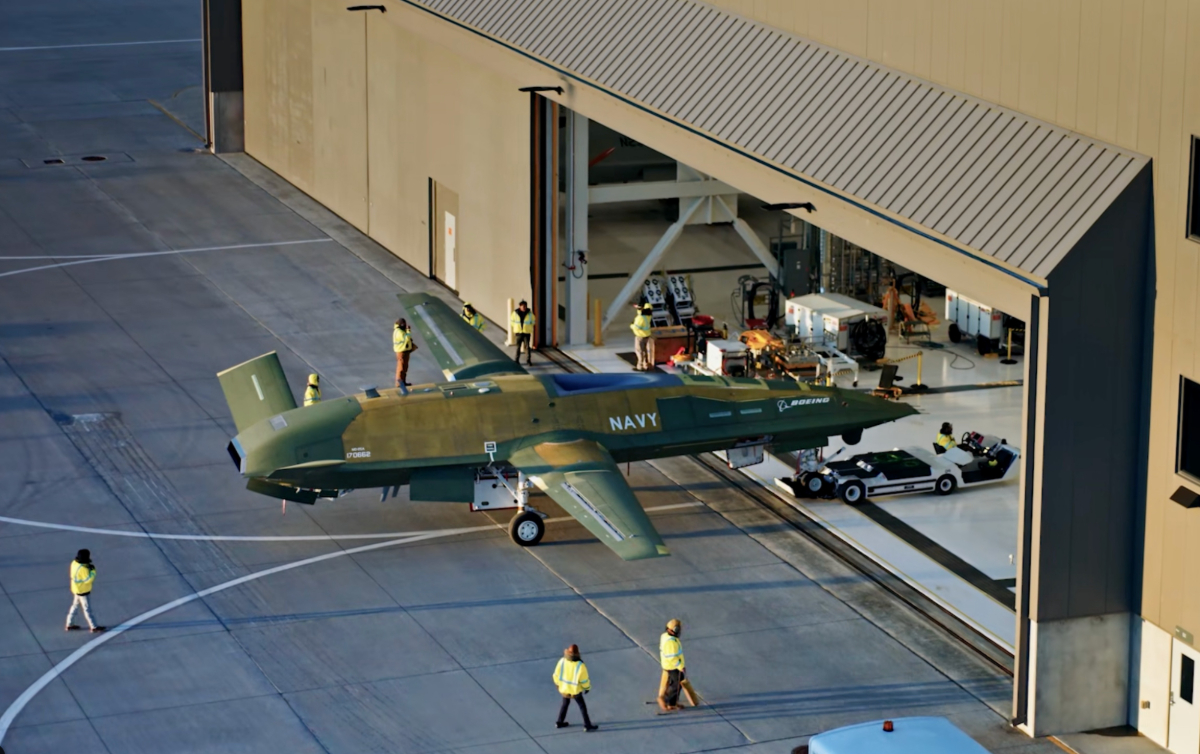
The U.S. Navy has given Boeing a contract worth up to $80 million to keep developing and improving the MQ-25A Stingray, the uncrewed tanker designed to refuel fighter jets from aircraft carrier decks.
The indefinite-delivery/indefinite-quantity contract, announced by the U.S. Department of War, covers system improvements, development and integration of new aircraft configurations, production readiness and sustainment work for the MQ-25A. Naval Air Systems Command at Patuxent River, Maryland, awarded it on a sole-source basis, with work to be done in St. Louis, Missouri, through October 2031. No money was obligated at signing; the U.S. Navy will fund the work through individual orders as it needs them.
The MQ-25A is the U.S. Navy’s first operational carrier-based drone. Its main job is aerial refueling, a task now often handled by F/A-18E/F Super Hornets carrying fuel tanks, which takes fighters away from combat missions. Handing that work to an uncrewed tanker is meant to free up Super Hornets and extend how far the carrier air wing can strike.
The new contract follows a busy year for the program. The first production-representative MQ-25A flew for about two hours on April 25, 2026, from Boeing’s facility at MidAmerica Airport in Mascoutah, Illinois, taxiing, taking off, flying and landing autonomously while U.S. Navy operators sent commands from a ground control station, Boeing said. On May 19, the U.S. Navy granted the program Milestone C approval, clearing it to enter low-rate initial production.
As part of that decision, the U.S. Navy said it expected a first low-rate production contract for three aircraft, with priced options for three more in a second lot and five in a third, Breaking Defense reported. The program of record calls for 76 aircraft, including four engineering development models and five system demonstration test articles, according to USNI News.
The Stingray has a long development history. Boeing’s T1 test aircraft first flew in September 2019, and in June 2021 it became the first uncrewed aircraft to refuel another aircraft in flight when it passed fuel to a Super Hornet. The program later slipped by several years: initial operational capability, defined as three MQ-25As with trained personnel ready to deploy on a carrier, was first planned for 2024 and is now expected in fiscal 2029.
Ships are being prepared alongside the aircraft. The aircraft carrier USS Theodore Roosevelt (CVN 71) became the first fully operational carrier able to handle the MQ-25 in 2026, after the U.S. Navy installed its first Unmanned Carrier Aviation Mission Control System aboard USS George H.W. Bush (CVN 77) in 2024, according to the Congressional Research Service.
Orders under the new $80 million contract will run through October 2031, as the MQ-25A moves through flight testing and toward carrier deployment.
Content preview only. Full article available at source. View Full Article
The U.S. Navy awarded Boeing a contract worth up to $80 million to develop and improve the MQ-25A Stingray drone, with work to be completed in St. Louis, Missouri, through October 2031. This contract includes system improvements and production readiness for the first operational carrier-based drone, which aims to enhance aerial refueling capabilities and extend the operational range of carrier air wings. The program plans for a total of 76 aircraft, with initial operational capability expected by fiscal 2029.
- U.S. Navy awarded Boeing a contract worth up to $80 million for MQ-25A development.
- The contract covers system improvements and production readiness.
- The MQ-25A is the first operational carrier-based drone for the U.S. Navy.
- The program aims for 76 aircraft, with initial operational capability expected in fiscal 2029.
- The first production-representative MQ-25A flew autonomously in April 2026.