
U.S. Patriot Reinforcements for Saudi Arabia and Qatar Reveal the Limits of Gulf Air Defense After the City Attack
 Ahmed Al-Rashid
American Patriot Reinforcements for Saudi Arabia and Qatar Reveal the Limits of Gulf Air Defense After the City Attack
On October 1, 2026, the Saudi-led coalition announced that a Houthi attack had struck an electricity station serving the area surrounding the Prophet's Mosque in Medina. Hours later, reports indicated that the United States had sent two additional Patriot batteries to Saudi Arabia and Qatar to protect oil and gas facilities. These two events should not be read as separate news items; the first demonstrates that a missile or drone can turn a target far from the front into a political crisis, while the second confirms that Washington still holds the key to Gulf air defense, regardless of local spending.
From the City to Energy Facilities
According to Reuters and Al Jazeera, Riyadh stated that the attack targeted electrical infrastructure linked to the service of the Prophet's Mosque, while the coalition announced the interception of other missiles and drones. The operational details still require independent verification, but the military message is clear. The Houthis do not need to destroy a religious facility to achieve a significant impact; it is enough to threaten its surroundings or the electrical grid it relies on to put Saudi air defense to a politically and morally sensitive test.
In contrast, reports attributed to Axios indicate that the two additional Patriot batteries are designated to protect energy facilities in Saudi Arabia and Qatar. This means that the American priority is not to create a comprehensive umbrella over every city, but to protect a few nodes of high economic and military value. Oil and gas, export terminals, airports, and American bases are what can be defended with the limited number of batteries; the entire Gulf airspace remains larger than the capacity of any single country.
What Patriot Can Actually Do
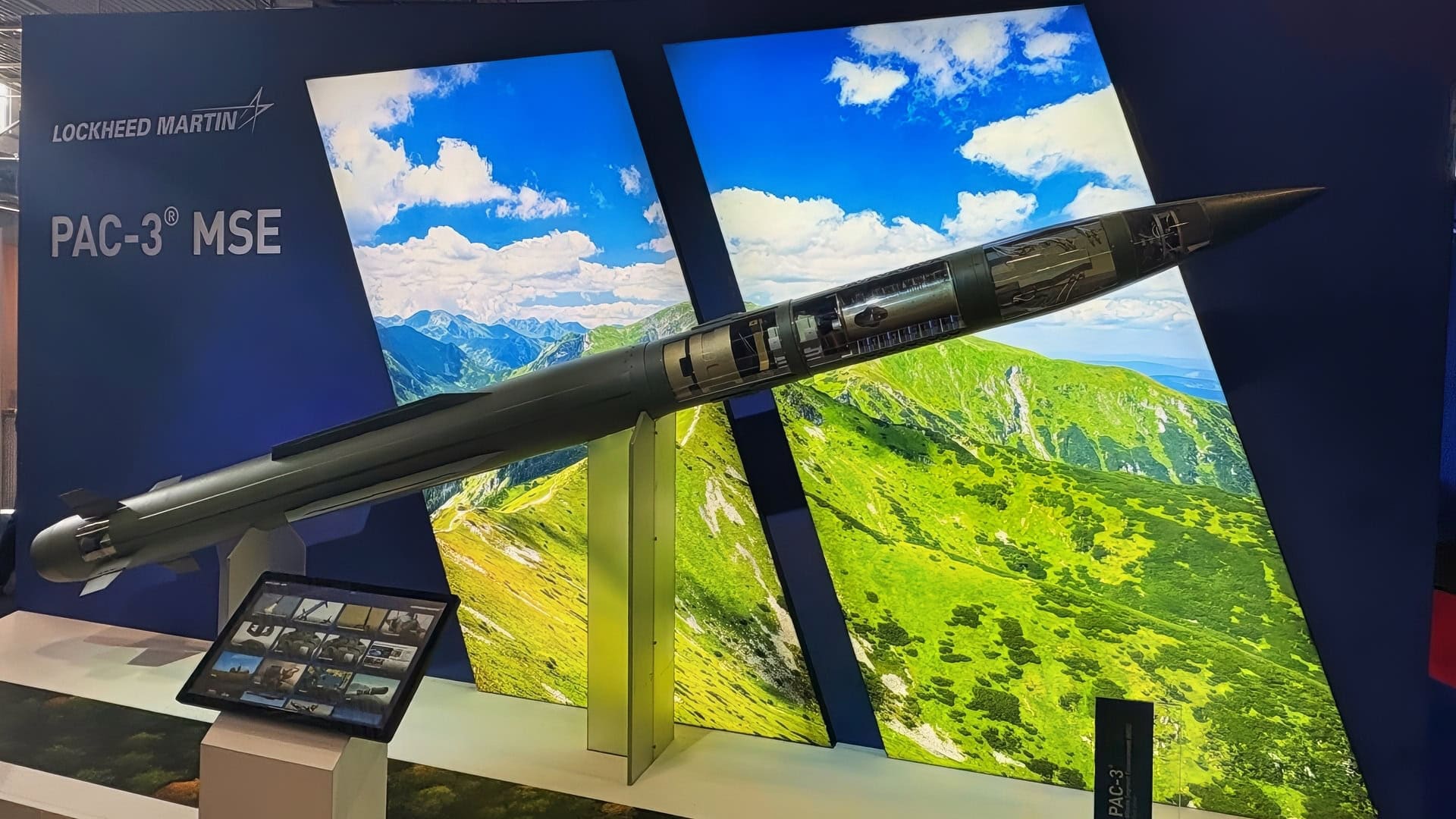
Technically, the Patriot, especially the PAC-3 MSE missiles, represents an important layer against ballistic missiles and some aerial targets. The radar, battle management center, launchers, and the discrimination chain between the real target and decoys operate as a single system. However, the battery is not a magic wall. Its geographical coverage is limited, the stock of interceptors is not infinite, and combined attacks that pair low-flying drones with faster missiles can force the defender to expend an expensive missile on a cheap target.
More importantly, the arrival of two American batteries does not equate to the arrival of full American capability. Effectiveness requires trained operating crews, an early warning network, continuous linkage with fighter aircraft, accurate intelligence, and a unified decision on who has the right to fire. In the doctrine I call the capability triangle, equipment is only one side; training and institutions are the other two sides. Gulf states have purchased equipment with significant financial efficiency, but they have not yet built a regional command institution capable of distributing fire, munitions, and alerts in real-time.
The Dependency That Contracts Do Not Conceal
Saudi Arabia and Qatar have spent billions of dollars on air defense systems and fighter jets, yet every major crisis brings the same question back to the forefront. Who decides the priorities when a facility in Yanbu, a base in Qatar, and a city in southern Saudi Arabia are subjected to simultaneous attacks? Do countries automatically share data? Can local crews reload batteries and repair radars under fire? The practical answer is not always reassuring, as part of the technical knowledge and supply chain and software updates remain tied to the United States.
Here lies the paradox. Washington is bolstering protection around energy, but in doing so, it reassures markets and simultaneously confirms that Gulf security still requires its umbrella. Gulf governments receive temporary deterrence, but they pay a political price of continued dependency. Purchasing Patriot gives the state a mark on the launcher, but does not necessarily grant it independence in battle management. Any military personnel who have served in the region know that owning the vehicle is much easier than owning the complete combat cycle.
The Houthis Test Politics Before Radar
The target associated with Medina adds a different layer to the calculations. An attack on a regular energy facility can be contained as a military incident, but linking it to the service of the Prophet's Mosque raises the cost of the Saudi response and gives the Houthis an opportunity to turn air defense into a legitimate and media issue. If Riyadh responds with a broad strike in Yemen, the group can present it as an escalation against civilians; and if it only intercepts, it can claim that the missiles still impose their rhythm on the adversary. This is not just a war of attrition for missiles, but a war on political decision-making.
Moreover, protecting energy in Qatar and Saudi Arabia clarifies that the Yemeni front is no longer local. Any disruption to an electricity station or export facility affects insurance prices, shipping movements, and investor confidence. Therefore, it is not enough for Patriot to intercept a single warhead. What is required is to reduce the number of exposed targets, distribute stocks, improve damage repair, and establish short-range defenses against drones alongside ballistic defense. Purchasing a long-range system and then leaving its surroundings exposed is akin to buying a safe and placing it on an open street.
Conclusion
The American reinforcement alleviates the immediate danger, but does not resolve the structural problem. Saudi Arabia and Qatar need Patriot, but they need even more a Gulf command network, a multi-layered intercept stock, joint training, and passive protection for energy facilities. Until then, the equation will remain as it was on October 2, 2026; Gulf states have the money to buy the best systems, while the United States has the ability to make them operate at full capacity. The contradiction between the desire for security independence and the need for the American operator is no longer a technical detail, but has become the essence of the balance of power in the Gulf.
Sources
- Reuters on the attack on the electricity station in Medina and the interception of missiles.
- Al Jazeera on the Saudi coalition narrative and the implications of the attack.
- Axios on the sending of Patriot batteries to protect Saudi and Qatari energy facilities.
- Middle East Eye on the interception of missiles and regional responses on October 2, 2026.
On October 1, 2026, the U.S. deployed two additional Patriot missile batteries to Saudi Arabia and Qatar following a Houthi attack on a power station in Medina. This move aims to enhance the protection of critical energy infrastructure in the Gulf. The report emphasizes the limitations of the Patriot system and the ongoing reliance of Gulf states on U.S. military capabilities for air defense.
- U.S. deployed 2 additional Patriot batteries to Saudi Arabia and Qatar.
- The deployment follows a Houthi attack on a power station in Medina.
- The U.S. aims to protect critical energy infrastructure in the Gulf region.
- The effectiveness of the Patriot system is limited by geographical coverage and operational readiness.
- The report highlights the ongoing dependency of Gulf states on U.S. military support.