

YF-23 vs. F-22: Why the Air Force Picked Agility Over “Invisible Speed”
The YF-23 is often remembered as the fighter that lost the Advanced Tactical Fighter (ATF) competition to the F-22. But that framing suggests inferiority, which is inaccurate. Rather, the stealth fighter was simply different, and as it happened, not what the Air Force was looking for.
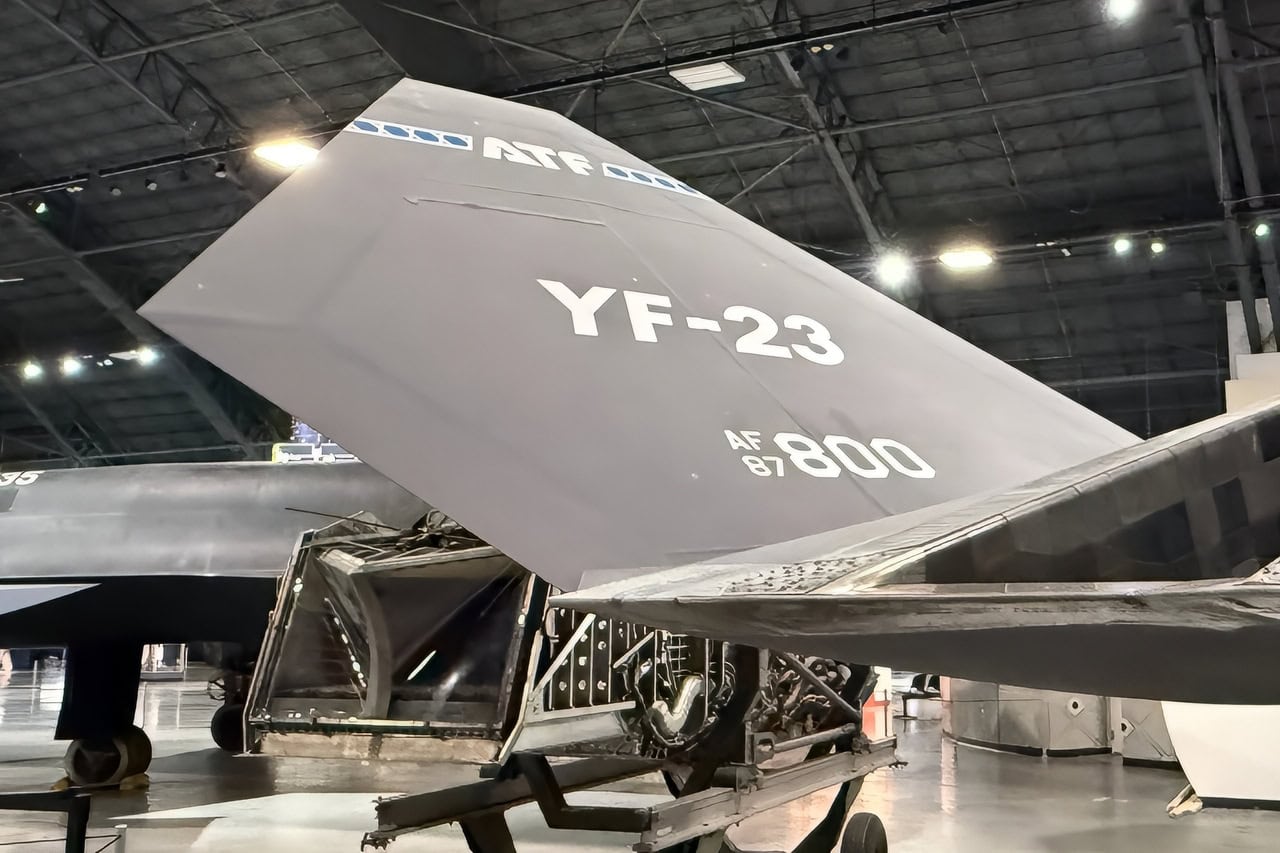
YF-23 Back End. 19FortyFive.com image.
Northrop designed the YF-23 to win the airway by being unseen, not by out-turning opponents. So, in effect, the ATF competition forced the Air Force to choose between agility dominance (the F-22) and stealth and speed optimization (the YF-23), two very different approaches to fifth-generation technology.
Note: This publication was sent to visit both YF-23 fighters and includes images of those visits in this article.
Introducing the YF-23
Designed by Northrop with McDonnell Douglas, the YF-23 was a prototype for the ATF program. Slated to compete against the Lockheed YF-22, the YF-23 emphasized low observability, supercruise, and range; it was not designed for close-in dogfighting or extreme maneuverability. Two prototypes were built, the Black Widow II and the more aptly named Gray Ghost. The aircraft reflected Northrop’s B-2 stealth heritage and its belief that stealth technology would define the future of air combat.
Stealth-first
The YF-23 featured a distinctive diamond-shaped planform and a V-shaped tail. This reduced the jet’s radar cross-section (RCS) through fewer control surfaces. The engine exhaust was shielded to reduce the IR signature, and the weapons bays were internal.

YF-23 at the Western Museum of Flight. Image by 19FortyFive/Harry J. Kazianis.
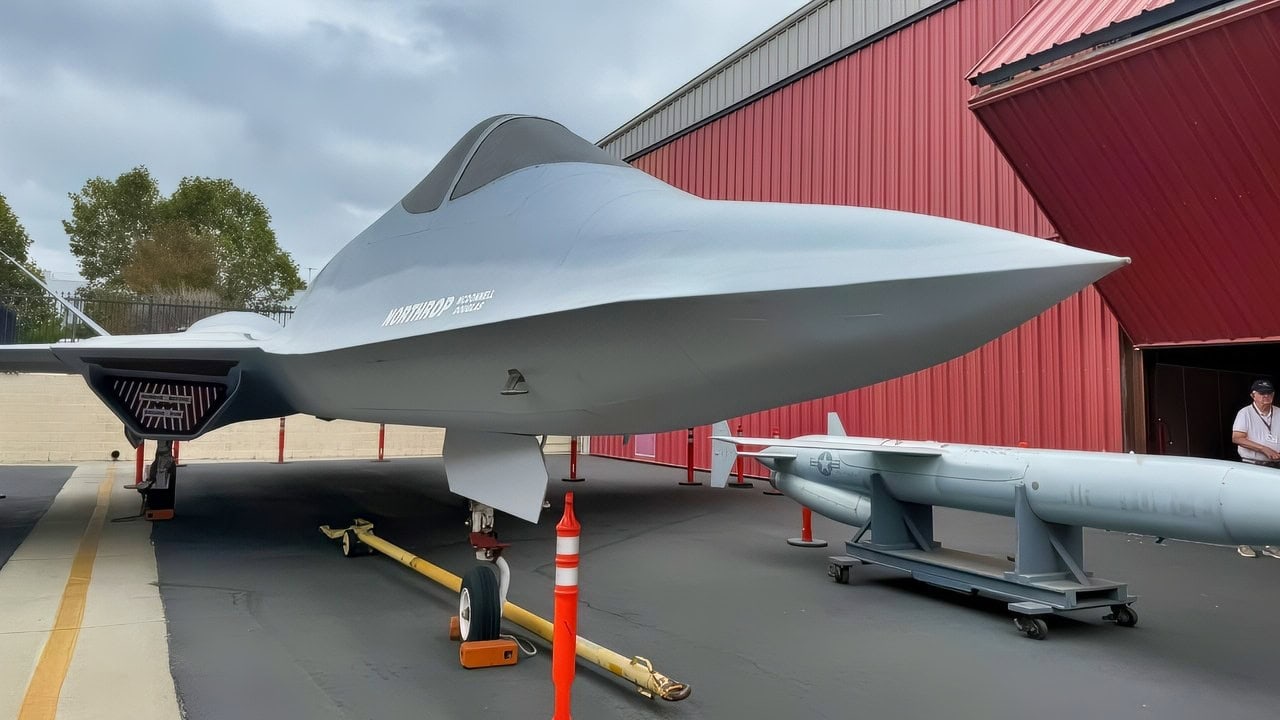
YF-23 at the Western Museum of Flight. Image by 19FortyFive/Harry J. Kazianis.
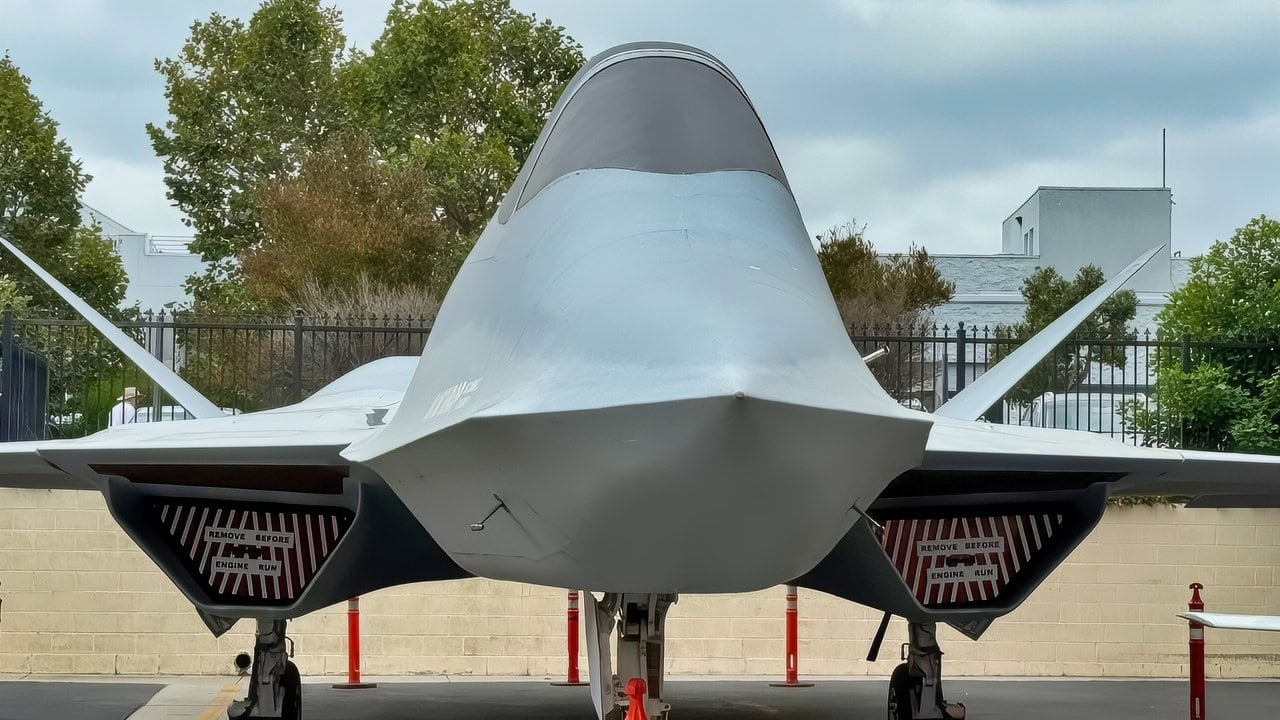
YF-23 at the Western Museum of Flight. Image by 19FortyFive/Harry J. Kazianis.
The high-aspect-ratio wings provided efficient cruise, helping optimize the platform for high-speed penetration and long-range patrols. The aircraft was not built for high-alpha maneuvering. Instead, every design choice prioritized signature reduction over raw agility.
The finished stealth fighter demonstrated higher top speed than the YF-22, along with excellent supercruise. The handling characteristics were stable and smooth, much less aggressive than the YF-22’s, which featured 2D thrust vectoring. The YF-23, without thrust vectoring, relied on aerodynamics and energy management. In sum, the YF-23 was designed to avoid close combat, choosing instead to control the fight at range.
Using the YF-23
Had the YF-23 ever made it to the flight line, the jet would have been used for air superiority and deep counter-air missions. Likely, the jet would have been employed for long-range patrols and early engagements, relying on stealth and speed.
Tactically, the fighter would have struck first and disengaged, with fewer merges and limited vision combat. Integration with AWACS and ISR assets would have enabled information dominance, thereby facilitating the jet’s BVR capabilities.
Strategically, the fighter reflected a belief, ahead of its time perhaps, that dogfighting was becoming obsolete. The aircraft prioritized first-shot, first-kill, meaning that strategically, the jet was better suited for large theaters (i.e., the Indo-Pacific) and long-range patrol. The fighter would have been less tactically flexible than the F-22 but potentially more survivable in a strategic sense. But the Air Force preferred the YF-22’s versatility and aggressiveness.
The Air Force decision
The Air Force decision wasn’t about choosing the “best” aircraft but about choosing the best fit. The YF-22’s sup[erior maneuverability, thrust vectoring, and better dogfighting performance tipped the scales, as the Air Force doctrine still valued close-in combat and visual identification.
The YF-22’s proposal was more conservative, less risky in terms of Air Force expectations.
Had the ATF competition taken place a decade or two later, the YF-23 may have edged out the YF-22, but in the late 1980s and early 1990s, the YF-23’s idea of stealth-first air combat was still too radical.
Doctrine eventually did shift in the YF-23’s favor. Stealth-first engagements, BVR kills, information dominance—it all became relevant, which aligned with the YF-23’s philosophy.
The technology matured in ways that strengthened the YF-23’s case, too; specifically, sensors, networking, and missiles, all of which reduced the need for extreme agility, improvements that came in the coming decades, making the YF-23’s doctrine more credible.
Regardless, the YF-23 lost the ATF competition. But it still offered a vision of air superiority that was defined by invisibility, a concept that would later influence the development of Northrop’s B-21 Raider and modern penetration doctrine.
So, arguably, in a sense, the fighter wasn’t rejected, but the ideas were deferred to the next generation. And as air combat shifts in the 21st century, the YF-23’s design concepts are beginning to look especially prescient, suggesting that the fighter was just too early.
About the Author: Harrison Kass
Harrison Kass is an attorney and journalist covering national security, technology, and politics. Previously, he was a political staffer and candidate, and a US Air Force pilot selectee. He holds a JD from the University of Oregon and a master’s in global journalism and international relations from NYU.