THAAD

🇺🇸United States
Pratt & Whitney Rocketdyne
2008 – Present
Spotlight

America's hit-to-kill shield against ballistic missiles, inside and outside the atmosphere

THAAD Missile Test - Terminal High Altitude Area Defense (Gung Ho Vids)

Watch on YouTube
Overview
THAAD
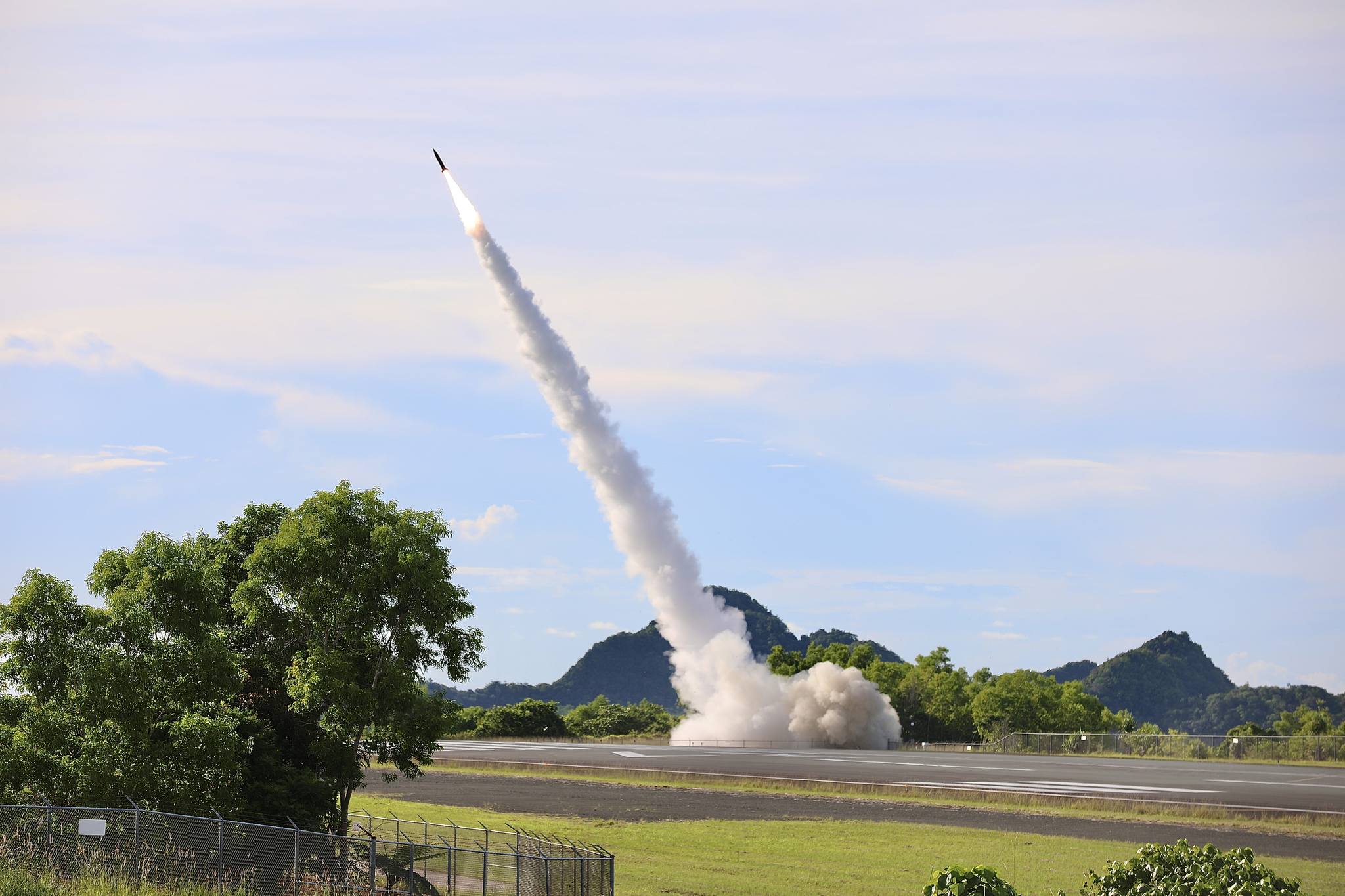
The THAAD (Terminal High Altitude Area Defense) is a mobile, long-range surface-to-air missile system designed to intercept and destroy tactical and theatre ballistic missiles at high altitudes.
Specifications

General

MobileYes
GuidanceIndium-antimonide imaging infra-red seeker head
Radar TypeAN/TPY-2 Ground-Based Radar
Max Range Km200 km
Anti BallisticYes
Max Altitude Km150 km
Missile Speed Mach8.24 Mach
Missiles Per Launcher8

Other

PropulsionSingle-stage solid-propellant booster (Aerojet Rocketdyne)
Kill MechanismHit-to-kill kinetic impact, no explosive warhead
Crew Per Battery~95 soldiers
Intercept EnvelopeTerminal phase, endo- and exo-atmospheric
Battery Composition6 launchers (48 ready interceptors), AN/TPY-2 radar, TFCC fire control (typical)
Interceptor Length M6.17
Radar Detection Range Km~870 terminal mode / up to ~3,000 forward-based mode (reported)
Interceptor Launch Weight Kg~900 (est.)
Latest Developments
Sep 17, 2026strong signal
Lockheed reaches deal to boost production of secretive JATM missile

Lockheed previously nabbed framework deals for the Patriot’s PAC-3 and THAAD interceptors, which have since turned into undefinitized contract actions worth $59 billion and $35 billion respectively.

Sep 1, 2026strong signal
US 2026 Patriot and THAAD Surge Still Leaves Indo-Pacific Short

The Pentagon wants THAAD output to jump from 96 to 400.

Sep 1, 2026strong signal
American Events for Seven Years to Boost Patriot and THAAD Production Reveal the Depth of Gulf Dependence in 2026

في 31 أغسطس أعلنت وزارة الدفاع الأمريكية اتفاقات إطارية جديدة مع Lockheed Martin و General Dynamics Ordnance and Tactical Systems لرفع إنتاج اعتراضات Patriot PAC-3 MSE و THAAD على مدى سبع سنوات.

Aug 31, 2026strong signal
Lockheed Martin, General Dynamics get framework deals to surge Patriot, THAAD production

the U.S. has dispensed around 38% of its THAAD interceptors

Aug 14, 2026strong signal
Pentagon inks SM-3 framework deals with RTX, Boeing on critical components

Entity 'THAAD' mentioned in report

Aug 4, 2026strong signal
US used ‘virtually all’ long-range precision missiles during Iran war, sources say

Entity 'THAAD' mentioned in report

Featured Coverage
Research Notes

Upper-tier defense against short and medium range ballistic missiles

high

THAAD is a deployable U.S. ballistic missile defense system designed to intercept missiles in their terminal phase.

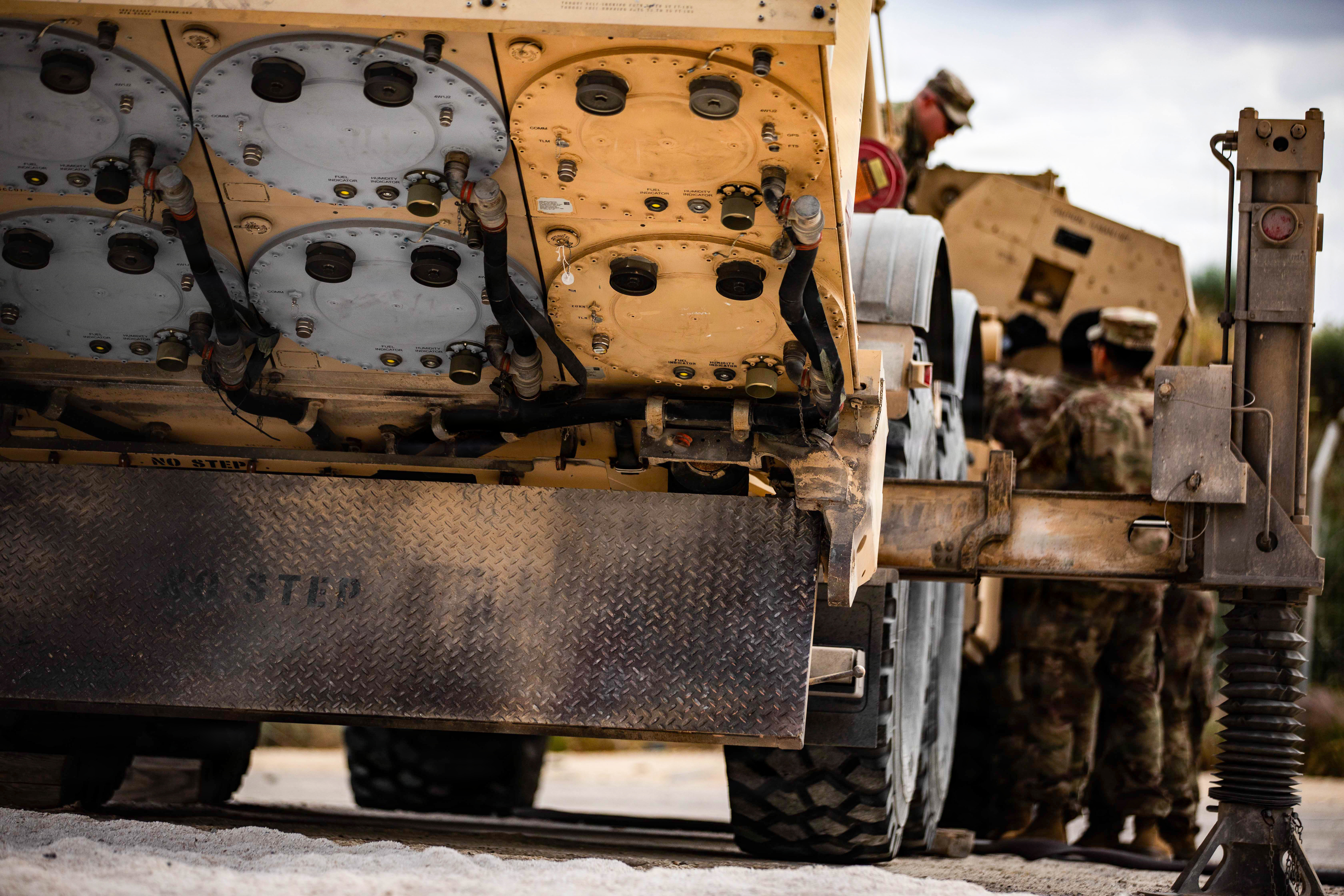
THAAD stands for Terminal High Altitude Area Defense. It is built to defend against ballistic missile threats during the terminal phase of flight, using interceptors, launchers, fire-control systems, radar, and command links as a complete battery rather than a single missile.

The system is important because it fills an upper-tier regional defense role. It can protect deployed forces, critical infrastructure, and allies against some ballistic missile threats, while operating as part of a broader missile defense architecture that may include Patriot, Aegis, sensors, and command networks.

For HiWars, THAAD should be treated as a system record. The launcher or interceptor alone does not explain the capability; the radar, command system, engagement doctrine, defended area, and integration with other defenses are equally important.

Hit-to-kill interceptor and integrated battery logic

high

THAAD uses hit-to-kill interception, meaning the system seeks to destroy a target through direct impact rather than a blast-fragmentation warhead.

Lockheed Martin describes THAAD within a hit-to-kill missile defense family. The core idea is direct collision with the target, requiring accurate detection, tracking, fire control, seeker performance, and interceptor maneuvering.

That makes THAAD a system-of-systems capability. The interceptor is only one piece; radar quality, battle management, communication links, launch readiness, and operator training determine whether the system can complete an engagement.

Public discussions sometimes describe THAAD as a shield, but no missile defense system is absolute. Its effectiveness depends on threat type, salvo size, trajectory, countermeasures, defended footprint, sensor coverage, and coordination with lower-tier or sea-based systems.

Alliance deployments and political sensitivity

medium

THAAD deployments can be militarily useful and politically sensitive because radar coverage and regional deterrence affect neighboring states.

THAAD is often deployed in alliance contexts where missile threats, host-nation politics, and regional deterrence overlap. A deployment can reassure allies and improve missile defense coverage, but it can also create diplomatic friction with states that view the radar or defensive architecture as affecting their strategic position.

This political dimension is not separate from the equipment. A THAAD battery needs host-nation support, protected sites, communications, trained crews, logistics, and integration with national and allied command structures.

HiWars should therefore connect THAAD records to deployment locations, operators, radar coverage discussions, and the wider missile defense architecture. A technical page becomes much more useful when it explains what the system defends, what it does not defend, and why deployment decisions matter.

Key parameters at a glance

medium

Range and altitude figures are open-source estimates; the US Army does not publish the full intercept envelope.

Role
Terminal-phase defense against short-, medium- and intermediate-range ballistic missiles
Prime contractor
Lockheed Martin Missiles and Fire Control
Kill mechanism
Hit-to-kill kinetic kill vehicle, endo- and exo-atmospheric
Interceptor length
6.17m
Intercept altitude
~40–150km (est.)
Interceptor range
~150–200km (est.)
Radar
Raytheon AN/TPY-2 X-band AESA, terminal and forward-based modes
Battery composition
6 launchers (8 rounds each), AN/TPY-2, TFCC fire control
Flight test record
100% success in MDA intercept flight tests
Operators
US Army (7 batteries), UAE, Saudi Arabia

Program milestones

high

Publicly reported milestones from development through combat use.

1992Development contract

Lockheed (later Lockheed Martin) awarded the THAAD demonstration/validation contract by the US Army.

2008-05First battery activated

After a redesign that reversed early-1990s test failures, the first operational THAAD battery stood up at Fort Bliss, Texas.

2013-04Guam deployment

A THAAD battery deployed to Andersen AFB, Guam (Task Force Talon) in response to North Korean missile threats; the presence became permanent.

2017-04South Korea deployment

US Forces Korea emplaced a THAAD battery at Seongju amid strong objections from China over the AN/TPY-2 radar's reach.

2022-01First combat intercept (UAE)

An Emirati-operated THAAD battery destroyed a Houthi ballistic missile targeting Abu Dhabi — the system's first combat use.

2024-10US battery to Israel

The US deployed a THAAD battery with about 100 soldiers to Israel after Iran's October 2024 ballistic missile attack.

2024-12First US Army combat intercept

The THAAD battery in Israel intercepted a Houthi ballistic missile on 27 December 2024, the US Army's first combat firing.

2025-06Twelve-Day War salvo defense

During the Israel–Iran war, US THAAD units reportedly fired 100–150 interceptors against Iranian ballistic missiles — roughly a quarter of the US stockpile.

Strategic significance

medium

THAAD occupies a distinct tier in the layered US ballistic missile defense architecture: it engages higher and farther than Patriot PAC-3 but below the midcourse regime covered by Aegis SM-3 and GMD, and it is the only US system able to take terminal-phase shots both inside and outside the atmosphere. Its hit-to-kill design and a flight-test record without an intercept failure since the 2005-era redesign have made it the benchmark against which other terminal-defense systems are commonly measured.

Beyond its technical role, THAAD functions as an instrument of strategic signaling. Permanent emplacements on Guam and at Seongju in South Korea, and expeditionary deployments to Israel in 2019 and 2024, communicate US commitment to allies under missile threat. The AN/TPY-2 radar is itself strategically consequential: its reported forward-based detection reach of well over 1,000 km is the reason China objected so strongly to the South Korean deployment, viewing the radar rather than the interceptors as the destabilizing element.

Combat performance since 2022 — the Emirati intercept over Abu Dhabi, the US Army's first combat firings from Israel against Houthi missiles, and the high-volume engagements of the June 2025 Israel-Iran war — has validated the system while exposing its principal weakness: magazine depth. Reports that roughly a quarter of the US interceptor stockpile was expended in twelve days, with replenishment measured in years at current production rates, suggest that THAAD's effectiveness against a peer-level salvo campaign would hinge less on single-shot lethality than on industrial capacity to sustain the fight.

Videos

U.S. Army THAAD Ballistic Missile Defense System Arrives in South Korea (USNI News Video)

Watch on YouTube

THAAD: The Ultimate Missile Defense System Explained (Security & Defence)

Watch on YouTube

THAAD-ER Extended Range Terminal Defense System, bilingual subtitles (Bilibili)

Watch on Bilibili
Sources & References
Related Discussions

No discussions about THAAD yet

Start the first discussion