Geran-5

🇷🇺Russian Federation•🇮🇷Iran, Islamic Republic of•🇨🇳China
Telefly (engine)
2026 – Present
Spotlight

Russia's jet-powered Geran: cruise-missile shape, ~600 km/h, thin evidence base

Russia's Geran-5 Jet Makes Combat Debut, Hits Ukraine's Western Regions (Times Now World)

Watch on YouTube
Overview
Geran-5
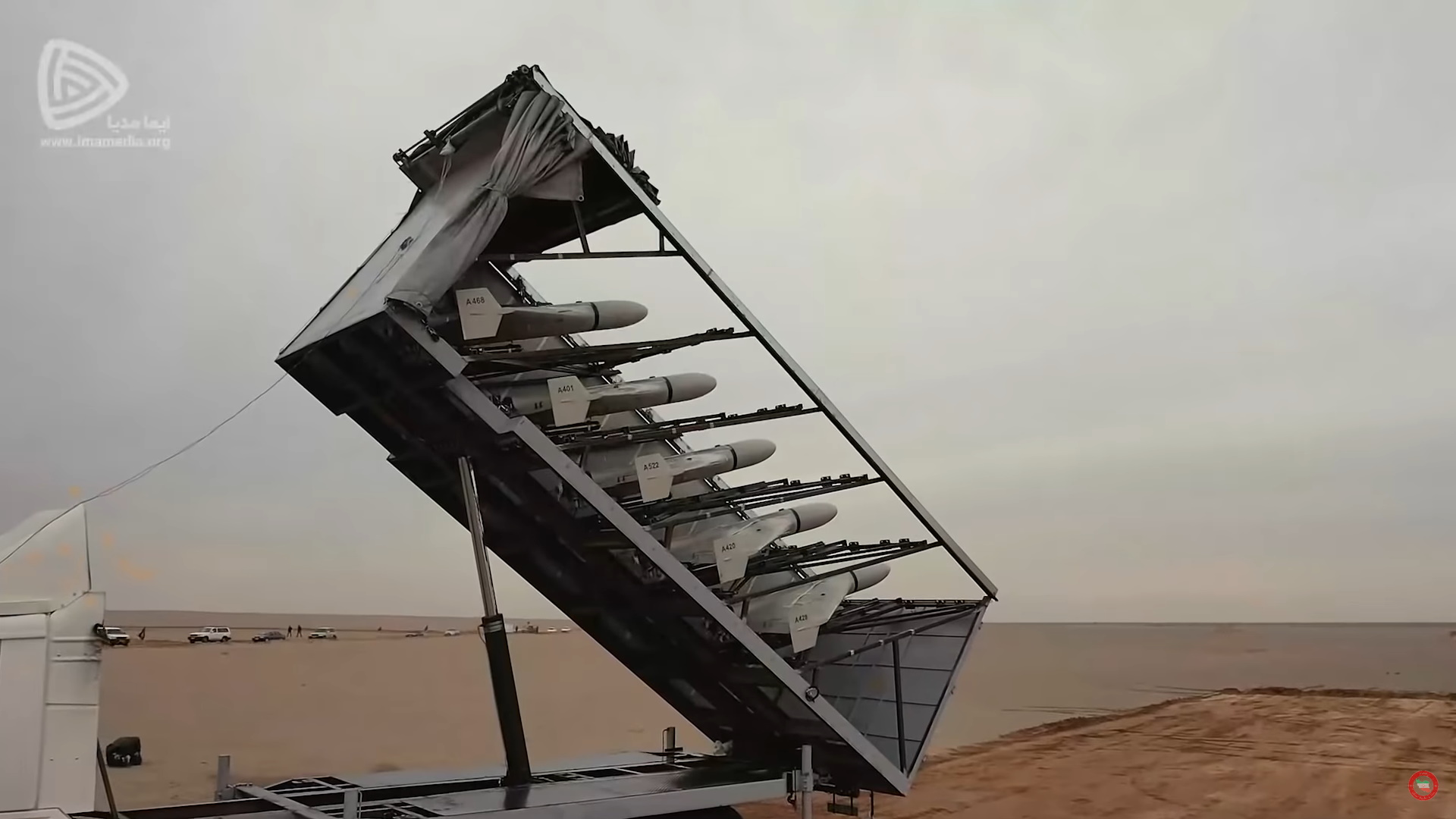
The Geran-5 is a jet-powered unmanned aerial vehicle (UAV) developed by Russia, featuring a conventional aerodynamic design with a tube-like fuselage, centrally mounted straight wings, and a straight horizontal tail with finlets. It is powered by a Chinese-manufactured JT80 turbojet engine from Telefly, offering greater thrust and speed compared to previous models. The Geran-5 is capable of carrying air-to-air missiles and is designed for long-range strike missions. It incorporates a 12-channel Kometa satellite navigation system, a Raspberry Pi-based tracker, and 3G/4G communication modules. The drone measures approximately 6 meters in length with a wingspan of up to 5.5 meters and has an operational range of up to 1,000 kilometers.
Specifications

General

Range Km1,000 km
Payload Kg90 kg
Wingspan M5.5 m
Max Speed Kmh500-600 km/h (reported; vs ~180 km/h for the propeller-driven Geran-2)

Other

Length M~6 m (reported by Ukraine's GUR; no manufacturer data published)
Navigation12-channel 'Kometa' controlled-reception-pattern GNSS antenna, as used across the Geran family (reported)
PowerplantChinese Telefly turbojet — variously identified as JT80 or TF-TJ2000A, ~200 kgf thrust, ~29 kg (reported)
Endurance H~2 h (assessed from reported range and cruise speed)
Launch MethodGround catapult/rail launch; carriage under a Su-25 for air launch reported to be under study (unconfirmed)
Self Defence ArmamentR-73 (AA-11 Archer) IR air-to-air missile reported to be under consideration (unconfirmed; no in-service example documented)
Airframe ConfigurationCylindrical fuselage with mid-mounted straight wing and finlets — assessed as closer to Iran's Karrar than to the Shahed-136/Geran-2 delta
Latest Developments
Oct 19, 2026strong signal
Ukraine turns its Bars strike drone into a Shahed hunter

the first footage of the Ukrainian missile-drone being used against Russia’s own jet-powered attack drones

Oct 14, 2026strong signal
Ukraine races to field faster interceptors as Russia hammers its energy grid

Entity 'Geran-5' mentioned in report

Oct 10, 2026strong signal
Japan signs deal for Ukrainian SkyFall interceptor drones

Entity 'Geran-5' mentioned in report

Oct 5, 2026strong signal
Germany pledges $1.1B military aid package to Ukraine flush with drone interceptors

the single clearest illustration of the Geran’s rapid development cycle is the progression of its satellite-navigation antennas

Sep 1, 2026strong signal
Russia's Six-Day Strike Run Is Exposing Kyiv's Air Defence Math

the newer reported Geran-5 matters because it trades some of the old Shahed logic for speed, flying at roughly 500 to 600 kilometres per hour instead of the propeller-driven Geran-2's roughly 180

Aug 17, 2026strong signal
Russia's Ten Secret Drone Bases Put Warsaw Inside the Kill Zone

The Geran-5 pushes the range to around 1,000 kilometers with a 90-kilogram payload.

Aug 2, 2026strong signal
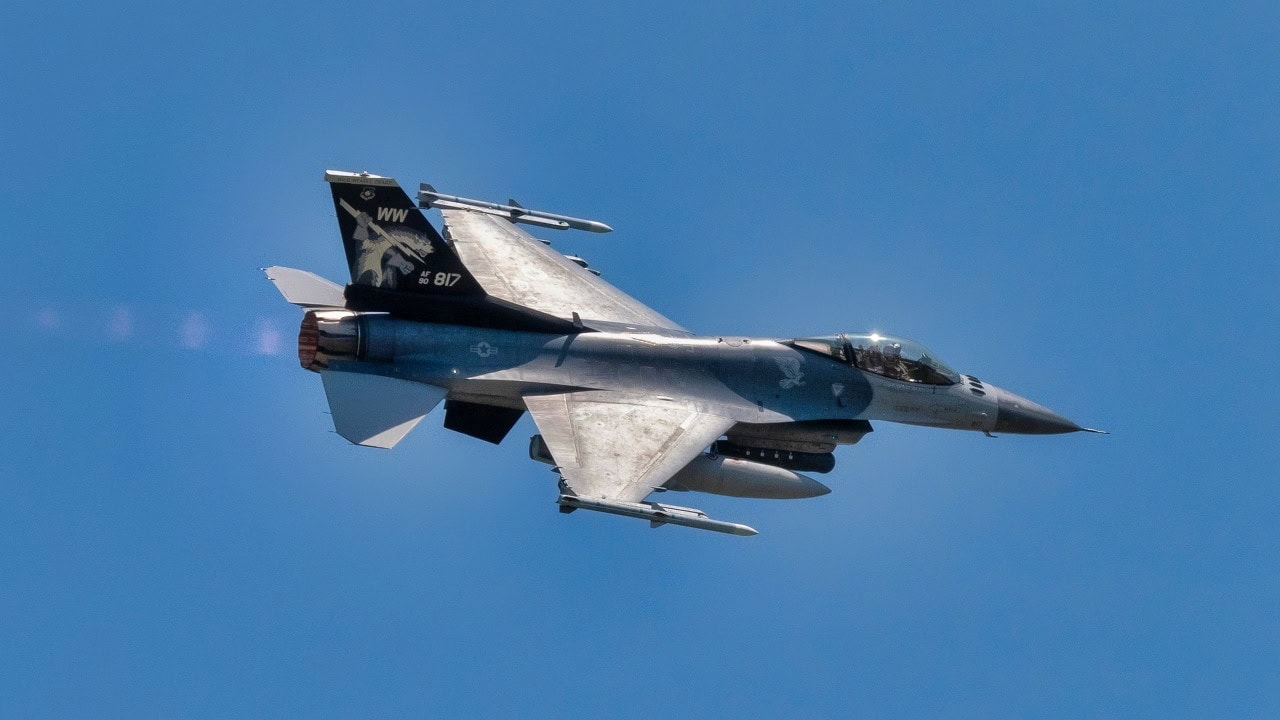
Ukraine's F-16s Are Burning Hours Killing 2,500 Russian Drones

Entity 'Geran' mentioned in report

Jul 30, 2026strong signal
Ukraine’s F-16s are being worn out from intercepting Russian drones

Entity 'Geran' mentioned in report

Featured Coverage
Research Notes

Emerging Geran-family reporting

medium

Geran-5 is a reported newer member of Russia's Geran drone family, but public evidence remains limited and should be treated as provisional.

Open-source reporting on the Geran-5 is much thinner than for the widely documented Geran-2/Shahed-136 lineage. Recent reports describe new Geran-family airframes recovered or observed in Ukraine, with analysts linking some examples to possible Chinese or Iranian design influence. The available evidence is therefore closer to battlefield identification and technical inference than to a mature public specification sheet.

For this reason, the Geran-5 entry should be conservative. It is reasonable to describe it as a reported or alleged Geran-family unmanned attack system associated with Russian long-range strike operations, but not to present unverified performance figures as settled fact.

The significance is still real. If Russia is introducing multiple Geran-family variants, that indicates an effort to diversify low-cost strike drones, complicate air defense, and adapt production channels. The Geran-5 page should therefore focus on evidence status, operational context, and uncertainty rather than pretending the item is fully documented.

Known and uncertain characteristics

medium

Public details point to a one-way attack drone concept, but exact propulsion, payload, guidance, and production origin remain uncertain in open sources.

The most defensible technical description is that Geran-5 belongs in the category of one-way attack or loitering strike drones associated with Russia's campaign against Ukrainian targets. Public reports discuss recovered airframes and possible foreign design links, but they do not yet provide a stable, authoritative technical baseline.

That uncertainty should be visible to readers. Analysts should distinguish observed wreckage, official claims, manufacturer data, and media interpretation. In this case, much of the public record is driven by wartime recovery and identification rather than by manufacturer disclosure.

From an air-defense perspective, even uncertain variants matter. A new airframe can change radar signature, speed, altitude profile, noise, payload, or routing options. It can also force defenders to spend time classifying threats and adapting interception tactics, which is valuable for an attacker even when the drone is relatively inexpensive.

Operational relevance in Ukraine

medium

The Geran-5 is relevant mainly as part of Russia's broader attempt to sustain and evolve mass drone-strike pressure against Ukrainian defenses.

The Geran-5 should be interpreted through the wider operational pattern of Russia's drone and missile strikes. One-way attack drones are used to damage targets directly, expose air-defense positions, force ammunition expenditure, and create persistent pressure over large areas.

A newer Geran variant would not need to be individually revolutionary to matter. If it is cheaper, easier to source, harder to detect, or simply available in additional numbers, it can still contribute to saturation dynamics. Wartime drone campaigns often reward production depth and adaptation as much as individual platform sophistication.

For the equipment database, this entry should remain updated as better evidence appears. Current public information supports a cautious, evidence-limited note: Geran-5 is a reported new Geran-family strike drone associated with Russian use in Ukraine, with open questions about origin, configuration, and exact capabilities.

Key parameters at a glance

medium

No manufacturer or Russian official data has been published. Every figure below traces back to Ukrainian military-intelligence (GUR/HUR) statements and wreckage analysis reported in open sources, and should be treated as provisional. Range in particular is quoted as roughly 950 km in some GUR briefings and about 1,000 km in others.

Role
Jet-powered one-way attack drone for deep strike; described in Ukrainian reporting as a 'missile-drone' rather than a Shahed-type loitering munition (reported)
Lineage
Newest reported member of Russia's Geran (Shahed) family; airframe assessed as a close derivative of Iran's Karrar, not of the Shahed-136/Geran-2 delta
Length
~6m (reported)
Cruise speed
500-600km/h (reported)
Warhead
~90 kg high-explosive unitary/fragmentation (reported by GUR; unverified)
Stated range
~950-1,000 km (reported; sources differ)
Powerplant
Chinese Telefly turbojet (JT80 / TF-TJ2000A class), ~200 kgf thrust (reported)
Navigation
12-channel 'Kometa' jam-resistant GNSS antenna; Western and Chinese microelectronics identified in wreckage (reported)
First combat use
Early January 2026 against Ukraine, announced by Ukraine's GUR (reported; no independent confirmation of the airframe identification)
Claimed growth paths
Air launch from a Su-25 and an R-73 air-to-air missile for self-defence — both described as under study, neither documented in use (unconfirmed)

Program milestones

medium

The Geran-5 has no published development record. The sequence below is assembled from Ukrainian intelligence announcements and wreckage analysis; dates mark when a claim became public, not necessarily when the event occurred.

2022Family baseline: Geran-2

Russia begins mass use of the Iranian Shahed-136 as the Geran-2 — a slow, propeller-driven delta-wing one-way attack drone, later localised for domestic production. It remains the reference point against which every later Geran variant is measured; it is covered on its own page.

2025Jet propulsion enters the family

The jet-powered Geran-3, derived from Iran's Shahed-238, appears in Ukrainian reporting in limited numbers. It establishes the pattern the Geran-5 later extends: trade unit cost and endurance for speed that Ukraine's propeller-driven interceptor drones cannot match.

2026-01First reported combat use

Ukraine's Defence Intelligence (GUR) announces that a new jet-powered strike UAV designated Geran-5 was used in combined strikes in the opening days of January 2026. Publicly released imagery shows a cylindrical fuselage with a mid-mounted straight wing and finlets rather than the Shahed delta (reported).

2026-01GUR technical description released

GUR figures put the airframe at roughly 6 m long with a wingspan up to about 5.5 m, a Telefly turbojet with more thrust than the Geran-3's engine, a ~90 kg warhead, a declared range near 1,000 km, and a 12-channel 'Kometa' satellite-navigation unit. None of this has been independently verified (reported).

2026-01Air-launch and self-defence claims surface

GUR material reported by TWZ describes Russian study of Su-25 carriage — one round under each wing — and of fitting one or more R-73 infrared air-to-air missiles so the drone could threaten interceptor aircraft and helicopters. Both remain study-stage claims with no documented operational example (unconfirmed).

2026-01Wreckage teardown and the Karrar link

Analysis of components published via Ukraine's War&Sanctions portal identifies a TELEFLY TF-TJ2000A turbojet (~200 kgf, ~29 kg) plus Texas Instruments, Monolithic Power Systems, CTS and Infineon parts and a Chinese XK-F358 mesh modem, some manufactured after February 2022. GUR characterises the aircraft as a Russian replica of the Iranian Karrar (reported).

2026-08Scale claims from Ukrainian intelligence

HUR states that Russia has stockpiled roughly 6,200 Geran-family drones of all types and quotes the Geran-5 at a 90 kg warhead, ~950 km range and up to 600 km/h. These are belligerent-intelligence figures released during an active campaign and should be read as claims, not audited data (reported).

Strategic significance

medium

The clearest thing about the Geran-5 is what it is trying to fix. Ukraine's cheapest answer to the Shahed-136/Geran-2 has been the propeller-driven interceptor drone, which works because the target flies at roughly 180 km/h. A one-way attack aircraft cruising at a reported 500-600 km/h moves that engagement out of reach of most of that inventory and pushes it back onto gun systems, missile interceptors and manned aircraft — the expensive tiers Ukraine has been trying to preserve. If the reported speed figures hold, the significance is less about the airframe than about which layer of the defence is forced to fire.

That gain is not free, and the pack should be read with the trade-off in view. A Chinese turbojet, a cruise-missile-style fuselage and reported endurance of roughly two hours put unit cost and complexity well above the moped-engine Geran-2, which is exactly the property that made the original concept strategically awkward to defend against. Ukrainian intelligence claims of about 3,000 Geran-4/5 airframes a month and roughly 6,200 drones stockpiled suggest Russia believes it can hold cost down at volume, but these are belligerent figures released for effect during an active bombing campaign, and no independent production audit exists. The teardown finding that a system marketed as domestic depends on Chinese propulsion and on US and German microelectronics manufactured after February 2022 is, if accurate, the more durable point: it identifies a supply chain that sanctions policy can plausibly target.

Everything beyond that should be held loosely. The Geran-5 has been in reported use for roughly eight months, no manufacturer or Russian official specification has been published, and essentially the entire public record comes from one belligerent's intelligence service. Two of the most-repeated claims — Su-25 air launch and R-73 air-to-air armament — are described even by their source as options under study, and neither has been shown in operational use; a drone that can shoot at its interceptors would be a genuine change in the air-defence problem, which is precisely why the claim should not be treated as established. Reported range alone already varies by 5 percent between briefings. Published figures should be expected to move as wreckage analysis accumulates.

Videos

Geran-5 Exposed: Ukraine Reveals US and German Tech Inside (Times Now World)

Watch on YouTube

Russia Unleashes a New, Deadlier Aerial War Over Ukraine — Geran-5 Drone (Times of India)

Watch on YouTube

Russia's strike drones upgraded to the Geran-5, range reported at ~1,000 km (Southeast Military Intel, Bilibili)

Watch on Bilibili
Sources & References
Related Discussions

No discussions about Geran-5 yet

Start the first discussion