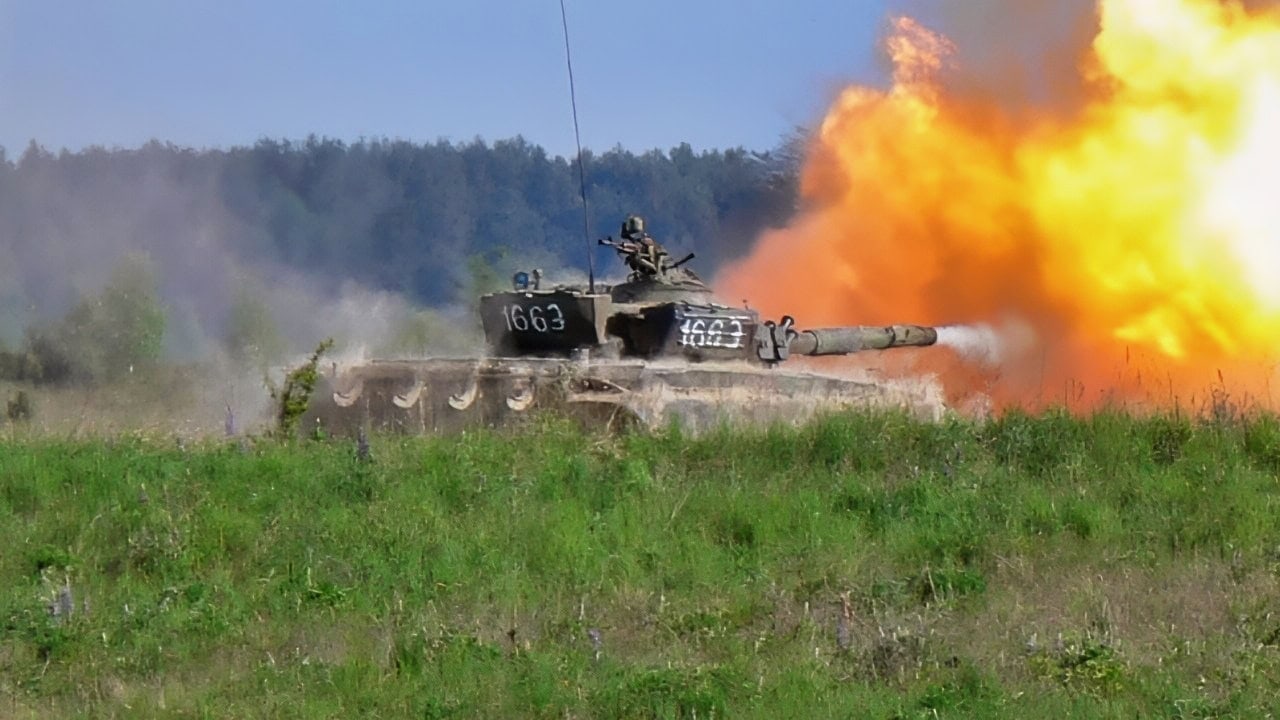
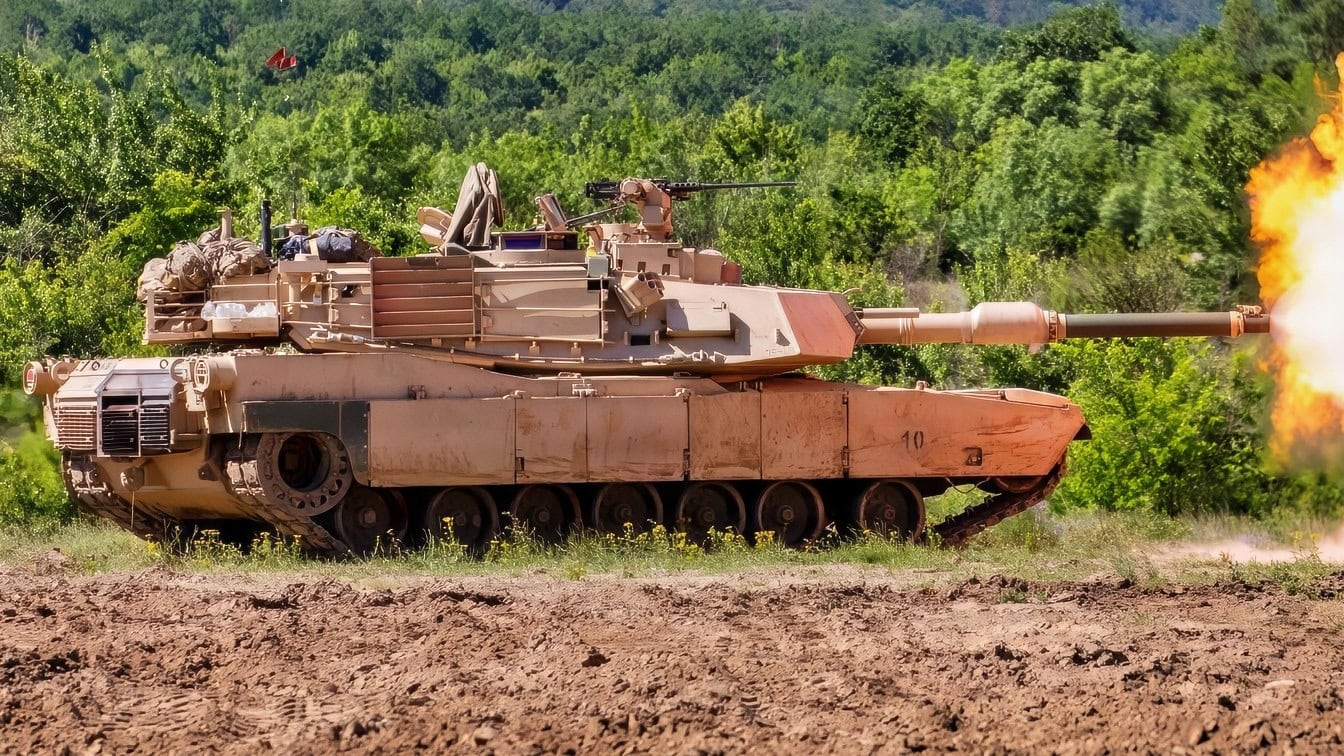
The Abrams matters less as an individual vehicle than as the physical expression of a doctrine. AirLand Battle assumed US armour would fight outnumbered, at night and on the move, and the design decisions follow from that: a gas turbine chosen for power density and cold-start behaviour rather than fuel economy, a laminate armour array optimised against the frontal arc, and a fire-control and thermal-sight suite that let crews shoot first. Desert Storm validated the package about as completely as any weapon system has been validated - roughly 1,900 M1A1 fought the ground campaign and 23 were damaged or destroyed, with US post-war assessments attributing losses to friendly fire, mines and deliberate destruction of disabled hulls rather than to Iraqi tank guns. The caveat is that the opponent was a poorly supported force fighting in open desert, terrain that maximised every US advantage at once.
The export record has made the Abrams a durable instrument of US security policy rather than merely an item of hardware. Australia, Egypt, Iraq, Kuwait, Morocco, Poland, Romania, Saudi Arabia, Taiwan and Ukraine now operate or have ordered the type, and several of those relationships carry decades of sustainment, ammunition and training dependency. Egypt assembles the tank domestically; Poland ordered 250 M1A2 SEPv3 alongside used M1A1 as a bridge; Taiwan completed delivery of its 108 M1A2T in 2026. Each transfer is a long-term logistical tie as much as a capability transfer - a point that also constrains the Army's modernisation choices, since a fleet standard adopted at home eventually propagates through the customer base.
The M1E3 programme is best read as an admission that the original architecture has run out of growth margin. Weight climbed from roughly 54 tonnes at introduction to around 67 tonnes for the SEPv3, straining bridges, transport and the turbine's fuel demand, while Ukraine has shown that top-attack munitions and cheap FPV drones erode the value of a heavily armoured frontal arc. The Army's response - cancelling SEPv4 in 2023, targeting roughly 60 tons gross, a hybrid powertrain, an autoloader and integrated hard-kill active protection - is a genuine architectural reset rather than another upgrade block, and the compressed 24-to-30-month schedule with prototypes in soldiers' hands during 2026 is unusually aggressive by US land-systems standards. The open questions are whether an unmanned or low-profile turret and a hybrid drive can be matured at that pace, and whether Lima's output, measured in low dozens per year rather than the 1980s peak, can recapitalise a fleet of several thousand vehicles on any militarily relevant timeline.