
Britain’s new Challenger 3 tank passes 2,000 km in trials
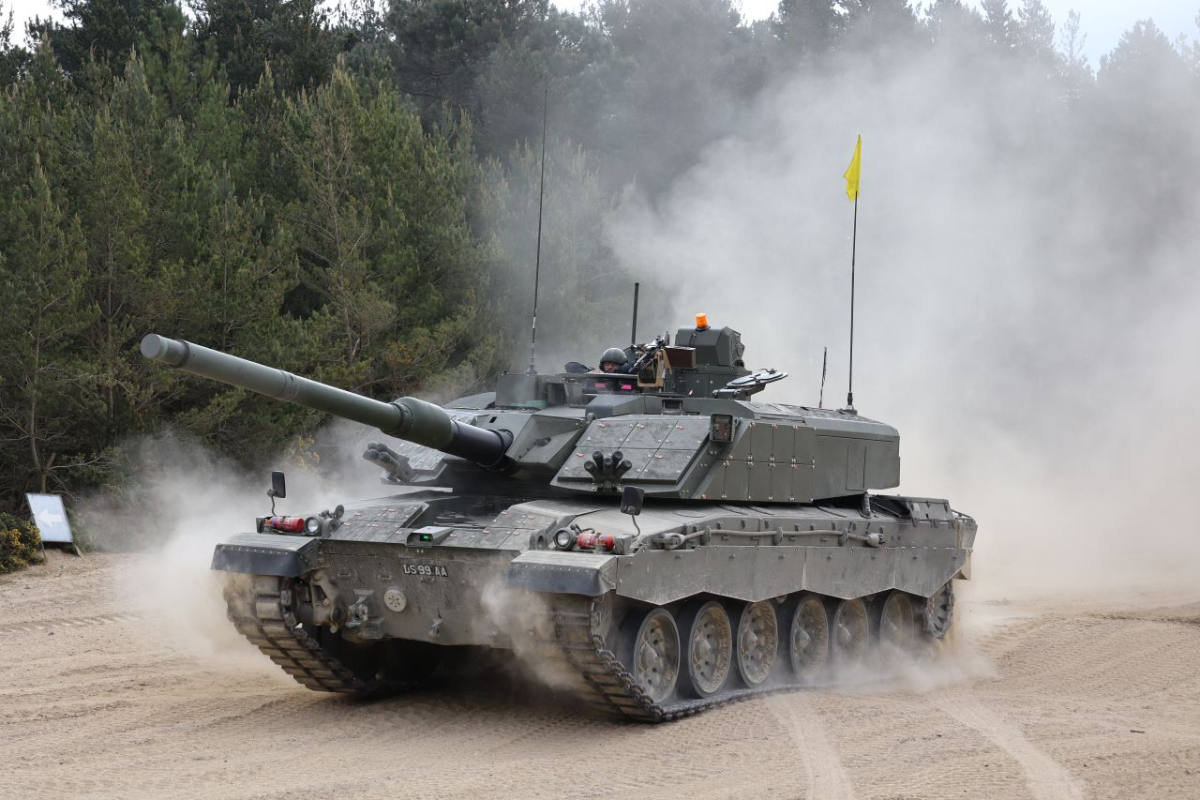
The British Army’s new Challenger 3 tank has now driven 2,000 km (1,240 miles) and fired more than 200 main gun rounds in testing, and it is set to start a tougher phase of trials in November, according to its builder, Rheinmetall BAE Systems Land.
RBSL, the British-German joint venture building the tank, shared the figures in a LinkedIn post, which also counted 100 smoke grenades fired so far. From November, the company said, Challenger 3 will move into its next phase of trials, in which it will push the vehicle and its new systems harder and faster.
Challenger 3 is a deep rebuild of the Challenger 2 tank the British Army has used since the late 1990s. Under a roughly £800 million ($1.06 billion) contract, RBSL is converting 148 Challenger 2 hulls with a new turret, a Rheinmetall-made 120 mm L55A1 smoothbore gun that replaces the older rifled cannon, modern sights and digital systems, upgraded armor, and the Trophy active protection system, which detects incoming anti-tank missiles and rockets and fires small projectiles to destroy them before they hit.
The new gun lets Challenger 3 use the same standard NATO tank ammunition as allies such as Germany and Poland, including the latest armor-piercing rounds and programmable multipurpose shells that can be set to burst at different points along their flight.
The trials have built up over the past year. RBSL completed initial mobility trials of nearly 800 km on roads and cross-country routes across the UK in 2025, and in January 2026 it carried out the first crewed live firing of Challenger 3 at a Ministry of Defence training center, the first time a newly developed British main battle tank had fired its main gun in the UK in more than 30 years. The tanks have since gone through battlefield mission serials, with cross-country driving, gunnery drills and full crew exercises, which The Defence Blog reported in June.
The Ministry of Defence has said series conversion of the fleet will begin once the demonstration-phase trials have validated the tank’s performance. Challenger 3 is planned to reach initial operating capability in 2027 and full operating capability in 2030, and the tank is expected to stay in service until at least 2040.
When all 148 tanks are delivered, the British Army plans to field them in reorganized armored regiments, and the November trials will put the vehicles and their crews through more demanding conditions as RBSL works toward that 2027 initial capability date.
Content preview only. Full article available at source. View Full Article
The British Army's Challenger 3 tank has completed 2,000 km of trials and fired over 200 rounds, with tougher testing scheduled for November 2026. The tank, a rebuild of the Challenger 2, is being developed under a £800 million contract, converting 148 hulls with advanced systems. Initial operating capability is expected in 2027, with full capability by 2030.
- Challenger 3 tank has driven 2,000 km and fired over 200 main gun rounds in testing.
- The tank is undergoing trials set to become tougher in November 2026.
- 148 Challenger 2 hulls are being converted under an £800 million contract.
- The tank features a new 120 mm smoothbore gun and upgraded systems.
- Initial operating capability is planned for 2027.