
EU pays 3.47 billion euros for Ukraine drones, rockets, and Gripen 2026
 Dr. Klaus Weber
EU Pays 3.47 Billion Euros for Ukraine Drones, Missiles, and Gripen in 2026
3.47 billion euros were disbursed on July 30, but the political announcement only appeared today on the Commission's website. This slight delay illustrates the European problem: money moves faster than the institutional ability to turn payments into a coherent air defense architecture.
The European Commission refers to another tranche from the 90 billion euro Ukraine Support Loan's defense window. Additional drones are being financed, including long-range jet-powered systems, missiles, air defense, and Gripen fighter jets. A total of 28.3 billion euros is earmarked for the Ukrainian defense industry in 2026; the exact allocation is to be finalized by September through so-called product schedules. Together with the previous payments of 3.9 billion euros on June 30 and 1.1 billion euros on July 15, this is no longer a symbolic gesture but an industrial procurement program.
The New Tranche is More Precise than Previous Ukraine Aid
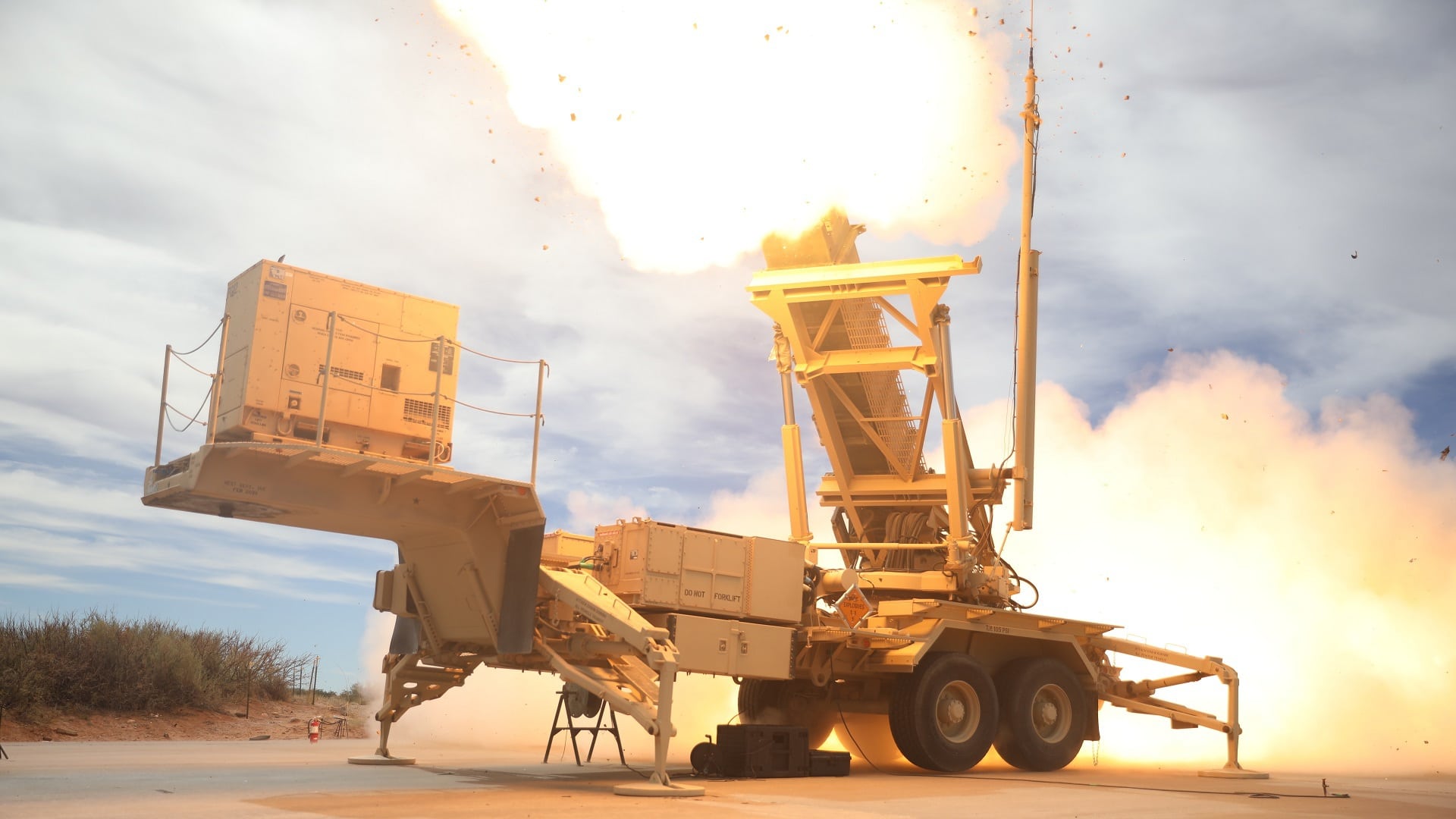
Previous European aid packages often suffered from accounting vagueness. They added bilateral commitments, EU facilities, macro-financial assistance, and reimbursement mechanisms without always clarifying which capability would arrive at the front when. Today's announcement is more tightly defined. It specifies drones, missiles, air defense, and fighter jets. This is progress because it translates the political concept of solidarity into military product categories.
However, precise product categories do not equate to capability. A Patriot battery without sufficient PAC-3 MSE interceptors protects less than its political weight suggests. A Gripen package without pilots, ground personnel, spare parts, data links, protected bases, and weapons integration remains an announcement. A drone program without electronic warfare and target reconnaissance produces mass but not automatically effect. The Commission is increasingly financing capabilities; however, it is still not managing them like a military system.
Gripen Fits Ukraine Better than Many European Debates
It is noteworthy that the Commission explicitly mentions Gripen fighter jets. The Swedish JAS 39 Gripen was designed for distributed operations, short runways, and relatively lean maintenance chains. These very characteristics are relevant in a war where Russian missiles and drones regularly threaten fixed air force bases. Compared to heavier Western models, the advantage lies not in spectacular stealth rhetoric but in operational robustness.
This does not mean that Gripen will fix Ukrainian air defense alone. The aircraft can carry air-to-air missiles like Meteor or IRIS-T, it can be connected with Western reconnaissance, and it is more plausible for dispersed operations than many alternatives. However, each aircraft type generates its own logistics. Ukraine already operates Soviet models, F-16s, and Mirage 2000-5s. Another model increases flexibility but also complexity. European politics tends to underestimate this second side because it remains invisible in press photos.
Drones are the Right Priority, but Not the Whole Answer
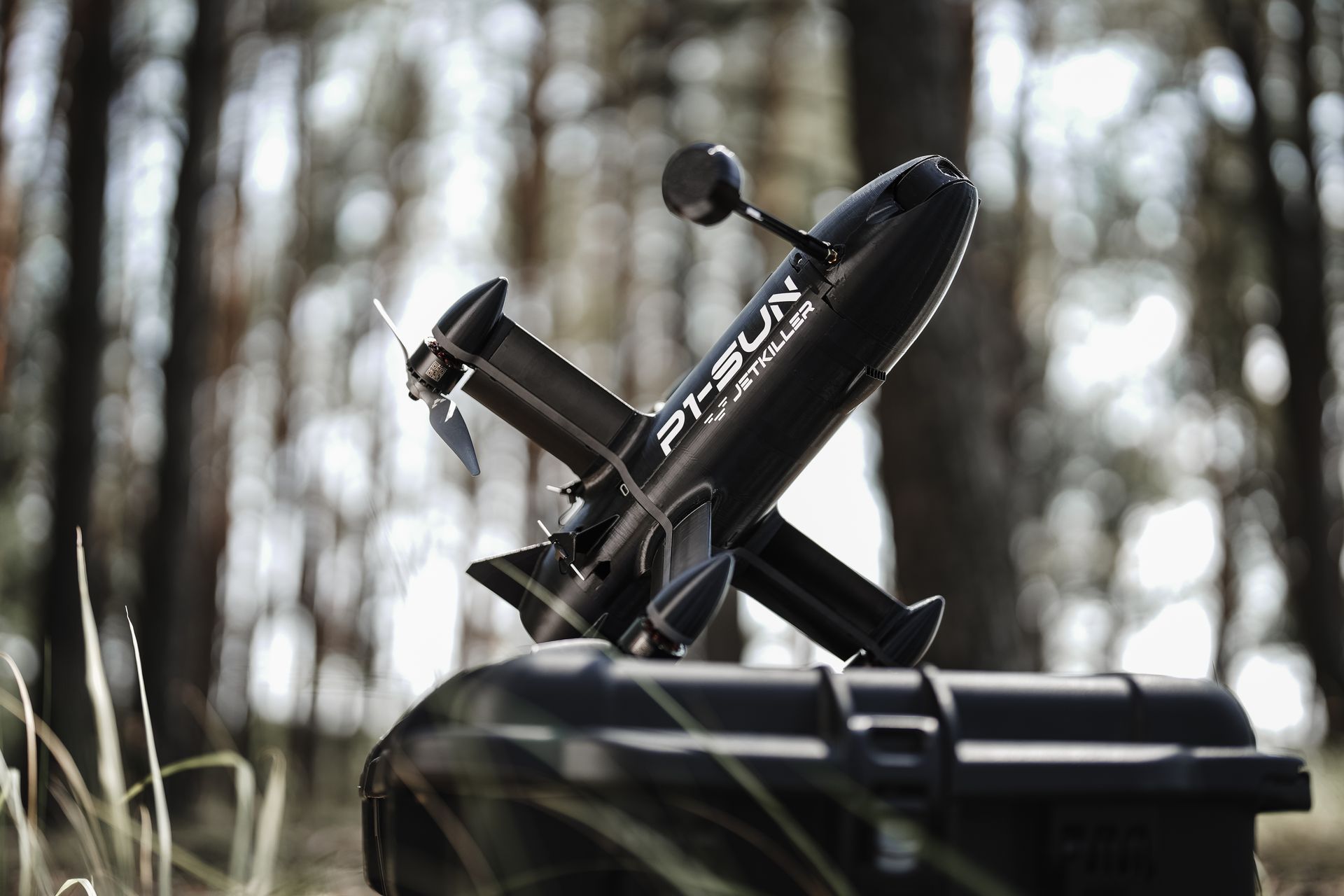
The drone component is institutionally even more interesting. Ursula von der Leyen spoke of the new Drone Deal and a connection between European industrial scaling and Ukrainian innovation speed. This formulation is more than just communication language. It describes a real asymmetry: Ukraine learns under fire in weeks, while European procurement apparatuses learn in budget years.
The challenge does not lie in inventing individual drones. Europe can provide sensors, engines, warheads, software, and series production. The challenge lies in the speed of variant changes. Ukrainian units continuously adapt frequencies, control logic, and attack patterns to Russian jamming measures. A classic EU program with multi-year certification, national industry quotas, and slow contracting law can hardly keep up in this cycle. If the Drone Deal is to work, Brussels must organize procurement as a learning process, not as a one-time tender.
The Industrial Connection Remains Politically Fragile
At the same time, HENSOLDT shows why the European industry takes this development seriously. The board of the German sensor manufacturer points to rising demand in NATO air defense, Eurofighter radars, naval programs, and space reconnaissance. Ukraine has now become the largest operator of the TRML-4D radar. From a European perspective, this is a crucial shift: Ukraine is not just a recipient of European aid but a testing ground, user, and co-developer of future European air defense.
For this reason, the separation between aid policy and industrial policy is artificial. When European funds finance Ukrainian drones, missiles, and sensor integration, a common armaments space effectively emerges. However, this space does not yet have stable governance. Who decides on priorities between Ukrainian front-line needs and European industrial promotion? Who bears responsibility when Ukrainian-European systems are exported or further developed? Who protects intellectual property without killing the speed of innovation? These questions are uncomfortable, but they determine whether 28.3 billion euros translate into capability or merely demand.
Washington Remains in the Engine Room Despite European Billions
The European financing does not eliminate transatlantic dependence. Defense News reported at the end of July that the Pentagon has formally begun its review of the US troop presence and basing in Europe. Elbridge Colby described the goal as a rapid and irreversible transition to European primary responsibility for conventional defense. At the same time, Kyiv is negotiating with Washington over Patriot licenses, and Lockheed Martin is exploring a shift of ATACMS production capacities to Germany with Rheinmetall.
This sounds like autonomy, but initially, it is a hybrid. Europe is paying more, producing closer to the threat, and integrating Ukrainian experience. However, critical technologies, licensing rights, and military key capabilities remain partially American. This is not a moral failure but an institutional fact. Strategic autonomy does not begin with the first European check but with the ability to secure technology, spare parts, training, and operational doctrine over years without political blackmail.
The Real Criterion is Not the Sum
The 3.47 billion euros are important because they can procure weapons in the short term and shape the European-Ukrainian industrial base in the long term. But the real criterion is not the amount of the tranche. What matters is whether the product schedules in September are concrete enough that drones, missiles, air defense, and Gripen are not treated as four separate shopping lists.
Europe is currently learning that defense capability does not arise from money but from the connection of money, time, production, and leadership. The paradox remains: Without billions, there is no European responsibility; with billions alone, there is still no European capability.
The European Union allocated 3.47 billion euros for military support to Ukraine on July 30, 2023, focusing on drones, missiles, air defense systems, and Gripen fighter jets. This funding is part of a larger commitment of 28.3 billion euros planned for the Ukrainian defense industry by 2026. The report emphasizes the importance of a coherent military procurement strategy to effectively utilize these resources.
- The EU allocated 3.47 billion euros for military support to Ukraine on July 30, 2023.
- Funding includes drones, missiles, air defense systems, and Gripen fighter jets.
- A total of 28.3 billion euros is planned for the Ukrainian defense industry by 2026.
- Previous payments of 3.9 billion euros and 1.1 billion euros were made in June and July 2023, respectively.
- The report highlights the need for a coherent military procurement strategy.