
Iran Keeps the Strait of Hormuz Closed in 2026 and Threatens the Alternative Energy Model in the Gulf
 Ahmed Al-Rashid
Iran Keeps the Strait of Hormuz Closed in 2026 and Threatens Alternative Energy Models in the Gulf
On October 4, 2026, Iranian Parliament Speaker Mohammad Baqer Qalibaf announced that the Strait of Hormuz would remain closed until the United States accepts Tehran's seven-point plan. This statement is not just a navigational news item, but an announcement that Iran wants to turn the maritime corridor into a bargaining chip independent of the nuclear file. Practically, Tehran is trying to tell Washington that the cessation of hostilities is not measured by diplomatic statements, but by the return of shipping traffic to the Gulf.
Long Closure Does Not Mean Complete Strangulation
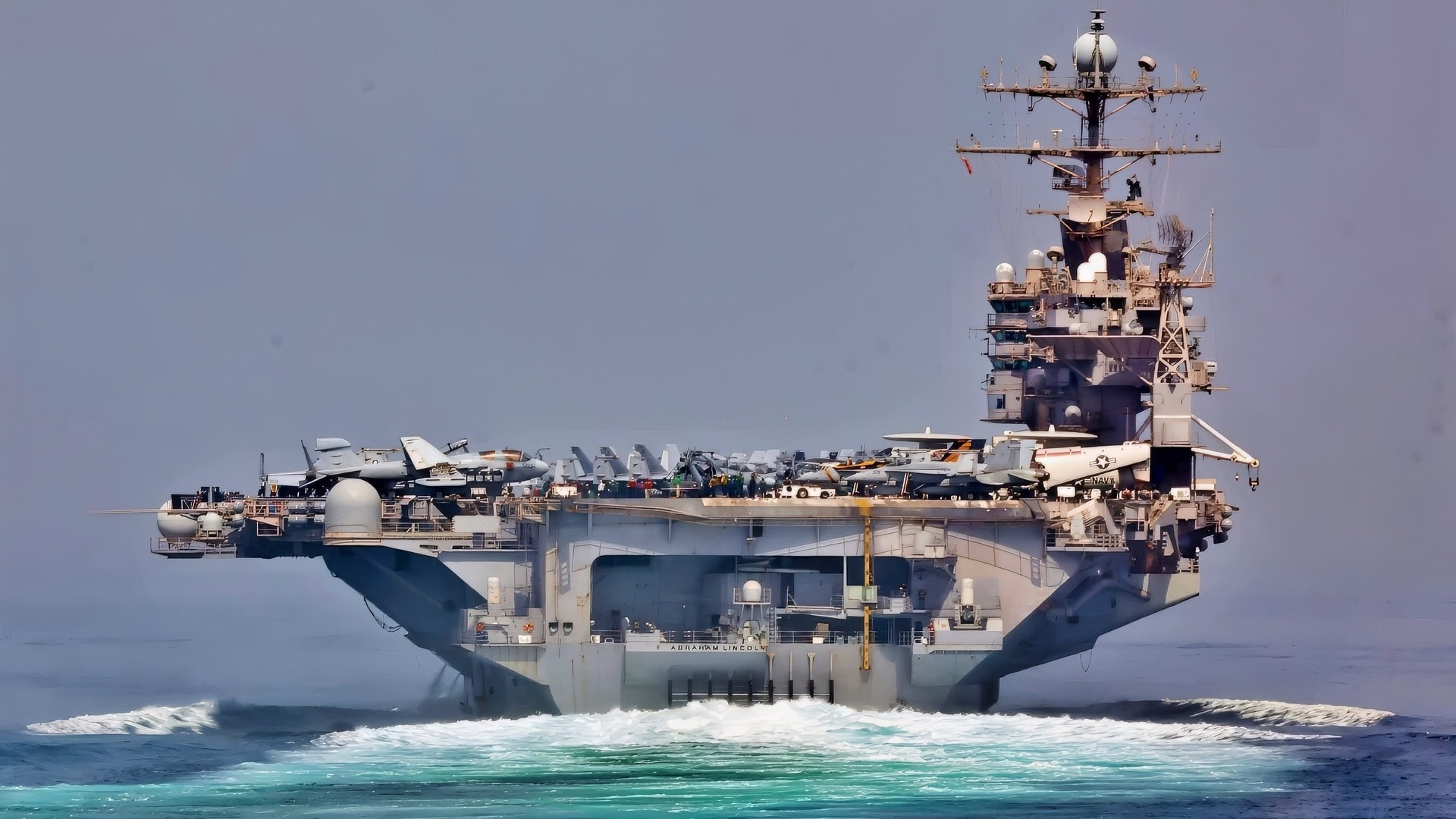
Al Jazeera reported that the corridor has been largely disrupted for more than seven months since the American and Israeli strikes on Iran, and that it normally accounts for about one-fifth of global oil and gas. However, the term closure requires military precision. Iran does not prevent every barrel, nor does it have a guaranteed ability to inspect every ship, but it raises the cost of passage and turns the route into a threat zone with missiles, drones, and fast boats. This ability to create uncertainty is sometimes enough to force insurance companies and ship captains to change their calculations, even when navigation does not legally stop.
Tehran claims it wants to negotiate and fight at the same time. This is not a contradiction in Iranian doctrine; it is a pressure tactic. The corridor is the place where Iran can influence the United States, Saudi Arabia, and the UAE without engaging in a new ground battle. Meanwhile, Washington insists on making the nuclear file the focus of negotiations, while the Iranian Foreign Ministry insists that the priority is to restore security and stability within the strait. The gap between the two agendas is the reason for the ongoing crisis.
Gulf Alternatives Redistribute Risks
Kpler data reported by the BBC presents a more complex picture. In the last week of September, oil flows from the Middle East reached about 92 percent of their pre-war levels, despite Iranian restrictions. However, this recovery did not come from a natural return to navigation. About 40 percent of the oil exported in September bypassed Hormuz via land routes, compared to 17 percent before the war, and the use of shuttle tankers in the Gulf of Oman has increased.
- The Saudi East-West pipeline transported more than four million barrels per day to Red Sea ports.
- The UAE's Fujairah port has become a major hub for oil bypassing the strait towards the Gulf of Oman.
- More than 60 large tankers operate in a ship-to-ship transfer system, with over 70 percent of the transiting crude moved this way in August.
These figures provide Riyadh and Abu Dhabi with some breathing room, but they do not grant them military independence. The Saudi pipeline itself has been targeted in attacks attributed to Iran-backed proxies, and ship-to-ship transfers require favorable weather and air and naval protection. According to the BBC, U.S. forces have supported ships through air alerts and intercepting drones, missiles, and boats, and the number of vessels receiving U.S. assistance in September increased by a third compared to August. In other words, the Gulf alternative works because the American umbrella is functioning.
The Gulf's Problem Is Not the Number of Tankers
Decision-makers in the Gulf like to talk about alternative pipelines and ports as if they equate to an open strait. But they do not. The strait is a single, high-density corridor, while the alternatives are a slower network more vulnerable to sabotage and requiring coordination among oil companies, navies, and air defense forces. Even a return of crude exports to near-normal levels does not mean a return of refined products, liquefied natural gas, and jet fuel; these flows have remained far below pre-war levels.
Here, the problem of the triad capability that I always refer to in evaluating Gulf armies emerges: equipment, training, and institution. Saudi Arabia and the UAE have advanced lines, ports, and tankers, meaning they have succeeded in the equipment and infrastructure aspect. However, joint training to protect dispersed maritime nodes and an institution that makes quick decisions without waiting for Washington are still weaker than the announced investments. Buying Patriots or building an export terminal does not automatically create a protection system for the corridors.
Iran's Leverage Is Politically Stronger Than Militarily
Iran cannot guarantee a tight closure indefinitely without incurring a huge economic and military cost. Its own exports are nearing a halt, and the ongoing crisis is putting pressure on its allies and trade networks. However, Tehran does not need a complete closure to achieve its goal. It is enough to make passage unpredictable, keep American ships occupied with protection, and push Gulf capitals to spend extra on alternative routes.
A corridor where not everything stops may remain practically closed if every trip requires military protection and exceptional security.
Therefore, Qalibaf's announcement should be read as a negotiating message rather than a maritime operations schedule. Iran wants to be recognized that the security of Hormuz is part of a war settlement, not just a side result of talks regarding uranium enrichment. The United States wants to keep freedom of navigation as a principle separate from political concessions. Between the two positions, Gulf states are paying the price of relying on foreign power to protect their exports while discovering that alternative infrastructure does not negate geography.
Conclusion
American convoys, Saudi pipelines, and Fujairah port may succeed in keeping the oil market supplied in the short term, but they do not solve the deterrence dilemma. Militarily, Iran can disrupt the system at a lower cost than it costs to operate it against its adversaries. The Gulf will remain faced with two uncomfortable choices: accept long and costly American protection, or build an independent naval and air capability that requires years of training and institutions, not weeks of arms purchases. Hormuz proves once again that having an alternative does not mean having the ability to protect it.
Sources
- Al Jazeera, October 4, 2026, Iran's statements regarding the conditions for reopening the Strait of Hormuz.
- BBC Verify, October 2, 2026, Kpler data on the return of oil flows and the use of convoys and pipelines.
Iran announced the closure of the Strait of Hormuz on October 4, 2026, until the U.S. accepts its seven conditions, using the closure as a negotiation tool. This move aims to exert pressure on the U.S. and Gulf states while complicating shipping operations in the region. Despite alternative routes being utilized, the situation remains precarious, with U.S. forces increasing support for maritime security.
- Iran will keep the Strait of Hormuz closed until the U.S. accepts its conditions.
- The closure is used as a negotiation tactic rather than a complete blockade.
- Iran's actions have led to increased shipping costs and uncertainty in the region.
- Alternative oil transport routes have been developed, but they are less efficient and more vulnerable.
- U.S. forces are providing support to shipping in the region.