
Korean War soldier’s grave exposed to the elements at Louisiana cemetery for years

Conditions at a cemetery in Baton Rouge, Louisiana, recently sparked outrage among veterans and service members on social media following a post to the Army subreddit over the weekend that showed a collapsed burial vault and an exposed casket at the grave marker of a U.S. Army soldier who died during the Korean War.
Pfc. Samuel Pierre Jr. was 23 when he died in Korea in July 1952. Military casualty records list his death as nonhostile. His grave marker now stands beside a collapsed brick tomb at Sweet Olive Cemetery, a historically Black burial ground established in 1898.
Above-ground burial vaults are common in parts of Louisiana, where high water tables and frequent flooding can make underground burials difficult. The vaults help prevent floodwaters from disturbing buried remains.
“I’m just basically mad that we did this to this guy. Like, this guy’s coffin is exposed. And he served in one of the most brutal wars that just got talked about recently to begin with. I mean, it was called the Forgotten War,” said Chris Cheramie, who served in the Army National Guard and spent time at the cemetery.
Cheramie said he participated in two volunteer cleanup efforts at Sweet Olive between 2022 and 2025. He described the challenges of maintaining the cemetery, contrasting its condition with better-maintained national and Catholic cemeteries nearby.
Photographs dating back to 2021 show deteriorating conditions at the cemetery, including damaged above-ground burial vaults, with a photograph published in 2023 showing the collapsed tomb at Pierre’s grave marker. Images taken for Task & Purpose on Thursday by freelance photographer Collin Richie show that the problems persist today.
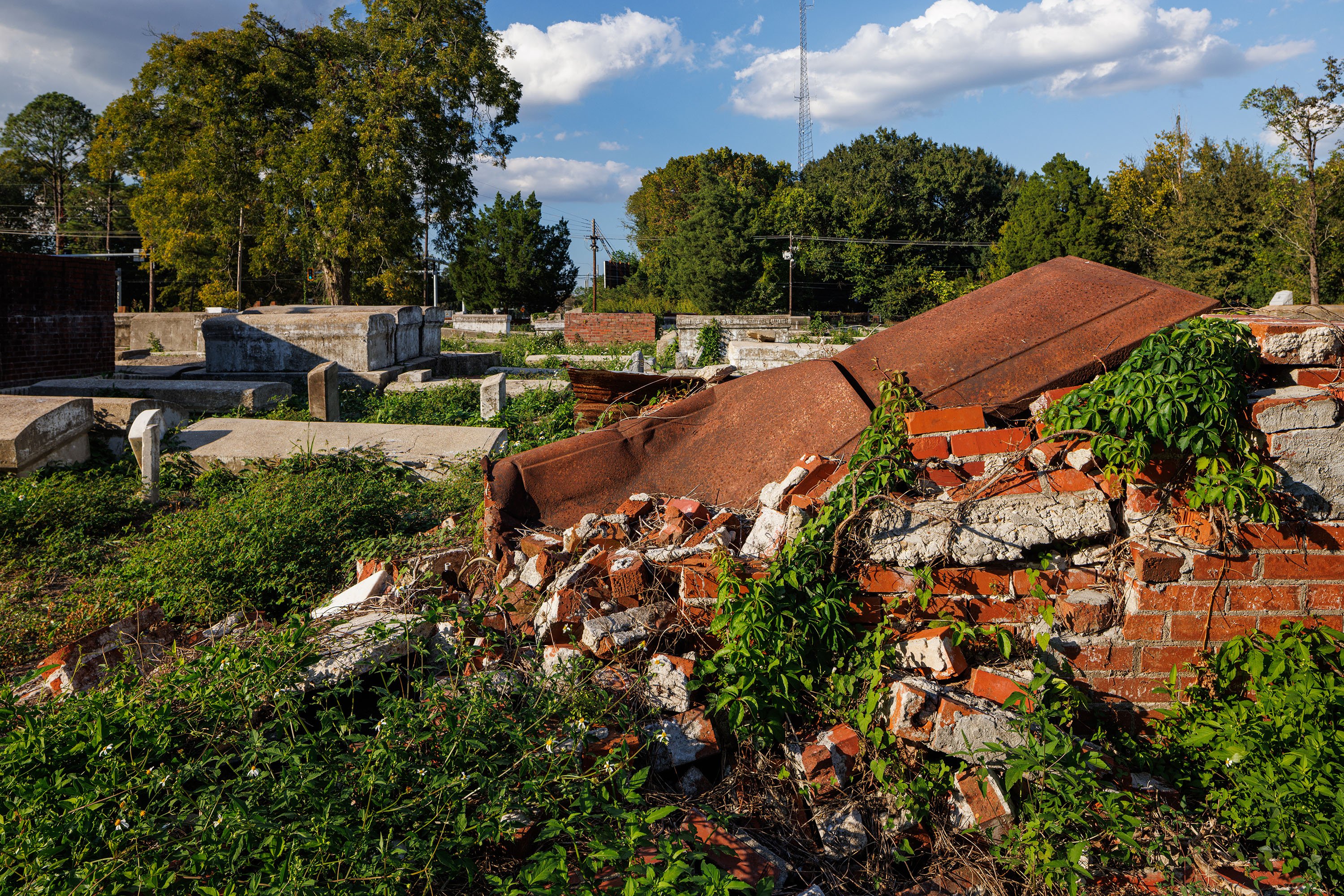 An Oct. 15 photo of Sweet Olive Cemetery in Baton Rouge, Louisiana, shows the state of Pfc. Samuel Pierre Jr.’s grave. Photo by Collin Richie.
The deterioration has prompted volunteer cleanup efforts over the years. Historical Google Street View imagery also shows overgrown grounds at various points over the past decade.
Just 500 feet away sits Baton Rouge National Cemetery, a federally maintained burial ground for veterans.
“The national cemetery’s right across the street, and then the Catholic one is right across the street from the national cemetery. Those are way more maintained, way better maintained,” Cheramie said.
Jerry Sullivan, director of the Louisiana Cemetery Board, told Task & Purpose that Sweet Olive has no dedicated funding for upkeep. Unlike cemeteries that set aside money from burial plot sales to pay for future maintenance, Sweet Olive was never required to establish such a fund.
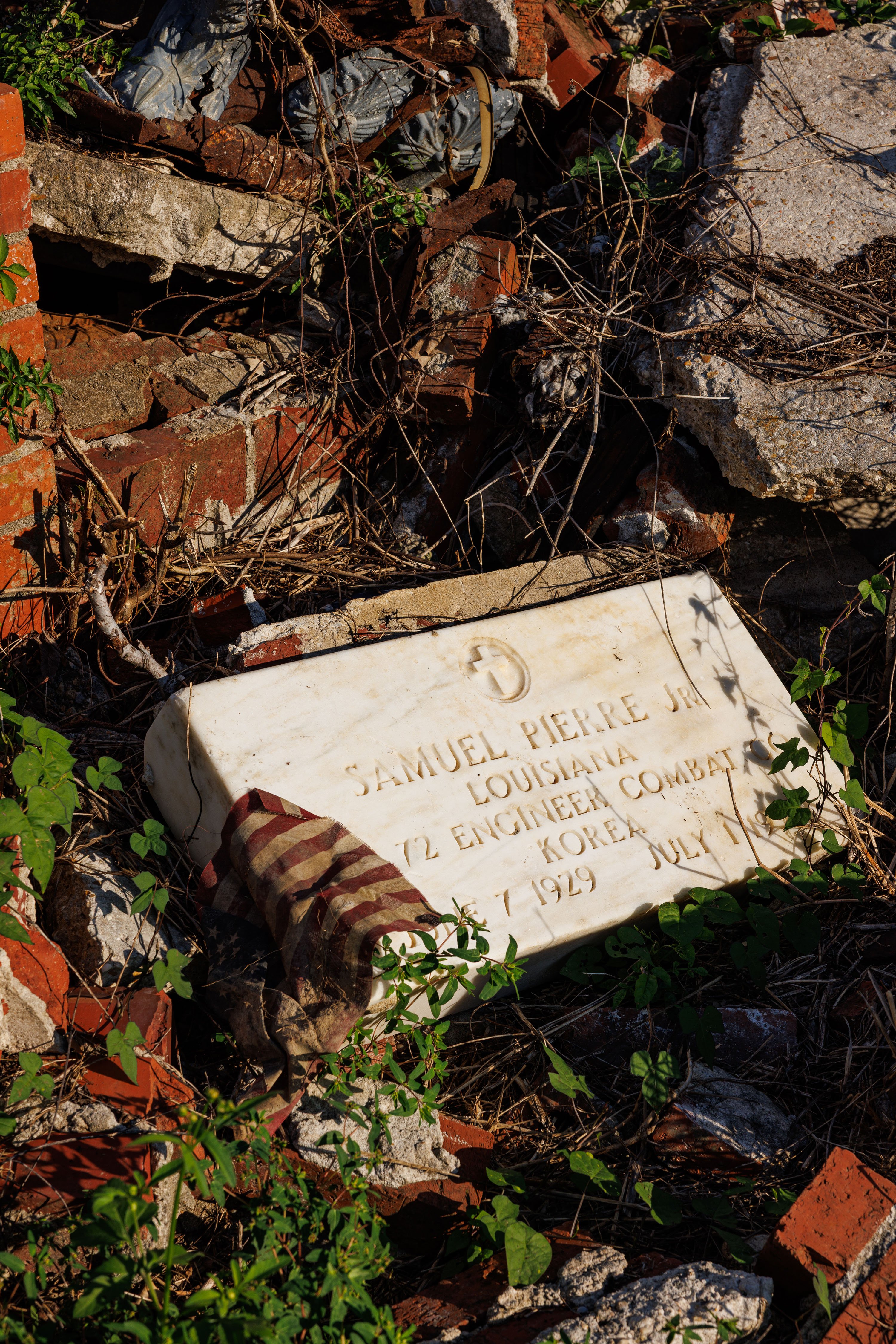 An Oct. 15, 2026 photo of Samuel Pierre Jr.’s tombstone at Sweet Olive Cemetery. Photo by Collin Richie.
According to Sullivan, the board’s records list the Sweet Olive Cemetery Association as the cemetery’s contact organization, with W.T. Winnfield as its representative. A separate nonprofit, Friends of Sweet Olive Cemetery, previously organized cleanup efforts under the leadership of local volunteer Markeda Cottonham.
Sullivan said the board has tried unsuccessfully to contact the cemetery’s representative to have exposed human remains secured and buried again. Louisiana law allows officials to recover and rebury exposed remains, but Sullivan said that authority belongs to the state Attorney General’s Office, not the Cemetery Board.
The cemetery has previously drawn scrutiny from the Louisiana Attorney General’s Office. In 2019, a man was arrested for allegedly destroying burial vaults and removing human bones from the cemetery. The office later pursued legal action over exposed remains at Sweet Olive, according to reporting by 225 Magazine in 2023.
More than 70 years after Pierre died while serving in Korea, his grave marker stands beside an exposed casket in a cemetery that has deteriorated for years. Like the war in which he served, his final resting place appears to have been forgotten.
The post Korean War soldier’s grave exposed to the elements at Louisiana cemetery for years appeared first on Task & Purpose.
The grave of Pfc. Samuel Pierre Jr., a soldier who died in the Korean War, has been exposed at Sweet Olive Cemetery in Baton Rouge, Louisiana, due to neglect and a collapsed burial vault. The cemetery, lacking dedicated funding for upkeep, has drawn outrage from veterans and prompted volunteer cleanup efforts. The Louisiana Cemetery Board has attempted to address the situation but has faced challenges in securing the exposed remains.
- Pfc. Samuel Pierre Jr. died in Korea in July 1952.
- His grave at Sweet Olive Cemetery is exposed due to a collapsed burial vault.
- The cemetery has no dedicated funding for maintenance.
- Volunteer efforts have been made to clean up the cemetery.
- The Louisiana Cemetery Board has attempted to secure the remains.