
Missile Defense of Japan, the U.S., and South Korea Moves to Combat Stage in Freedom Edge 2026
 Tanaka Takashi
Missile Defense of Japan, the U.S., and South Korea Moves to Combat Stage in Freedom Edge 2026
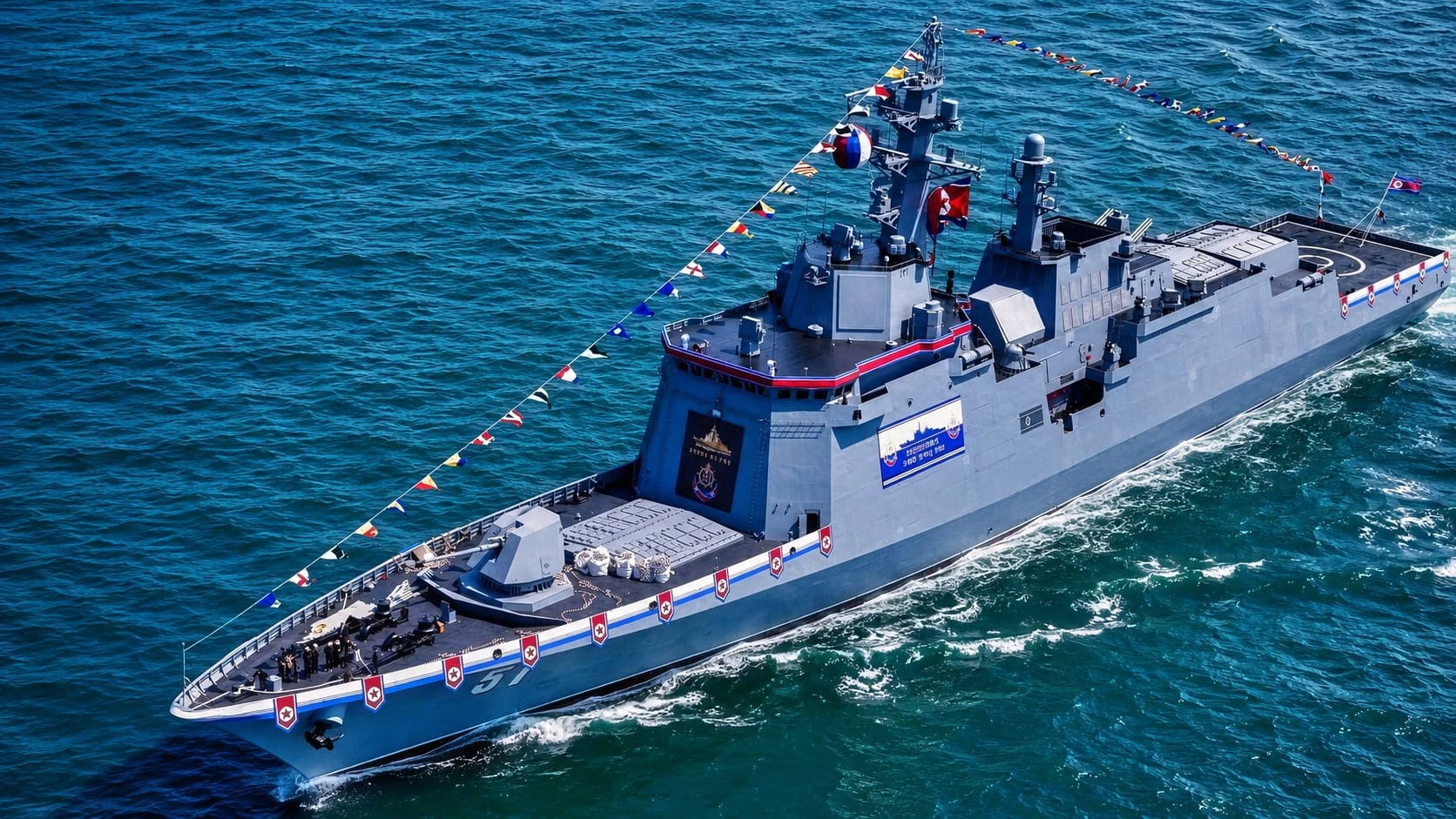
On September 7, Japanese, U.S., and South Korean forces lined up in a hangar at Yokota Air Base. On the same day, North Korea commissioned a new 5,000-ton destroyer, the "Kang Gon." Freedom Edge 2026, taking place from September 9 to 11 in the southeastern waters of Jeju Island, is not merely a show of force against North Korea, but a training exercise to assess whether dispersed sensors can be connected to a unified air defense decision.
Six Surface Combatants to Compensate for the Absence of an Aircraft Carrier
According to Stars and Stripes, the participating forces total approximately 2,300 personnel from the three countries, along with six destroyers. Two South Korean Sejong the Great-class destroyers, Japan's "Atago" and "Asahi," and the U.S. Navy's "Benfold" will connect with air and cyber units. Although there has been no aircraft carrier for two consecutive years, the U.S. side explains that this reflects the distribution of missions around the world and does not signify a reduction in regional engagement.
The Focus is on the Speed of Information Rather than the Number of Vessels
Japan will deploy E-767, E-2D, P-1, F-15, F-2, and KC-46A aircraft. The configuration will simultaneously handle air defense identification, ballistic and cruise missile countermeasures, and maritime denial using aircraft from land bases and Aegis ships at sea. While four vessels are equipped with Aegis, publicly available information does not clarify the name of the sixth ship or the number of aircraft by type. This is a reason why the scale of the exercise should not be evaluated at face value.
North Korea's New Destroyer Changes the Calculations
According to Naval News, the Kang Gon is 145 meters long and has 88 vertical launch system cells, capable of carrying up to approximately 104 missiles for anti-ship, anti-air, and land attack purposes. While the actual performance relies on North Korean announcements, it is significant that a navy, previously focused on coastal defense, is moving towards operating multiple missile ships that claim to be nuclear-capable. The significance of connecting Japan's P-1 with U.S. and South Korean air and naval sensors becomes concrete here for the first time.
The Weakness of Alliance Cooperation Lies in Politics
According to Tanaka, the litmus test this time is not the firepower of the vessels, but whether the three countries can share the few minutes from detection to engagement decision. North Korea has condemned the exercise as a threat, and in the U.S., the capacity for aircraft carrier operations is also in question. While Japan, the U.S., and South Korea have advanced their cooperation, the slowest element in actual combat may not be radar, but the speed at which different political leaderships can agree on the same risks.
Sources
Japan, the U.S., and South Korea conducted the Freedom Edge 2026 missile defense exercise at Yokota Air Base from September 7-11, 2026. The exercise involved approximately 2,300 personnel and 6 destroyers, focusing on integrating sensor data for air defense. Concurrently, North Korea commissioned a new destroyer, the Kang Gon, highlighting regional military developments.
- Japan, the U.S., and South Korea conducted a joint missile defense exercise called Freedom Edge 2026.
- North Korea commissioned a new destroyer named Kang Gon on the same day as the exercise.
- The exercise involved approximately 2,300 personnel and 6 destroyers from the three nations.
- Japan deployed various aircraft including E-767, E-2D, P-1, F-15, and F-2.
- The focus of the exercise was on integrating dispersed sensors for air defense.