
Royal Navy frigate crisis deepens as old warships wear out
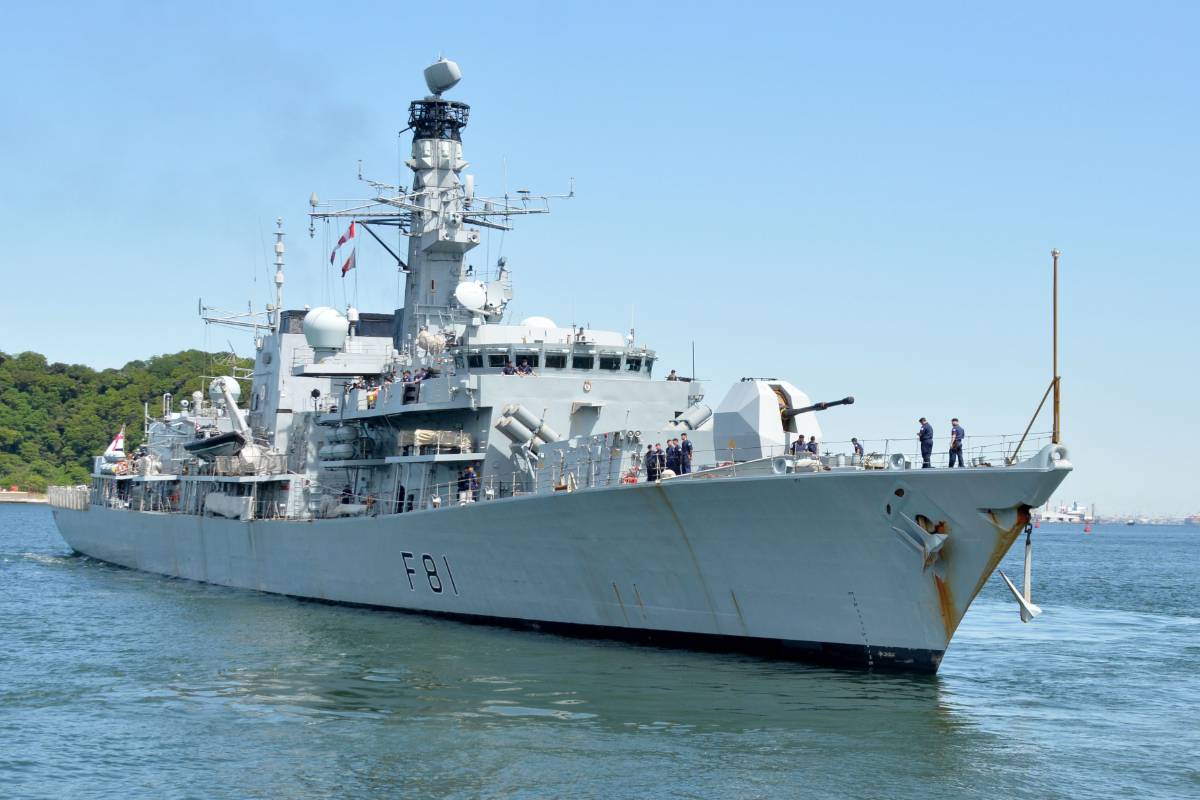
Britain’s Royal Navy could be left with just one frigate available for operations at any given time next year, as two more of its five remaining Type 23 frigates are expected to be declared unseaworthy within months, leaving three ships in service in 2027 with one at sea, one in training and one in maintenance, British tabloid The Sun reported, citing a report by naval news site Navy Lookout.
Navy Lookout said industry insiders had told it that two of the five Type 23s will almost certainly have to be declared unseaworthy in the next few months, without naming the ships. The fleet now consists of HMS Kent, which has been in refit for more than two years, along with HMS Portland, Somerset, St Albans and Sutherland, which cover the navy’s main anti-submarine tasks. The youngest of the four was commissioned in 2002, in a class designed for an 18-year service life, and the ships are being retired because their light steel hulls are corroding beyond economic repair.
The frigates hunt Russian submarines in the North Atlantic, protect the Royal Navy’s nuclear-armed ballistic missile submarines as they leave and return to port, and guard undersea communications cables around the British Isles. Former frigate captain Cmdr. Tom Sharpe told The Sun that two tasks cannot be dropped, the towed array patrol ship that tracks Russian submarines in the North Atlantic and the Fleet Ready Escort that responds to threats in British waters, and that keeping even one ship available from a fleet of three becomes harder as the hulls age.
“If we are down to three frigates there will be times when none are available. We are wide open,” said Cmdr. Tom Sharpe.
The warning followed a House of Commons Defence Committee report on defense in the High North, published last week, which found that the navy’s readiness and ship numbers fall far short of the government’s own requirements. The committee cited an internal NATO assessment that reportedly ranks Britain 31st of 32 allies on the speed of rearmament, ahead only of Iceland, and recommended that no further towed-array Type 23 leave service until a new Type 26 frigate replaces it on a one-for-one basis.
“The current reality could hardly be bleaker,” the committee said.
The Royal Navy has had a minimum requirement for 19 frigates and destroyers since 2010, but now operates 11: six Type 45 destroyers and five Type 23 frigates. HMS Richmond and HMS Iron Duke were retired in July, Iron Duke less than three years after a £103 million (about $138 million) life-extension refit, and The Sun reported that around half of the remaining escorts have not sailed for two years.
Replacements are running late. The first Type 26 anti-submarine frigate, HMS Glasgow, is now expected to start contractor sea trials in the first half of 2027, almost a decade after construction began, with initial operating capability planned for October 2028, while the Ministry of Defence says only that the first Type 31 general-purpose frigates will arrive “by the end of the decade.” According to Navy Lookout’s reading of the committee report, the combined frigate force could fall to two ships in 2031 and not recover to eight until 2037.
The warnings come as Defence Secretary Wes Streeting has said Russia could be ready to attack by 2030 and that Britain must prepare accordingly.
“That gives us a little over 1,000 days to complete our mission: to be ready with our allies to fight and win,” said Defence Secretary Wes Streeting.
The Ministry of Defence said the Royal Navy continues to meet its operational commitments around the world while bringing new maritime capabilities into service, and that it is spending £8 billion (about $10.7 billion) on new ships. The government has two months to respond to the committee’s call for a plan to raise frigate, destroyer and submarine availability before 2030.
Content preview only. Full article available at source. View Full Article
The Royal Navy is projected to have only one operational frigate by 2027 due to the aging Type 23 fleet, with two ships expected to be declared unseaworthy soon. This situation raises concerns about the Navy's ability to fulfill its operational commitments, particularly in the North Atlantic, as it currently operates below the required number of frigates and destroyers. Delays in new ship construction further exacerbate the issue, prompting warnings from military officials about potential vulnerabilities.
- Royal Navy may have only one frigate operational at a time by 2027.
- Two Type 23 frigates are expected to be declared unseaworthy soon.
- The Royal Navy currently operates 11 frigates and destroyers, below the required 19.
- The first Type 26 frigate is delayed until 2027, with initial capability not expected until 2028.
- Defence Secretary warns of potential Russian aggression by 2030.