
Russia's 2026 Winter Air Campaign Is Already Testing Ukraine's Air Defences
 Alexandra Reeves
Russia's 2026 Winter Air Campaign Is Already Testing Ukraine's Air Defences
Russia has started Ukraine's winter energy war early, and Kyiv is already paying the price. The overnight assault reported on 30 September was the largest strike on Ukraine's energy infrastructure since spring, according to the BBC. It hit 11 regions, damaged residential and civilian infrastructure, and forced emergency power cuts around the capital. This is not simply another night of missiles and drones. It is an opening move in a campaign designed to turn Ukraine's electricity shortage into a military advantage.
The strike was broader than a single power-plant attack
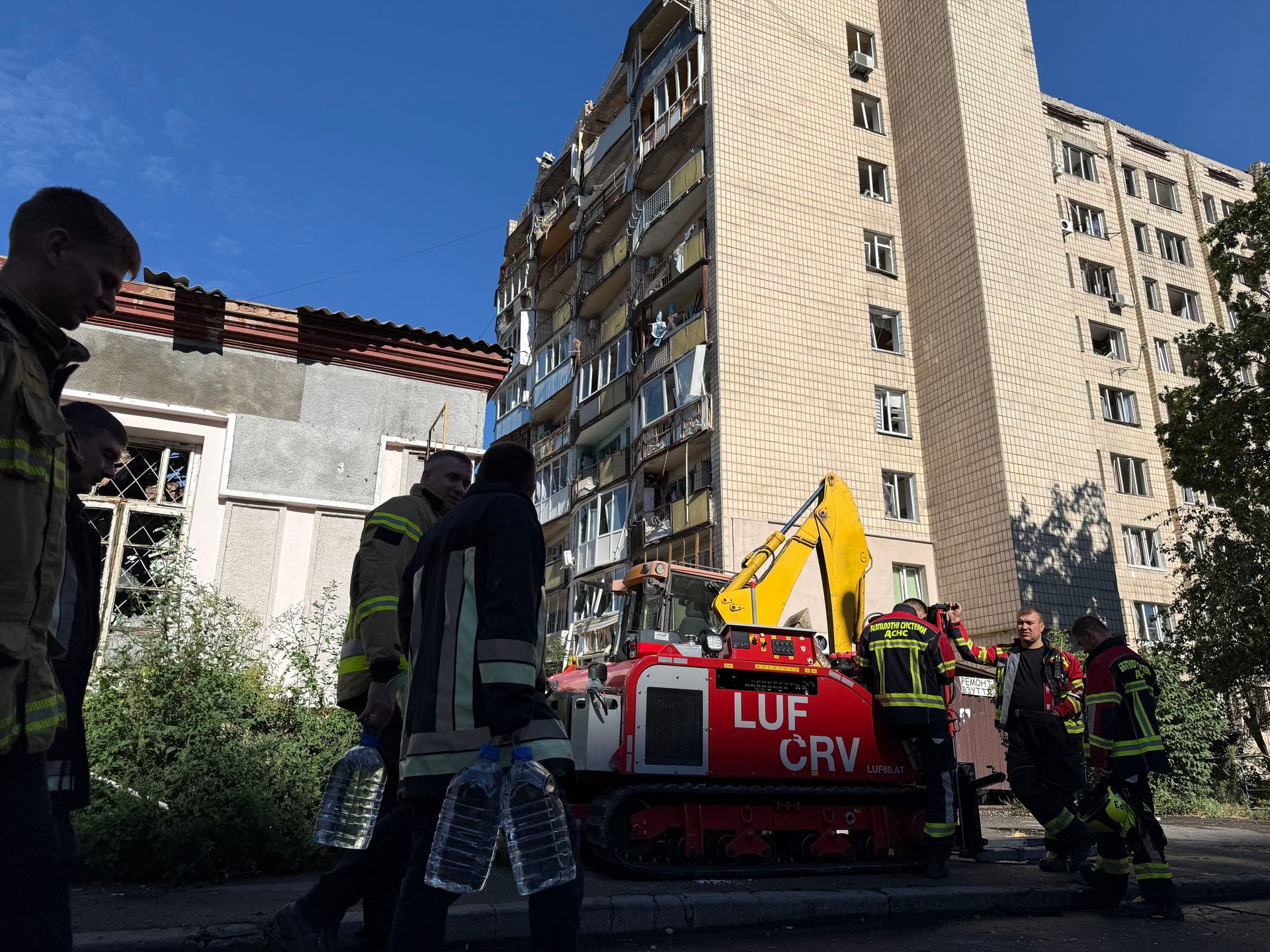
Ukraine's prime minister, Serhiy Koretskyi, said the assault combined attacks across the country at a scale not seen since the end of the last heating season. The BBC reported damage at the Trypilska thermal power plant, the largest supplier of electricity to Kyiv, while Ukraine's energy ministry said households in Kyiv, Dnipropetrovsk, Donetsk, Sumy and Kharkiv regions remained without power. DTEK said it had restored electricity to 8,000 homes after what it called a difficult night.
The Guardian reported a higher national death toll of seven, with emergency cuts imposed in Kyiv and three surrounding regions. It also reported that critical infrastructure was hit in five regions and additional damage in five others. The different casualty counts are a reminder that the situation was still developing when the first reports were published. The geographic pattern, however, is clear: Russia was not probing one facility. It was stressing the grid as a system.
What the weapons are doing to the defence problem
The operational recipe is familiar but increasingly difficult to defeat. Russia uses waves of one-way attack drones to force Ukrainian air-defence crews to reveal positions and expend interceptors, then adds cruise missiles and follow-on strikes against fixed targets. The Shahed-136 and its Russian Geran-2 derivative are relatively slow, propeller-driven aircraft, but their long range, low cost and ability to arrive in large numbers make them useful saturation weapons. Open-source specifications put the Shahed-136's range at roughly 1,000 to 2,000 kilometres and its warhead at about 40 to 50 kilograms, depending on the variant.
Those figures explain why the drone is strategically useful even when it is intercepted. A Patriot interceptor is vastly more capable than a Geran-2, but it is also vastly more expensive and scarce. Ukraine therefore has to layer expensive systems, short-range guns, electronic warfare and mobile fire teams across a national grid that cannot be hidden. A power station is a fixed target; the air-defence network protecting it must cover transformers, substations, rail junctions and repair sites as well.
That is the uncomfortable arithmetic. Russia does not need every drone to reach its target. It needs enough to make Ukrainian commanders choose which part of the network receives protection. Every successful interception preserves electricity but consumes time, ammunition and maintenance capacity. Every gap becomes an invitation to attack the next node.
The real target is winter resilience
Ukraine has endured repeated Russian energy campaigns since the full-scale invasion began, but the timing matters. The Guardian reported that freezing night temperatures were expected in Kyiv in the coming days. Power cuts that are manageable in September become a civilian emergency when heating systems, water pumps and transport networks depend on a grid under repeated attack.
Russia's defence ministry said the Trypilska plant was targeted because it supplied Ukrainian defence facilities. That claim should be treated as part of Moscow's information campaign, but it also reveals the logic of the strikes. The grid is both civilian infrastructure and military infrastructure. It supports factories, railways, command posts, repair depots and the ordinary workforce that keeps Ukraine fighting. There is no clean separation for an attacker to respect, or for Kyiv to defend.
The result is a campaign with effects far beyond the blast radius. Damaged power infrastructure slows industrial output and complicates railway movement. Emergency generation consumes fuel. Repair crews work under air-raid warnings. Local authorities must decide between scheduled outages and uncontrolled failures. That is a military problem disguised as a utility problem.
Why this is a NATO problem too
Everyone in Brussels knows that Ukraine is Europe's most important live test of integrated air and missile defence. The lesson is not that Patriot or NASAMS are ineffective. The lesson is that even a capable network can be overwhelmed when the defended area is large, the targets are fixed and the attacker can manufacture cheap threats faster than defenders can replace interceptors.
NATO countries have supplied launchers and ammunition, but they have not solved Ukraine's central dilemma: how to protect an entire national energy system while preserving enough air defence for troops at the front. European governments can send another battery, but batteries without a deep stock of missiles are political gestures with short shelf lives. The industrial question is now as important as the tactical one. Can the alliance produce affordable interceptors, counter-drone systems and replacement transformers at the speed this war demands?
There is also a hard political choice. Protecting Ukraine's electricity is not charity. It is a way to prevent Russia from turning civilian infrastructure into a coercive weapon against the European security order. If Moscow can repeatedly push a large European state toward darkness without exhausting its own strike capacity, every NATO planner should assume the same logic will be tested elsewhere.
What to watch next
Three indicators will show whether this was a one-off escalation or the opening of a sustained winter campaign. First, watch the interval between major drone waves and missile strikes. Shorter intervals would suggest Russia is trying to keep repair crews and air-defence units permanently reactive. Second, watch emergency power restrictions in Kyiv and the eastern industrial regions. A return to scheduled cuts is a nuisance; repeated uncontrolled outages would indicate deeper grid damage. Third, watch Western deliveries of interceptors and mobile counter-drone equipment, not merely announcements of future aid.
The immediate story is that Russia hit Ukraine's power system and Ukraine kept the lights on in many places. The strategic story is less reassuring. Moscow has found the pressure point where air defence, industrial capacity and civilian endurance meet. If Europe treats the next few months as another round of battlefield attrition, it will miss the point. Russia is testing whether winter itself can become a weapon. The answer will depend less on the next communiqué than on how many affordable interceptors Ukraine has when the temperature drops.
Sources
- BBC News, 30 September 2026, on the scale of the strike, 11 affected regions, Trypilska power plant damage and reported casualties.
- The Guardian, 1 October 2026, on emergency power cuts, regional damage and the reported death toll.
- Defense News, consulted for current defence-industrial context and air-power reporting.
On 30 September 2026, Russian forces launched a large-scale air campaign against Ukraine, targeting energy infrastructure across 11 regions, including Kyiv. The assault resulted in significant damage, power outages, and at least seven reported casualties. The strikes aimed to exploit Ukraine's energy vulnerabilities as winter approaches, complicating civilian and military operations.
- Russia conducted the largest strike on Ukraine's energy infrastructure since spring.
- The strike affected 11 regions, including Kyiv and surrounding areas.
- Casualties reported include at least seven deaths and significant damage to critical infrastructure.
- The Trypilska thermal power plant was specifically targeted due to its role in supplying electricity to defense facilities.
- Ukraine's air defense is under strain due to the volume and type of attacks.