

Summary and Key Points: The B-21 Raider is moving quickly toward operational service, promising deep-penetration stealth, nuclear credibility, and future flexibility for hypersonics and autonomous teaming.
-But the program’s core vulnerability isn’t performance—it’s scale. At roughly $700 million per aircraft, current plans for around 100 bombers risk creating a small-fleet “death spiral,” where maintenance burdens rise, training capacity tightens, and combat attrition becomes strategically decisive.
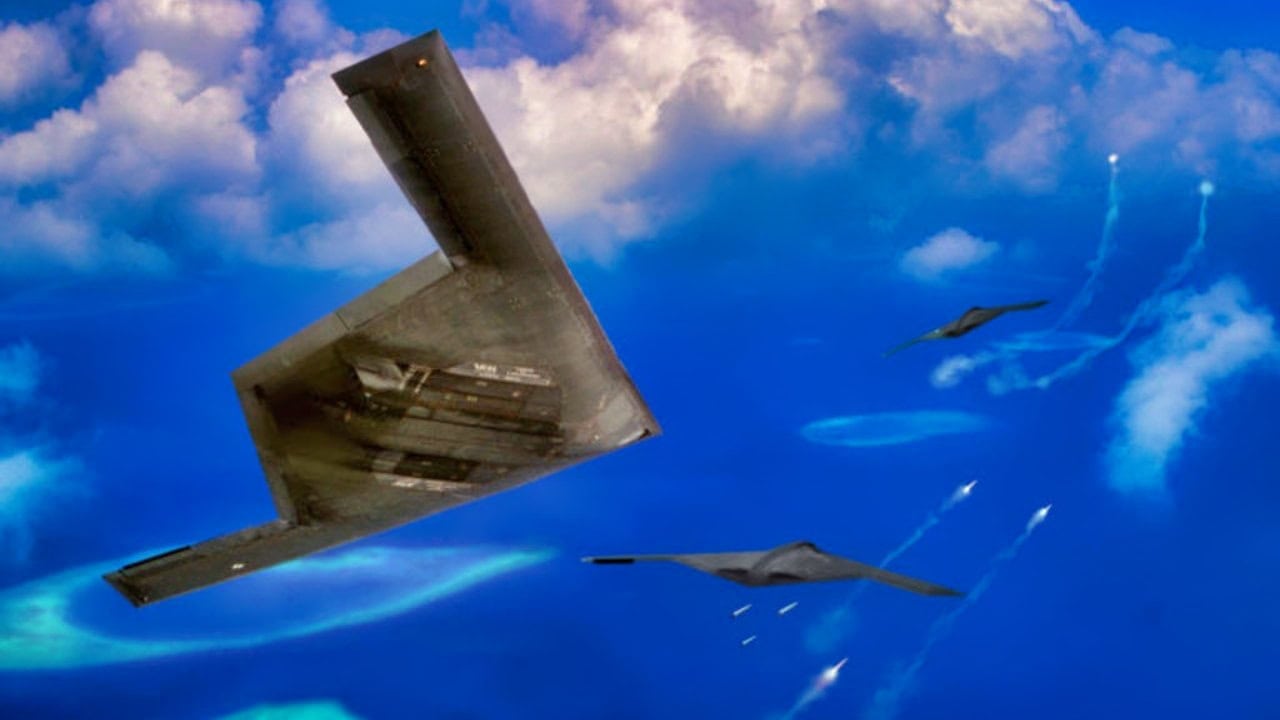
B-21 Raider Bomber. Artist Rendition/Creative Commons.
-Advocates argue the Air Force needs far more aircraft to sustain operations in a long conflict while meeting global commitments, yet industrial constraints and budget limits make that difficult.
-The central question: capability—or capacity?
The B-21 Raider “Math Problem”: Why a Small Fleet Could Break the Bomber Force
The United States Air Force is rapidly advancing the B-21 Raider long-range stealth, nuclear-capable bomber program—with initial operational capability (IOC) possibly arriving as early as this year or 2027—meaning the first aircraft begin formal service.
The B-21 is Coming Fast—and Beijing Knows It
The aircraft’s development has been streamlined under recent defense reforms to move faster through testing and production. It is intended for the B-21 to replace the B-2 Spirit and the B-1B Lancer.
The US Air Force further expects the B-21 to boost deterrence against near-peer rivals—particularly China—by offering stealth penetration capabilities deep into defended airspace.
A $700 Million Plane in a Mass-Production War
Yet, with each aircraft approaching $700 million per plane, there will be real limits how many can realistically be procured. That alone is a problem, especially considering the way in which America’s principal geostrategic rival, the People’s Republic of China (PRC), is both innovating their own stealth bombers and have the capacity to scale production of those systems at breakneck speeds.
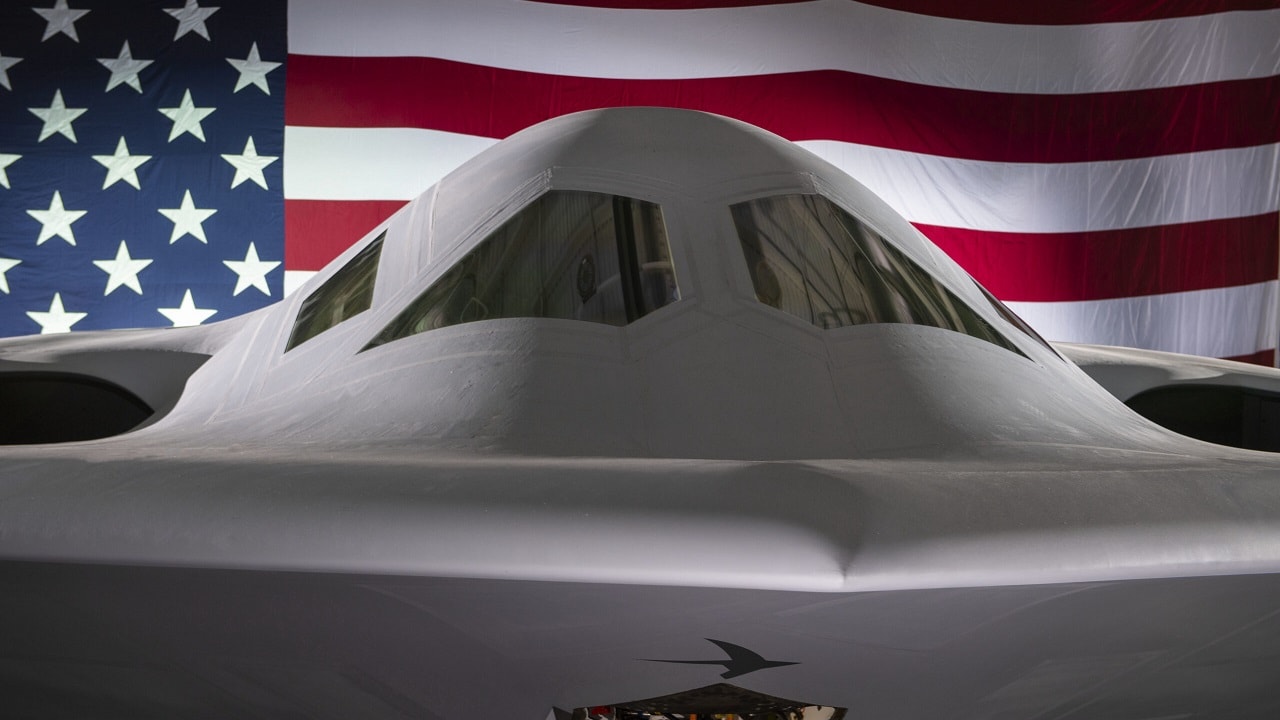
The B-21 Raider was unveiled to the public at a ceremony December 2, 2022 in
Palmdale, Calif. Designed to operate in tomorrow’s high-end threat environment, the B-21 will play a critical role in ensuring America’s enduring airpower capability. (U.S. Air Force photo)
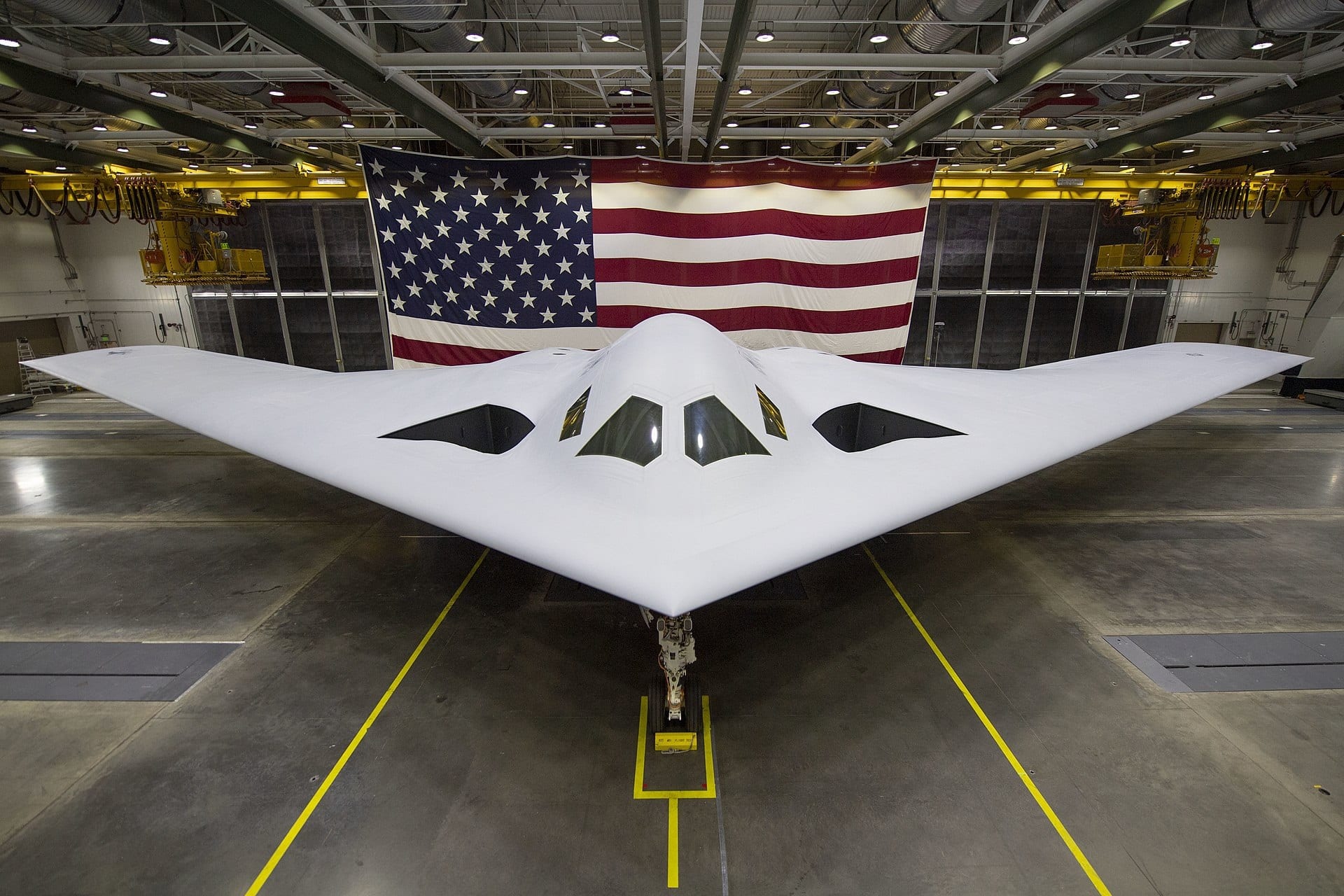
The B-21 Raider was unveiled to the public at a ceremony December 2, 2022 in..Palmdale, Calif. Designed to operate in tomorrow’s high-end threat environment, the B-21 will play a critical role in ensuring America’s enduring airpower capability. (U.S. Air Force photo)
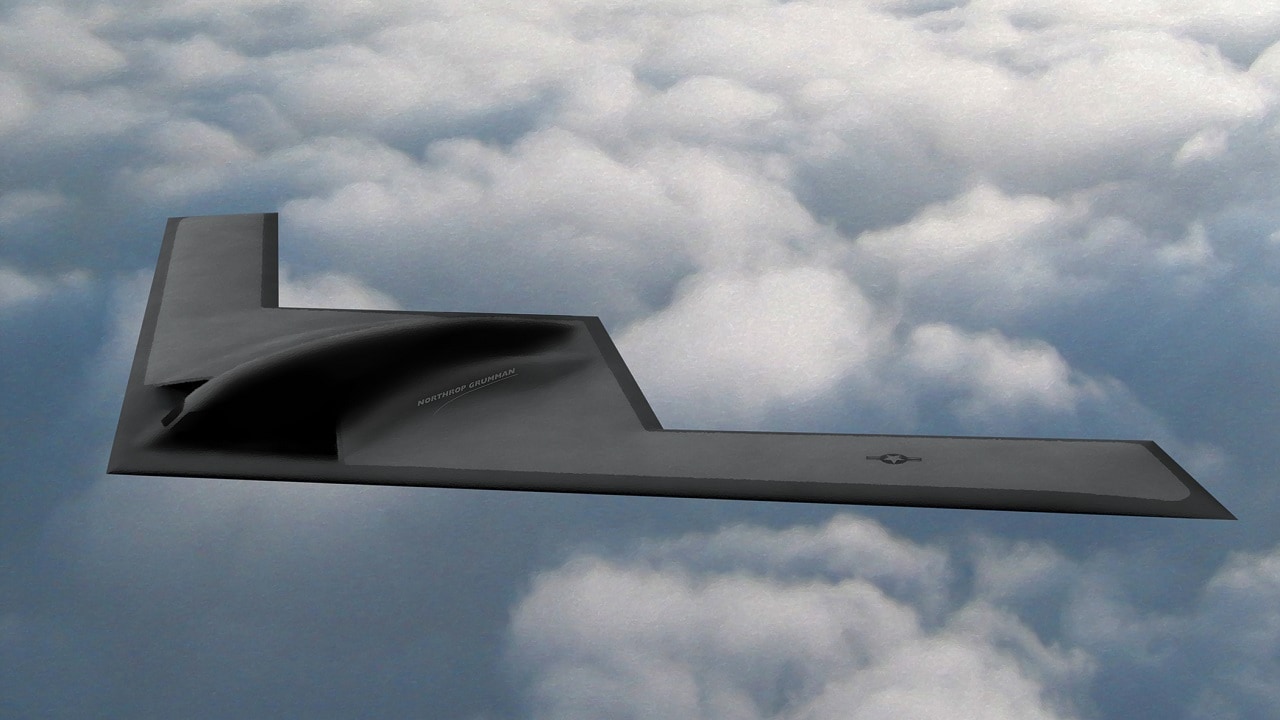
B-21 Raider bomber. Image Credit: Creative Commons.
A key theme among analyses of the ongoing B-21 Raider development program has been the math problem facing the next-generation stealth bomber. Air Force defense planners intend for there to be around 100 B-21s.
Why 100 Bombers Is Delusional, Not Deterrence
Most experts assess that 100 is far too few to sustain operations against China and Russia simultaneously (or in a protracted conflict).
The Air Force really needs about 300 of these planes when the program finished its production—but at $700 million per plane, with bottlenecks in the defense industrial base relatively unresolved, this is an impossible request to fulfill.
Furthermore, the smaller the B-21 fleet, the more costly maintenance becomes, as we have painfully learned with the tiny B-2 Spirit fleet. Training cycles become protracted, too. Nuclear readiness duties are not performed adequately.
And, if war were ever to erupt, a small fleet that is nearly impossible to replace due to attrition in combat means that the B-21 could be rendered combat-ineffective very quickly.
The Small-Fleet Death Spiral
So, the math war problem is very real and overcoming it to ensure that the Air Force has enough of these bombers in a timely fashion is unlikely—even though the Trump administration, to its credit, has created a special task force at the Pentagon to break through those aforementioned bottlenecks and streamline the production of the B-21.
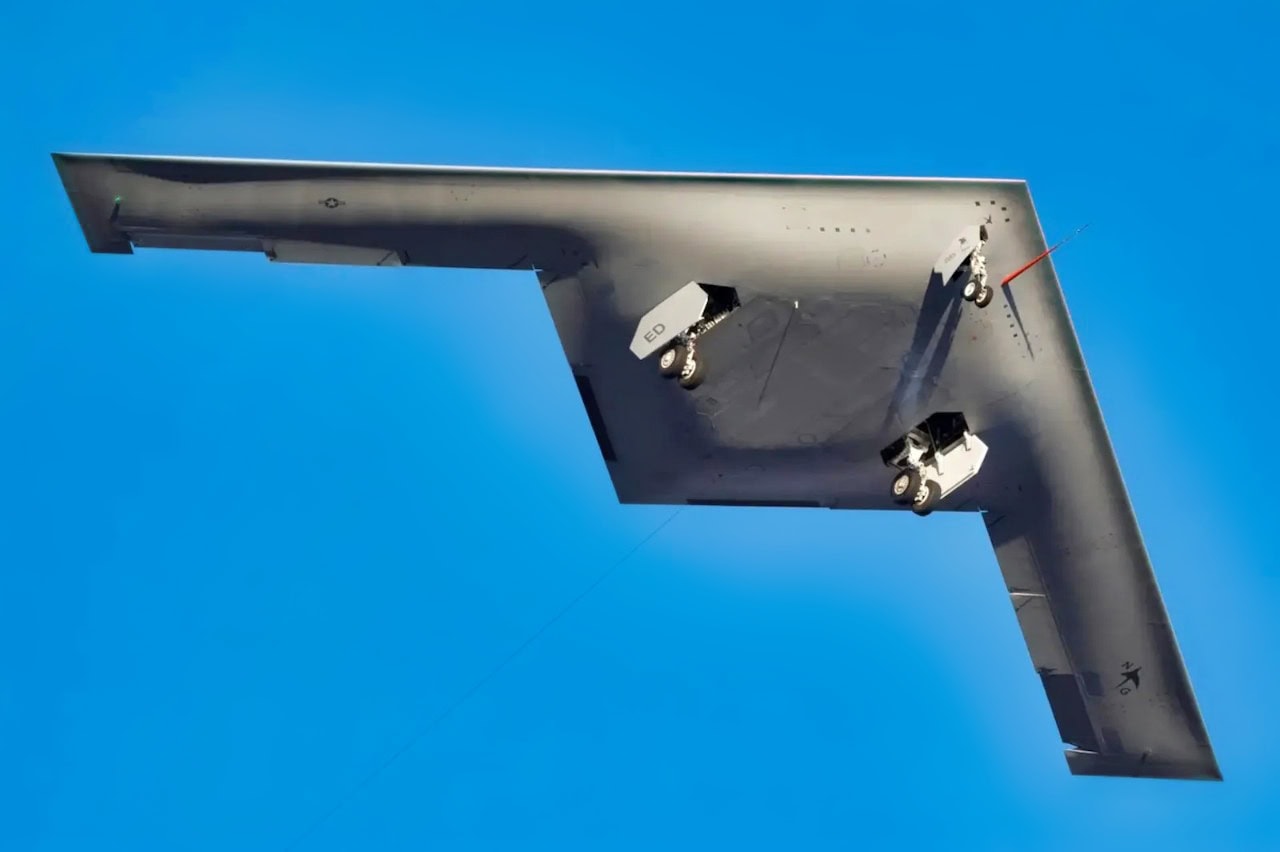
B-21 Raider. Image Credit: Creative Commons.
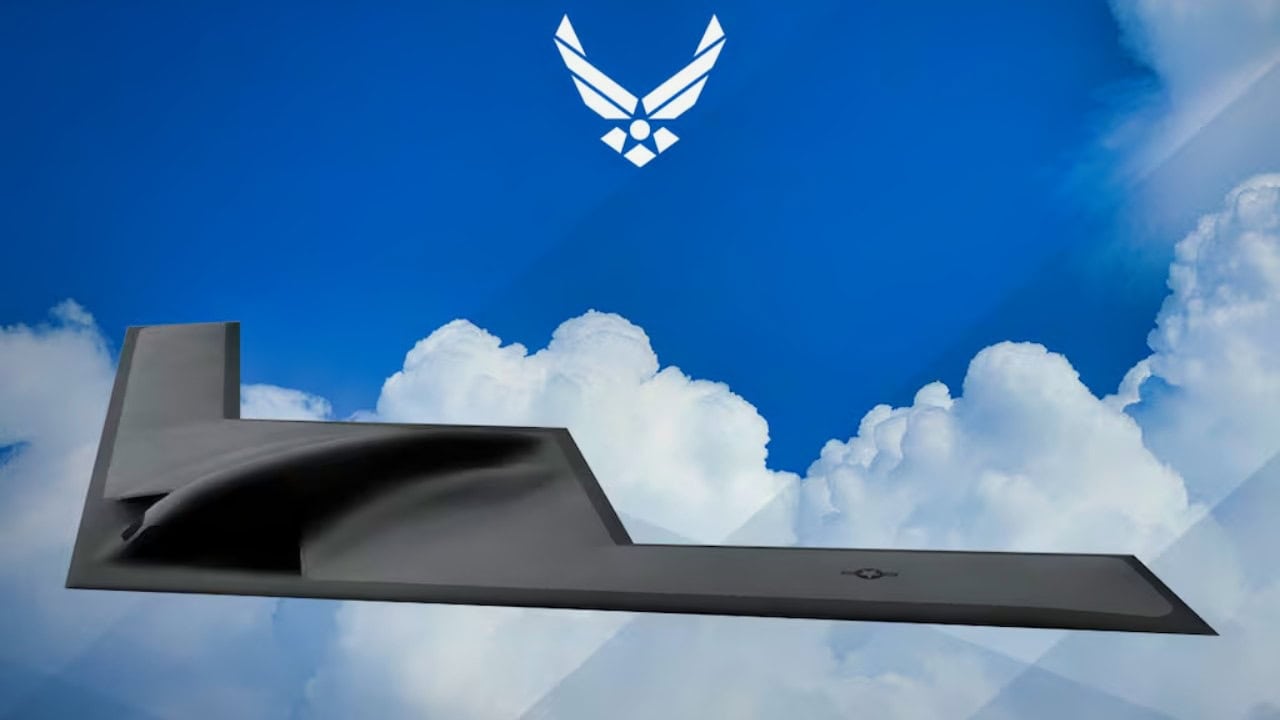
B-21 Raider Bomber.
On paper, the B-21 is the most advanced bomber in the US arsenal. Indeed, it is likely technologically superior to any other bomber on Earth (at present).
It possesses next-generation stealth, open architecture, and potential roles for firing hypersonic weapons and future integration of autonomous systems, as part of the Air Force’s excellent Collaborative Combat Aircraft (CCA) program.
Trump’s Pentagon Task Force vs. Industrial Reality
At its core, the debate over the efficacy of the B-21 Raider program turns on whether the US Air Force requires a highly advanced bomber fleet or a long-range bomber fleet with relatively affordable, easily replaceable numbers of bombers.
I’d add to that argument that the Americans might want to forego expensive manned bombers entirely and instead focus on building swarms of advanced, stealth drones that can conduct long-range bombing missions rather than either the B-21 Raider or the B-52J “Super” Stratofortress.
Can America Win the Bomber Numbers Game?
Still, the early versions of the B-21 Raider are slated to enter service soon. This will be a milestone in US long-range strike capability. China and Russia are major strategic drivers for the acceleration of this development and deployment.
Yet the central controversy is not whether the B-21 works as advertised. It does. It comes down to that math problem: how many can be built and can the US defense budget and industrial base sustain a fleet large enough to meet global commitments?
The answer to that (at least for now) is, unfortunately, no.
About the Author: Brandon J. Weichert, Defense Expert
Brandon J. Weichert is the Senior National Security Editor at 19FortyFive.com. He was previously the senior national security editor at The National Interest. Weichert is the host of The National Security Hour on iHeartRadio, where he discusses national security policy every Wednesday at 8pm Eastern. He hosts a companion show on Rumble entitled “National Security Talk.” Weichert consults regularly with various government institutions and private organizations on geopolitical issues. His writings have appeared in numerous publications, among them Popular Mechanics, National Review, MSN, and The American Spectator. And his books include Winning Space: How America Remains a Superpower, Biohacked: China’s Race to Control Life, and The Shadow War: Iran’s Quest for Supremacy. Weichert’s newest book, A Disaster of Our Own Making: How the West Lost Ukraine, is available for purchase wherever books are sold. He can be followed via Twitter/X @WeTheBrandon.