

The smallest fleet in the Ukrainian Air Force may be its most efficient. Sixteen months after the first French Mirage 2000-5s landed in Ukraine, the force amounts to roughly four operational jets — a number that would constitute a maintenance rotation in most air forces — and that handful has compiled a record worth examining: a permanent station on the night air-defense beat, a specialist’s reputation against Russian cruise missiles and drones, not one aircraft lost to enemy action, and, as of reporting this month, the first signs of a turn toward offensive strikes. The Mirage story in Ukraine is what a hyped weapons donation looks like after the hype burns off, and the residue is more interesting than the headlines were.
Mirage 2000-5: From Macron’s D-Day Promise To A Four-Jet Fleet
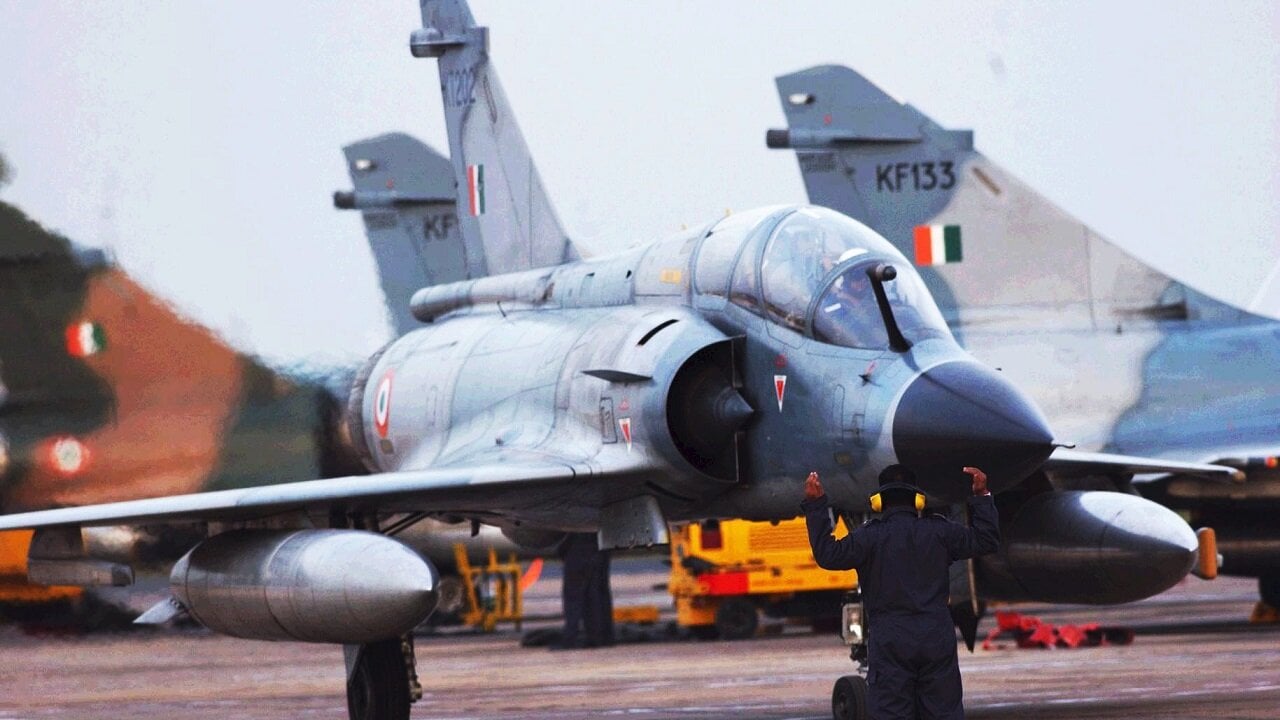
Mirage 2000. Image Credit: Creative Commons.
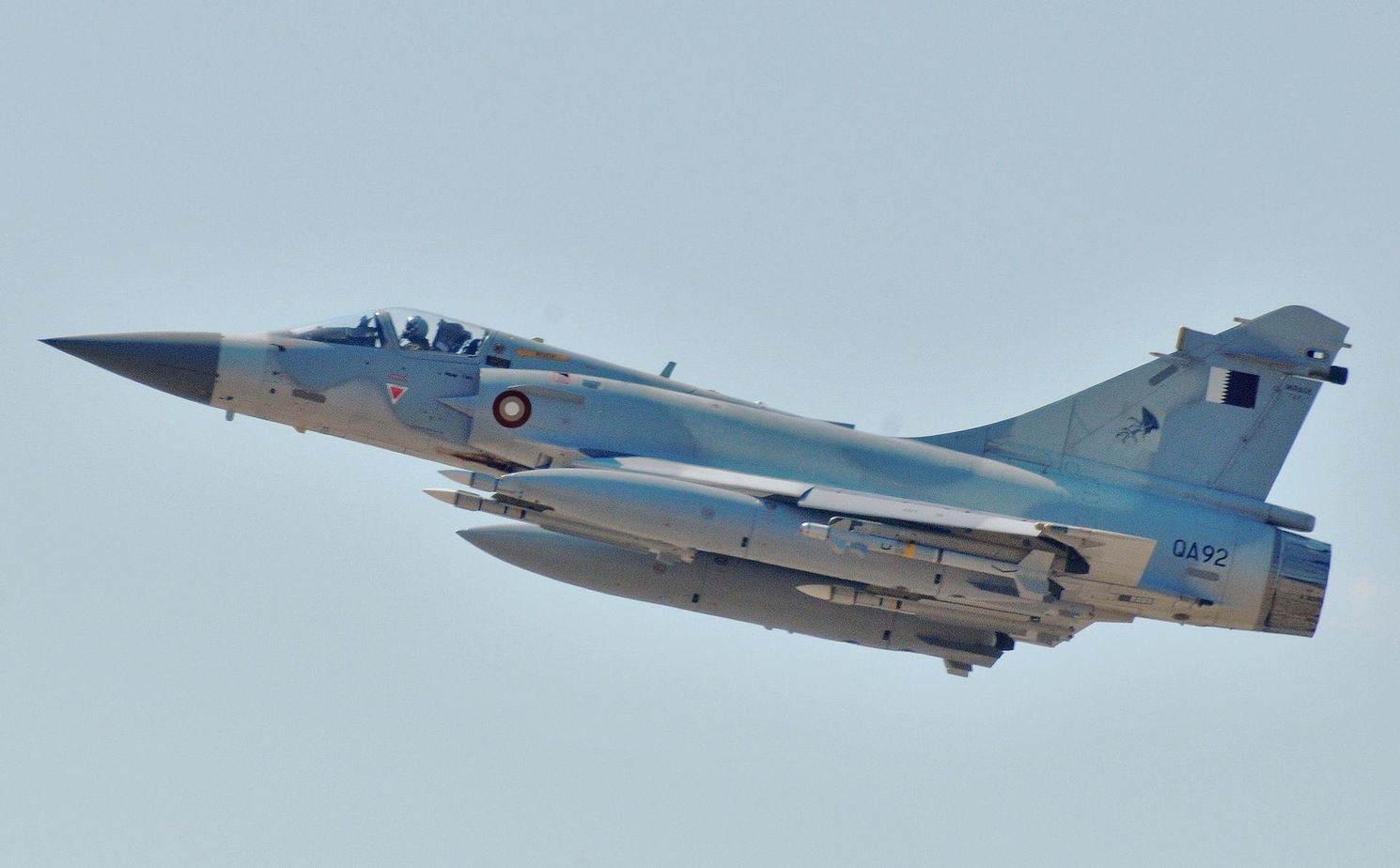
Mirage 2000-5.
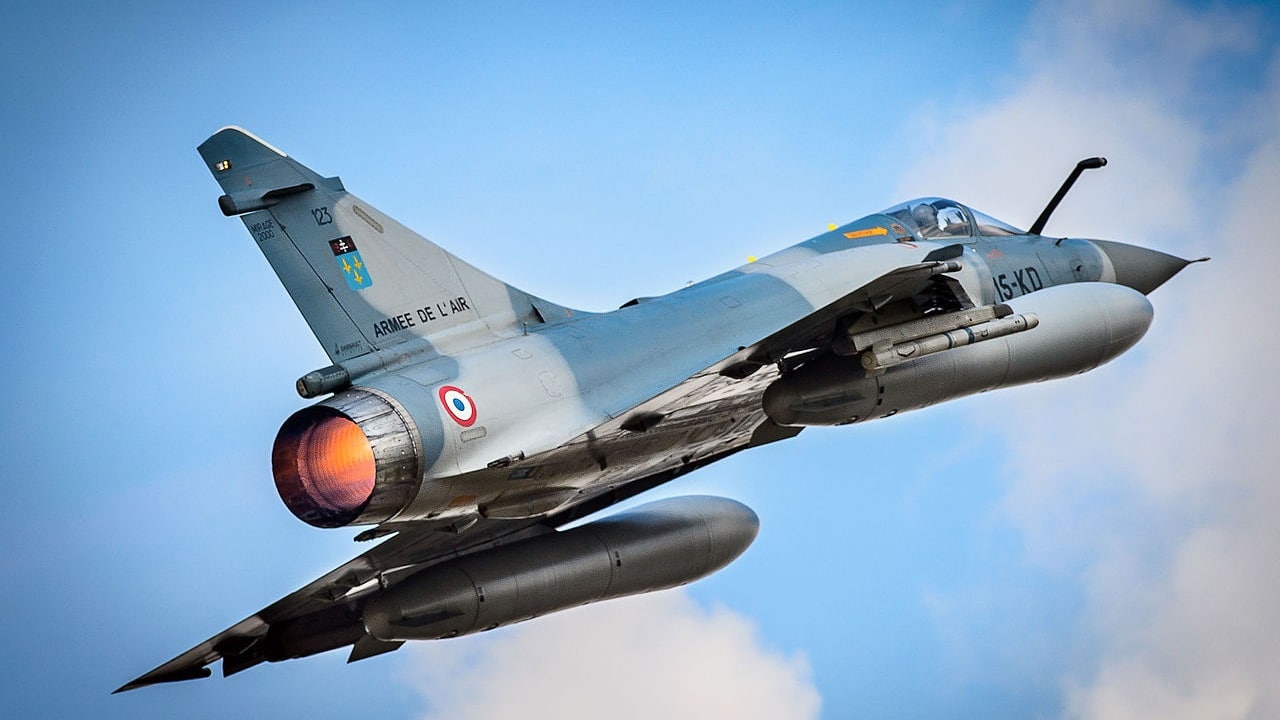
French Air Force Dassault Mirage 2000C take off from RAF Brize Norton.
The donation began at the maximum theater.
On June 6, 2024, after the D-Day commemorations, President Emmanuel Macron announced on French television that France would transfer Mirage 2000-5 fighters to Ukraine and train their pilots, with six-month training courses at Nancy and the jets upgraded to the latest standards before delivery.
Early reporting imagined a force of up to 20 aircraft. The specialist Ukrainian press never believed it, and the specialists were right: Defense Express assessed this winter that six aircraft likely represent the maximum France will transfer, with the 20-jet scenario dismissed as optimistic and even 12 a stretch — France operated only 26 of the type and is managing its own transition schedules.
The delivery arithmetic is still a learner. Three aircraft arrived in 2025. Two more were reported due by the end of March under a package that would bring the operational fleet to four, with the additional transfer accompanied by training for pilots and ground crews, and one final airframe to follow under the six-jet plan. Paris declines to publish exact numbers for operational security, and some aggregated reporting has floated far higher fleet figures; the disciplined sourcing supports four to five jets flying as of this month, and that is the number this assessment uses.
The July 2025 Crash That Cut The Fleet By A Third
The fleet’s only loss came from within. Last July, a Ukrainian Mirage went down during a flight mission, with the pilot ejecting safely and the Air Force attributing the loss to equipment failure rather than Russian fire.
President Zelensky confirmed the loss himself, calling the jet a very effective machine. One crash, subtracting a third of the then-operational force, illustrates the central fragility of the entire enterprise: with so few airframes and no realistic replacement pipeline, every Mirage is irreplaceable, every sortie carries fleet-level stakes, and Russia would treat a single combat kill as a propaganda event. The Ukrainian Air Force flies the jets accordingly — hard, but carefully.
Cruise Missile Hunter: What The Mirage 2000-5 Actually Does Over Ukraine
The role the Mirages settled into plays directly to the variant’s design. The 2000-5 was built as an air-defense interceptor, and over Ukraine it hunts the weapons that terrorize the cities.
Ukraine’s Defense Ministry describes the jets in exactly those terms — able to detect and neutralize hard-to-find cruise missiles, Shahed, Geran, and Gerbera attack drones, and the reconnaissance UAVs that precede strike packages, with the incoming airframes carrying modern radar and electronic-warfare upgrades and the type fighting at altitudes up to 18 kilometers.
Armed with MICA missiles reaching out 80 kilometers and Magic 2s for close work, a Mirage on the night beat can run down low-flying cruise missiles that ground-based radars lose in the clutter, and it spends interceptor missiles costing a fraction of a Patriot round on targets that would otherwise force exactly that trade.
The record over sixteen months is the strongest argument: zero losses from enemy action, amid constant defensive operations in the most dangerous airspace on earth. Furthermore, the operating costs tell their own story — roughly €10 million for the partial first year on a handful of jets, a figure Defense Express reads as evidence the aircraft are flying intensively rather than being preserved as showpieces.
Four jets cannot defend a country, but four jets flown nightly against the drone and missile streams subtract real weapons from real salvos, and they have done it without giving Moscow the shootdown it wants.
The Ground-Attack Turn: Following The F-16’s Path
The newest development may matter most. Reporting this month, first surfaced by The War Zone, suggests Ukraine may have begun using its Mirages to strike ground targets, expanding the fleet beyond its air-defense lane — most plausibly with French AASM Hammer precision glide bombs, a weapon Ukraine already employs from other types.
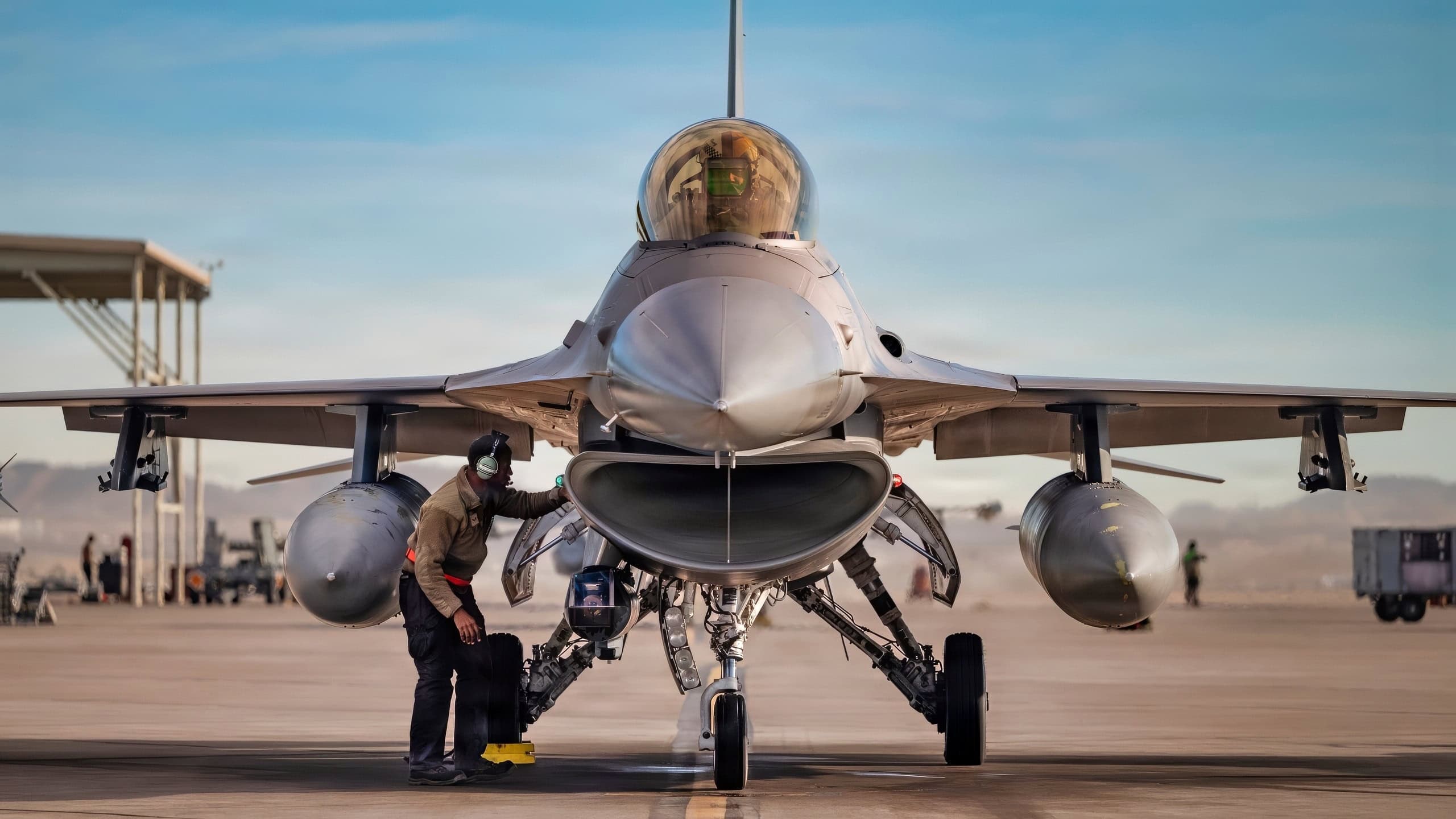
U.S. Air Force Senior Airman Gregory Chastang, a crew chief assigned to the 857th Aircraft Maintenance Squadron, conducts a post-flight inspection on an F-16C Fighting Falcon assigned to the 16th Weapons Squadron, U.S. Air Force Weapons School, at Nellis Air Force Base, Nevada, Feb. 24, 2026. Members of the 857th AMXS performed pre- and post-flight inspections, and launch and recovery for F-16Cs following a mission. (U.S. Air Force photo by Airman 1st Class Jennifer Nesbitt)
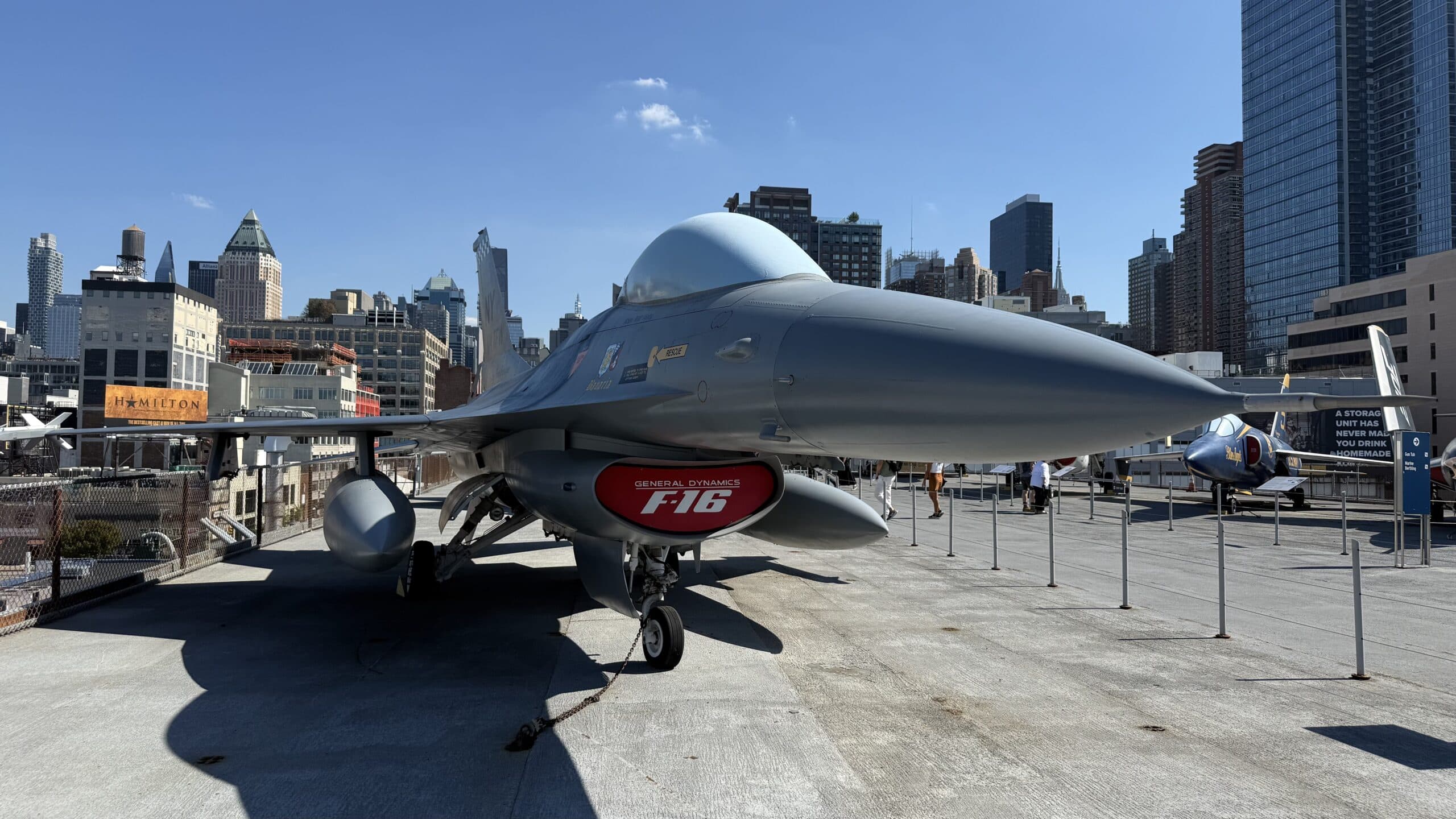
F-16 On Flight Deck of USS Intrepid. 19FortyFive.com Image.
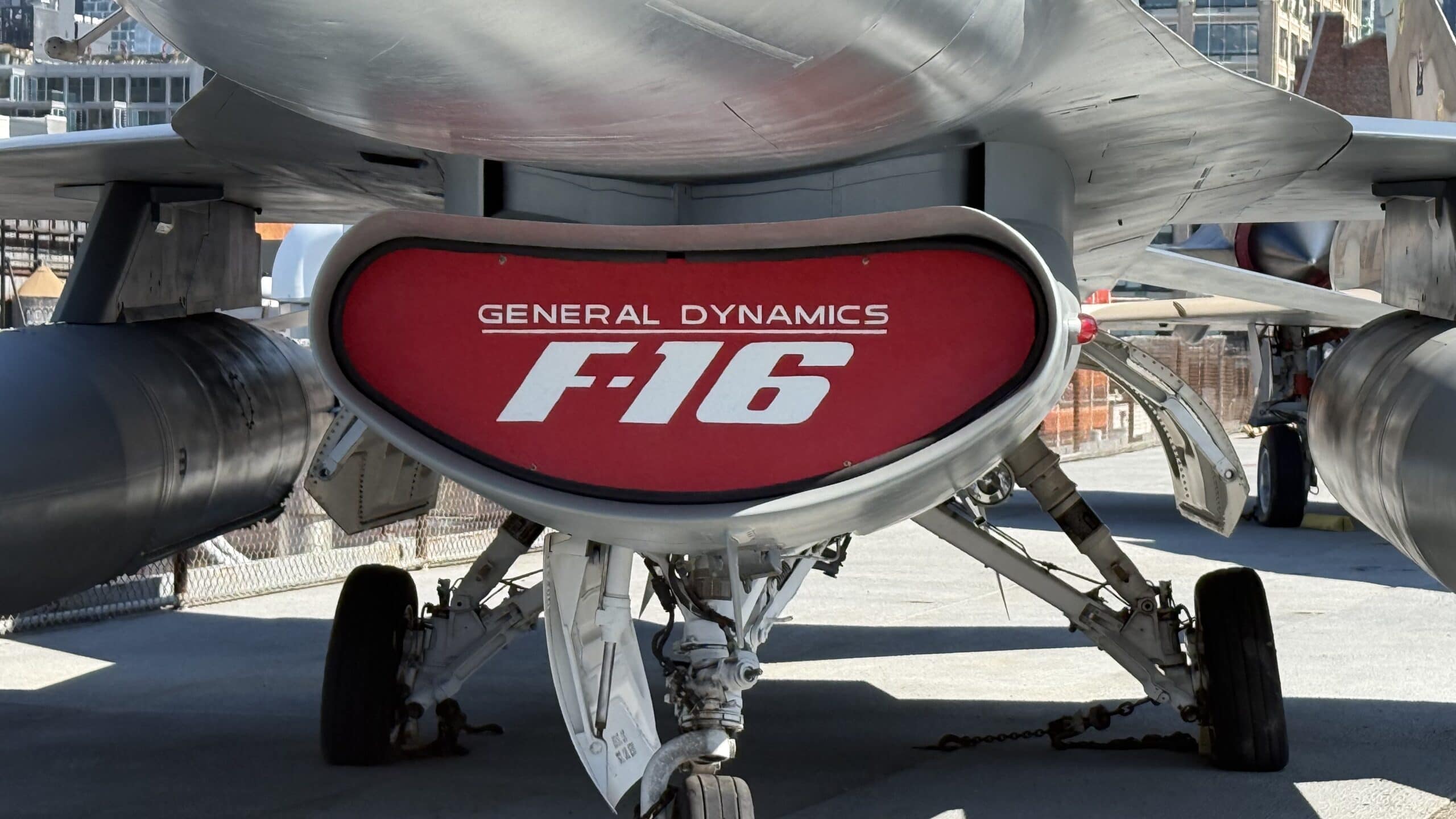
F-16 On Flight Deck of USS Intrepid. 19FortyFive.com Image.
The precedent runs through the F-16 force, which flew defensively for nearly a year before pivoting to sustained offensive sorties as airframes accumulated and pilots matured.
If the Mirage force is making the same turn at the four-jet mark, it signals confidence in the jet’s survivability, in the pilots’ seasoning, and in the calculation that a supersonic delivery platform for standoff weapons is worth more than a pure interceptor as Ukraine’s strike campaign deepens.
However, the same fragility applies with interest. Offensive sorties mean flying toward the Russian air defense network rather than away from it, and a fleet of four has no margin for the attrition that offensive air war eventually charges.
The turn, if confirmed, will be cautious, standoff-ranged, and rationed.
Six Mirages Now, Rafales Later
The Mirage chapter was always written as a bridge. The longer-term Franco-Ukrainian arrangement points toward Rafale deliveries as Ukraine reconstitutes its air force around Western types — F-16s in growing numbers, the French fleet behind them — and the six Mirages will eventually read as the advance party of a much larger French commitment rather than the commitment itself. The fair verdict on the program as of June 2026 runs in two directions at once.
As a donation, it shrank from twenty imagined jets to six real ones, a case study in the gap between announcement and delivery that has marked Western aid throughout this war.
As a weapon, the Mirage 2000-5 has done precisely what the specialists predicted in 1980s-vintage airframes upgraded for the job: hunted cruise missiles, killed drones, protected cities, lost nothing to the enemy, and begun reaching toward offense.
Four jets were never going to change the war. They have changed a measurable number of nights in Ukrainian cities, and in a war decided by attrition and arithmetic, that is what a niche weapon done well looks like.
About the Author: Harry J. Kazianis
Harry J. Kazianis (@Grecianformula) was the former Senior Director of National Security Affairs at the Center for the National Interest (CFTNI), a foreign policy think tank founded by Richard Nixon based in Washington, DC. Harry has over a decade of experience in think tanks and national security publishing. His ideas have been published in the NY Times, The Washington Post, The Wall Street Journal, CNN, and many other outlets worldwide. He has held positions at CSIS, the Heritage Foundation, the University of Nottingham, and several other institutions related to national security research and studies. He is the former Executive Editor of the National Interest and the Diplomat. He holds a Master’s degree focusing on international affairs from Harvard University.