
Lithuania buys HIMARS and 2 billion euros in US weapons — Europe's strategic autonomy is under pressure
 Dr. Klaus Weber
Lithuania buys HIMARS and 2 billion euros in US weapons — Europe's strategic autonomy comes under pressure
In the past three years, Lithuania has spent around 2 billion euros on American weapons and military equipment. According to its Ministry of Defense, the country is the largest buyer of American military technology among the three Baltic states. The list ranges from Javelin anti-tank missiles to JLTV all-terrain vehicles and Black Hawk helicopters, as well as HIMARS rocket artillery and AMRAAM missiles for NASAMS. This is not an ordinary shopping list. It is a strategic decision in favor of immediate NATO interoperability — and against the comfortable illusion that Europe can simultaneously ramp up its defenses and end its industrial dependence on the United States in the short term.
HIMARS, JLTV, and NASAMS are capabilities — not just symbols
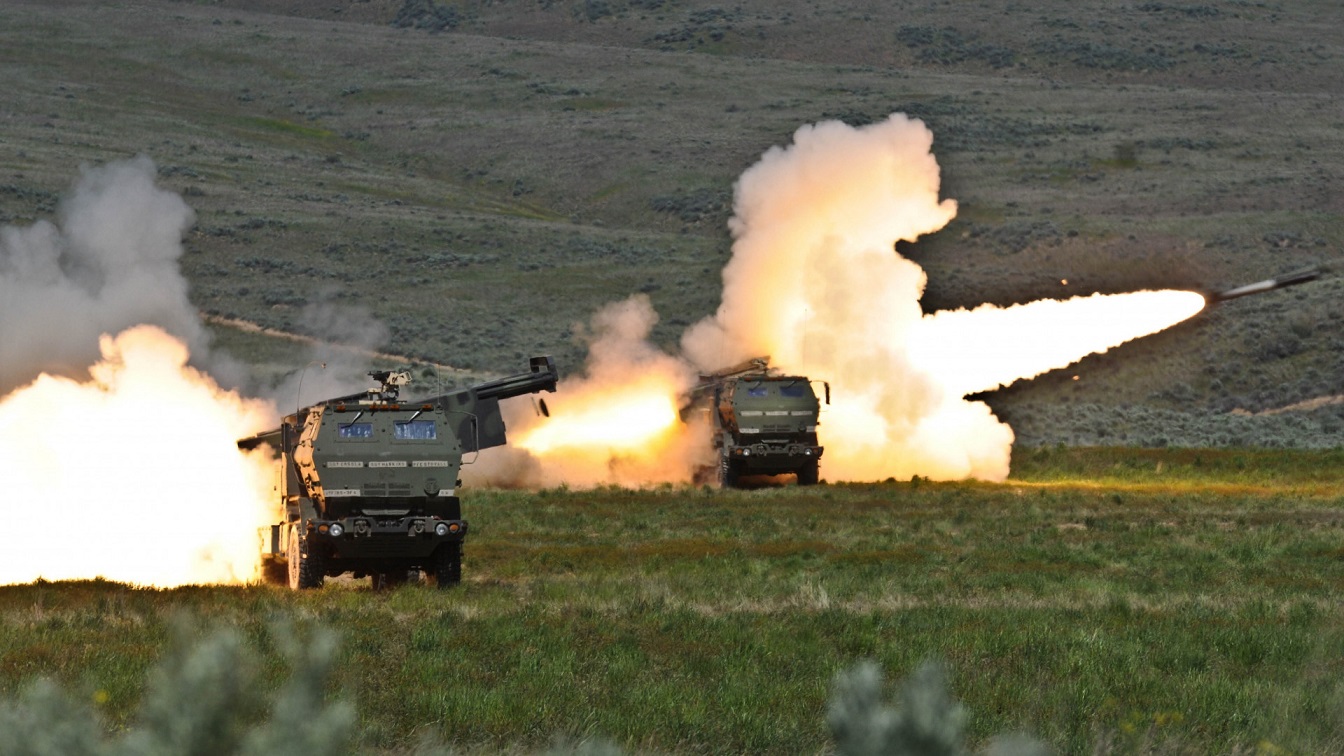
The military logic behind the procurement is understandable. HIMARS combines high tactical mobility with precise rocket fire; the system can deploy GMLRS missiles from a transportable launch platform and integrates into NATO's command and reconnaissance architecture. Javelin enhances the ability of small land forces to engage armored units in a potential scenario at the Suwałki Gap. JLTV does not replace an infantry fighting vehicle but increases the protected mobility of forces that need to be deployed over long distances in a short time.
Air defense also follows a clear division of labor. NASAMS with AMRAAM missiles is not a strategic missile shield and does not replace a layered defense against ballistic missiles. However, it is a proven, network-capable means against aircraft, cruise missiles, and certain drone threats. For Lithuania, the theoretical autonomy of the system is not what counts, but its immediate compatibility with NATO. A small state on the eastern flank cannot afford a national special solution.
The new step goes from procurement to production
Defense Minister Robertas Kaunas is now trying to turn purchasing relationships into industrial connections. During talks in the United States, he met with representatives from Northrop Grumman, Lockheed Martin, Palantir, and Epirus. Lockheed Martin and Northrop Grumman are reportedly building relationships with Lithuanian companies. Epirus is expected to present its microwave-based counter-UAS technology in Lithuania as early as next year. A joint statement with Mach Industries also aims to explore local production of drone systems, including systems that have been tested in real combat conditions in Ukraine (Defence Industry Europe, September 28, 2026).
This is strategically more interesting than the mere figure of 2 billion euros. Lithuania is trying to turn a customer relationship into a production hub. Such an industry would combine three functions: its own deterrence, support for Ukraine, and the integration of American technology into European manufacturing. For Vilnius, this is a more realistic concept of sovereignty than the political demand for fully European production.
“Allocations are not deliveries, and deliveries are not yet industrial sovereignty.”
However, this is precisely where the institutional limit lies. Assembly, maintenance, or drone production in Lithuania can reduce dependence on American software rights, export licenses, spare parts, and ammunition chains. They do not eliminate it. Those who remain dependent on American approvals for HIMARS, Javelin, or NASAMS possess greater resilience but no complete technical sovereignty. This is a distinction that European summit declarations regularly blur.
Vilnius opts against the European purchasing reflex
The Lithuanian position collides with the political momentum behind European defense industrial policy. Instruments like SAFE aim to promote joint procurement, European value creation, and ultimately an independent industrial base. The goal is reasonable. However, the threat perception of the Baltic states is more immediate than the timelines of European production programs. A new European system that is available in six or eight years helps with today's deterrence only to a limited extent.
Therefore, Lithuania is choosing a mixed strategy. It buys American systems because they are available and NATO-compatible, while also trying to bring part of the value creation back to Europe. This is neither pure “strategic autonomy” nor mere dependence. It is risk management under time pressure. The Baltic lesson is: industrial sovereignty is worthless if it only emerges after a security policy emergency.
For Germany and France, this decision contains an uncomfortable critique. Berlin speaks of European defense capability but remains institutionally blocked on multinational projects like FCAS. Paris calls for European preference but cannot guarantee that European companies can deliver the required quantities of air defense, precision munitions, and drones in the short term. Lithuania has less strategic rhetoric and a clearer procurement logic: first the capability, then the industrial deepening.
The American solution remains politically vulnerable
The flip side is equally clear. The United States remains the decisive supplier, integrator, and in many cases, the gatekeeper. If Washington changes delivery priorities, tightens export restrictions, or focuses its military forces more on other regions, Lithuania would feel the consequences immediately. Recent debates about American ammunition stocks and delayed deliveries to allies show that an order does not guarantee an available capability.
Therefore, it would be wrong to read Lithuania's 2 billion euro program as evidence against European defense integration. Rather, it is evidence against a defense integration that does not back its industrial promises with credible delivery times. Europe needs American systems as long as it cannot produce central capabilities in sufficient quantities itself. At the same time, every FMS procurement must include a European plan for maintenance, ammunition, software access, and replacement production. Otherwise, interoperability will become a permanent subscription relationship.
The Baltic decision highlights the European dilemma. Those who want to deter now often buy in the United States. Those who want to be more independent tomorrow must invest in European production capacity today. More money does not automatically resolve this contradiction. But without money for both — immediately available weapons and its own industrial depth — Europe's strategic autonomy remains a political headline without military substance.
Sources
Lithuania has spent approximately 2 billion euros on American military equipment over the past three years, making it the largest buyer among the Baltic states. The procurement includes HIMARS, Javelin missiles, JLTV vehicles, and NASAMS air defense systems, aimed at enhancing NATO interoperability. Lithuanian Defense Minister Robertas Kaunas is also seeking to establish industrial connections with U.S. defense companies to facilitate local production of military systems.
- Lithuania has spent around 2 billion euros on American military equipment in the past three years.
- Lithuania is the largest buyer of American military technology among the Baltic states.
- The procurement includes HIMARS, Javelin missiles, JLTV vehicles, and NASAMS air defense systems.
- Lithuania aims to enhance NATO interoperability and reduce dependence on U.S. technology.
- Discussions are ongoing to establish local production of military systems in Lithuania.