

While Iran’s ability to sustain its force of American-supplied F-14 Tomcats is a well-worn story, less well-known is how post-revolution Iran managed to keep its fleet of F-4 Phantom fighters — a significantly larger force than the F-14s — aloft and airworthy for decades, despite sanctions and a dearth of spare parts, a feat that was, from an engineering standpoint, remarkable.
Iran’s F-4 Phantoms: The Origin
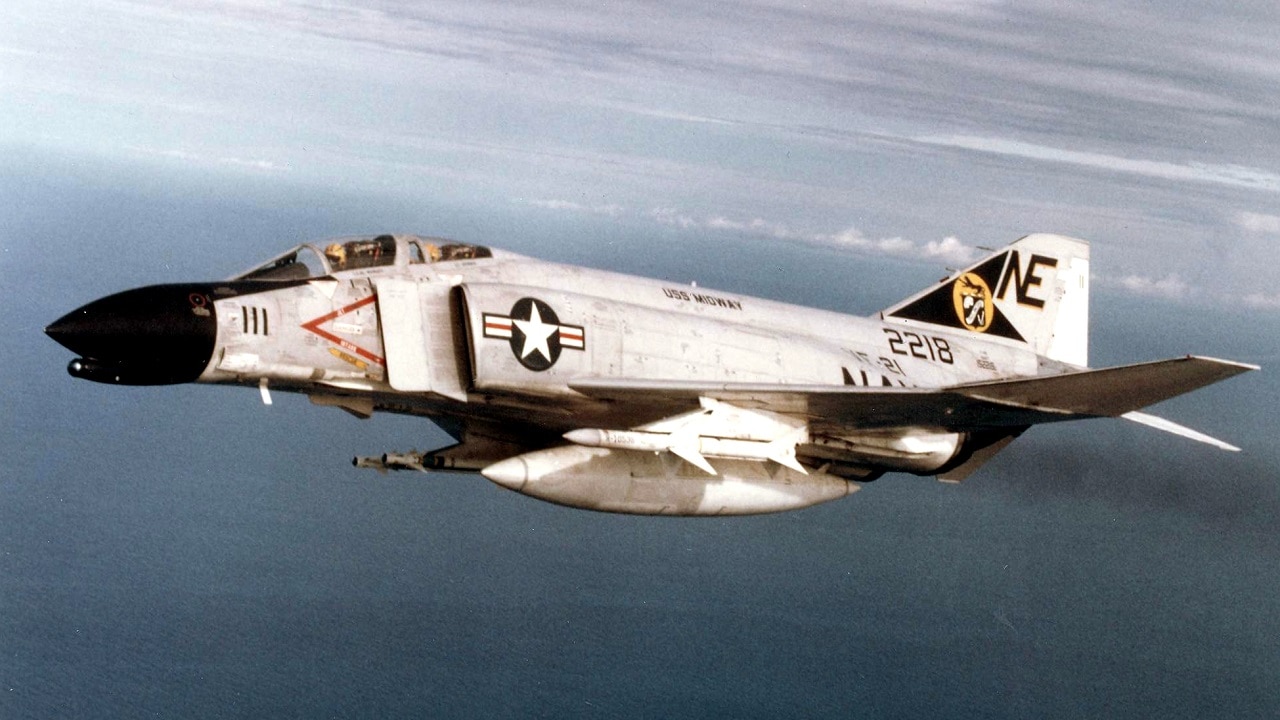
Vietnam War F-4 Phantom. Image Credit: Creative Commons.
Iran inherited about 225 F-4 Phantom fighters that the country had secured before the revolution, during the Shah’s time in power.
These aircraft formed the backbone of Iran’s long-range strike force during the early years of the Iran-Iraq War.
Keeping the aircraft airworthy after the 1979 revolution was very difficult.
The American embargo cut Iran off from the normal supply chain, while the revolutionary upheaval removed many experienced technicians and officers.
Iran responded by cannibalizing grounded aircraft for parts, repairing and reverse-engineering components domestically, and buying American spares through clandestine networks.
Parts were routed through black market brokers and European countries, and Israel even supplied Iran with some American-origin equipment despite the two countries’ open hostility.
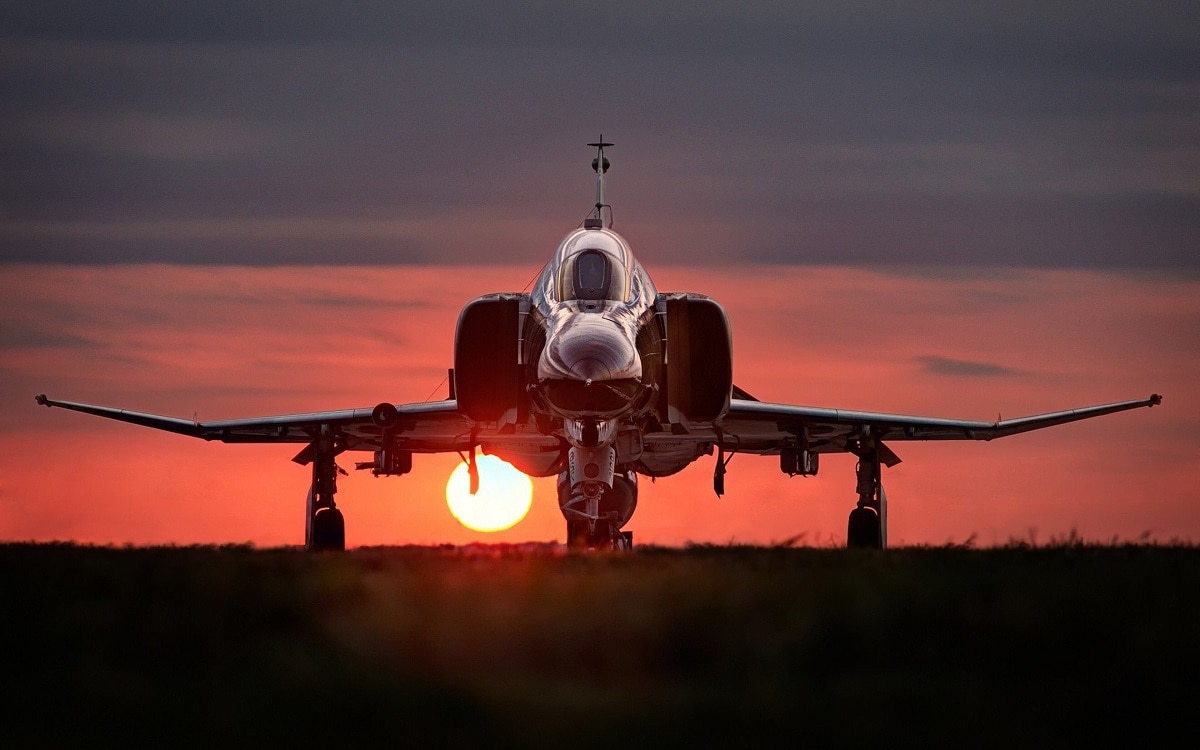
F-4 Phantom II. Image Credit: Creative Commons.
The Iran-Contra Affair arms deals provided another, albeit more limited, source of spare parts for the aircraft.
As a result, Iran had a shrinking but remarkably persistent F-4 Phantom fleet, though Tehran never kept all of its original Phantoms operational.
By the mid-1980s, estimates suggested only a few dozen aircraft were actually flyable, and later figures often mixed operational aircraft with stored or cannibalized airframes.
Iran’s own aerospace industry eventually became increasingly important in keeping the survivors aloft.
During the Iran-Iraq War, however, the F-4 was still a formidable aircraft.
Its combination of range, payload capacity, and the AGM-65 Maverick made the fighter particularly valuable for attacking Iraqi bases, armor, shipping, and infrastructure.
Iranian Phantoms participated in major operations and also fought against Iraqi fighters. But losses to Iraqi aircraft and anti-aircraft defenses, as well as accidents, significantly attrited the F-4 fleet.
Strengths and Weaknesses
Perhaps the biggest strength the F-4 had in Iranian flight wings was not its fighter capability, but its ability to carry weapons a long way.
Even an aged Phantom could put several tons of ordnance on a target hundreds of kilometers distant. That was enormously important for a country that could no longer buy replacement Western strike aircraft.
But its weaknesses were glaring, especially late in life. The F-4, fast and powerful though it was, was maintenance-intensive, with an estimated 135 maintenance hours for every flight hour.
Iran simply could not sustain the sort of sortie generation that its regional opponents could.
In the later years of the Iranian F-4 fleet’s history, the shortage of aircraft, weapons, trained technicians, and replacement parts was a strategic limitation on the fleet, not just an irritation or inconvenience.
That pressure exerted a strategic influence on how the F-4 fleet was utilized, making the force more defensive and more selective in its use.
Flying into the Future
Individual aircraft losses are difficult to ascertain with high certainty. But by the 2000s and 2010s, the remaining F-4s were no longer credible front-line fighters against a modern air force.
They could still be useful as long-range strike aircraft, particularly if employed against poorly defended targets.
Still, their older radar, weapons, and electronic warfare systems left them extremely vulnerable to modern fighter aircraft such as the F-15, F-16, Rafale, F-35, and F-22 Raptor.
But Iran managed to keep a small number of F-4 Phantoms flying remarkably late into their lives.
The survival of the Iranian F-4 fleet was a testament to Iranian maintenance, reverse engineering, and clandestine parts procurement.
Remarkably, by the 2020s, some F-4 Phantoms were still potentially flyable, whereas many others existed only as a source of spare parts.
Many surviving Phantoms were destroyed on the ground in 2025 during Israeli air strikes against Iran.
One Iranian F-4 was destroyed at Tabriz at the beginning of March of this year, alongside another aircraft, an F-5.
By then, however, the Iranian Phantom force was essentially the tail end of a much more robust Cold War-era fleet rather than part of a modern air wing.
One key conclusion about Iran’s F-4 fleet is that it remained a potentially dangerous strike aircraft long after it had ceased to be a credible modern fighter.
During the Iran-Iraq War in the 1980s, they were still a major combat asset. But by the 2000s, they were principally useful because Iran had so few alternatives.
But by the 2020s, every sortie was being generated from an airframe and support system that was about half a century old.
Their survival was an impressive feat of maintenance, but their ability to fight toe-to-toe against a first-rate air force was a completely different story.
About the Author: Caleb Larson
Caleb Larson is an American multiformat journalist based in Berlin, Germany. His work covers the intersection of conflict and society, focusing on American foreign policy and European security. He has reported from Germany, Russia, and the United States. Most recently, he covered the war in Ukraine, reporting extensively on the war’s shifting battle lines from Donbas and writing on the war’s civilian and humanitarian toll. Previously, he worked as a Defense Reporter for POLITICO Europe. You can follow his latest work on X.